5 min reading
Advancing Pet Food: Biotechnology's role in enhancing quality and sustainability
Today is the "International Biotechnology Day", a set of techniques that use living organisms or their derivatives to obtain products, processes or services. It is important to connect the advances of this discipline to generate improvements in production and in the market. Also, keep in mind that this multidisciplinary area is related to 14 of the 17 Sustainable Development Goals, established by the UN. Biorigin has stood out in this field for more than 20 years, bringing different biotechnologies that provide benefits to yeast, in order to develop healthier, more sustainable and personalized foods that meet the demands of pet owners.
Today is the "International Biotechnology Day", a set of techniques that use living organisms or their derivatives to obtain products, processes or services. It is important to connect the advances of this discipline to generate improvements in production and in the market. Also, keep in mind that this multidisciplinary area is related to 14 of the 17 Sustainable Development Goals, established by the UN. Biorigin has stood out in this field for more than 20 years, bringing different biotechnologies that provide benefits to yeast, in order to develop healthier, more sustainable and personalized foods that meet the demands of pet owners.
The word "biotechnology" can be divided into two parts where "bio" refers to living organisms such as cells, bacteria, yeast, and plants, and "technology" refers to the practical application of scientific knowledge. Biotechnology is a multidisciplinary field that utilizes living organisms, biological systems, and processes to develop products and technologies that benefit society.
The process involved in obtaining additives from yeast generally involves five stages (strain selection, cultivation, fermentation, purification, and drying), which may vary depending on the purpose of the product (protein source, prebiotic, flavor enhancer, among others).
The application of biotechnology in this context has the potential to improve the quality, nutrition, and sustainability of pet foods, contributing to the health and well-being of the animal. We can mention some ways in which biotechnology in yeast production can add value to pet foods:

Nutritional quality: the possibility of applying different processes to yeast to make specific nutrients available, such as making protein more accessible through hydrolysis, increasing the production of vitamins, minerals, or essential fatty acids in yeast.
Digestibility: Yeast-derived products can aid in the breakdown and absorption of nutrients, as well as the availability of nutrients.
Production of functional compounds: Assisting in the production of specific functional compounds that offer health benefits.
Alternative and sustainable ingredients: Production of alternative and sustainable ingredients for the food industry.
Customization of food: It is possible to develop yeast that produces specific compounds based on individual needs according to the specific characteristics and conditions of each animal, providing a more suitable and personalized diet.
Combining advances in biotechnology with the nutritional and health needs of pets, it is possible to develop healthier, sustainable and personalized foods to meet the demands of pet owners. Biorigin has stood out in this field for over 20 years, bringing different biotechnologies that provide different benefits to yeast, including:
Protein source: Yeast is an excellent source of high-quality protein with great sustainable potential. Commonly, we have dried inactive yeast (NutriCell) and hydrolyzed yeast (HiCell). It contains a good variety of essential amino acids necessary for the health of pets. Adding yeast to pet food helps increase protein content and improve overall nutritional quality.


Vitamins and minerals: Yeast is a natural source of various essential vitamins and minerals. It contains B-complex vitamins such as thiamine, riboflavin, niacin, and folic acid, which play vital roles in metabolism and the nervous system of animals. Additionally, yeast is rich in minerals like zinc, selenium, and chromium, which are important for overall pet health.
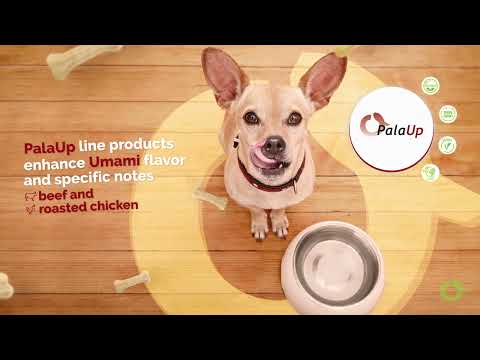
Palatability and flavor: Yeast has an appealing taste for many pets. It can be used as a natural ingredient to enhance the palatability of food and encourage pets to eat. Adding yeast to food aids in flavor enhancement (PalaUp), which is especially useful for picky eaters or those with reduced appetite. For example, by optimizing sugar and specific amino acid consumption and utilization, they can ensure that an appropriate amount of sugars is available for the Maillard reaction, resulting in the development of desirable flavor compounds or the presence of nucleotides, that enhance flavor by contributing to the umami taste, synergistically interacting with other taste compounds, stimulating taste receptors, and reducing the need for excessive salt or fat. To apply yeast extract, it can consider including it in the formula directly in the dough or as a coating, along with the palatant, in various pet food formats ranging from dry extruded diets to nutraceutical compounds.
Fiber and intestinal health: Yeast contains soluble and insoluble fibers, which are beneficial for the intestinal health of pets. Fiber assists in regulating intestinal transit, promotes colon health, and helps form healthy stools. Mannanoligosaccharides (MOS) are derived from the cell walls of yeast that support gut health in pets by promoting the growth of beneficial bacteria and improving digestive function. Moreover, the fiber present in yeast can act as a prebiotic (ActiveMOS and HyperGen), stimulating the growth of beneficial bacteria in the gut and promoting a balanced gut microbiota. It is important to mention that MOS and beta-glucan are both carbohydrates with distinct structures and functions. MOS primarily supports gut health and digestion by promoting beneficial gut bacteria, while beta-glucan focuses on immune modulation and enhancing immune responses. Their applications in pet food and supplements differ based on their specific benefits and mechanisms of action.
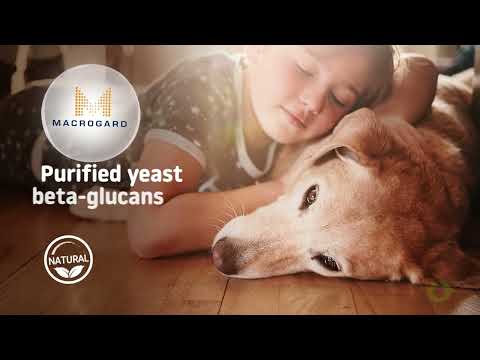
Immune support: Yeast contains bioactive compounds like β-glucans, which have immunomodulatory properties (Macrogard). These compounds can help strengthen the immune system of pets, making them more resistant to infections and diseases. Including β-glucans in pet food provide immune support, modulates inflammation, manages allergies and atopy, promotes gastrointestinal health, potentially in cancer management, benefits cardiovascular health, and may support cognitive function in aging pets.

Macrogard from Biorigin, is recognized worldwide and has extensive scientific evidence of its effectiveness. The biotechnology applied to Macrogard gives it a high content of bioactive beta-glucans, and the maintenance of the original structure of this molecule has recently been proven to have an additional function for dogs. In a recent study, Ferreira et al. (2022) demonstrated the beneficial effect of Macrogard in overweight dogs with insulin resistance.
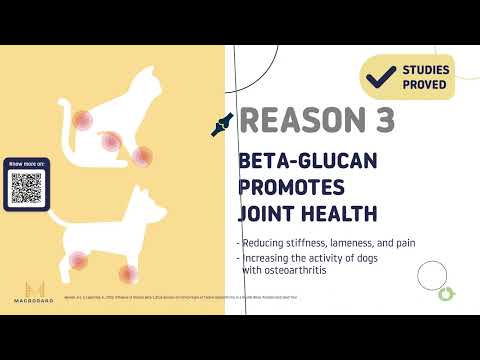
The beta-glucan can be applied in some ways, including as a supplement for immune support, in functional treats or chews for dental health and immune enhancement, in topical products for skin and coat health, in specialized diets for allergy management, and in formulations for specific health conditions such as joint health or gastrointestinal support.
It is important to note that not all yeasts used in pet foods are the same. Some specific forms of yeast, such as brewer's yeast or inactivated Saccharomyces cerevisiae yeast, are more commonly used due to their nutritional properties and health benefits.
The application of biotechnology in yeast production for pet food offers numerous benefits. It allows for the customization of food, improves nutritional quality, enhances digestibility, promotes the production of functional compounds, and provides sustainable and alternative ingredients. By harnessing the power of biotechnology, we can create healthier, more tailored, and sustainable pet food options that support the well-being of our beloved animal companions. With ongoing advancements in biotechnology, the future holds exciting possibilities for further innovation in pet food production, ensuring that our pets receive the best nutrition for a happy and healthy life.
By: Robson Barducci - R&D Specialist at Biorigin
Anderson Dias
Leticia Pacheco
You could be interested: From Mouth to Gut: The Journey of Pet Nutrition and Systemic Health

About the company

About the company
The pet food market is experiencing high growth levels worldwide. Alongside trends that are shaping this market—such as product humanization and segmentation—the development and launch of innovative products are essential for companies to stand out.
Biorigin understands these needs and, for over 20 years, has leveraged its expertise and technology to offer natural solutions derived from Saccharomyces cerevisiae yeast, meeting the demands of the pet food market and adding value to its customers' products.
Biorigin's natural solutions include purified beta-glucans that support natural defenses, prebiotics to improve gut health, and ingredients that help increase food palatability and intake.
Backed by full traceability through a vertically integrated production process—from raw materials to the final product- Biorigin's portfolio consists of 100% safe solutions.


19/02/2025
Biorigin's Annual Report Highlights Positive Impact in Sustainability Actions and One Health Practices
Videos
Next videos
Events

IBERZOO PROPET
11 to 13 March, 2026
Madrid, España
https://www.ifema.es/iberzoo-propet

Simposio CS Petfood & Aquafeed
15 to 16 April, 2026
Pilar, Buenos Aires, Argentina
https://www.cliviosolutions.com/

PET FOOD FORUM KANSAS
27 to 29 April, 2026
Kansas City, Missouri, USA
https://www.petfoodforumevents.com/

interpack
07 to 13 May, 2026
Düsseldorf, Alemania
https://www.interpack.com/

Smart Pet Food Production
11 May, 2026
Sheraton Carlton Nürnberg
https://www.petfoodcompetencenet.com/events/
Interzoo 2026
12 to 15 May, 2026
Nuremberg, Germany
https://www.interzoo.com/en

FENAGRA 2026
12 to 14 May, 2026
Santana – São Paulo
https://www.fenagra.com.br/

XXIV CONGRESO DE PET DE LA CBNA
12 to 14 May, 2026
São Paulo Expo, Brasil
https://www.fenagra.com.br/congresso/cbna-pet/

EXPO PACK México 2026
02 to 05 June, 2026
Ciudad de México, CDMX.
https://www.expopackmexico.com.mx/

VICTAM 2026
02 to 04 June, 2026
Utrecht, Países Bajos
https://victaminternational.com/

VIV Europe 2026
02 to 04 June, 2026
Utrecht, the Netherlands
https://www.viveurope.nl/

Foro Mascotas 2026
24 to 26 June, 2026
Expo Guadalajara, Mexico
https://www.foromascotas.mx/en

Pet South America 2026
12 to 14 August, 2026
São Paulo Expo, Brazil
https://petsa.com.br/

Pet Fair Asia 2026
19 to 23 August, 2026
Shanghai, China
https://en.petfairasia.com/

CIPAL 2026
23 to 24 September, 2026
Buenos Aires, Argentina
https://cipal.com.ar/?lang=en

PETZOO Eurasia
07 to 10 October, 2026
İFM- İstanbul Expo Center
https://petfuari.com/en/

SINPET 2026
15 to 16 October, 2026
Porto Alegre, Brazil
https://www.instagram.com/sinpet2026/

FIGAP 2026
21 to 23 October, 2026
Guadalajara, Jalisco, Mexico
https://figap.com/

Pet Fair South East Asia
28 to 30 October, 2026
Bangkok, Thailand
https://petfair-sea.com/
Advertising