Latest content from Conveying Systems

Your Go-To Guide For Stainless Steel Conveyors In Food Processing
Conveying Systems

11+ MIN

Your Go-To Guide For Stainless Steel Conveyors In Food Processing

Automated conveyor systems play a vital role in virtually every stage of food processing, from transporting raw ingredients to packaging finished products. What's more, in the food and beverage industry, hygiene is of the utmost importance. That's why stainless steel conveyors are such a popular choice in this sector (especially for conveying  food).   Stainless steel is easy to clean and disinfect, making it the ideal material for conveying foodstuffs in accordance with FDA regulations. In this blog post, we will explore the use of stainless steel construction conveyors in the food production industry in more detail. We'll also look at some of the benefits of using this type of conveyor and explain how you can keep it clean and sanitary What is stainless steel? Let's start by taking a closer look at stainless steel. This is an alloy of iron, chromium, and, in some cases, other metals such as nickel and molybdenum. The main feature of stainless steel that makes it so suitable for food handling is its resistance to corrosion. This means that it won't rust when it comes into contact with oxygen. Regular steel (carbon steel), when exposed to oxygen, will transform into iron oxide (rust). Rust is porous and can flake off, becoming an excellent source of contamination. Stainless steel, on the other hand, forms a protective chromium oxide layer on its surface that prevents oxygen from reaching the iron beneath. As a result, it is much more resistant to corrosion than regular steel. What's more, stainless steel is also non-toxic and non-allergenic, which is important when you are conveying food products. Benefits of stainless steel conveyors Corrosion resistance is just one of the many benefits of using a stainless steel conveying solution in food processing. Let's take a look at some of the others: No product contamination – Unlike other materials that degrade over time and release particles into the product, stainless steel is inert and won't contaminate the conveyed material. It is also non-porous, meaning bacteria and other contaminants cannot become trapped on the surface. Easy to clean and sanitize – Because of its smooth surface, stainless steel is very easy to clean and disinfect. This is essential in the food industry, where hygiene is of paramount importance. We'll get into more detail about cleaning stainless steel conveyor solutions later on. Doesn't change food flavor – Outgassing is a phenomenon that can occur with certain materials, whereby they release gasses that can change the taste of food. Stainless steel is completely inert and doesn't outgas, so you can be sure your product will not be affected.
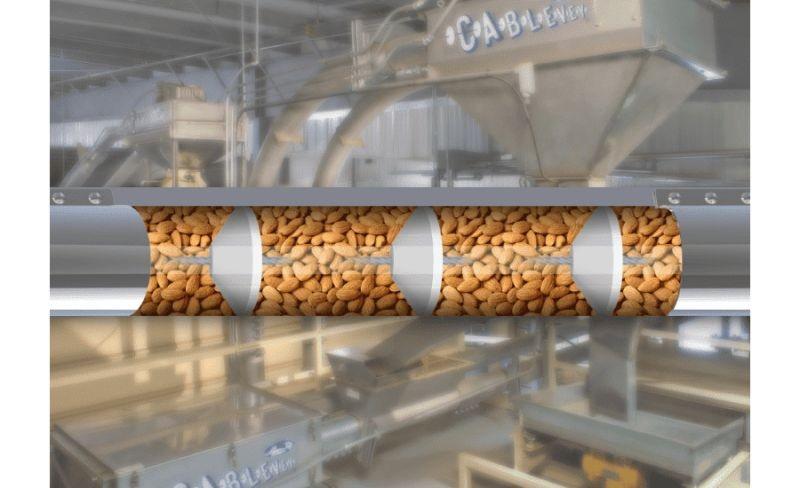
Resistant to high temperatures – Stainless steel can withstand high temperatureswithout being damaged. This means it can be used in applications where the product being conveyed is hot. Resistant to low temperatures – Just as stainless steel can withstand high temperatures, it is also resistant to low temperatures. This means it can be used in applications where the product being conveyed is frozen. Of course, these are not the only benefits of using a conveyor system for food made from stainless steel. Stainless steel is also a very strong material that is able to support heavy loads, making it ideal for use in the food industry. Is a stainless steel conveyor sanitary? To start answering the question of whether stainless steel food processing equipment is sanitary, we first need to understand what the term 'sanitary' means. In the food industry, the term 'sanitary' refers to an environment or piece of equipment that is free from contaminants such as bacteria, viruses, and other microorganisms. This is different from the term 'clean,' which simply refers to the absence of visible dirt. A piece of equipment can be clean but not sanitary, for example, if it has been cleaned with a cleaning solution that is itself contaminated. So, are stainless steel conveyors sanitary? The answer is no – no material is inherently sanitary. However, stainless steel is one of the most hygienic materials that you can use in food handling. This is because it is non-porous and non-absorbent, meaning that bacteria and other contaminants cannot become trapped on the surface. It is also made for easy cleaning and disinfection. That said, even stainless steel conveyors can become contaminated if they are not used and maintained properly. It is important to remember that bacteria and other microorganisms are everywhere – on our skin, in the air, and even on stainless steel. If left untreated, these contaminants can quickly multiply, compromise food safety, and cause foodborne illnesses. This is why it is so important to follow good hygiene practices when using stainless steel conveyors. In particular, you should ensure that the conveyor is cleaned and disinfected regularly, even if it is made of a food-grade material. Cleaning and sanitizing stainless steel conveyors Each facility has its own cleaning and sanitizing procedures developed according to the products being conveyed and the level of contamination risk. However, there are some basic steps that you can follow in cleaning and sanitizing your stainless steel conveyor: Remove loose dirt and debris – The first step is to remove any loose dirt and debris from the surface of the conveyor. The reason why it is important to do this first is that you don't want to spread contaminants around when you are cleaning. You can remove loose dirt and debris by brushing, vacuuming, or using compressed air. Pre-rinse – After you have removed the loose contaminants, you should pre-rinse the conveyor with water. This helps to remove any remaining impurities from the conveyor surface. Apply cleaning solution – Which cleaning agent you use will depend on the type of contaminants present and the manufacturer's recommendations. Rinse – Once you have applied the cleaning solution, you should rinse the conveyor with clean water. This helps to remove any remaining cleaning solution and contaminants from the surface. Inspect – Before sanitizing, you should inspect the conveyor to ensure it is clean. In particular, you should look for any areas that may have been missed during the cleaning process. Apply sanitizing solution – The final step is to apply a sanitizing solution to the conveyor. This helps to kill any remaining bacteria and other microorganisms. Once you have applied the sanitizing solution, you should rinse the conveyor with clean water. Note that some sanitizing agents may not need to be rinsed off, so be sure to check the solution manufacturer's instructions. Increase cleaning efficiency It's no secret that cleaning, sanitizing, and maintaining conveyors can be time-consuming. In fact, according to our State Of Conveying 2022 report, 54% of food processing managers and engineers said that cleaning and maintenance are the most challenging aspects of conveying. Reasons for this include: Downtime – When conveyors are taken offline for cleaning, it can lead to significant downtime and lost productivity. Cleaning frequency – The more often a conveyor is used, the more often it will need to be cleaned. This can make it difficult to keep up with the cleaning times and schedule, especially if the conveyor is in constant use. Complexity – Some food product handling conveyors are more complex than others, which can make them more difficult to clean. For example, some conveyors have many nooks and crannies that can be difficult to reach. Fortunately, there are methods you can use to increase the efficiency of your cleaning process. Have you come across clean-in-place (CIP) mechanisms? Clean-in-place systems A CIP system is a method of cleaning that uses special equipment to clean the interior surfaces of the conveyor without disassembling it. CIP systems are often used in the food and beverage industry, as they are an effective way to clean complex equipment quickly and efficiently. Cablevey offers two main types of CIP systems: Dry cleaning – Using brushes, air knives, urethane wiper discs, and special sponges with sanitizers. Dry cleaning is typically used for conveyors that move material that is not wet or sticky. Wet cleaning – Using water jets, sanitizers, and detergents. Wet cleaning is typically used for conveyors that move wet or sticky material. In this day and age, where every minute counts towards productivity, a CIP system can make a big difference. the conveyor type matter? If you choose a stainless steel conveyor for your food processing plant, does the type of conveyor matter? The answer is yes; of course, it does. The material the conveyor is made of is just one small part of the equation. You also need to consider the environment in which the conveyor will be used and the type of product that will be moved on the conveyor. Here are some common food manufacturing conveyors: Belt conveyor Perhaps the most widespread of all conveyors, belt conveyors are generally used to transport light to medium-weight products. A belt conveyor is composed of a belt that rests on two or more pulleys, which in turn rotate on shafts. The pulleys and shafts are powered by an electric motor. The belt on this type of conveyor can be made from a variety of materials. You can get plastic belt conveyors, rubber belt conveyors, and even metal belt conveyors. Not all of these represent a food-grade conveyor, though. Benefits: Good for fragile materials Can transport a variety of products Drawbacks: Not for steep inclines or vertical conveying Not for wet or sticky products If not enclosed, it poses a high risk of contamination Bucket conveyor Bucket conveyors, or bucket elevators, are composed of a series of buckets that are connected to a belt or chain. The buckets lift materials, such as grain, up to the top of the conveyor, where they are discharged into a chute. Even though horizontal bucket conveyors exist, incline conveyor options are more common, as they take up less space and can be used in a variety of settings. Benefits: Low driving power – energy efficient Good for facilities with small floor plans Good for inclines and vertical conveying Drawbacks: Ridiculously difficult to clean and maintain because of a lot of moving parts Pneumatic conveyor The main principle of material conveying in pneumatic conveyors is entrainment. In this type of conveyor, air is used to move materials through a system of tubes. A blower or a vacuum pump can generate the airflow. Benefits: High conveying speeds Low preventative maintenance and cleaning costs Flexible design – suitable for a variety of settings Drawbacks: Extremely hard on conveyed materials – material damage is common It requires a lot of power to control the speed Can be noisy Tubular chain conveyor A tubular chain conveyor is composed of a chain that runs inside a tube. Circular discs are evenly spaced along this chain, creating space between them for the conveyed material to fit into. The discs move along the tube, propelling the material forward. Benefits: Fully enclosed Can be used for inclines and vertical conveying Gentle conveying Drawbacks: Chain is in direct contact with conveyed material – high risk of contamination Difficult to clean and maintain Tubular cable and disc conveyor We saved the best for last. For specific material types, such as breakfast cereal, snack foods, nuts, beans, coffee beans, rice, and similar, tubular cable and disc conveyors are the best option. These conveyors work on a similar principle as tubular chain conveyors, with one major difference – instead of chains and discs, they use cables and discs. There is no direct food contact with the cable, which decreases the risk of contamination. Also, these conveyors are easier to clean and maintain. Benefits: Fully enclosed Gentle conveying – suitable for fragile materials Extremely low risk of contamination Easy to clean and maintain Drawbacks: Not for viscous or sticky materials Which conveyor to choose? A stainless steel conveyor system is only as good as the application it's being used for. Different conveyors are better suited for different tasks. To help you make a better decision, here are the top considerations you need to take into account: Conveyor type – As we've seen, there are many different types of conveyors. Make sure to choose the one that's best suited to your needs. Material type – Not all materials can be conveyed by all conveyors. Some materials are too fragile, while others are too dense. Make sure that the conveyor you choose can handle your material. Conveyor throughput – The amount of material that needs to be conveyed will play a big role in deciding which type of food processing conveyor to choose. Conveyor size and layout – Not every conveyor is suitable for every facility. The size of your facility and the layout of your production line will play a big role in deciding which conveyor to choose. Some other considerations are the cost of the conveyor, the energy efficiency, and how easy or difficult it is to clean and maintain the conveyor. Go for a sanitary design We've already explained how no material is completely safe from contamination. Even if you choose a food conveyor system that's easy to clean, there's always a risk of bacteria and other germs getting into the food. That's why it's important to go for a sanitary conveyor design. A hygienic design minimizes the risk of contamination. It includes: Easy access for cleaning – The conveyor should be designed in a way that allows easy access for cleaning. All parts of the conveyor should be accessible for cleaning, and there should be no dead spots where bacteria can accumulate. No traps in the conveyor frame – The conveyor frame design has to prevent food from getting trapped in it. All food should be able to fall freely from the conveyor, without getting caught in any nooks or crannies. No areas where water can accumulate – The conveyor should be designed to prevent water from accumulating anywhere on it. All wet areas should drain quickly, and there should be no places where water can pool. No fasteners – Welds should be used instead of fasteners to prevent food from getting trapped in them. It stands to reason that deciding exactly which type of stainless steel conveyor to choose for your food processing facility is a big decision. But with the right information, you can make the best choice for your needs. Conclusion Here are the main takeaways from this article: Stainless steel isn't sanitary by default. But it is an excellent material for conveyors because it's easy to clean and doesn't rust. The cable and disc conveyor is the best type of stainless steel conveyor for food processing applications. These food conveyors are fully enclosed, gentle, and have a low risk of contamination. When choosing an industrial conveyor, consider the type of conveyor, the material you're conveying, the throughput, the size and layout of your facility, and the cost. Make sure to choose a conveyor with a sanitary design to minimize the risk of contamination. A sanitary design includes easy access for cleaning, no traps in the conveyor frame, no areas where water can accumulate, and no fasteners. Ready to buy a stainless steel conveyor for your food processing facility? Cablevey Conveyor  can help you find the perfect one for your needs. Contact Cablevey today to get started By Cablevey Conveyor Source: All Pet Food  

Pet Food Processors 'Test Drive' Conveyors  at World-Class Facility
Conveying Systems

5+ MIN

Pet Food Processors 'Test Drive' Conveyors at World-Class Facility

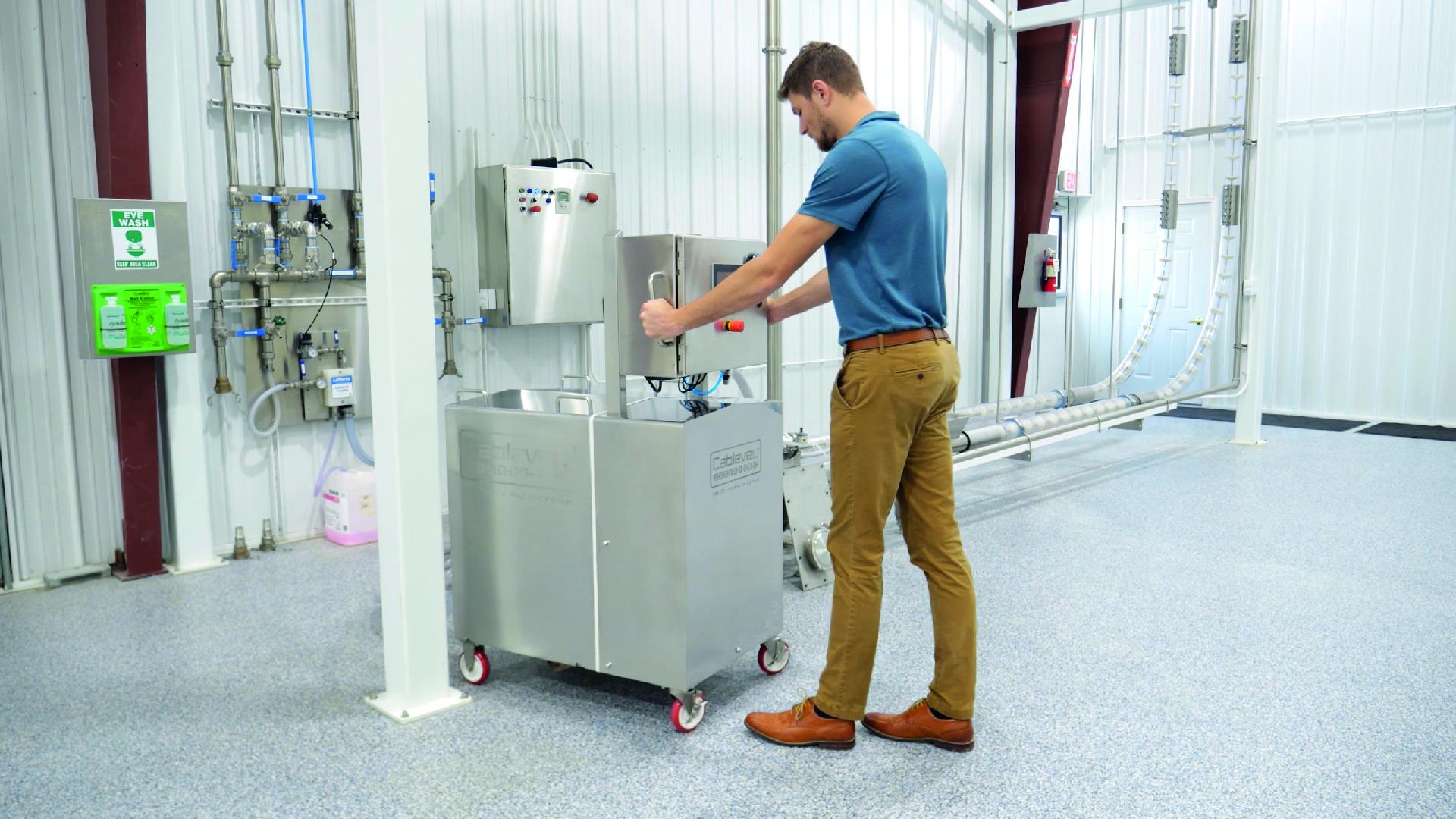
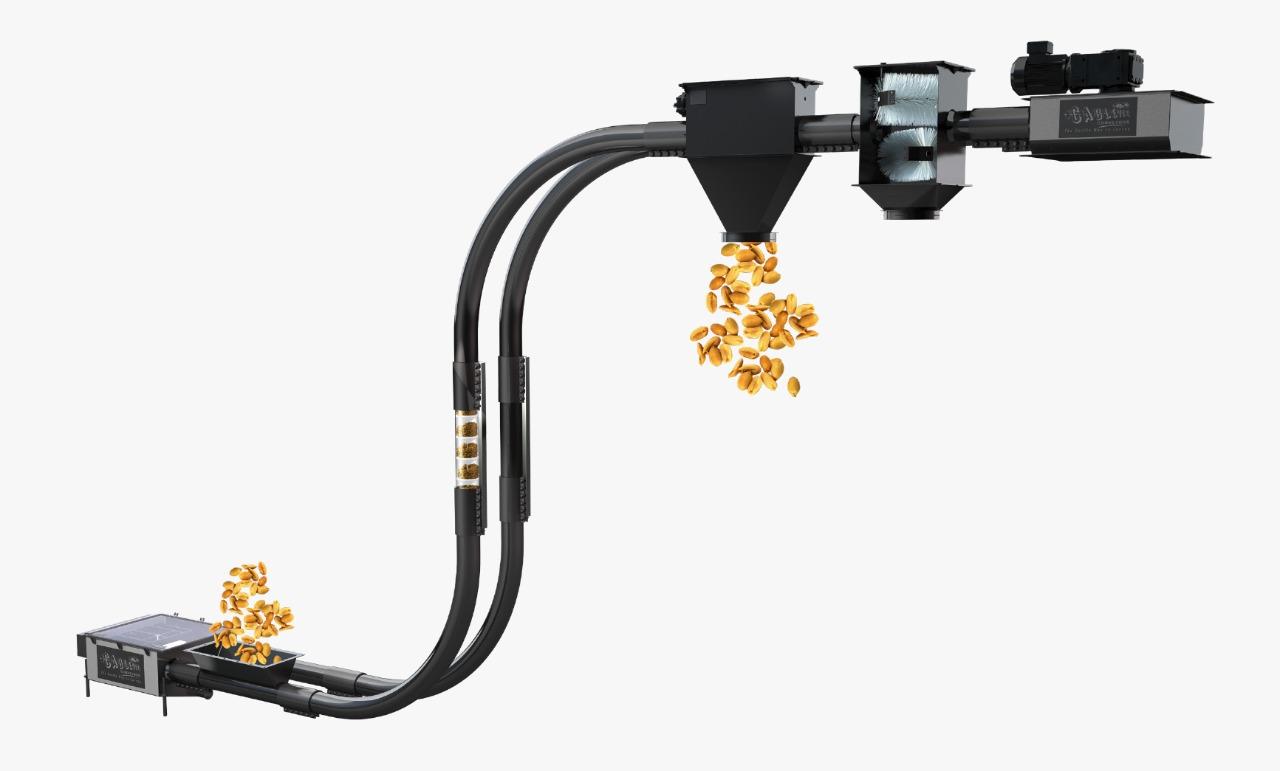
Even when people love the look of a car or SUV, most would not complete a purchase before a test drive to confirm how the vehicle performs on the road. Similarly, today an increasing number of pet food processors are realizing the importance of 'test driving' conveyor equipment at OEM test facilities, which use their actual product to ensure the equipment meets processor quality, flow, and cleaning requirements before they make the purchase. In response, some OEMs have invested in state-of-the-art test facilities that allow pet food processors to run product on the same type of equipment they are considering for purchase, while benefitting from expert consultation to optimize their process. 'We encourage pet food processors to test their products [at our facility] and observe the results to ensure it meets their needs. They can ask questions in real time. They can test for fines or degradation. They can see for themselves how the product flows in the conveyor and how easy it is to clean,' says Larry Van Zee, Executive VP, retired at Cablevey Conveyors, a mechanical conveyor manufacturer that serves the pet food, specialty food, coffee, powder, nut, and frozen food markets. In more than 66 countries, the company has designed, engineered, and serviced enclosed cable and disc tube conveyors for over 50 years. At its full-service product test center in Oskaloosa, Iowa, the OEM has tested more than 1,900 products, including pet food, beans, rice, grains, cereals, coffee, chocolate, and caramel corn peanut snacks, for some of the largest global brands. All products are run through a tubular disc and cable conveying system to observe the effects and fine-tune the results. According to Scott Berning, Cablevey's Product Testing Manager, there are multiple reasons pet food processors decide to visit the test center. 'Customers may have products that we know will run well on tubular cable conveyors, but they want to see it in operation with their own eyes,' says Berning. 'They want to ensure the product will run properly, and their quality department typically checks as part of their due diligence before purchasing equipment.' Berning adds that when Cablevey's applications department designs and quotes a conveyor and the manufacturer lacks sufficient experience conveying a specific product, the email quote states it is 'pending successful product testing.' Some pet food processors want to evaluate tubular cable conveyors against other conveying options they may also be considering, such as bucket elevators or chain conveyors. Others are already familiar with tubular cable conveyors based on experience and want to show their managers that a similar solution could be implemented at their current facility. Once the pet food processor is at the site, Cablevey product specialists and engineers typically consult with the customer to determine their specific goals and issues to be resolved. From this, they can proceed to design a conveyor with a set of features that addresses specific challenges. 'Our technicians and engineers can diagnose and prescribe a solution whether the concern is breakage, temperature, stickiness, abrasiveness or other issues,' says Berning. He notes that when pet food processors test products at the facility, they are provided full documentation of the results, including a detailed report with video and recommendations. According to Berning, testing for product fragility and damage is usually the primary concern of processors. 'No matter the product, pet food processors want to keep their product intact and avoid damage during conveying,' says Berning.  He points out that tubular drag cable conveyors excel at reducing product damage since the units gently move product through a sealed tube using a coated, flexible stainless-steel drag cable pulled through on a loop. Solid circular discs (flights) are attached to the cable, which push the product through the tube without the use of air. These conveyors can transport delicate, precise blends for a wide variety of food types, and up to 2000 cubic feet per hour of materials in versatile layouts and configurations. Still, quality assurance checks can be essential for processors, even those transporting products that seem hard to damage.Reducing product loss and maintenance is also important to pet food processors.  'Processors want to place their material in an inlet and then have all of it emerge from the discharge with minimal losses,' he says. Since tubular cable conveyors are sealed from end-to-end with product traveling one way in enclosed tubes, there is essentially no product loss and no issue with carry-back.' Ease of cleaning the conveyor is also a top priority of pet food processors. Surprisingly, many processors visit the facility to witness how easily the conveyor can be cleaned. 'People come here from across the United States just to watch me perform a conveyor wet-clean and washdown even though it is something I have to do every day,' says Berning. Traditional alternatives like screw conveyors can be difficult to clean and require time-consuming disassembly, as well as some heavy lifting after each product changeover.  'One processor told me that it took six of his technicians about eight hours to clean their screw conveyor system. They had to pull a big auger out of the screw conveyor, which was dangerous to handle,' says Berning. Tubular drag cable conveyor systems offer easier, safer options for dry and wet tube conveyor cleaning. Equipment such as brush boxes, urethane wipers, air knives, inline sponges, and inline bristle brushes can facilitate multi-step, essentially automated Clean-In-Place (CIP) wet cleaning. The wet cleaning process internally cleans the cable conveyor tube in several steps, starting with a water rinse followed by foaming agent, a sanitizing rinse, and a final water rinse. Once the system is thoroughly flushed out, drying is achieved by attaching urethane wipers to the tubular conveyor's discs, which 'act like a squeegee' to remove any residual water. For those unable to visit the test facility in person, Cablevey now offers the ability to view and respond to product testing live in a 'virtual visit' with a link to real-time video and a Zoom meeting type format - an option developed during the COVID-19 pandemic. With this technology, the tubular cable conveyor manufacturer can host both in-person and virtual visits simultaneously, which is helpful when larger work groups such as quality assurance teams have an interest in evaluating the conveyor. 'In one recent product test, a team of four visited our facility in person while twelve others watched virtually,' says Berning.For those who wish to experience the world-class facility in greater detail, Cablevey has created a 360-degree immersive virtual tour of its product test center (https://cablevey.com/test-your-product/).  Embedded within the virtual reality (VR) experience is product information as well as videos. The video library demonstrates how tubular cable conveyors transport different materials such as pet food, coffee beans, grains, bird seed, tea leaves and breakfast cereals. How-to videos illustrate potential layouts, components, technologies, cleaning, and maintenance options.  With easily accessible, advanced product testing facilities, pet food processors can view and verify in real-time that their investment in new conveying equipment will meet their requirements. Processors who 'test drive' their product in this way will not only enhance their product quality and productivity, but also experience a significant advantage over competitors. By Del Williams -Technical writer based in Torrance, California. - Cablevey Conveyor All Pet Food 
 

Boost Profit with Gentle Conveying Without Air
Conveying Systems

6+ MIN

Boost Profit with Gentle Conveying Without Air

To convey such delicate food product, processors should avoid conveyors that may force the fragile material through stressful phases during transport that could impact its integrity, while still meeting high throughput requirements. Given this need, some food processors are reconsidering conveying fragile, high-value products using high-velocity air power through tubes, bends, or sweeps before it is unceremoniously dumped into bins or containers. In the coffee industry, for example, processors go to great expense to roast whole beans. However, the beans can be damaged by high-velocity air conveyance, compromising flavor and aroma, according to Gary Schliebs, a Process Engineer and Director of Plus One Percent…Engineered Solutions, a consulting firm that works in the food industry and markets food industry conveyor equipment globally. When a whole macadamia nut is broken, its value can drop by half. Instead of a premium price for whole nuts, damaged nuts are often sold at a substantial discount, and often crushed for use in cooking or processing further upstream in the food industry. 'Many high-value food products can be fragile and need very gentle handling. Otherwise, whole forms can be broken, crushed to bits, and even turned to powder. This significantly lowers the value of the product, and damaged portions may need to be removed or disposed of to prevent perceived quality issues that could prompt customers to turn to other brands,' says Schliebs. 'In some cases, more than 10% of delicate product can be damaged by high-velocity air-power systems. The cost to the industry is compounded because the damage often comes at the end of the process, after considerable value has been added, only to have it degraded by a poor choice in the selection of transfer conveying equipment,' adds Schliebs, who frequently consults on food engineering equipment design, plant layouts, and process flows. The Limitations of Air Conveyors A wide range of fragile, high-dollar-value food products can be prone to excess breakage when conveyed at high velocity by airpower, such as in pneumatic and aeromechanical systems. Pneumatic conveyor systems utilize air by creating air pressure above or below the atmospheric level. These systems use filters that require regular replacement. The two main types of pneumatic conveyors – dilute phase and dense phase – differ by speed and pressure, and both can be configured as a pressure or vacuum system. In dilute phase conveying, the food product is suspended in the air as it is transported through the conveying pipe at extremely high velocities of typically 3,400-5,000ft/min. While the product usually has minimal breakage during straight pathways, most systems have bends and sweeps where it can be forced through constricted areas, quickly change direction and be damaged. In such cases, high-dollar value food often can be too fragile.     Dense phase pneumatic conveyor systems, where the product is not suspended in air since it is heavy or abrasive, function at lower velocity than dilute phase. However, with air speeds of about 700-1,500ft/min., delicate food items are still susceptible to breakage at bends and sweeps. While aeromechanical conveyors have a different method of conveyance, these enclosed, high-capacity mechanical systems can also degrade delicate product. With these systems, a wire rope with evenly spaced discs within a tube travels at high speed, running in sprockets at each end of the conveyor. This generates an internal air stream traveling at the same high velocity as the discs that carry product along in the tube. However, these conveyors may also force vulnerable materials through stressful phases during transport, which could impair their integrity. 'Any fragile or friable food product conveyed at high velocity is prone to damage, particularly if it changes direction or exits with impact. This can be the case with both pneumatic or aeromechanical conveyors,' says Schliebs. A Gentler Approach Boosts Profitability According to Schliebs, a gentler alternative to protect sensitive, high-value food products is to utilize tubular cable conveyors. These systems move product through a sealed tube using a coated, flexible stainless-steel drag cable pulled through on a loop. Solid circular discs (flights) are attached to the cable, which push the product at low speed through the tube without the use of air, preserving product integrity and minimizing waste. 'Food industry manufacturers can decrease product damage down to 1-2% with a slower process like a Cablevey Conveyors tubular cable system. With it, the product is gently transferred at low speed, so there is minimal to no damage,' says Schliebs. Cablevey Conveyors is an Oskaloosa, Iowa-based premium, specialty material moving, mechanical conveyor company that has designed, engineered, and serviced enclosed cable and disc tube conveyors for almost 50 years, and is in more than 66 countries. 
In the food industry, the conveyors are utilized for products such as nuts, cereal, coffee, snacks, pet food, beans, and seeds. The systems can convey up to 2000 cubic feet per hour (56m3/hr.) of flakes, pellets, shavings, crumbles, granules, regrind, chunks, parts, prills, and powders with numerous layouts using multiple inlets and outlets. Since the material is carried between the flights, it is also much easier to safely convey some sticky or easily compacted materials in a tubular cable conveyor than in air-powered conveying systems, where such materials can form plugs. 'With pneumatic or aero-mechanical conveying systems, any soft or sticky material, like dried fruit, can smear and adhere to surfaces, particularly at bends and sweeps that change direction, which is not an issue with tubular cable conveyors,' says Schliebs. According to him the tubular cable conveyor's modular construction can also help reduce product damage by enabling it to slide out on a gentler gradient, rather than simply drop out, as is more typical with conveyors utilizing air. 'To minimize product damage, it is important for food industry manufacturers to not only transfer gently, but also get product in and out of the conveyor safely and gently as well. That is more achievable with a conveyor like Cablevey that allows product to slide down rather than drop out the end,' says Schliebs. In fact, most tubular cable conveyors have interchangeable components that allow the conveyor to be easily expanded or reconfigured to change the length, conveying path and the number of inlets and outlets. These modifications are more complex and time-consuming with a pneumatic conveying system because it has more components and electrical connections  Also, another bonus of the Cablevey systems is that the 'footprint' can be quite small compared to other conveyor systems, and that really helps with tight and compact manufacturing areas. 'Because of the 'bespoke' design of each Cablevey system for customer specific requirements, we can tailor the design to be very 'non- intrusive' in the work area and not hinder access for people and maintenance, as other systems can. This is a real bonus for safety, access and saving floor space, which is another cost to manufacturing,' said Schliebs. Less energy use, less noise  Since pneumatic systems convey product at high velocity, this typically requires larger, power-hungry motors that run fans, blowers and rotary valves. In a dense phase system, a pressure tank requiring compressed air consumes additional power. In terms of noise level, pneumatic conveying systems also generate considerable noise. Aero-mechanical systems, running at high speed, generate considerable motor and disc noise as well. Given that smaller motors are used, tubular cable systems are quieter overall and utilize much less energy. 'A low-speed tubular cable system is quiet enough to easily have a conversation around it while it is running,' says Schliebs. 'In regards to energy, it utilizes about one-tenth that of pneumatic systems. For dense phase models, the electricity savings by using a tubular conveyor can be sizeable, with 1-year ROI in some cases.' 
  by Cablevey Conveyor

Protect Against Pet Food Recalls with the  Right Conveyor System
Conveying Systems

5+ MIN

Protect Against Pet Food Recalls with the Right Conveyor System

With the threat of contamination from harmful pathogens such as salmonella, listeria, and E. coli a continual concern, pet food processors are seeking to protect not only the public but also their companies' bottom lines from the massive costs, reputational damage, and greater regulatory scrutiny associated with recalls. The goal is a safe, clean, sanitized working environment. According to the FDA's Food Safety Modernization Act (FSMA) Final Rule for Preventive Controls for Animal Food, 'Every facility that produces animal food with a hazard requiring a preventive control must have a recall plan.' (https://www.fda.gov/food/food-safety-modernization-act-fsma/fsma-final-rule-preventive-controls-animal-food). The FSMA Final Rule for Preventive Controls for Animal Food has various key requirements. Among these, covered facilities must establish and implement a food safety system that includes an analysis of hazards and, if necessary, risk-based preventive controls. The rule sets requirements for a written food safety plan that includes details about the facility's hazard analysis and resulting preventive controls. Given the increasing number of outbreaks and recalls traced to post-processing contamination of foods, it is no surprise that the Preventive Controls Rule requires manufacturers to implement a food safety plan with the goal of preventing sanitation deficiencies. The rule covers sanitation practices for food-contact surfaces, preventing microbial and chemical cross-contamination, and monitoring potential environmental pathogens for critical equipment like conveyors. As a result, quality assurance teams are paying more attention to the type and design of conveyance systems used to help meet pet food safety standards. This includes identifying potential harborage points where debris and pathogens can collect, as well as implementing best practices to save on costs to clean equipment, perform regular testing, and maintain the environment.  'Every day we are asked for recommendations about the sanitary design of equipment,' says Justin Kerr, founder of Factor IV Solutions, LLC, a food safety consulting firm that has worked with hundreds of food processors and harvesting operations throughout North America. 'With conveyors, ideally there should be minimal harborage points, they should protect products from the environment, and be easy to clean.'  Kerr says Factor IV Solutions assists food processors to develop Sanitation SOPs (SSOP:  Sanitation Standard Operating Procedures) related to conveyors that include regular verification testing of food contact and non-food contact surfaces. However, given the risks of contamination, the potential for recalls, and the additional costs associated with regular cleaning and testing, it's advisable to select a conveyor that eliminates many of the potential risk factors. Selecting a Conveyor System  In the pet food processing industry, open conveyor systems like bucket elevators and belt conveyors can be more vulnerable to contamination. With open systems, products can be exposed to pathogens, contaminants, or moisture in the surrounding environment. Product can also spill onto the plant floor and make its way into drains. Consequently, processors that use such conveyors must maintain strict environmental controls including constant swabbing, testing, and quality assurance.  Closed conveyor systems, on the other hand, effectively seal off products from the outside environment. Even then, it is still necessary to control the environment. Although there are several types of closed systems, one popular example when conveying high-value foods is tubular drag cable conveyors. These systems gently move products that are prone to breaking or crumbling through a sealed tube using a coated, flexible stainless-steel drag cable pulled through on a loop. Solid circular discs (flights) are attached to the cable, which push the product through the tube without using air. The coated cable ensures that no debris accumulates within the strands of the cable, as the cable is totally sealed.  'An enclosed conveyor like the Cablevey provides a controlled environment that reduces the risk of exposure to contaminants and pathogens from outside the system when properly maintained,' says Kerr. 'Because it is closed, it is less susceptible to aerosols and over spray from adjacent lines.'  Oskaloosa, Iowa based-Cablevey Conveyors is a specialty conveyor company that has designed, engineered, and serviced enclosed cable and disc tube conveyors for over 50 years, with installations in over 65 countries. The company's product can be as small as powdered material or as large as whole potatoes, and is increasingly used to convey pet food, coffee, cereal, nuts, produce, and specialty foods. 'When we conducted trials and verification testing, we found that tubular cable conveyors maintain greater repeatability cleanliness over a longer period of time than open systems due to the controlled environment within the enclosure,' says Kerr. Additionally, Kerr notes that closed conveyors significantly reduce potential harborage points for contamination.  'Tubular drag cable conveyors are very simple in construction, without standard joints, threaded bolts, and plastic-to-metal connections,' says Kerr.  Superior Cleaning Kerr points out another advantage: the enclosed conveyors also enable a 'wet cleaning' process without wetting the surrounding areas, in which the systems can be quickly and effectively flooded with water and sanitized without disassembly. While not all pet food processing materials are suited to wet cleaning, such as hygroscopic materials that readily absorb and retain moisture, the process minimizes potential contamination for other types of food. The wet cleaning procedure begins with a water rinse followed by foaming agent, a sanitizing rinse, and a final water rinse. Once the system is thoroughly flushed out, drying is achieved by attaching urethane wipers to the tubular conveyor's discs, which act like a 'squeegee' to remove any residual water. 'Within the tubular system, all wash factors can be repeatably controlled – water chemistry, temperature, physical action, and time – so every surface is equally cleaned,' says Kerr. He notes that clear tubes are available that offer the additional benefit of visual inspection or verification. Since a complete and thorough cleaning can be accomplished without disassembly of the system, the entire process only takes 20-90 minutes, depending upon the layout, product, and desired level of cleanliness. This can substantially reduce disruptions and downtime during production changeovers and eliminate the need for additional dedicated conveyor lines. Regular cleaning can be automated through the plant's distributed control system.  'A benefit of Cablevey is the repeatability and verification of surfaces cleaned and the ease of maintaining them,' says Kerr. 'You can do verifications against cleanliness and hold [the cleanliness] over a greater period of time.'  When a pet food processor wants to ensure that a conveyor will meet its sanitation requirements, equipment suppliers like Cablevey often allow quality assurance teams to perform tests prior to purchase.  'Sometimes customers come to our test lab so they can run product and conduct swab tests before and after wet cleaning and review the results for themselves,' says Morgan Bailey, Communication Specialist at Cablevey Conveyors.  In the pet food processing industry, the stakes are high when it comes to preventing safety issues. With the threat of contamination from harmful pathogens always a concern, processors are seeking to protect both the public and their companies' bottom lines from the massive costs associated with recalls. As a result, quality assurance teams are analyzing the type and design of conveyance systems more closely.  Enclosed conveyors that are capable of automated wet cleaning can help mitigate risk and prevent many safety issues. These conveyors provide an extra level of protection by keeping debris and pathogens from collecting. They also save on costs by eliminating the need for manual cleaning. As processors continue to seek ways to improve safety, enclosed conveyors will become an increasingly popular choice. by: Del Williams, Cablevey Conveyors All Pet Food 

Industrial transport
Conveying Systems

8+ MIN

Industrial transport

Before beginning to describe the different types of transports, that exist nowadays in industries, with their advantages and disadvantages, it is important to understand the meaning of transportation: transportation is the means by which objects, products, materials, people or data, are moved from point A to point B. Transport is part of the logistics and material handling of a company, and is carried out in all activities of the value chain, but it does not add value, but rather the opposite: it has associated costs. For this reason, it is very important that the materials transportation is as efficient as possible, with the main objective of optimizing the product value chain. When talking about transport, it is necessary to consider different important points to determine which is the most appropriate system that adapts to the company situation and needs, for example: Product specifications Production line requirements Cleaning, safety and hygiene requirements Lay out and plant spaces Risk of dust explosion With product specifications we refer, first of all to which product is to be moved, the particle size, temperature, humidity and density, whether it is easy or difficult to flow and if it is or not abrasive. Other product characteristics are its angle of repose, rearrangement and inclination. Related to the second point, it is essential to define what is the required capacity, if the transport will be continuous, batch, intermittent and its hours of operation. Additionally, it is important consider the product care, either because it is fragile, has a high degree of explosiveness, it emits gases or because it can be corrosive. After this brief introduction, we will focus on some of the different types of transport that exist today, we will describe their main characteristics, advantages, disadvantages and applications, mainly in Pet Food, Aqua Feed and Animal Feed industry, considering the raw materials and the final product.   Tubular Conveyors Tubular conveyors move the products by means of teflon disc that are joined by a taut cable that pulls the movement, the whole set is inside a continuous tube avoiding cross contamination. ​ Main advantages are: it is an extremely clean equipment, easy to maintain, efficient (low energy consumption), it preserves the homogeneity of the product and there is a wide range of capacities and sizes, it is the ideal type of transport when it comes to delicate products that must maintain their structure protecting them, it is a safe system for food. We must highlight the great flexibility to the plant spaces that the tubular conveyor has, allowing to connect a load and a discharge in different industrial buildings, with angles and inclinations that other conveyors do not have the capacity to do. The disadvantages of tubular conveyors are: they are not suitable for abrasive products, their high cost and in special cases, when distances are long, is it necessary to install two or more equipment in series. As mentioned above, these systems have an excellent application for the finished product of Pet Food, Aqua Feed and Animal Feed industries, because it is transported in a delicate way, maintaining the structure of the pellet. It can also be used for the movement of raw materials, as long as they are not abrasive. With the installation of the tubular conveyor, the manufacturer ensures excellent performance and a high-quality final product.   Z Conveyors The second equipment to be analyzed is the Z conveyor, it is named for its zeta shape, although also, depending on the layout of the plant, it can be designed in a C shape or with different inclinations for loading, lifting and unloading materials; these systems stand out for being systems with high transport capacities and that achieve very wide routes of long distances. The advantages of these systems are: equipment that adapt to the plant space with vertical and horizontal arrangements, low maintenance cost and avoid cross contamination of products. The disadvantages that these systems have are: the high investment cost, depending on the material of the buckets, the risk of wear when the product is abrasive and, in some cases, the high to medium levels of energy consumption. These equipment are mainly used to transport granular and solid materials, being suitable for the transfer of animal feed.   Bucket Elevators Bucket elevators are very high-capacity conveyors, used today in the industry, mainly for lifting and ​ transferring raw materials from one site to another. When it comes to finished product, these equipment are not recommended due to their high degree of breakage. The elevators have, as traction of movement, a band or a chain where the buckets are joined, there the material is loaded and transferred to the corresponding unloading point. Its two main advantages are: its large capacity and its relatively low investment cost (in relation to other conveyors analyzed in this article). As negative points, bucket elevators have: little flexibility, difficult maintenance and do not prevent cross contamination of products or materials.   Pneumatic Conveying (dense phase) Another well-known and widely used transport is the dense phase pneumatic, where the force of the air acts for the movement (it is used for flowable products). The transport is divided into two types: Pressurized: used mainly to transport fragile or abrasive materials, at low speeds and long distances. The movement is generated from the 'push' of compressed air that forces the material to move to the destination point. ​ Vacuum: in this second case the distances are short. A vacuum is generated by means of a pump and "sucks" the product to transfer it. The main advantages of these equipment are: tightness, so that no waste of the material or emissions are expelled into the environment, the handling of the product is soft and delicate, so the product is damaged very little and it´s flexibility to the layout of the plant. Among the disadvantages of pneumatic transport, we find that not all products can be transported, there are limitations with the size of the particles, the maximum transport capacity and in some cases the distances, finally, the energy consumption is not less and the wear suffered mainly by the curves of the system. For the transport of raw materials, it is not profitable due to the cost of the equipment, while for the final product it is usually used by companies, despite the small damage that the croquettes suffer.   Pneumatic Conveying (diluted phase) Continuing with pneumatic transports, we have the diluted phase transport. It is a more direct method and the materials move dissolved along with the air flow. Like the previous case, these systems are also divided in two types: ​ Pressurized: a high volume of compressed air is supplied at low pressure to generate the movement of the products. It is commonly used to get the product from a one point to multiple destinations. Vacuum: it works in the opposite way; with a pump the vacuum is generated to carry out the product. A great advantage that the transport has is that important distances are achieved with wide flexibility, high transport capacity and its investment cost is accessible, while its negative aspects are its large consumption of electricity and there is a risk of cross contamination of products or raw materials. They are used for bulk raw materials where the breakage is not relevant. This break occurs because the materials are suspended in the air and in contact with the pipe, generating friction that affects its homogeneity. Therefore, when we refer to the transport of animal feed kibbles, it is not a recommended system.   Screw Transport The next transport to analyze is the screw transport, it is one of the simplest that exist today in industries due to its easy manufacturing process and its accessible price. The screws are fed through one or more mouths and the material is moved to the discharge (s) by means of the screw. The screws are very useful for the discharge of silos in the dosage on scales, where the variable flight is usually used to avoid the compaction of the product. However, when we talk about the transport of animal feed kibbles, the screws are not recommended because it can damage them, generating breakage of kibbles and dust, for this reason the screws are not recommended for the final product. However, they are considered for the move of raw materials, although the short distance from one point to another is considered as a limitation. The advantages that can be mentioned of these systems are: their low investment cost and simple installation. While the disadvantages that stand out is its null flexibility for being a robust system, as mentioned above the high probability of breaking the transported material, in many cases its difficult maintenance and its low capacity.   Belt Conveyors Belts Conveyor are the most common types, as is screw transport. The movement occurs on the belt, which moves thanks to the rotation of the rollers where it rests. Although the operation seems to be simple, today there are great innovative technological developments. The positive aspects of these equipment are: versatility and adaptability to a wide range of products with great transport capacity, according to the technological level it is considered as a low-cost equipment, significant distances traveled are achieved and it has a low consumption of electrical energy. Furthermore, by including "floating" sections on load cells and belt speed control, it is possible to measure and gravimetrically control the flow of product to be transported. As all the equipment mentioned above, this one also has disadvantages, for example damage to the rollers and belt, possible slippage, misalignment and it is not a very flexible system. Currently several industries use these systems for transportation, however, it is necessary to consider when raw materials are transported because the air can be polluted and when finished products are transported there can be cross contamination.   Chain Conveyors Another interesting transport to consider when planning an investment project is the 'redler' or chain conveyor, the traction is from the chain that moves the modules for the move of materials. The most notable advantage is its high transport capacity and the distances that can be achieved. While among its disadvantages are the frequent replacement of the sprockets due to their high wear, their high energy consumption, their almost zero flexibility and only slight inclinations can be applied. Its use for the transfer of animal feed pellets is questioned because product can accumulate between the chains, which would generate a source of bacteriological formation, in addition to the high probability of breakage of the pellets. Not everything is negative in these transports, because when raw materials must be moved, it is one of the most recommended and used systems for industries having an accessible price. We will make a conclusion with ponderation of each of the analyzed transports considering the points seen and the following assessment: We can conclude that, after analyzing each of the main aspects and characteristics of the different conveyors with their advantages, disadvantages and applications in the animal feed industry, among the most suitable and recommended systems are the Tubular and Z Conveyors. Despite the differences, they all have a good score, so it is key to understand the purpose of their installation, each of the points studied must be considered, its necessary to evaluate the cost / benefit ratio and determine which system is indicated for the existing necessity.   At Clivio Solutions we are at your entire disposal to evaluate and recommend the appropriate type of transport for each of your needs, it will be a pleasure to help you. We await your inquiries by email or by WhatsApp at +54 -9-2352-540040.   Source: Clivio Solutions