4 min reading
Beyond Meat: Harnessing the Power of Phytonutrients for Optimal Health
In recent years, the pet food industry has seen a surge in high-protein meat-based diets for dogs, often marketed as “biologically appropriate” or “ancestral.” These diets emphasize whole prey concepts, incorporating muscle meat, organs, and bone to mimic what canines would consume in the wild. While all that protein sounds tasty for our dogs, we shouldn’t overlook the quiet world of “non-essential” plant-based compounds.
In recent years, the pet food industry has seen a surge in high-protein meat-based diets for dogs, often marketed as “biologically appropriate” or “ancestral.” These diets emphasize whole prey concepts, incorporating muscle meat, organs, and bone to mimic what canines would consume in the wild. While all that protein sounds tasty for our dogs, we shouldn’t overlook the quiet world of “non-essential” plant-based compounds.
It's important to recognize that the term "non-essential" refers to the body's ability to synthesize these compounds or function without them. However, their inclusion in the diet may enhance quality of life and may make that little bit of difference in prevention!
In the realm of canine nutrition, the focus has traditionally been on essential nutrients—those compounds that dogs cannot synthesize and must obtain through their diet. However, a growing body of research suggests that non-essential nutrients, particularly phytonutrients found in plant-based ingredients, may offer significant health benefits for our canine companions.
The Silent Power of Plants
Phytonutrients are bioactive compounds produced by plants to protect against environmental challenges like pests and ultraviolet radiation. In canine diets, these compounds are primarily sourced from fruits, vegetables, grains, legumes, nuts, and seeds. Unlike essential nutrients, phytonutrients are not required to sustain life but may contribute to optimal health by supporting various physiological functions.

For example, in the wild, wolves don't just eat meat—they consume the entire prey, including the stomach contents filled with digested plant matter. This means that while your dog may be domesticated, its body still benefits from these plant-based nutrients.
What Do Phytonutrients Do?
Phytonutrients act as nature's free health beneficiary, and often have very fancy names such as carotenoids, polyphenols, flavonoids and phytosterols. They each contribute unique benefits to body weight, metabolism, cardiovascular health, immunity, joint health, cognition, and skin health, with much still left to be discovered.
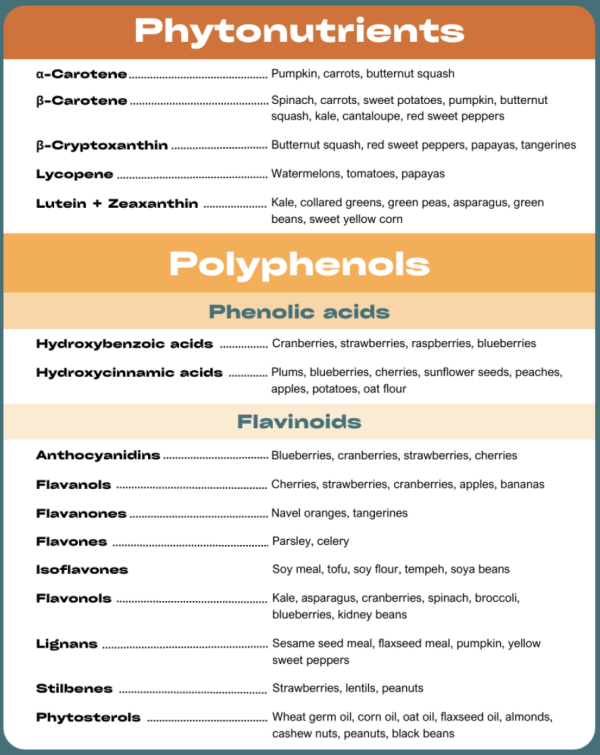
This table provides a comprehensive overview of various phytonutrients and their impact on canine health.
Source: Tanprasertsuk, J., Aldrich, G., & Shmalberg, J. (2022). Roles of plant-based ingredients and phytonutrients in canine nutrition and health. Journal of Animal Physiology and Animal Nutrition, 106(2), 586–613.
Carotenoids
Carotenoids, such as β-carotene, lutein, and lycopene, found in vegetables like spinach, carrots, and pumpkin, play a significant role in immune function, skin health, and antioxidant protection. Research shows β-carotene enhances immune response in dogs, while lutein supports vision and cognitive function. Lycopene, found in tomatoes, has shown promise in reducing cancer cell proliferation.

Polyphenols
Polyphenols, including flavonoids and phenolic acids, are present in fruits like blueberries, cranberries, and cherries. These compounds have been linked to improved cardiovascular health, reduced oxidative stress post-exercise, and enhanced gut microbiota composition. Green tea polyphenols, for instance, have demonstrated benefits for insulin sensitivity and weight management in dogs (as long as it's decaffeinated).
Phytosterols
Phytosterols, primarily found in oils like wheat germ, flaxseed, and oat oil, contribute to cholesterol regulation and cardiovascular health. Studies suggest that beans rich in phytosterols may help reduce cholesterol levels and triglycerides in dogs. Overall, these plant-based nutrients provide essential health benefits beyond basic macronutrients. Including a variety of vegetables, fruits, and functional foods in a dog's diet can enhance longevity, immune function, and overall well-being.
Potential Health Benefits
There are several areas where phytonutrients may positively impact canine health:
- Immune Support: Certain phytonutrients possess anti-inflammatory and antioxidant properties, potentially bolstering the immune system and aiding in disease prevention.
- Gastrointestinal Health: Dietary fibers and specific phytonutrients can promote a healthy gut microbiome, enhancing digestion and nutrient absorption.
- Cognitive Function: Antioxidant-rich phytonutrients may help mitigate oxidative stress, potentially preserving cognitive function as dogs age.
- Cardiovascular Health: Some plant compounds have been linked to improved heart health, possibly by supporting healthy blood lipid levels and vascular function.
Don't Ignore Your Vegetables

Dog's bodies are designed to utilize a variety of nutrients, including those from plant sources. In fact, research suggests adding vegetables to a dog's diet can reduce the risk of cancer and may improve overall longevity. An epidemiological study by Raghavan et al. (2005) published in the Journal of the American Veterinary Medical Association found Scottish Terriers that consumed yellow-orange and green-leafy vegetables at least three times a week had a significantly lower risk of developing bladder cancer.
While essential nutrients are critical for basic survival, non-essential nutrients like phytonutrients can play a pivotal role in promoting overall well-being. Incorporating a diverse array of plant-based ingredients into canine diets not only ensures a broad spectrum of phytonutrient intake but also aligns with holistic approaches to health maintenance.
Non-essential nutrition needs further research to establish more definitive guidelines regarding the types and amounts of phytonutrients beneficial to dog health and longevity. This may be just as important and the original research conducted to define minimum nutrient requirements. While preliminary findings are promising, more controlled studies are necessary to fully understand the mechanisms through which these compounds exert their effects and to identify optimal dietary sources and dosages.
A Balanced Approach to Canine Nutrition
Incorporating plant-based ingredients rich in phytonutrients into canine diets represents a proactive approach to health that goes beyond meeting basic nutritional requirements. As research continues to unveil the multifaceted benefits of these compounds, pet owners and nutritionists are encouraged to consider the potential advantages of a diet that embraces the full spectrum of nutrients—both essential and non-essential—to support the vitality and longevity of our canine companions.
By Dr. Blaire Aldridge, MS, PhD, PAS
Source: BSM Partners
You could be interested: Keeping the Doctor Away With Algal Omega-3s Each Day


Events

IBERZOO PROPET
11 to 13 March, 2026
Madrid, España
https://www.ifema.es/iberzoo-propet

Simposio CS Petfood & Aquafeed
15 to 16 April, 2026
Pilar, Buenos Aires, Argentina
https://www.cliviosolutions.com/

PET FOOD FORUM KANSAS
27 to 29 April, 2026
Kansas City, Missouri, USA
https://www.petfoodforumevents.com/

interpack
07 to 13 May, 2026
Düsseldorf, Alemania
https://www.interpack.com/

Smart Pet Food Production
11 May, 2026
Sheraton Carlton Nürnberg
https://www.petfoodcompetencenet.com/events/

Interzoo 2026
12 to 15 May, 2026
Nuremberg, Germany
https://www.interzoo.com/en

FENAGRA 2026
12 to 14 May, 2026
Santana – São Paulo
https://www.fenagra.com.br/

XXIV CONGRESO DE PET DE LA CBNA
12 to 14 May, 2026
São Paulo Expo, Brasil
https://www.fenagra.com.br/congresso/cbna-pet/

EXPO PACK México 2026
02 to 05 June, 2026
Ciudad de México, CDMX.
https://www.expopackmexico.com.mx/

VICTAM 2026
02 to 04 June, 2026
Utrecht, Países Bajos
https://victaminternational.com/

VIV Europe 2026
02 to 04 June, 2026
Utrecht, the Netherlands
https://www.viveurope.nl/

Foro Mascotas 2026
24 to 26 June, 2026
Expo Guadalajara, Mexico
https://www.foromascotas.mx/en

Pet South America 2026
12 to 14 August, 2026
São Paulo Expo, Brazil
https://petsa.com.br/

Pet Fair Asia 2026
19 to 23 August, 2026
Shanghai, China
https://en.petfairasia.com/

CIPAL 2026
23 to 24 September, 2026
Buenos Aires, Argentina
https://cipal.com.ar/?lang=en

PETZOO Eurasia
07 to 10 October, 2026
İFM- İstanbul Expo Center
https://petfuari.com/en/

SINPET 2026
15 to 16 October, 2026
Porto Alegre, Brazil
https://www.instagram.com/sinpet2026/

FIGAP 2026
21 to 23 October, 2026
Guadalajara, Jalisco, Mexico
https://figap.com/

Pet Fair South East Asia
28 to 30 October, 2026
Bangkok, Thailand
https://petfair-sea.com/
Advertising