4 min reading
Food, Defecation, and Environment: A Glance to Improve the Impact (Part 1)
Brazil has an increasing number of dogs (67,8 million) and cats (33,6 million), a number expected to grow (ABINPET, 2024). Consequently, the amount of animal waste grows, which causes health diseases and environmental impacts.
Brazil has an increasing number of dogs (67,8 million) and cats (33,6 million), a number expected to grow (ABINPET, 2024). Consequently, the amount of animal waste grows, which causes health diseases and environmental impacts.
Pet feces transmit bacterial and parasitic diseases (Cinquepalmi et al. 2013), but there has been little discussion about its impact. With the emerging focus on sustainability to meet the 2030 calendar and the SDL (ONU, 2015), this aspect can be widely considered.
Although there are programs that promote the collection of pet feces in public areas and alternatives to manage this kind of waste, such as composting and anaerobic digestion (Martínez-Sabater et al. 2019), we still do not know its impact, especially those managed in Brazilian homes.
This waste significantly contributes to the environmental fingerprint for pet ownership since nitrogenated waste from defecation —in great numbers and non-neutralized— can be toxic to the environment (Hobbie et al. 2017).
Social media and local governments know this waste harms the environment, but there is not enough scientific data about its real impact. It is necessary to use appropriate research tools to correctly understand its flows and emissions to find the best way to manage and reduce the effects of dog and cat defecation.

Dog/Cat Defecations and Sustainability: Their Relationship
Sustainability involves environmental, social, and economic aspects that ensure resources are available for future generations.
In Brazil, pet feces are commonly thrown away in the sewage system or in the garbage to be collected by governmental programs or leave them in the open air where they decompose.
Water waste is usually treated to reduce pollutant loads of waste; however, feces in the garbage, outdoors, or collected by local governmental programs increase the amount of organic solid urban waste (SUW) that ends up in landfills and is the main responsible for methane emissions.
The aforementioned information means a challenge. The Greenhouse Gas Emissions and Removals Estimates (SEEG in Portuguese) include the following goals in their 2030 calendar: reduce almost 14% of organic waste in landfills, recover 50% of methane generated in these landfills, and improve the recovery of animal waste methane (SEEG, 2022).
In 2023, 2,300 million tons of SUW were generated globally; by 2050, this number will reach 3,800 tons (PNUMA, 2024). Managing this waste cost 252,000-361,000 million dollars in 2020 (Figure 1). In Brazil, around 77,1 million tons of SUW were generated in 2020, with estimated costs of R$ 29,2 billion (ABREMA, 2023). That indicates that the generation of solid urban waste affects the environment, society, and the economy.

In Brazil, almost 50% of SUW is organic waste from pets though the concrete amount is not clear. Documenting these numbers and potential emissions can help to enhance the management of waste and reduce the impact and costs, contributing to the SDLs.
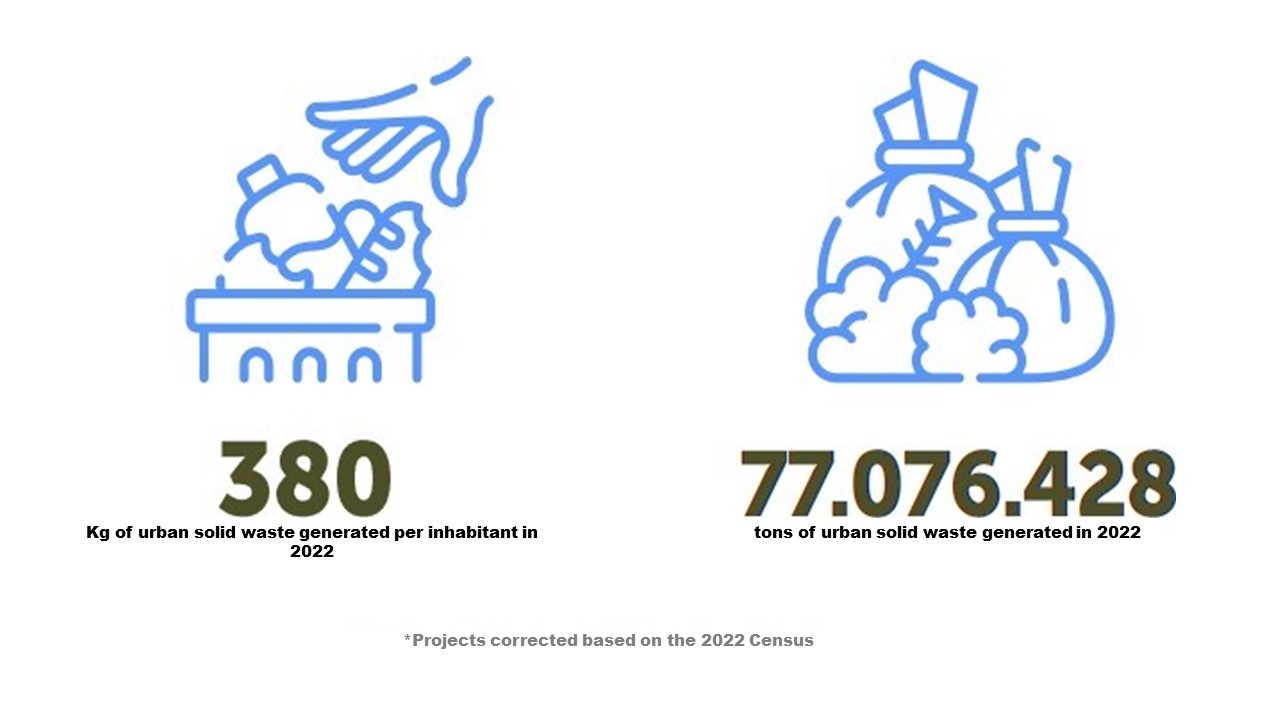
Figure 1: SUW generation in Brazil (2022). Published by ABREMA (2023).
Pet waste and sustainability are also related to the amount of nitrogen (N) and phosphorus (P). These waste and nutrients highly risk most species living on this planet since they are non-neutralized and appear in great amounts. Related to nitrogen, it can raise pollutant gases in the air, reduce vegetal digestion, and pollute urban water. On the other hand, P is essential for animal nutrition and can contaminate fresh water, which is increasingly rare (Rezende et al. 2022).
Due to nutritional and physiological aspects, pets, mainly cats and dogs, can release large amounts of N and P to the environment (Ritchie & Roser, 2020). Dogs are facultative carnivore animals, and cats are obligatory carnivores, which need a diet rich in total and animal proteins (NRC, 2006; Rousseau et al. 2019; FEDIAF, 2021) and, at the same time, have high excretion of nitrogen waste.
As consumers purchase according to the protein level on the label, without knowing pets' nutritional protein and amino acid (AA) needs (Singh et al. 2024), pet food industries commonly formulate food with high-protein levels and with high-quality ingredients that compete with human nutrition (Swanson et al. 2013; Okin, 2017; Su and Martens et al. 2018).
High ingestion of proteins in dogs and cats promotes high AA oxidation to eliminate excess. On the other hand, maintaining body condition score in adult dogs and cats depends on the non-restriction of proteins in food practices (Li and Wu, 2024). In addition, pet fecal and urinary excretion can contain other waste, such as plasticizers (Li and Kannan, 2024), but their effect on the environment and human health are not known.
These factors show the relationship between pet waste and sustainability, highlighting the importance of studying this topic in Brazil. The appropriate characterization of feces and urine impact is a way to cooperate with strategies aimed at mitigating the problem and maintaining the future sustainability of agriculture.
In the second part of this article, we will provide information about the Life Cycle Assessment (LCA), a useful approach to analyze how products and processes impact the environment which includes pet waste production in Brazil, standardizing these processes to help sustainable decision-making.

By: Jéssyka Laura Galdino Costa, Ricardo Souza Vasconcellos (Universidad Estatal de Maringá - Brasil), Fernando José González González (Universidad de la Salle - Colombia).
Source: All Pet Food Magazine
You could be interested: 5 Impactful Insights from the 2025 State of Sustainability in the Pet Industry Report

Sustainability

25/06/2025
Sustainable Pet Nutrition: Reducing the Carbon Footprint in the Supply Chain
By

Events

IBERZOO PROPET
11 to 13 March, 2026
Madrid, España
https://www.ifema.es/iberzoo-propet

Simposio CS Petfood & Aquafeed
15 to 16 April, 2026
Pilar, Buenos Aires, Argentina
https://www.cliviosolutions.com/

PET FOOD FORUM KANSAS
27 to 29 April, 2026
Kansas City, Missouri, USA
https://www.petfoodforumevents.com/

interpack
07 to 13 May, 2026
Düsseldorf, Alemania
https://www.interpack.com/

Smart Pet Food Production
11 May, 2026
Sheraton Carlton Nürnberg
https://www.petfoodcompetencenet.com/events/
Interzoo 2026
12 to 15 May, 2026
Nuremberg, Germany
https://www.interzoo.com/en

FENAGRA 2026
12 to 14 May, 2026
Santana – São Paulo
https://www.fenagra.com.br/

XXIV CONGRESO DE PET DE LA CBNA
12 to 14 May, 2026
São Paulo Expo, Brasil
https://www.fenagra.com.br/congresso/cbna-pet/

EXPO PACK México 2026
02 to 05 June, 2026
Ciudad de México, CDMX.
https://www.expopackmexico.com.mx/

VICTAM 2026
02 to 04 June, 2026
Utrecht, Países Bajos
https://victaminternational.com/

VIV Europe 2026
02 to 04 June, 2026
Utrecht, the Netherlands
https://www.viveurope.nl/

Foro Mascotas 2026
24 to 26 June, 2026
Expo Guadalajara, Mexico
https://www.foromascotas.mx/en

Pet South America 2026
12 to 14 August, 2026
São Paulo Expo, Brazil
https://petsa.com.br/

Pet Fair Asia 2026
19 to 23 August, 2026
Shanghai, China
https://en.petfairasia.com/

CIPAL 2026
23 to 24 September, 2026
Buenos Aires, Argentina
https://cipal.com.ar/?lang=en

PETZOO Eurasia
07 to 10 October, 2026
İFM- İstanbul Expo Center
https://petfuari.com/en/

SINPET 2026
15 to 16 October, 2026
Porto Alegre, Brazil
https://www.instagram.com/sinpet2026/

FIGAP 2026
21 to 23 October, 2026
Guadalajara, Jalisco, Mexico
https://figap.com/

Pet Fair South East Asia
28 to 30 October, 2026
Bangkok, Thailand
https://petfair-sea.com/
Advertising