









9 min reading
Food, Defecation and Environment: A Glance to Improve the Impact (Part 2)
The Life Cycle Analysis (LCA), recommended by ISO Standard 14040 and other international organizations, is defined as “the collection and evaluation from cradle-to-grave and possible environmental impacts of a product system, which analyzes processes from the raw material procurement to the product shelf-life expiration” (ABNT, 2009).
The Life Cycle Analysis (LCA), recommended by ISO Standard 14040 and other international organizations, is defined as “the collection and evaluation from cradle-to-grave and possible environmental impacts of a product system, which analyzes processes from the raw material procurement to the product shelf-life expiration” (ABNT, 2009).
Life Cycle Analysis in Dog and Cat Ownership and the Defecation Production
As we mentioned in the article in the last issue, we provide further information about this tool, which has become an interdisciplinary research field with great potential for scientific and technological production. The Brazilian LCA has been spread in the academic area, industries, and the government, which supports the green label program and the Environmental Product Declaration. In Brazil, among the studies applying the Life Cycle Analysis are those on agriculture, livestock, and product development (Souza et al. 2017).
Even though in Brazil there has been increasing research about LCA use and its implementation in companies during the last few years, there is still a big field of study and opportunities to be explored. For example, regional environmental impacts related to dogs and cats' environmental footprints and their effects have not been analyzed with this approach.

Costa et al. (2024) used the LCA to evaluate dry food impact in Brazil considering the following stages: food manufacturing, packaging production, and product distribution (from the industry to the sales process). They found that food formulation provides almost 70% of the available impact (Figure 2), which mainly contributed to the impact of soil and marine eutrophication, acidification, particulate material, and climate change —that represents 80% of the total environmental impact of raw material selection (Figure 3). LCA activities involving product consumption were not studied.
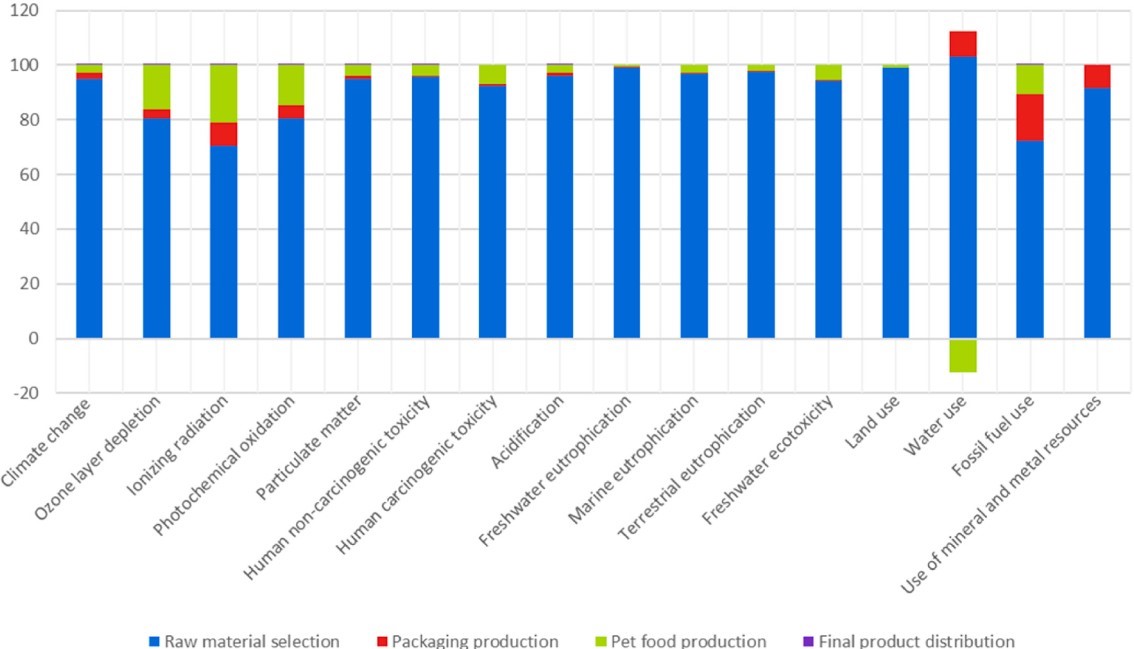
Figure 2: Contribution (percentage) of each stage in pet food manufacturing and environmental impacts. Published by Costa et al. (2024).
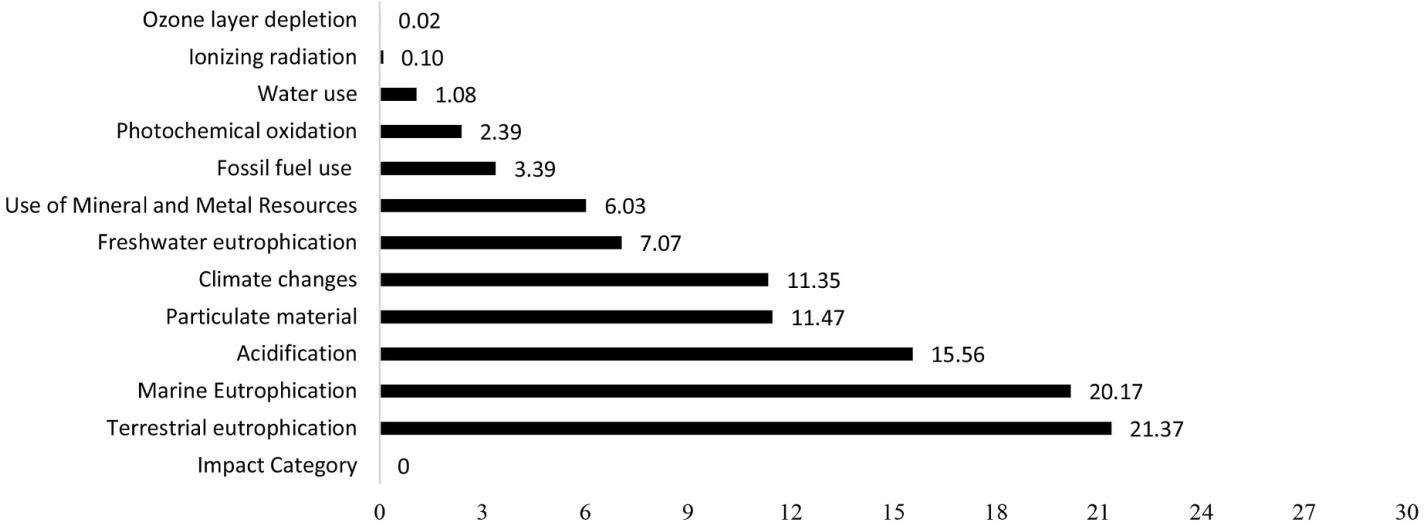
Figure 3: Contribution of the raw materials selection impact category. Published by Costa et al. (2024).
Only one European study investigated the shelf-life end of pet waste from the LCA perspective. Yavor et al. (2020) analyzed three points of view (Figure 4) and discovered that the urine and feces of an average dog have a potential climate change and freshwater eutrophication of 8,200 kg of carbon dioxide equivalent and 5 kg of phosphorus equivalent respectively. For 13 years, urine (≅ 44%) and feces (≅ 43%) have mainly contributed to freshwater eutrophication (caused by phosphorus contained in feces) and significantly in ecotoxicity (≅50%).

The produced waste is just a factor in the food use stage and does not define sustainability in pet ownership. Generally, diet effects exceed the other stages. However, quantifying the flows of this substage adequately can complement the existing regional information and identify possibilities or technologies for the environmental footprint cycle of dogs and cats, especially nitrogenated waste and potentially toxic nutrients in feces and urine.
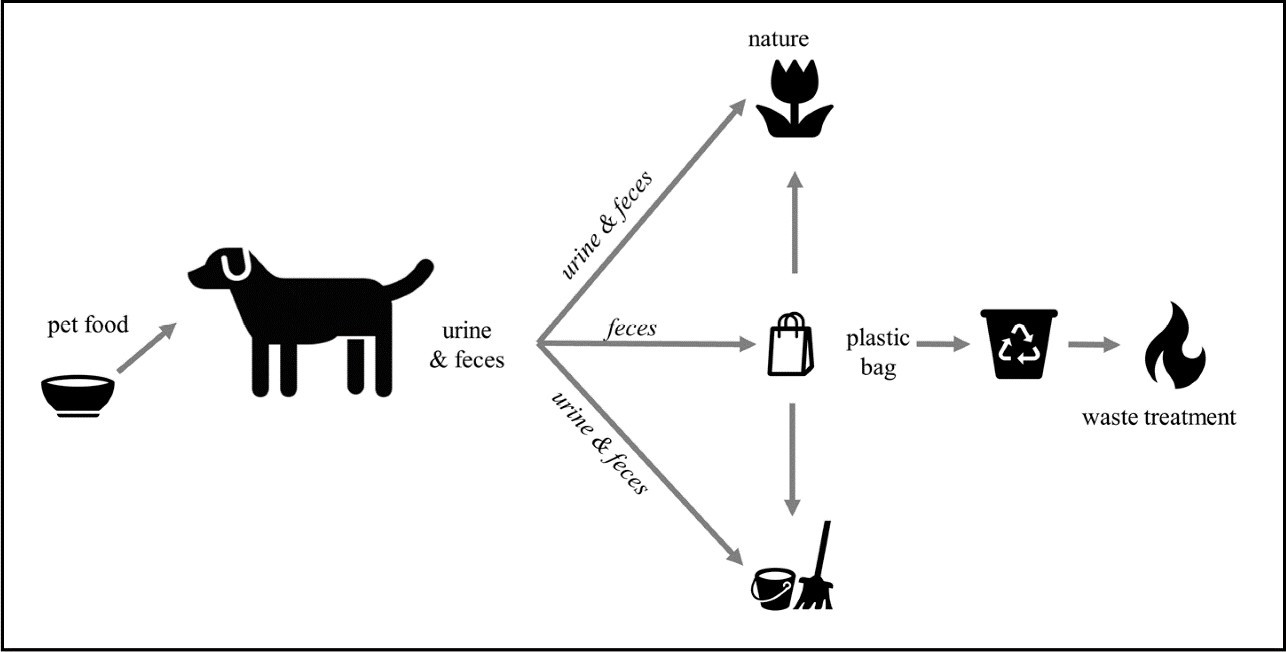
Figure 4. Dogs' defecation system to the shelf-life end of waste. Published by Yavor et al. (2020).
Advantages and Challenges of the LCA
Life Cycle Analysis is a methodology used to evaluate products and services environmental impact, from manufacturing to elimination. It is useful since it analyzes all the stages in the product life cycle integrally. This approach comprises systems at different levels and regions throughout flow evaluation, which enter and leave the system. Its results can combine other methodologies to better define system sustainability; it can be used in complex environmental analysis for objective decision-making and to formulate plans that satisfy sustainable development needs.
Using the LCA has the potential to:
- Identify critical points and the impacts of a process, product, or service.
- Enhance or develop products and services.
- Optimize mechanical systems and energy recovery.
- Compare equivalent products.
- Define criteria for ecological labels.
- Support the creation of politics of sustainability.
- Provide clear information to consumers.
- Manage and preserve natural resources.
These characteristics can be extremely interesting to characterize dog and cat waste, towards sustainability. However, here are some challenges and limitations to consider:
- The number of people and experienced professionals using this methodology is still minimal.
- There are no accurate and solid regional inventories about the product's life cycle, especially in Brazil. Databases are essential to save time and resources in LCA study.
- This shortage is a problem as Brazil has diverse production, agriculture practices, weather, and technology. Using a specific database from Brazil would help to carry out accurate and adequate research for more sustainable production. Another challenge is to follow general rules for product characterization, such as Product Environmental Footprint Category Rules (FEDIAF, 2018) that ensure standardized studies and suitable results.

Final Thoughts
So far, impacts generated by pet ownership have not been defined in Brazil. The LCA focus can help to characterize them, predict harmful effects, minimize the short/long-term impact, and reach global and sustainable goals. However, the scientific data on cat and dog ownership used by this approach is still lacking.
Defecation and its accumulative effects are related to pet ownership, being a substage in food usage which also must be studied for its environmental impact. Understanding the impact helps evaluate pet possession in an integrated way. Brazil has unique characteristics and highlights the importance of studying and characterizing local impacts. Research can offer new insights as well as improve awareness and promote pro-environmental behavior in society and industries, helping the environment and sustainability in dog and cat ownership, such important species for human beings.
References
ABINPET. PET Mercado Brasil (2024). Asociación Brasileña de la Industria de Productos para Mascotas. www.abinpet.org.br/. Fecha de consulta: 05 de agosto de 2024.
ABNT (Asociación Brasileña de Normas Técnicas), 2009a. NBR ISO 14040: Gestión Ambiental - Análisis de Ciclo de Vida - Principios y estructura. Río de Janeiro.
ABNT (Asociación Brasileña de Normas Técnicas), 2009b. NBR ISO 14044: Gestión Ambiental - Análisis de Ciclo de Vida - Requisitos y directrices. Río de Janeiro.
ABREMA. Panorama de los residuos sólidos en Brasil 2023 (2023). Disponible en: https://abrelpe.org.br/panorama-2020/. Fecha de consulta: 10 de agosto de 2024.
Cinquepalmi, V.; Monno, R.; Fumarola, L.; Ventrella, G.; Calia, C.; Greco, M. F.; De Vito, D.; Soleo, L. (2013). Contaminación ambiental por heces de perro: ¿un problema de salud pública? Revista Internacional de Investigación Ambiental y Salud Pública, 10(1), 72–84. https://doi.org/10.3390/ijerph10010072
Costa, J. L. G.; Bánkuti, F. I.; Oiko, O. T.; Monti, M.; Loureiro, B. A.; Henríquez, L. B. F.; Florindo, T. J.; Vasconcellos, R. S. (2024). Análisis de ciclo de vida de la producción de un alimento extruido para perros en Brasil. Revista de Producción Más Limpia, 458. https://doi.org/10.1016/j.jclepro.2024.142505
FEDIAF (2021a). Federación Europea de la Industria de Alimentos para Animales de Compañía. FEDIAF Guías Nutricionales para Alimentos Completos y Complementarios para Perros y Gatos. 98 págs.
FEDIAF (2018b). Reglas de Categoría de Huella Ambiental de Productos (PELCR): Alimento preparado para perros y gatos. FEDIAF, Bruselas.
Hobbie S. E.; Finlay, J.C.; Janke, B. D.; Nidzgorski, D. A.; Mijo D. B; Baker, L. A. Contraste de los presupuestos de nitrógeno y fósforo en las cuencas urbanas y las implicaciones para la gestión de la contaminación del agua urbana. Proc Natl Acad Sci U S A (2017). 18 de abril; 114(16):4177-4182. doi: 10.1073/pnas.1618536114. Epub 3 de abril de 2017. Fe de erratas en: Proc Natl Acad Sci U S A. 16 de mayo de 2017; 114(20):E4116. doi: 10.1073/pnas.1706049114. PMID: 28373560; PMCID: PMC5402417.
Li, P.; Wu, G. (2024). Características de la nutrición y el metabolismo en perros y gatos. En Avances en Medicina Experimental y Biología (Vol. 1446, p. 55-98). Salmer. https://doi.org/10.1007/978-3-031-54192-6_4
Li, Z.-M., & Kannan, K. (2024). Excreción urinaria y fecal de 121 sustancias químicas ambientales en perros y gatos: importancia de las heces en el biocontrol de las exposiciones.
Macdonald, M. L.; Rogers, Q.; Rmorris, J. G (1984). Nutrición del gato doméstico, un mamífero carnívoro. Revista anual de nutrición, v. 4, n. 1, p. 521-562.
Martínez-Sabater, E.; García-Muñoz, M.; Bonete, P.; Rodríguez, M.; Sánchez-García, F. B.; Pérez-Murcia, M. D.; Bustamante, M. A.; López-Lluch, D. B.; Moraleja, R. (2019). Manejo integral de las heces de perro: Compostaje versus digestión anaeróbica. Revista de Gestión Ambiental, 250. https://doi.org/10.1016/j.jenvman.2019.109437
Morris, J. G (2002). Los requerimientos idiosincrásicos de nutrientes de los gatos parecen ser adaptaciones evolutivas inducidas por la dieta. Revistas de investigación en nutrición, v. 15, n. 1, p. 153-168.
NRC. Consejo Nacional de Investigación. Requerimientos de nutrientes de perros y gatos.Washington, DC: Nacional Academias Prensa 2006. 424 págs. Disponible en:
<https://nap.nationalacademies.org/catalog/10668/nutrient-requirements-of-dogs-andcats\>. Consultado: 02
Agosto. 2024.
Okin, G. S. Impactos ambientales del consumo de alimentos por perros y gatos. PLOS UNO, v. 12, n.
8, p. E0181301, 2017.
ONU. Asamblea General de las Naciones Unidas. Transformar nuestro mundo: la agenda 2030 para el desarrollo sostenible. (2015). Disponible en: https://sdgs.un.org/2030agenda.
Programa de las Naciones Unidas para el Medio Ambiente ( Programa de las Naciones Unidas para el Medio Ambiente (2024). Resumen ejecutivo Perspectivas mundiales de la gestión de residuos 2024: Más allá de la era de los residuos. Convertir la basura en un recurso. Nairobi. https:// wedocs.unep.org/20.500.11822/44992
Rezende, V. T.; Rodrigues, G. R. D.; Boaventura, J. F.; Alves, L. K. S., Zanini, L. D., Nacimento, R. A.; Gameiro, A. H. (2022). Aproximación preliminar a la carga ambiental generada por dietas de humanos, animales de producción y mascotas a partir del análisis de flujos de nitrógeno y fósforo. Nuevos retos de la investigación en nutrición y producción animal.
Ritchie, H.; Roser, M. Impactos ambientales de la producción de alimentos (2020). Disponible en:
<https://ourworldindata.org/environmental-impacts-of-food>. Fecha de acceso: 25 jul. 2024
Rousseau, M.; Guénard, F.; Garneau, V.; Allam-ndoul, B.; Lemieux, S.; Pérusse, L.; Vohl, M.C (2019). Asociaciones entre las fuentes de proteínas dietéticas, los BCAA plasmáticos y los niveles de acilcarnitina de cadena corta en adultos. Nutrientes, v. 11, n. 1, p. 173-189.
SEEG. Sistema de estimación de emisiones de gases de efecto invernadero, 2022. Desafíos y oportunidades para la reducción de emisiones de metano en Brasil. Disponible en: https://plataforma.seeg.eco.br. Fecha de consulta: 11 de agosto de 2024.
Singh, P.; Banton, S.; Bosch, G.; Hendriks, W. H.; Shoveller, A. K. (2024). Más allá del tazón: comprensión de los requisitos de aminoácidos y la digestibilidad para mejorar las métricas de calidad de las proteínas para alimentos para perros y gatos. En Avances en Medicina Experimental y Biología (Vol. 1446, p. 99-134). Salmer. https://doi.org/10.1007/978-3-031-54192-6_5
Souza, C. G., Barbastefano, R. G., & Teixeira, R. C. (2017). Investigación en análisis de ciclo de vida en Brasil: características, interdisciplinaricalidad y aplicaciones. Revista Internacional de Evaluación del Ciclo de Vida, 22(2), 266–276. https://doi.org/10.1007/s11367-016-1150-5
Su, B.; Martens, P. Impactos ambientales del consumo de alimentos por perros de compañía y gatos en Japón. Indicadores Ecológicos, v. 93, p. 1043–1049, 2018. Disponible en:
<https://doi.org/10.1016/j.ecolind.2018.06.015>.
Swanson, K. S.; Carter, R. A.; Yount., T. P.; Preston, J. A.; Buff, R. (2013). Sostenibilidad nutricional de los alimentos para mascotas. Avances en Nutrición, 4: 141-150. https://doi.org/10.3945/an.112.003335.
Yavor, K. M.; Lehmann, A.; Finkbeiner, M. (2020). Impactos ambientales de un perro de compañía: un estudio de caso de ACV. Sostenibilidad (Suiza), 12(8). https://doi.org/10.3390/SU1208339
By Jéssyka Laura Galdino Costa, Ricardo Souza Vasconcellos (Universidad Estatal de Maringá - Brazil), Fernando José González González (Universidad de la Salle - Colombia)
Source: All Pet Food Magazine
You could be interested: 5 Impactful Insights from the 2025 State of Sustainability in the Pet Industry Report

Sustainability

25/06/2025
Sustainable Pet Nutrition: Reducing the Carbon Footprint in the Supply Chain
By
Events

IBERZOO PROPET
11 to 13 March, 2026
Madrid, España
https://www.ifema.es/iberzoo-propet

Simposio CS Petfood & Aquafeed
15 to 16 April, 2026
Pilar, Buenos Aires, Argentina
https://www.cliviosolutions.com/

PET FOOD FORUM KANSAS
27 to 29 April, 2026
Kansas City, Missouri, USA
https://www.petfoodforumevents.com/

interpack
07 to 13 May, 2026
Düsseldorf, Alemania
https://www.interpack.com/

Smart Pet Food Production
11 May, 2026
Sheraton Carlton Nürnberg
https://www.petfoodcompetencenet.com/events/
Interzoo 2026
12 to 15 May, 2026
Nuremberg, Germany
https://www.interzoo.com/en

FENAGRA 2026
12 to 14 May, 2026
Santana – São Paulo
https://www.fenagra.com.br/

XXIV CONGRESO DE PET DE LA CBNA
12 to 14 May, 2026
São Paulo Expo, Brasil
https://www.fenagra.com.br/congresso/cbna-pet/

EXPO PACK México 2026
02 to 05 June, 2026
Ciudad de México, CDMX.
https://www.expopackmexico.com.mx/

VICTAM 2026
02 to 04 June, 2026
Utrecht, Países Bajos
https://victaminternational.com/

VIV Europe 2026
02 to 04 June, 2026
Utrecht, the Netherlands
https://www.viveurope.nl/

Foro Mascotas 2026
24 to 26 June, 2026
Expo Guadalajara, Mexico
https://www.foromascotas.mx/en

Pet South America 2026
12 to 14 August, 2026
São Paulo Expo, Brazil
https://petsa.com.br/

Pet Fair Asia 2026
19 to 23 August, 2026
Shanghai, China
https://en.petfairasia.com/

CIPAL 2026
23 to 24 September, 2026
Buenos Aires, Argentina
https://cipal.com.ar/?lang=en

PETZOO Eurasia
07 to 10 October, 2026
İFM- İstanbul Expo Center
https://petfuari.com/en/

SINPET 2026
15 to 16 October, 2026
Porto Alegre, Brazil
https://www.instagram.com/sinpet2026/

FIGAP 2026
21 to 23 October, 2026
Guadalajara, Jalisco, Mexico
https://figap.com/

Pet Fair South East Asia
28 to 30 October, 2026
Bangkok, Thailand
https://petfair-sea.com/
Advertising


