3 min reading
Innovative FEED Act introduced in US House of Representatives
The Innovative Feed Enhancement and Economic Development Act marks a step toward establishing a regulatory pathway for a new category of animal feed additives.
The Innovative Feed Enhancement and Economic Development Act marks a step toward establishing a regulatory pathway for a new category of animal feed additives.
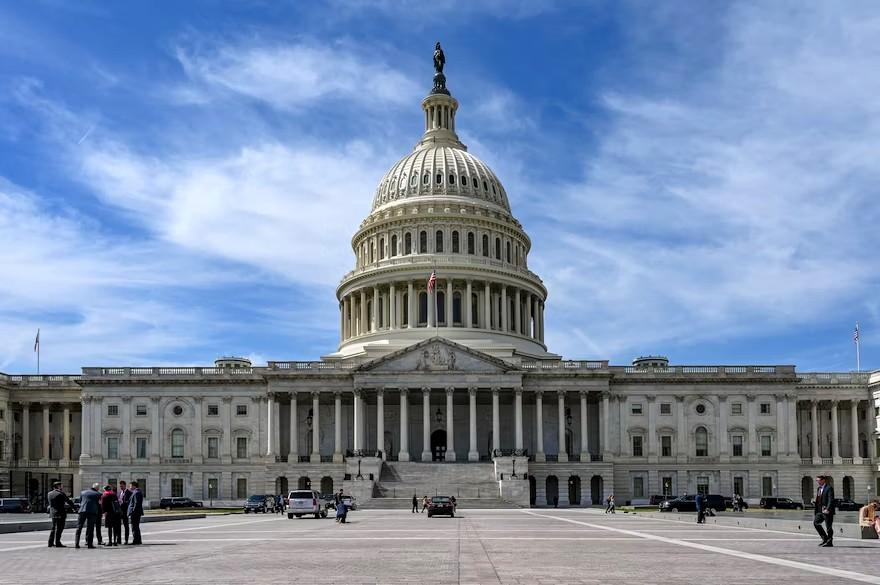
The Innovative Feed Enhancement and Economic Development (Innovative FEED) Act was introduced into the U.S. House of Representatives on December 7, a step toward establishing a regulatory pathway for a new category of animal feed additives. The bill was introduced in the U.S. Senate in June.
The Innovative FEED Act would amend the Federal Food, Drug and Cosmetic Act to allow for a new category of animal food substances that act solely within animals' gut microbiomes or in the feed they are digesting to provide a wide range of benefits, giving the U.S. Food and Drug Administration (FDA) the power it needs to ensure regulations keep pace with scientific innovation in feed, the American Feed Industry Association (AFIA) said in a press release.

'The AFIA is excited that the Senate has already introduced the Innovative FEED Act and now, with the House introduction, the bill has the bipartisan and bicameral support we hoped for,' AFIA President and CEO Constance Cullman said. 'Now, we urge Congress to act quickly on the bill. The legislation will be the spark needed to drive nutritional innovation that improves animal health and production while addressing public health challenges. We need this modernized regulatory oversight instead of the current policy of overregulation. Any delay in enacting this legislation continues to put U.S. agriculture at a disadvantage compared to our global counterparts whose regulatory systems have evolved with the times.'
The FDA's Center of Veterinary Medicine (CVM) regulates animal foods with drug claims, including environmental benefit or production claims and claims about the effects on the animal's microbiome. Many in the animal feed industry agree CVM's regulations are overly burdensome and that some rules are inconsistent and arbitrary, and that they put U.S. companies at a competitive disadvantage.

They also say the regulations put U.S. dairy and beef producers at a disadvantage because they don't have broad access to these methane-reducing feed additives. Dozens of countries have already safely approved and started using these feed ingredients on farms, resulting in improved animal production, well-being, reduced pre-harvest food safety concerns, and a smaller environmental footprint, AFIA said.
'Competent authorities of our global competitors in Europe, Asia and South America already have updated their policies to allow feed products on the market that demonstrate increased efficiency in meat production as well as byproduct and waste reduction,' said David Fairfield, senior vice president of feed at the National Grain and Feed Association, in a statement. 'To compete in the global market, farmers and ranchers in the United States need access to innovative zootechnical animal food substances to improve animal production and well-being, diminish pre-harvest food safety concerns, and boost sustainability opportunities.'
The AFIA has urged the FDA to modernize its outdated 1998 Policy and Procedures Manual Guide 1240.3605, which has hindered animal food manufacturers from clearly indicating non-nutritive benefits on labels without navigating the FDA's arduous drug approval process.
There is a wide range of feed additives that have been shown to reduce enteric methane emissions by between 2% and 12% per year. These include seaweed, fatty acids, 3-Nitrooxypropanol (3-NOP), oregano, tannins, nitrate, biochar, cinnamon, garlic and saponins.
'These ingredients have novel benefits that make a positive impact on our food production system, such as improving feed efficiency and reducing human foodborne illness," Fairfield said. "This legislation would provide food manufacturers with a pathway to make truthful, non-misleading production, environmental and well-being claims for animal foods that have been substantiated to provide such benefits more efficiently.'

The Innovative FEED Act will bring about the necessary changes to ensure these additives are reviewed for safety and effectiveness as food additives, not drugs, and can more quickly come to market for U.S. farmers and ranchers to choose to use, AFIA said.
By AFIA
Source . All Pet Food
You could be interested: NARA recognizes Pet Food Alliance coordinator

Animal Origin

23/10/2023
Tyson Foods Announces Partnership with Protix for More Sustainable Protein Production
Events

IBERZOO PROPET
11 to 13 March, 2026
Madrid, España
https://www.ifema.es/iberzoo-propet

Simposio CS Petfood & Aquafeed
15 to 16 April, 2026
Pilar, Buenos Aires, Argentina
https://www.cliviosolutions.com/

PET FOOD FORUM KANSAS
27 to 29 April, 2026
Kansas City, Missouri, USA
https://www.petfoodforumevents.com/

interpack
07 to 13 May, 2026
Düsseldorf, Alemania
https://www.interpack.com/

Smart Pet Food Production
11 May, 2026
Sheraton Carlton Nürnberg
https://www.petfoodcompetencenet.com/events/
Interzoo 2026
12 to 15 May, 2026
Nuremberg, Germany
https://www.interzoo.com/en

FENAGRA 2026
12 to 14 May, 2026
Santana – São Paulo
https://www.fenagra.com.br/

XXIV CONGRESO DE PET DE LA CBNA
12 to 14 May, 2026
São Paulo Expo, Brasil
https://www.fenagra.com.br/congresso/cbna-pet/

EXPO PACK México 2026
02 to 05 June, 2026
Ciudad de México, CDMX.
https://www.expopackmexico.com.mx/

VICTAM 2026
02 to 04 June, 2026
Utrecht, Países Bajos
https://victaminternational.com/

VIV Europe 2026
02 to 04 June, 2026
Utrecht, the Netherlands
https://www.viveurope.nl/

Foro Mascotas 2026
24 to 26 June, 2026
Expo Guadalajara, Mexico
https://www.foromascotas.mx/en

Pet South America 2026
12 to 14 August, 2026
São Paulo Expo, Brazil
https://petsa.com.br/

Pet Fair Asia 2026
19 to 23 August, 2026
Shanghai, China
https://en.petfairasia.com/

CIPAL 2026
23 to 24 September, 2026
Buenos Aires, Argentina
https://cipal.com.ar/?lang=en

PETZOO Eurasia
07 to 10 October, 2026
İFM- İstanbul Expo Center
https://petfuari.com/en/

SINPET 2026
15 to 16 October, 2026
Porto Alegre, Brazil
https://www.instagram.com/sinpet2026/

FIGAP 2026
21 to 23 October, 2026
Guadalajara, Jalisco, Mexico
https://figap.com/

Pet Fair South East Asia
28 to 30 October, 2026
Bangkok, Thailand
https://petfair-sea.com/
Advertising