5 min reading
Insect Protein in Pet Food: Sustainable Breakthrough or Strategic Media Push?
Insect protein has gained increasing attention as a potential sustainable alternative to traditional animal proteins like beef, chicken, and fish in pet food.
Insect protein has gained increasing attention as a potential sustainable alternative to traditional animal proteins like beef, chicken, and fish in pet food.
Advocates argue that insect protein offers a climate-smart solution with a significantly lower environmental footprint, addressing the pet food industry's growing demand for protein.
However, the question remains: is the media buzz around insect protein grounded in its real-world potential, or is it being strategically driven by well-funded startups and investor-backed companies eager to validate their business models?
This article delves into the environmental benefits, commercial pressures, regulatory challenges, and market realities of insect protein in pet food, exploring whether the excitement surrounding it is driven by genuine consumer demand or the influence of corporate media strategies.
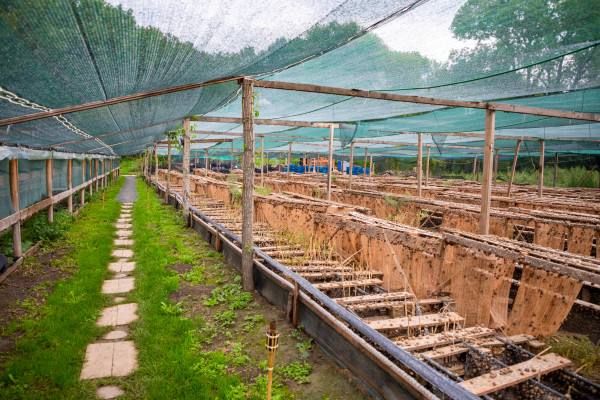
Photo by TDyuvbanova

The Environmental Promise
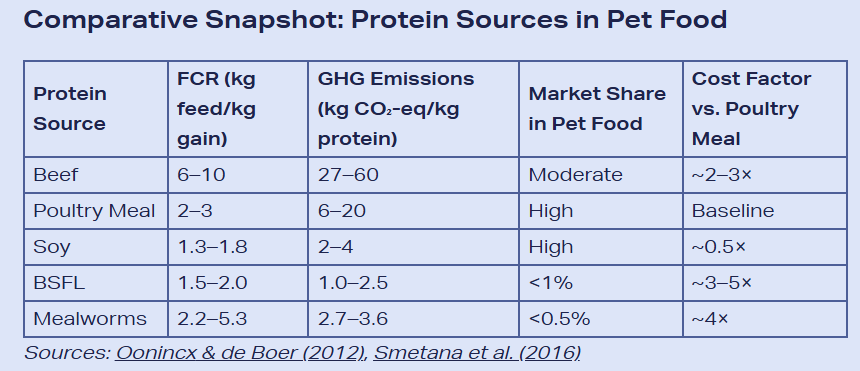
The primary insect species used in pet food—black soldier fly larvae (BSFL) and mealworms—have gained recognition for their efficiency in converting feed into protein. Insects like BSFL achieve feed conversion ratios (FCRs) as low as 1.5:1, meaning they require significantly less feed to produce protein compared to traditional livestock like beef (6–10:1) or pork (3–5:1).This efficiency is one of the key selling points of insect protein, making it an attractive solution for improving the sustainability of the pet food industry.
In addition to feed efficiency, insect farming results in significantly lower greenhouse gas (GHG) emissions when compared to traditional livestock farming. According to studies, beef emits 27–60 kg CO₂-eq/kg of protein, while poultry emits 6–20 kg CO₂-eq/kg. In contrast, black soldier fly larvae emit just 1–2.5 kg CO₂-eq/kg, which is a substantial reduction in emissions. These figures suggest that insect protein could play a significant role in reducing the carbon footprint of pet food production.
Another advantage of insect farming is the reduction in land and water use. Insects like BSFL can be farmed in vertical, climate-controlled environments, reducing the need for vast amounts of land and minimizing natural habitat destruction. Unlike traditional livestock farming, which requires large expanses of land for grazing, insect farming can be done in compact facilities, making it more land-efficient.
Moreover, many insect farms use food waste or agricultural by-products as feed, creating a circular economy that reduces food waste while providing a new protein source. This approach aligns well with sustainability goals by helping to tackle food waste issues, assuming regulatory frameworks permit such feed inputs.

The Less Publicized Challenges
While insect protein holds promise, there are several challenges that must be addressed to make it a viable and widespread ingredient in pet food.
High Processing Energy
Farming insects is resource-efficient, but the process of turning insects into protein meal or oil is energy-intensive, often requiring drying and grinding. These steps increase the overall energy footprint of insect protein production, potentially offsetting some of its environmental benefits.
Regulatory Hurdles
Regulatory challenges also pose a significant barrier to the widespread adoption of insect protein in pet food. In the U.S., the Association of American Feed Control Officials (AAFCO) has approved BSFL for use in adult dog food, but not yet for cats or for all life stages of dogs.
Furthermore, regulations around the type of feed that insects can consume—such as restrictions on the use of post-consumer food waste—limit the sustainability potential of insect farming in some regions.
Scalability and Cost
Scalability remains a critical issue for insect protein production. While the technology for insect farming is promising, it is not yet able to meet the demand for mass adoption in the pet food industry. Insect protein currently costs significantly more than traditional proteins such as poultry meal. As noted in a 2023 Petfood Industry report, insect meal can cost three- to five-times more per kilogram than poultry meal, making it difficult for mainstream pet food companies to integrate insect protein at scale.
Additionally, insect protein remains a niche ingredient in pet food. Consumer perceptions remain a key barrier, but research suggests that educational efforts can help bridge the gap: for example, an ADM surveyrevealed that while only 12% of U.S. pet owners were initially "completely likely" to try insect-based pet foods, that figure rose to 42% after learning about the benefits of insect protein, such as its high digestibility, hypoallergenic properties, and lower environmental impact compared to traditional animal proteins. As awareness grows, insect protein holds promise as a novel, eco-friendly option in the pet food space.
Is the Hype Partly a Media Strategy?
The increasing focus on insect protein in pet food raises the question of whether the media's enthusiasm for insect-based protein is grounded in real-world demand or driven by the commercial interests of well-funded startups.

Over the past five years, companies like Ynsect, Innovafeed, and Protix have raised millions of dollars to fund their insect farming operations. With large amounts of venture capital at stake, there is significant pressure on these companies to create narratives that validate their business models, often by positioning insect protein as a scalable, sustainable solution for pet food.
The focus on sustainability in the media, particularly through partnerships with NGOs and climate-focused events, has also contributed to the narrative that insect protein is the "next big thing." However, it is important to consider that some of these media messages may be influenced by the commercial ties of insect protein companies and the growing investor pressure to generate returns.
Key Takeaways
Insect protein offers significant environmental benefits, including lower emissions, reduced land and water use, and upcycling food waste. However, challenges related to processing energy, regulatory hurdles, cost, and scalability continue to impede widespread adoption. The media's enthusiasm for insect protein may be fueled in part by the commercial interests of well-funded startups, leading some experts to question whether the hype surrounding insect protein is ahead of real-world market demand.
As the industry continues to evolve, it will be essential for stakeholders to balance the environmental benefits of insect protein with the practical realities of scaling production and meeting regulatory requirements.
About the Author
Lee Ann Hagerty is Director of Customer Enrichment and Consumer Insights on the BSM Product Innovation team with 29+ years in the pet food industry, working for Iams/Eukanuba, Procter & Gamble, and Mars Pet Care. She brings a unique combination of project management skills with consumer insights, product design, animal nutrition, and sensory science which drives an in-depth understanding of the pet and consumer. Lee Ann has a passion for helping dogs. Over the last year and a half, she has fostered over 22 dogs. Many of them were senior dogs who had lived their entire lives outside as hunting dogs. She has been a foster pet parent for many years, and it brings her great joy to see these pets find fur-ever homes where they live with families indoors with love and care.
By Lee Ann Hagerty, MBA, BS, AS, CVT, RVT, PAS
Source: BSM Partners
You could be interested: Tebrio boosts B Corp certification score to 96 points, up 11 from 2022


Insect Based

15/10/2025
Insects in Dogs and Cats Feeding: Composition, Application, and Functional Benefits
By

Events

IBERZOO PROPET
11 to 13 March, 2026
Madrid, España
https://www.ifema.es/iberzoo-propet

Simposio CS Petfood & Aquafeed
15 to 16 April, 2026
Pilar, Buenos Aires, Argentina
https://www.cliviosolutions.com/

PET FOOD FORUM KANSAS
27 to 29 April, 2026
Kansas City, Missouri, USA
https://www.petfoodforumevents.com/

interpack
07 to 13 May, 2026
Düsseldorf, Alemania
https://www.interpack.com/

Smart Pet Food Production
11 May, 2026
Sheraton Carlton Nürnberg
https://www.petfoodcompetencenet.com/events/
Interzoo 2026
12 to 15 May, 2026
Nuremberg, Germany
https://www.interzoo.com/en

FENAGRA 2026
12 to 14 May, 2026
Santana – São Paulo
https://www.fenagra.com.br/

XXIV CONGRESO DE PET DE LA CBNA
12 to 14 May, 2026
São Paulo Expo, Brasil
https://www.fenagra.com.br/congresso/cbna-pet/

EXPO PACK México 2026
02 to 05 June, 2026
Ciudad de México, CDMX.
https://www.expopackmexico.com.mx/

VICTAM 2026
02 to 04 June, 2026
Utrecht, Países Bajos
https://victaminternational.com/

VIV Europe 2026
02 to 04 June, 2026
Utrecht, the Netherlands
https://www.viveurope.nl/

Foro Mascotas 2026
24 to 26 June, 2026
Expo Guadalajara, Mexico
https://www.foromascotas.mx/en

Pet South America 2026
12 to 14 August, 2026
São Paulo Expo, Brazil
https://petsa.com.br/

Pet Fair Asia 2026
19 to 23 August, 2026
Shanghai, China
https://en.petfairasia.com/

CIPAL 2026
23 to 24 September, 2026
Buenos Aires, Argentina
https://cipal.com.ar/?lang=en

PETZOO Eurasia
07 to 10 October, 2026
İFM- İstanbul Expo Center
https://petfuari.com/en/

SINPET 2026
15 to 16 October, 2026
Porto Alegre, Brazil
https://www.instagram.com/sinpet2026/

FIGAP 2026
21 to 23 October, 2026
Guadalajara, Jalisco, Mexico
https://figap.com/

Pet Fair South East Asia
28 to 30 October, 2026
Bangkok, Thailand
https://petfair-sea.com/
Advertising