5 min reading
Organic trace minerals for pets´s mental health
How can we address some of these challenges, especially those related to cognitive function in pets?
1. Take a preventative, nutrition-based approach.
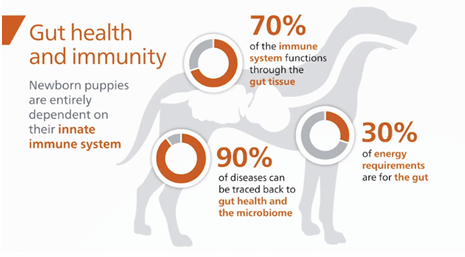
Providing proper nutrition is still considered one of the most effective and financially viable ways to decrease an animal's disease risk. An important part of any animal's health and diet is immuno-nutrition, which can be defined as the effect of providing specific nutrients — typically, a combination of certain amino acids, nucleic acids, vitamins and minerals — on the animal's immune system.
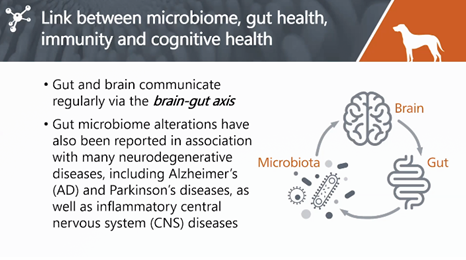
With the direct link between a healthy digestive system and immunity, the importance of gut health cannot be overstated. Gut health, immunity and the microbiome have also been shown to be linked to cognitive health. Research in this area has proven the gut and brain communicate regularly through a highly complex interactive system. This highlights the important role of nutrition, not only for the growing and developing puppy, but for the aging or senior dog as well.

2. Optimize gut health by increasing microbial diversity.
Gut health can be improved and maintained in several ways, but increasing microbial diversity — as well as reducing pathogens and increasing beneficial bacteria, such as the Lactobacillus and Bifidobacteria species — is key. Adding prebiotics, probiotics and postbiotics to an animal's gut health program has been well-researched and established as important for maintaining good gut health. Furthermore, products such as mannan-rich fractions of yeast (MRF) and certain fermentation solubles — including mannan oligosaccharides (MOS) — as well as nucleotides and branched-chain amino acids are being incorporated into pet food for dogs and cats at a growing rate.
Senior or geriatric dogs tend to have reduced concentrations of Bifidobacteria species, and studies of MOS have shown that they are correlated with significant increases in beneficial populations, which can help offset the negative effects of age on colonic health.
MRF have also proven to be beneficial in pet diets in several ways. They basically provide a source of attachment for certain pathogens and escort them through the digestive tract, preventing colonization and reversing dysbiosis. MRF also support nutrient utilization, help maintain digestive function and enzyme activity and work to control inflammation.

3. Support immunity and cognitive health in dogs and cats with antioxidants.
We've looked at how immuno-nutrients affect gut health, but what impact do they have on the overall immune system? Trace minerals are essential in many metabolic and physiological processes, and using the organic, more bioavailable form of these essential nutrients has been proven to be beneficial in multiple ways.
Recent companion animal studies of Bioplex®and Sel-Plex® showed that, even when supplemented at much lower levels than their inorganic counterparts, these two products supported and promoted better trace mineral status, bone mineral density, growth and immune measures in both cats and dogs.
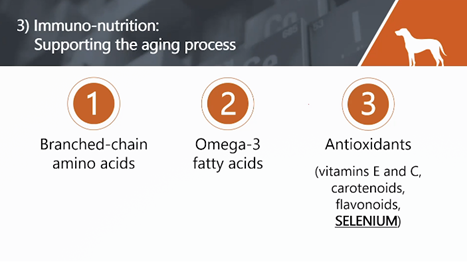
Certain trace minerals, including selenium, are also known to be important antioxidants. Since antioxidants can help minimize free-radical formation and oxidative stress, including them in pets' diets is often considered an important part of any immune-nutrient strategy to help prevent and managed age-related health issues.
Some of the leading age-related health problems in pets include immune-related issues, joint health, cancer, diabetes and heart disease. Two other emerging concerns and interests for pet owners with older pets are cognitive health and function.
When it comes to cognitive health, there have been several studies linking antioxidants and their role in counteracting oxidative stress to potential improvements in cognitive performance.
It seems that impaired neuroprotection that results from oxidative stress has been implicated in neurodegeneration, and as such, inhibitors of oxidative damage — especially antioxidants — are considered very promising as potential preventatives.
Selenium is considered to be not only a very powerful antioxidant but a major agent of immune stimulation as well. Several studies in humans, companion animals and other species have shown that selenium can reduce oxidative damage, optimize immunity and thyroid health, and even help prevent mental decline.
The problem with selenium is that its availability, utilization and efficacy depend on the dietary source or form in which it is provided. Inorganic selenium (i.e., sodium selenate or sodium selenite), the most widely used form of selenium, is not only highly toxic; it is also poorly absorbed, can induce DNA damage and can have very strong pro-oxidative properties, making it a poor choice as an antioxidant. Because of toxicity concerns, inclusion rates for selenium are regulated, and the suggested levels are set with an eye toward preventing a deficiency rather than supplementing for optimized immunity and health. As such, it is worthwhile to reconsider our selenium supplementation strategies and find ways to maximize selenium status that, ultimately, support cognitive health as well.

An animal's selenium status can easily be improved by substituting inorganic selenium with the organic form of the mineral, such as that included in Sel-Plex. Studies of Sel-Plex have evaluated its potential antioxidant characteristics in several species, including transgenic mice, and the results have shown a substantial increase in glutathione peroxidase and significantly decreased levels of DNA and RNA oxidation. Poor selenium status, on the other hand, has been linked to an increased risk of heart disease.
Selenium has been shown to lower markers of inflammation, indicating that it may help decrease an animal's risk of heart disease by reducing inflammation and oxidative stress, which have been linked to atherosclerosis. Since pets are also susceptible to certain heart conditions, implementing nutritional strategies to improve selenium status and, in turn, reduce oxidative stress and any subsequent inflammation could potentially have positive benefits for geriatric pets as well.
Conclusion
Thanks to the growing trend of increased awareness and interest from pet owners about the overall health and well-being of their animal companions, we can expect nutrition to play an even more prominent role as part of a preventive approach to maintaining pet health. The importance of the pet microbiome cannot be underestimated, as it serves as the foundation of a healthy GI tract, immunity and overall health through all life stages. When looking at antioxidants, the opportunity also exists to make seemingly small changes — like switching from inorganic selenium to an organic source — that can actually have a significant impact on the overall immunity, health and cognitive function of the animal. Immuno-nutrients will continue to be an important part of a targeted nutritional approach to caring for pets, but it is also important to look for product-specific research and validation when creating your pets' health plan.
Source: Alltech
You could be interested: ANDRITZ: Technology to Feed the Future


Events

IBERZOO PROPET
11 to 13 March, 2026
Madrid, España
https://www.ifema.es/iberzoo-propet

Simposio CS Petfood & Aquafeed
15 to 16 April, 2026
Pilar, Buenos Aires, Argentina
https://www.cliviosolutions.com/

PET FOOD FORUM KANSAS
27 to 29 April, 2026
Kansas City, Missouri, USA
https://www.petfoodforumevents.com/

interpack
07 to 13 May, 2026
Düsseldorf, Alemania
https://www.interpack.com/

Smart Pet Food Production
11 May, 2026
Sheraton Carlton Nürnberg
https://www.petfoodcompetencenet.com/events/
Interzoo 2026
12 to 15 May, 2026
Nuremberg, Germany
https://www.interzoo.com/en

FENAGRA 2026
12 to 14 May, 2026
Santana – São Paulo
https://www.fenagra.com.br/

XXIV CONGRESO DE PET DE LA CBNA
12 to 14 May, 2026
São Paulo Expo, Brasil
https://www.fenagra.com.br/congresso/cbna-pet/

EXPO PACK México 2026
02 to 05 June, 2026
Ciudad de México, CDMX.
https://www.expopackmexico.com.mx/

VICTAM 2026
02 to 04 June, 2026
Utrecht, Países Bajos
https://victaminternational.com/

VIV Europe 2026
02 to 04 June, 2026
Utrecht, the Netherlands
https://www.viveurope.nl/

Foro Mascotas 2026
24 to 26 June, 2026
Expo Guadalajara, Mexico
https://www.foromascotas.mx/en

Pet South America 2026
12 to 14 August, 2026
São Paulo Expo, Brazil
https://petsa.com.br/

Pet Fair Asia 2026
19 to 23 August, 2026
Shanghai, China
https://en.petfairasia.com/

CIPAL 2026
23 to 24 September, 2026
Buenos Aires, Argentina
https://cipal.com.ar/?lang=en

PETZOO Eurasia
07 to 10 October, 2026
İFM- İstanbul Expo Center
https://petfuari.com/en/

SINPET 2026
15 to 16 October, 2026
Porto Alegre, Brazil
https://www.instagram.com/sinpet2026/

FIGAP 2026
21 to 23 October, 2026
Guadalajara, Jalisco, Mexico
https://figap.com/

Pet Fair South East Asia
28 to 30 October, 2026
Bangkok, Thailand
https://petfair-sea.com/
Advertising