4 min reading
Troubleshooting a Flushing Feeder
“A variety of issues can contribute to material flushing”.
From time to time, we hear from customers that material is flushing out of their feeders.
Several things can contribute to or cause this. In this article, we will look at some of the more common issues associated with material flushing.
“A variety of issues can contribute to material flushing”.
From time to time, we hear from customers that material is flushing out of their feeders.
Several things can contribute to or cause this. In this article, we will look at some of the more common issues associated with material flushing.
Low Angle of Repose
To start our investigation, we look at the material itself. Is it aeratable and, once aerated, does it fluidize like a liquid?
We can evaluate this by measuring the material's angle of repose. Picture a pile of material sitting on a flat surface. The angle of repose is the angle between the flat surface and one side of the pile. Higher angles of repose happen when a material is cohesive and sticks to itself. Lower angles of repose mean the material is more free-flowing and could potentially be floodable.
Low-angle-of-repose materials are more prone to flushing out of a feeder than those with higher angles of repose.
Refill Set Points
The next place to look? Refill setpoints.
When the feeder calls for a refill, the incoming material aerates the material inside of the feeder. This can fluidize this material and flush it out of the feeder. When that happens, the entire line must be paused so the feeder can be properly refilled again.

The solution? Raise the set point until there is a nice heel or head of material over the feed screw. This will protect the rest of the material inside the feeder from the charge coming in. Because it is protected, the material inside of the feeder doesn't fluidize.
In other words, you can prevent flushing of a low angle-of-repose, floodable material with more frequent, smaller refills.
Material Voids
We have looked at issues affecting low-angle-of-repose materials. However, even high-angle-of-repose materials sometimes flood out of a feeder. Two scenarios contribute to this:
- Ratholing
- Material bridges
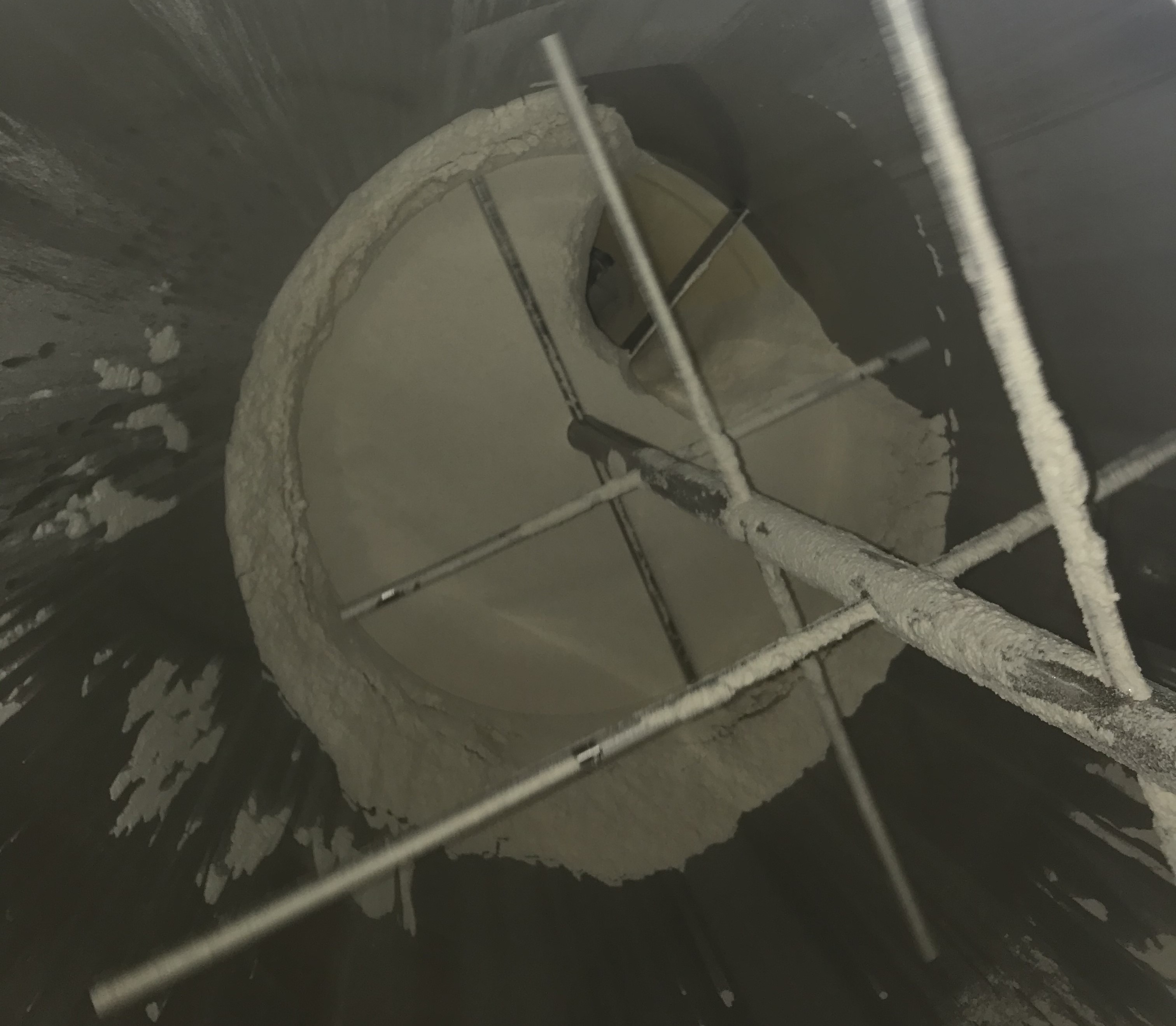
Figure 1: Ratholing example
There is also the material bridge scenario. Like a rathole, a material bridge involves a small void. In this case, the void occurs in the shape of a small bridge over the feed screw. When this bridge collapses, the material can flush out of the feeder.
In either of these scenarios, a feeder with internal agitation may be needed to keep material from ratholing or bridging.
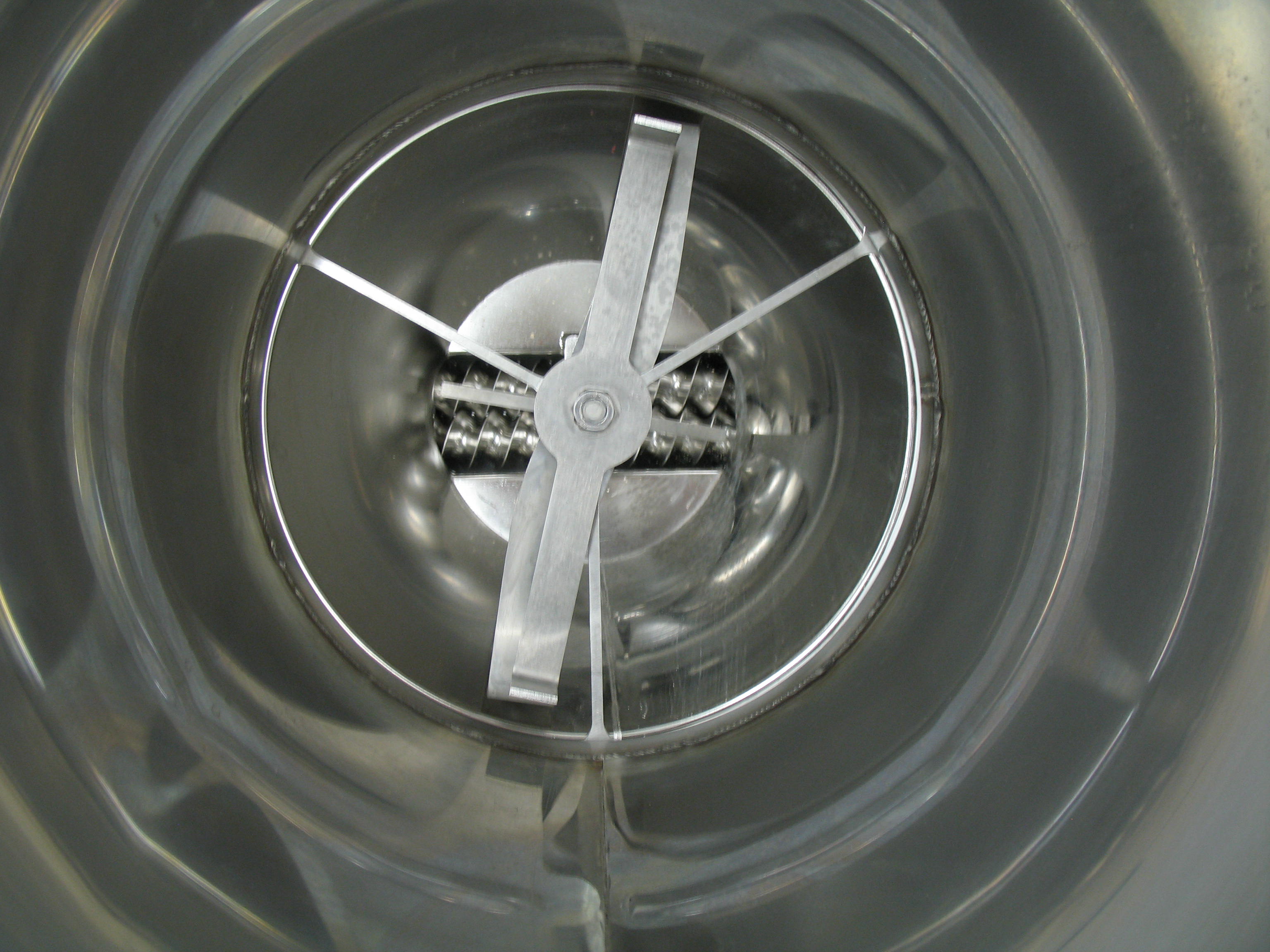
Figure 2: Internal feeder agitation

The next place to look is with the refill system itself: gravity, pneumatic, or vacuum.
Gravity System
In a typical gravity system of a bin with a refill valve at the bottom, a long drop to the feeder can cause the material inside the feeder to aerate and flush out. There are two ways to address this:
- Move the refill valve (butterfly valve or slide-gate valve) closer to the feeder so the material does not have as far to fall. This is the best option, but may not always be possible.
- Install a baffle inside the feeder's extension hopper. The baffle can be a piece of angle iron pointed up toward the inlet of the feeder's extension hopper. Or it can be a conical piece of material supported inside the feeder. These will baffle the impact of the material coming into the feeder. However, installing baffles can be tricky—material may hang up on them, and the hopper could eventually become blocked.
Pneumatic and Vacuum Systems
In a pneumatic or vacuum-type system, material that has been aerated before entering the feeder can also cause flushing.
The solution is to give the material enough time to de-aerate after being picked up and conveyed. A larger refill bin above the feeder will allow the material to de-aerate before it is introduced into the feeder.
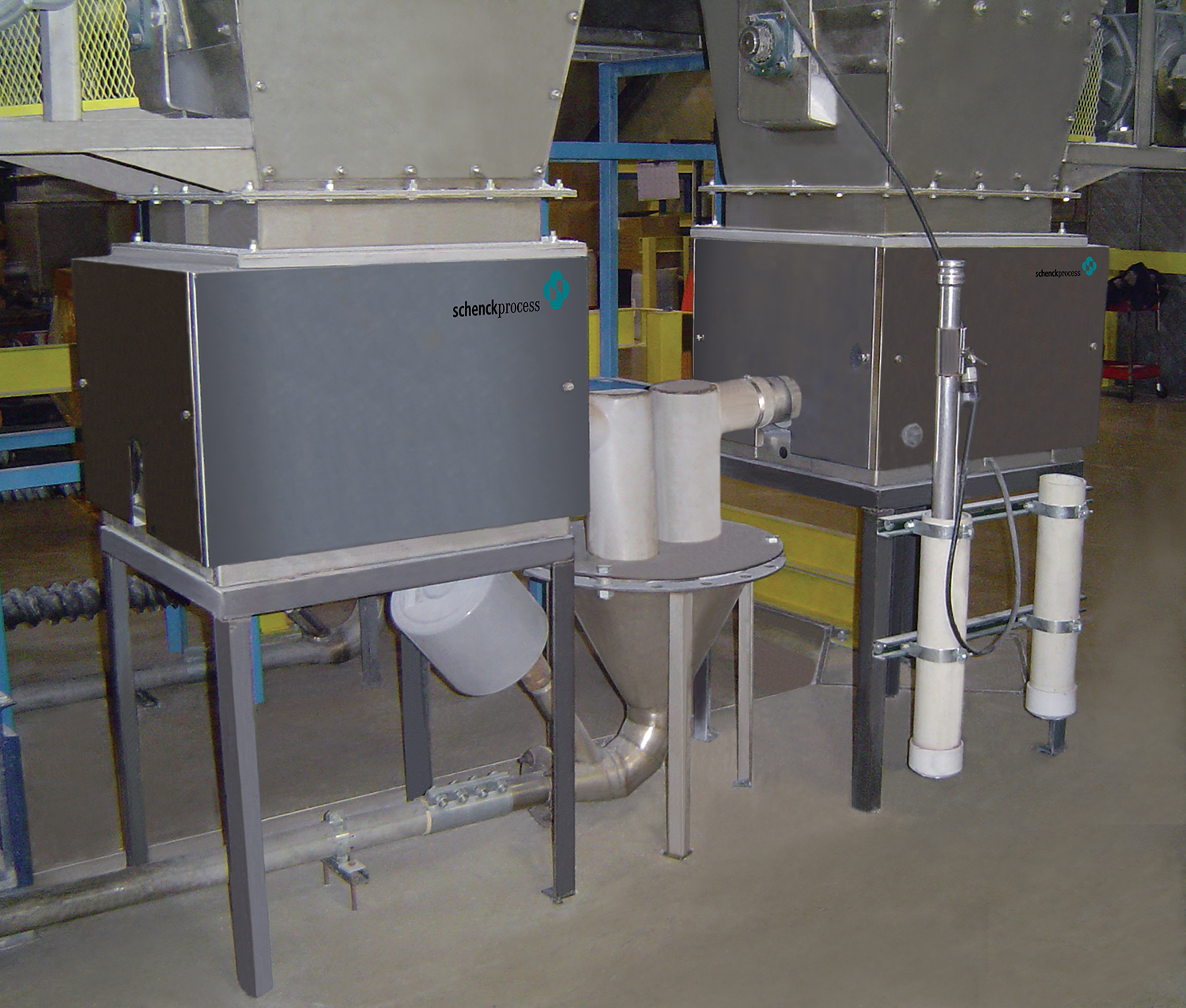
Figure 3: Refill bin above a feeder
Is the material only flushing with the first refill? Filling a feeder with a floodable material for the first time can cause the material to flood out of the feeder. Three ways to prevent flooding in this situation are:
- Incorporating a center rod inside the feed screw to take up the void in the feed screw spiral or helix.
- Using a side discharge, which gives the material a wall or end cap to overcome before it is fed out.
Using a discharge plunger to stop the discharge of the feeder during the initial refill, then opening the discharge of the feeder the rest of the time. This is ideal for extremely floodable materials.
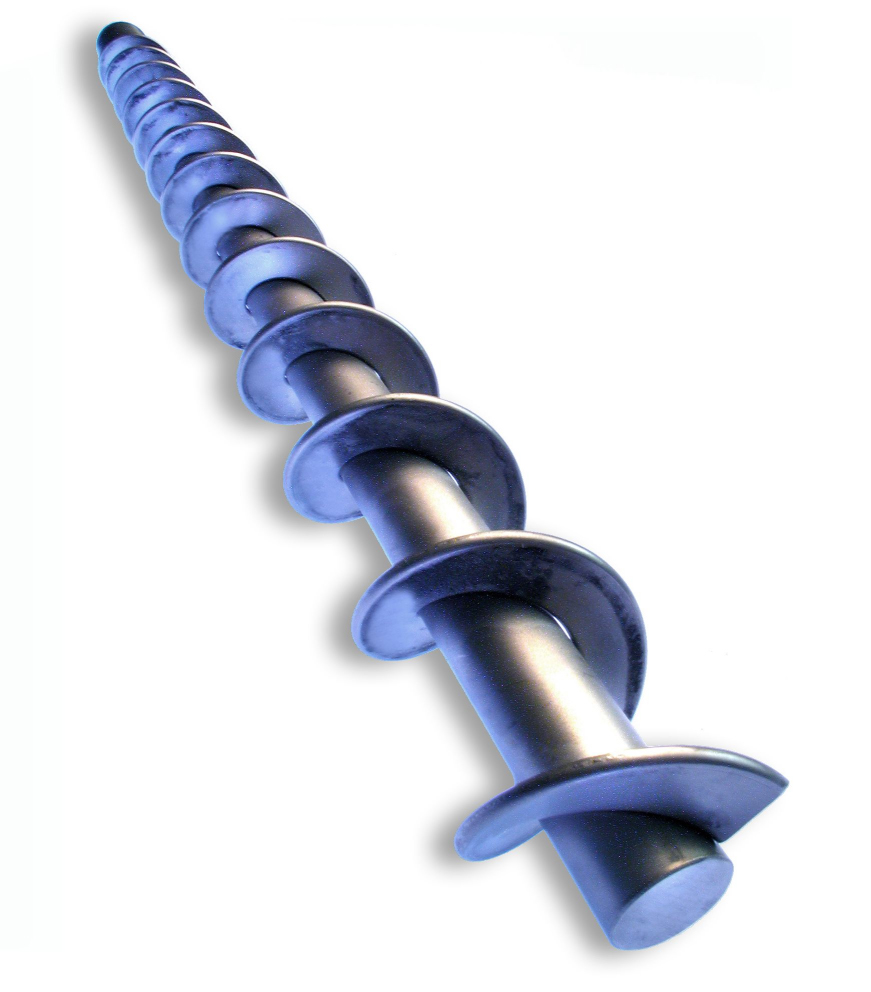
Figure 4: Helix with center rod
Clogged Filtration System
Another place we need to look at is the filtration system of the feeder. If the feeder has a blinded-up dust sock, the air inside the feeder cannot move out as new material comes in. Air will always take the path of least resistance, so if one exit is plugged (dust sock), the air will find its way out through the discharge point of the feeder—and it will bring the material with it.

Downstream Effects
Finally, what is downstream of the feeder? Are we feeding into a pressurized or vacuum-type system below the feeder? The vacuum may be strong enough to pull the material out of the feeder before the feeder has a chance to weigh it. If this is the case, investigate isolating the feeder from the downstream vacuum with a vented rotary airlock or a smaller screw conveyor.
Reach Out for Help
Hopefully, these scenarios have given you some ideas of what to look at if you experience a flushing or flooding feeder. Feel free to give an applications engineer a call to help troubleshoot your system or, better yet, have a technician come out. This small investment can prevent significant losses of revenue from downtime and product waste.
By: Todd D. Messmer - Weighing and Feeding Product Manager
Source: Schenck Process
You could be interested: Veterinarians Should Know How Pet Food is Made and Its Innovations

Manufacturing Process


Events

IBERZOO PROPET
11 to 13 March, 2026
Madrid, España
https://www.ifema.es/iberzoo-propet

Simposio CS Petfood & Aquafeed
15 to 16 April, 2026
Pilar, Buenos Aires, Argentina
https://www.cliviosolutions.com/

PET FOOD FORUM KANSAS
27 to 29 April, 2026
Kansas City, Missouri, USA
https://www.petfoodforumevents.com/

interpack
07 to 13 May, 2026
Düsseldorf, Alemania
https://www.interpack.com/

Smart Pet Food Production
11 May, 2026
Sheraton Carlton Nürnberg
https://www.petfoodcompetencenet.com/events/

Interzoo 2026
12 to 15 May, 2026
Nuremberg, Germany
https://www.interzoo.com/en

FENAGRA 2026
12 to 14 May, 2026
Santana – São Paulo
https://www.fenagra.com.br/

XXIV CONGRESO DE PET DE LA CBNA
12 to 14 May, 2026
São Paulo Expo, Brasil
https://www.fenagra.com.br/congresso/cbna-pet/

EXPO PACK México 2026
02 to 05 June, 2026
Ciudad de México, CDMX.
https://www.expopackmexico.com.mx/

VICTAM 2026
02 to 04 June, 2026
Utrecht, Países Bajos
https://victaminternational.com/

VIV Europe 2026
02 to 04 June, 2026
Utrecht, the Netherlands
https://www.viveurope.nl/

Foro Mascotas 2026
24 to 26 June, 2026
Expo Guadalajara, Mexico
https://www.foromascotas.mx/en

Pet South America 2026
12 to 14 August, 2026
São Paulo Expo, Brazil
https://petsa.com.br/

Pet Fair Asia 2026
19 to 23 August, 2026
Shanghai, China
https://en.petfairasia.com/

CIPAL 2026
23 to 24 September, 2026
Buenos Aires, Argentina
https://cipal.com.ar/?lang=en

PETZOO Eurasia
07 to 10 October, 2026
İFM- İstanbul Expo Center
https://petfuari.com/en/

SINPET 2026
15 to 16 October, 2026
Porto Alegre, Brazil
https://www.instagram.com/sinpet2026/

FIGAP 2026
21 to 23 October, 2026
Guadalajara, Jalisco, Mexico
https://figap.com/

Pet Fair South East Asia
28 to 30 October, 2026
Bangkok, Thailand
https://petfair-sea.com/
Advertising