4 min reading
By Ludmila Barbi T. Bomcompagni
Wednesday, 27 of February, 2024Two essential parameters for pet food launching
In recent years, the pet food industry has experienced exponential growth, driven by increased awareness among owners about the importance of proper nutrition for their pets. However, this dynamic and expanding sector is quickly becoming a highly competitive field where companies relentlessly seek innovation to offer high-quality products that meet specific consumer demands.
In recent years, the pet food industry has experienced exponential growth, driven by increased awareness among owners about the importance of proper nutrition for their pets. However, this dynamic and expanding sector is quickly becoming a highly competitive field where companies relentlessly seek innovation to offer high-quality products that meet specific consumer demands.
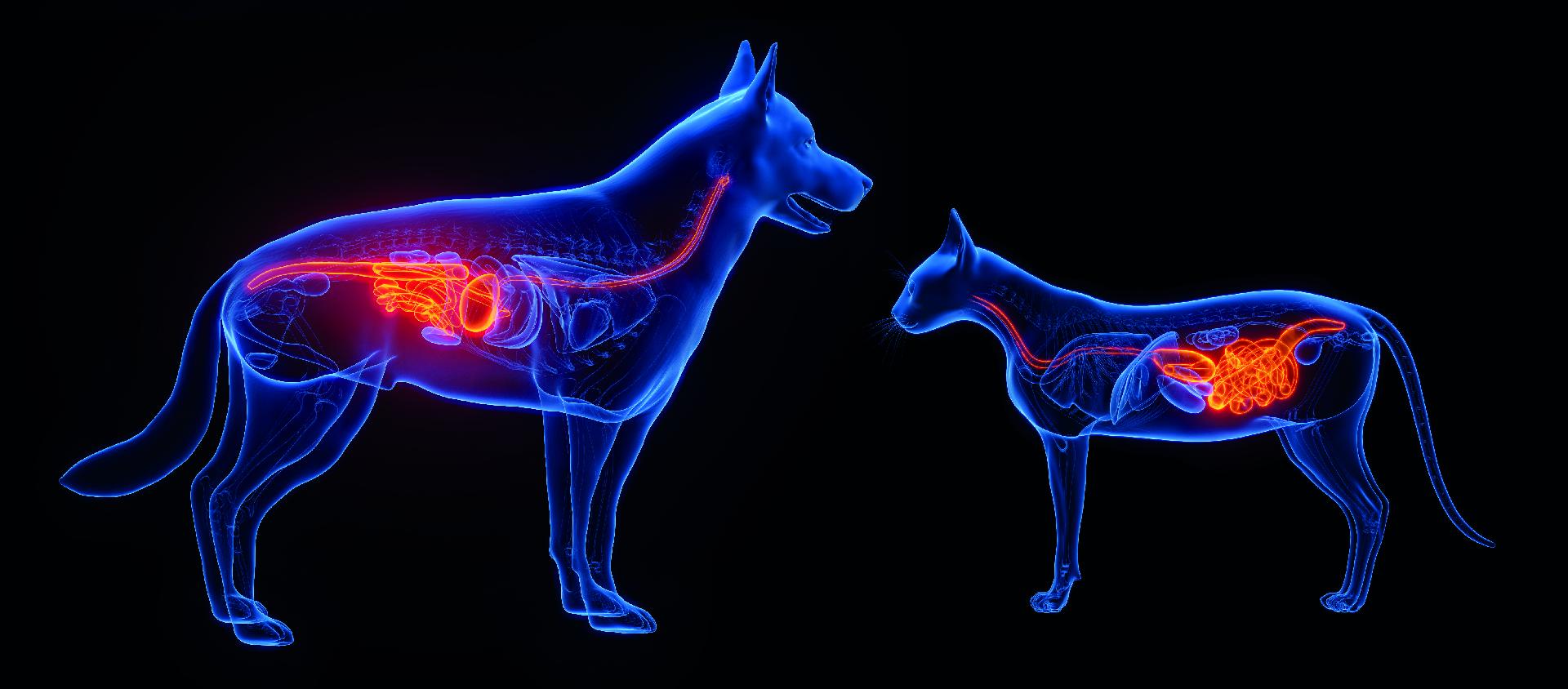
The fierce competition in the pet food market not only highlights the need for differentiation and excellence in pet food formulation but also emphasizes the importance of validating their effectiveness. Carrying out digestibility tests and fecal score evaluation is one of the crucial methods for evaluating the nutritional pet food quality.
Two essential parameters for pet food launching
Digestibility test
The digestibility test is a crucial tool in evaluating the efficiency with which animals use and absorb food nutrients. This method provides a deep understanding of the digestion and absorption capacity of essential nutrients, which is essential for optimizing diet formulations and ensuring adequate nutrition for living beings. By analyzing the digestibility rate of various components present in food, such as proteins, fats, and starch, the digestibility test contributes significantly to the development of more efficient and sustainable feeding strategies, benefiting pet food products.

Fecal score evaluation
Assessment of fecal score in dogs and cats is a practical and valuable method for monitoring the digestibility of food consumed by these animals. The fecal score refers to the consistency and appearance of feces, being a visual indication of gastrointestinal health and digestive efficiency.
This method involves assigning an appropriate score to stool, usually on a scale from 1 to 5, based on characteristics such as consistency, color, and shape.
When applied to food digestibility studies for dogs and cats, fecal score plays a crucial role. Well-formed stools with adequate consistency indicate good nutrient absorption in the gastrointestinal tract. On the other hand, excessively soft stools, diarrhea, or other abnormalities can be attributed to poor diet digestibility.
Fecal score assessment is often performed in experimental feeding studies in which animals are subjected to different diets. By comparing fecal scores over time, researchers can infer the relative digestibility of different food ingredients or formulations. Diets that result in better-formed and more consistent stools generally indicate better use of food nutrients.
Visual examination of the fecal score can complement the assessment of digestibility. This approach provides a more comprehensive understanding of the impact of food on the gastrointestinal health of dogs and cats, allowing adjustments to formulations to optimize nutrition and digestibility, thereby promoting pet health and well-being.
Evaluating these parameters before launching a pet food product onto the market can give you advantages in comparison with competitors, evaluating whether the processing was done correctly, and identifying in time the need for changes in formulations.

A demonstration in practice would be excess carbohydrates in the diet, for example, which leads to accentuated lactic fermentation, and the feces appear pasty with a light color and acidic smell (without a rotten smell). The same occurs when the feed is poorly processed. Normally, to manufacture dry food, a process called extrusion is used, which consists of applying steam and pressure to a crumbled mass, forming those granules that we technically call 'kibbles.' In this process, starch is essential for making the feed expand. However, if it does not undergo good cooking (or gelatinization) there is a risk of causing osmotic diarrhea in the animal fed with the feed in question. (Saad et al., 2014).
The use of ingredients with lower digestibility directly impacts the fecal score. Ingredients such as soybean meal, widely used in standard or economical pet food manufacturing, contain 20% non-starch polysaccharides (NSP). Soluble PNAs can reduce the digestibility of nutrients and energy in the diet due to the increase in the viscosity of the gastrointestinal tract (GIT) and the reduction in food passage time, making it difficult for digestive enzymes to access the food bolus and interfering with diffusion and transport of nutrients, resulting in loose stools and large quantities.
To minimize the adverse effects of ingredients with less digestibility, their use can be restricted to small inclusions. Otherwise, additives, such as enzymes or adsorbents, can be used. In the case of diets with raw materials rich in NSP and its influence on the fecal characteristics of dogs and cats, for example, the inclusion of a zeolite-type adsorbent additive adjusts the diet fecal score, since this additive, when passing inert through the GIT, adsorbs water and gases and reduces the elimination of ammonia, which improves the fecal characteristics and odors of animals.
The animal's fecal score after consuming a feed plays a significant role in consumer satisfaction and can directly influence the repurchase decision. Thus, the digestibility and consistency of the fecal score reinforce consumer confidence in the product. If the food provides healthy and regular digestion, owners tend to associate this quality with the brand, thus strengthening customer loyalty.
Brand trust is crucial for repurchase, as consumers look for products that consistently meet expectations in such a competitive market.
You could be interested: High-level nutrition: The revolution in pet health

About the author
Ludmila Barbi T. BomcompagniBrazilian living in Mexico City, veterinarian with a master's degree in Animal Nutrition. Having experience in pet food formulation and raw materials evaluation, she currently dedicates to the study and development of functional additives for pet food nutrition.

About the author
Erika StasieniukAnimal Scientist graduated from UNESP —Botucatu, with a Master’s degree (2009) and Ph.D. (2013) in Animal Science, with an emphasis on Companion Animal Nutrition, from UFMG— Belo Horizonte. With over 15 years of experience in the pet food industry, she has worked in Research and Development, formulation of dry extruded foods, premixes, and supplements for dogs, cats, and fish, with experience in both national and multinational companies. Since 2019, she has been the founder of SFA Consultoria, providing technical and strategic support to national and international companies that produce food and ingredients for dogs and cats. She also trains professionals through online courses and mentorships, with more than 200 students in Brazil and abroad. She is currently also a postgraduate professor at Faculdade CTA, where she teaches the subject of Dry Extruded Food Formulation for Dogs and Cats. You can find her on Instagram: @erikastasieniuk


Publisher Contents


Events

IBERZOO PROPET
11 to 13 March, 2026
Madrid, España
https://www.ifema.es/iberzoo-propet

Simposio CS Petfood & Aquafeed
15 to 16 April, 2026
Pilar, Buenos Aires, Argentina
https://www.cliviosolutions.com/

PET FOOD FORUM KANSAS
27 to 29 April, 2026
Kansas City, Missouri, USA
https://www.petfoodforumevents.com/

interpack
07 to 13 May, 2026
Düsseldorf, Alemania
https://www.interpack.com/

Smart Pet Food Production
11 May, 2026
Sheraton Carlton Nürnberg
https://www.petfoodcompetencenet.com/events/
Interzoo 2026
12 to 15 May, 2026
Nuremberg, Germany
https://www.interzoo.com/en

FENAGRA 2026
12 to 14 May, 2026
Santana – São Paulo
https://www.fenagra.com.br/

XXIV CONGRESO DE PET DE LA CBNA
12 to 14 May, 2026
São Paulo Expo, Brasil
https://www.fenagra.com.br/congresso/cbna-pet/

EXPO PACK México 2026
02 to 05 June, 2026
Ciudad de México, CDMX.
https://www.expopackmexico.com.mx/

VICTAM 2026
02 to 04 June, 2026
Utrecht, Países Bajos
https://victaminternational.com/

VIV Europe 2026
02 to 04 June, 2026
Utrecht, the Netherlands
https://www.viveurope.nl/

Foro Mascotas 2026
24 to 26 June, 2026
Expo Guadalajara, Mexico
https://www.foromascotas.mx/en

Pet South America 2026
12 to 14 August, 2026
São Paulo Expo, Brazil
https://petsa.com.br/

Pet Fair Asia 2026
19 to 23 August, 2026
Shanghai, China
https://en.petfairasia.com/

CIPAL 2026
23 to 24 September, 2026
Buenos Aires, Argentina
https://cipal.com.ar/?lang=en

PETZOO Eurasia
07 to 10 October, 2026
İFM- İstanbul Expo Center
https://petfuari.com/en/

SINPET 2026
15 to 16 October, 2026
Porto Alegre, Brazil
https://www.instagram.com/sinpet2026/

FIGAP 2026
21 to 23 October, 2026
Guadalajara, Jalisco, Mexico
https://figap.com/

Pet Fair South East Asia
28 to 30 October, 2026
Bangkok, Thailand
https://petfair-sea.com/
Advertising