5 min reading
Understanding Minimally Processed: What It Really Means for Your Pets Food
Have you ever soaked chickpeas overnight or blanched fresh green beans to prepare for freezing? If so, then you’ve already processed food. Flip the switch on a modern twin-screw extruder and you’re doing the same thing—just faster, hotter, and with far more control.
Have you ever soaked chickpeas overnight or blanched fresh green beans to prepare for freezing? If so, then you’ve already processed food. Flip the switch on a modern twin-screw extruder and you’re doing the same thing—just faster, hotter, and with far more control.
Processing simply means altering an ingredient's chemistry, structure, or safety profile. It can be as gentle as hydrating a pulse or fermenting kefir, or as intensive as retort canning. In other words, each processing step exists because it solves a specific problem, such as improving digestibility, extending shelf life, controlling pathogens, enhancing palatability, preserving texture, or maintaining color, often addressing multiple issues simultaneously.
The real question is how much processing is happening, why, and what does it mean for nutrition and safety?
Regulatory Definitions
There are currently no regulatory definitions for 'minimally or lightly processed,' 'gently cooked,' or even 'fresh' pet food established by the Association of American Feed Control Officials (AAFCO). The closest AAFCO definition pertains to the 'natural' claim, which allows for common heat or mechanical steps such as rendering, extrusion, purification, and fermentation. Even then, there is no use of the phrase 'minimally processed.'

However, the USDA's 'natural' claim states: 'A product containing no artificial ingredient or added color and is only minimally processed. Minimal processing means that the product was processed in a manner that does not fundamentally alter the product.' But there is no numerical cap for 'minimal.' The Food, Drug, and Cosmetic Act, established by the Food and Drug Administration (FDA), does not define 'minimally processed' either, and no temperature limits are specified.
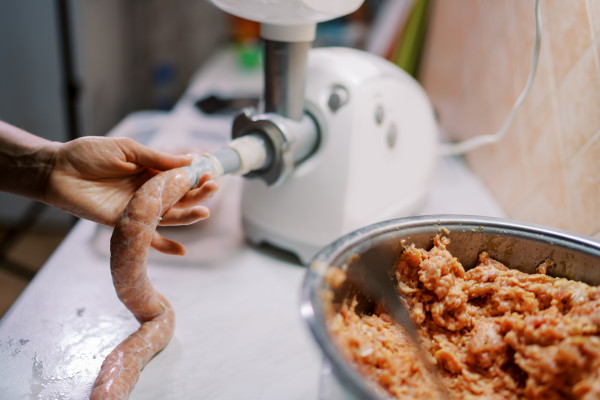
Photo by Nadtochii
Enter NOVA System—Helpful Lens or Marketing Hammer?
In 2009, nutrition scientists at the University of São Paula proposed the NOVA classification system. This four-tiered system ranks foods by the extent and purpose of industrial processing. The tiers are as follows:
- Group 1: Unprocessed/Minimally Processed—Edible parts of plants, animals, fungi, algae, or water used almost as found in nature, or altered only by basic preservation steps (washing, peeling, drying, chilling, freezing, pasteurizing, fermenting, etc.)
- Group 2: Processed Culinary Ingredients—Substances extracted from Group 1 foods or nature (oils, butter, lard, sugar, honey, salt) via pressing, milling, refining, evaporating, or drying.

- Group 3: Processed Foods—Group 1 foods modified by adding Group 2 ingredients (salt, oil, sugar) and/or by preservation or non-alcoholic fermentation; usually have 2–3 ingredients and remain recognizable as the original food.
- Group 4: Ultra-Processed Foods—Industrial formulations made mostly or entirely from refined food fractions (starches, sugars, oils, proteins) plus additives that create colors, flavors, textures, or extend shelf-life; contain little if any intact whole food.
The model was never intended to regulate pet food; yet, the term 'ultra-processed' has been eagerly adopted by bloggers and marketers to cast conventional kibble as nutritionally suspect. The trouble is that NOVA's criteria focus on how a product is assembled, rather than whether it meets nutrient profiles, safety standards, or digestibility targets.
Here's the bottom line: NOVA does provide a consumer-friendly shorthand for human diets, but it isn't recognized by the FDA, USDA, or AAFCO, and can be misleading when pasted onto pet nutrition. So, when you see 'ultra-processed' used to dismiss a pet food, first ask: 'What nutrient, safety, or digestibility metric is actually falling short? Or is this just another buzzword trying to 'make fetch happen?''
Is 'Minimally/Lightly Processed' Automatically Better?
Again, it depends on the product's ultimate goal. Is it always better? No, not always. Less heat means fewer automatic kill steps for pathogen safety. In these cases, it is prudent to add a kill step. High-pressure processing (HPP) or steam pressurized pasteurization (SPP) are two methods that can be used to reduce microbial load. The major difference between the two is that HPP is technically a non-thermal process, while SPP relies on heat to inactivate microbes.
Certain ingredients, such as beans or potatoes, require processing to reduce anti-nutrient factors and enhance the digestibility of their starches. Without the appropriate process, there is an increased chance of your pet consuming an ingredient that is not healthy for them. On the other hand, ingredients that are not exposed to high levels of heat often have higher nutrient retention, albeit at the cost of increased retention of anti-nutrient factors.
Even the gentlest recipe requires a validated kill step. Whether a brand relies on HPP, SPP, or heat in extrusion or retort, the goal is the same: to achieve at least a 5-log reduction of pathogens such as Salmonella and Listeria without overcooking nutrients.

Bottom line, the degree of processing should not be on the product as a whole, but on the individual ingredients and what is appropriate from a safety and nutritional perspective.
Looking Ahead: How the PURR Act Could Bring Clarity
The Pet Food Uniform Regulatory Reform (PURR) Act of 2025, now pending before the House of Representatives, proposes a single federal standard for labeling dog and cat food. If passed, it offers a viable vehicle to define descriptors like lightly cooked, air-dried, and freeze-dried raw in measurable terms—think core temperature limits, required pathogen-reduction methods, and even minimum digestibility disclosures.
However, the proposed bill is not without its flaws, which BSM Partners has addressed in articles, 'Time for change: Addressing regulatory reform in pet food,' and, 'AAFCO: PURR Act Places Pet Food Transparency on the Chopping Block,' as well as in an episode of the Barking Mad podcast, 'Barking Up the Wrong Tree: How the PURR Act Could Undermine Pet Food Transparency and Safety'.
By checking the Federal Register and Regulations.gov, you can keep up to date on any scheduled public hearings or if there is an open comment period for the PURR Act. By participating in this process, brands can help ensure that "minimal processing" becomes a transparent promise backed by science, not just clever marketing copy.
Whether you're perfecting your recipe, validating a kill step, or trying to understand where your next opportunity is in the industry, our experts at BSM Partners specialize in audits that keep nutrition, safety, and regulatory compliance in balance, understand market trends, and formulate a nutritious formula for your desired format.
About the Author
Dr. Sydney McCauley is a Board-Certified Companion Animal Nutritionist and earned both her bachelor's and doctoral degrees at Virginia Tech in Animal and Poultry Sciences. McCauley's research was in nutritional physiology with a focus on understanding the effects of low birth weight on glucose, fatty acid, carbohydrate, and amino acid metabolism in skeletal muscle and overall metabolic homeostasis during neonatal development.
By Sydney McCauley
Source: BSM Partners
You could be interested: From Claim to Credibility: The Case for Research-Backed Pet Food Ingredients

Events

IBERZOO PROPET
11 to 13 March, 2026
Madrid, España
https://www.ifema.es/iberzoo-propet

Simposio CS Petfood & Aquafeed
15 to 16 April, 2026
Pilar, Buenos Aires, Argentina
https://www.cliviosolutions.com/

PET FOOD FORUM KANSAS
27 to 29 April, 2026
Kansas City, Missouri, USA
https://www.petfoodforumevents.com/

interpack
07 to 13 May, 2026
Düsseldorf, Alemania
https://www.interpack.com/

Smart Pet Food Production
11 May, 2026
Sheraton Carlton Nürnberg
https://www.petfoodcompetencenet.com/events/
Interzoo 2026
12 to 15 May, 2026
Nuremberg, Germany
https://www.interzoo.com/en

FENAGRA 2026
12 to 14 May, 2026
Santana – São Paulo
https://www.fenagra.com.br/

XXIV CONGRESO DE PET DE LA CBNA
12 to 14 May, 2026
São Paulo Expo, Brasil
https://www.fenagra.com.br/congresso/cbna-pet/

EXPO PACK México 2026
02 to 05 June, 2026
Ciudad de México, CDMX.
https://www.expopackmexico.com.mx/

VICTAM 2026
02 to 04 June, 2026
Utrecht, Países Bajos
https://victaminternational.com/

VIV Europe 2026
02 to 04 June, 2026
Utrecht, the Netherlands
https://www.viveurope.nl/

Foro Mascotas 2026
24 to 26 June, 2026
Expo Guadalajara, Mexico
https://www.foromascotas.mx/en

Pet South America 2026
12 to 14 August, 2026
São Paulo Expo, Brazil
https://petsa.com.br/

Pet Fair Asia 2026
19 to 23 August, 2026
Shanghai, China
https://en.petfairasia.com/

CIPAL 2026
23 to 24 September, 2026
Buenos Aires, Argentina
https://cipal.com.ar/?lang=en

PETZOO Eurasia
07 to 10 October, 2026
İFM- İstanbul Expo Center
https://petfuari.com/en/

SINPET 2026
15 to 16 October, 2026
Porto Alegre, Brazil
https://www.instagram.com/sinpet2026/

FIGAP 2026
21 to 23 October, 2026
Guadalajara, Jalisco, Mexico
https://figap.com/

Pet Fair South East Asia
28 to 30 October, 2026
Bangkok, Thailand
https://petfair-sea.com/
Advertising