4 min reading
Cruciferous vegetables in Pet Food formulas
Pet food manufacturers are in a constant bid to find the best formula: the healthiest, the tastiest, the most convenient ...
In this article, we discuss cruciferous vegetables that are incorporated into Pet Food formulas in search of a healthier food.
First: what vegetables are cruciferous?
Cruciferous vegetables are the vegetables of the Brassicaceae family, a family of dicotyledonous angiosperms made up of a monophyletic group with 372 genera and 4,060 accepted species. The best known and most consumed are cauliflower, kale, cabbage, watercress, broccoli and Brussels cabbage, among others.
Vegetables in the cruciferous family are known as "super vegetables": they contain vitamins, fibers and phytochemicals that help the human immune system fight disease. In fact, it is recommended for human consumption several times a week.
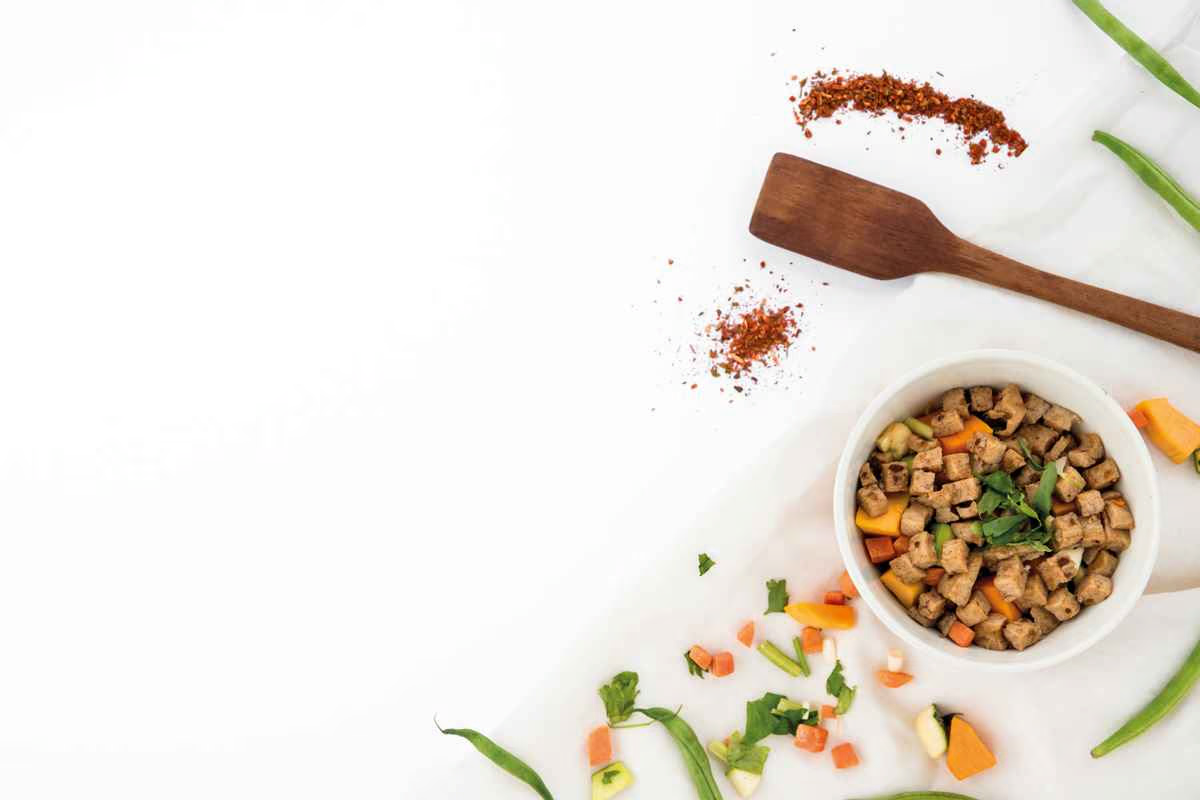
Now, as we have already seen in previous articles that everything that is imposed on humans is imposed, sooner rather than later, in the lifestyle of pets, and this trend is no exception: the consumption of vegetables and the replacement of animal meat is on the rise.
Are cruciferous vegetables also good for Pets?
The answer is yes: the vegetables in this family are healthy, safe and nutritious to include in pet food formulas.
Broccoli, for example, is packed with fiber, which helps with digestion and weight control; It contains many vitamins (A, B, C, D, E and K) that help promote the general well-being of the animal and lutein, a nutrient that promotes eye and cardiovascular health.
What's more:
- Cabbage, for its part, is the one with the highest amount of vitamin A.
- Brussels sprouts and broccoli contain high levels of folic acid and omega-3s.
- Brussels sprouts have the highest amount of vitamin A, C, K and B complex vitamins.
- Kale is high in fiber, vitamin K and E, iron, calcium, potassium, magnesium, and antioxidants.
'You have to follow the advice of the grandmother: everything in moderation! Crucifers are warrior vegetables that prevent cancer; Dogs should not be denied the benefits of indole-3-carbinol found in these foods, but they should be used in moderation, and the crucifers should be made from organic soils to avoid contamination with thallium by environmental pollutants. "
Dr. Karen Becker, expert in Comprehensive Veterinary Medicine
Benefits of incorporating cruciferous vegetables into the Pet Food formula
• Prevention of oxidative stress: Thanks to the antioxidants in these vegetables, oxidative stress in pets can be reduced or prevented, which occurs when there is an imbalance of free radicals and antioxidants in the animal's body. Free radicals are unstable molecules with an odd number of electrons. We could say that they are a natural "by-product" of the daily processes of the body's functioning, although they are also caused by environmental toxins such as pollution and smoke. To try to stabilize, free radicals interact with other molecules, which can damage proteins, DNA, and other cells.

• Carotenoid intake: Carotenoids are plant pigments rich in antioxidants that protect dogs from free radicals. Kale, for example, contains three main carotenoids: lutein, zeaxanthin, and beta-carotene, a provitamin A carotenoid, that is, it converts into vitamin A upon entering a dog's body, and benefits the skin, coat, and endings muscular and nervous. Lutein and zeaxanthin are beneficial to the health of the retina of the eye, and related research claims that they help prevent age-related macular degeneration (AMD), cataracts, and diabetic retinopathy, among other conditions.
Studies show that lutein and zeaxanthin improve cardiovascular health. Lutein and zeaxanthin also help increase levels of glutathione, an antioxidant produced in canine cells that is involved in detoxifying the liver. In fact, low glutathione can cause up to 45% of liver disease in dogs.
This antioxidant participates in various processes, such as stress, aging, and protection against environmental toxins, and cannot be easily replaced.
• Intake of flavonoids: like carotenoids, flavonoids are plant pigments found in fruits and vegetables. They are powerful antioxidants and anti-inflammatories, with the two most common being quercetin and kaempferol. Quercetin is known for its ability to fight allergies, because it is also an antihistamine. For its part, kaempferol helps reduce inflammation, improves cardiovascular health, protects the brain, and controls diabetes. Both flavonoids also protect against cancer.
'Kale is rich in some minerals that, compared to AAFCO or FEDIAF standards, are in short supply in many meat-based diets. So the choice often comes down to using moderate amounts of kale and similar vegetables, finding other foods that provide the minerals, adding mineral supplements, or having a diet that may be deficient in some important minerals. Mineral-rich vegetables reduce the amount of supplements we need to add to meet standards. "
Steve Brown, expert in Pet Nutrition.
Sumary
Vegetables are once again making their way into pet food. In this case, we can affirm that the incorporation of cruciferous vegetables into pet food formulas for dogs is positive; However, certain precautions must be taken, such as, for example, that the vegetables are grown in organic soils or that they do not exceed 10% of what the animal's diet will be.

It will be crucial to deepen the research and tests in our sector of the industry to be able to include the right measure of these vegetables with total safety in the pet food formulas that are committed to healthy, nourished animals and at the forefront of what their human owners seek.
Did you know all the benefits of these vegetables?
Let us know!
Source: All Pet Food
You could be interested: Keeping the Doctor Away With Algal Omega-3s Each Day


Events

IBERZOO PROPET
11 to 13 March, 2026
Madrid, España
https://www.ifema.es/iberzoo-propet

Simposio CS Petfood & Aquafeed
15 to 16 April, 2026
Pilar, Buenos Aires, Argentina
https://www.cliviosolutions.com/

PET FOOD FORUM KANSAS
27 to 29 April, 2026
Kansas City, Missouri, USA
https://www.petfoodforumevents.com/

interpack
07 to 13 May, 2026
Düsseldorf, Alemania
https://www.interpack.com/

Smart Pet Food Production
11 May, 2026
Sheraton Carlton Nürnberg
https://www.petfoodcompetencenet.com/events/

Interzoo 2026
12 to 15 May, 2026
Nuremberg, Germany
https://www.interzoo.com/en

FENAGRA 2026
12 to 14 May, 2026
Santana – São Paulo
https://www.fenagra.com.br/

XXIV CONGRESO DE PET DE LA CBNA
12 to 14 May, 2026
São Paulo Expo, Brasil
https://www.fenagra.com.br/congresso/cbna-pet/

EXPO PACK México 2026
02 to 05 June, 2026
Ciudad de México, CDMX.
https://www.expopackmexico.com.mx/

VICTAM 2026
02 to 04 June, 2026
Utrecht, Países Bajos
https://victaminternational.com/

VIV Europe 2026
02 to 04 June, 2026
Utrecht, the Netherlands
https://www.viveurope.nl/

Foro Mascotas 2026
24 to 26 June, 2026
Expo Guadalajara, Mexico
https://www.foromascotas.mx/en

Pet South America 2026
12 to 14 August, 2026
São Paulo Expo, Brazil
https://petsa.com.br/

Pet Fair Asia 2026
19 to 23 August, 2026
Shanghai, China
https://en.petfairasia.com/

CIPAL 2026
23 to 24 September, 2026
Buenos Aires, Argentina
https://cipal.com.ar/?lang=en

PETZOO Eurasia
07 to 10 October, 2026
İFM- İstanbul Expo Center
https://petfuari.com/en/

SINPET 2026
15 to 16 October, 2026
Porto Alegre, Brazil
https://www.instagram.com/sinpet2026/

FIGAP 2026
21 to 23 October, 2026
Guadalajara, Jalisco, Mexico
https://figap.com/

Pet Fair South East Asia
28 to 30 October, 2026
Bangkok, Thailand
https://petfair-sea.com/
Advertising