3 min reading
Feeding Puppies
Search online for 'best puppy food' and you will get thousands of different sites each telling you something different. Finding the right diet for any dog is tricky but for a new puppy owner approaching the world of pet food for the first time, it can be extremely daunting.
Search online for 'best puppy food' and you will get thousands of different sites each telling you something different. Finding the right diet for any dog is tricky but for a new puppy owner approaching the world of pet food for the first time, it can be extremely daunting.
Well don't worry, we're here to help! With a quick look at some of the fundamentals of feeding you'll soon have no trouble finding the very best food for your brand new best friend!
Puppy nutritional needs
After weaning, which usually occurs when the puppy is 4-6 weeks of age, puppies essentially require all of the same nutrients from their diet as adult dogs but because they are growing they need more of some of them per pound of bodyweight than their fully-grown counterparts.
It's particularly important that puppies receive plenty of good quality protein from their diet as well as the right level of fat and certain important minerals like calcium and phosphorus for healthy development.
Meat is the best source of protein for dogs as it tends to be easier for dogs to digest and utilise than other forms of protein like those from plants. A good diet for a puppy should therefore include meat as the first ingredient and meat should make up a good proportion of the food as a whole.

Puppy-specific vs all-lifestage foods
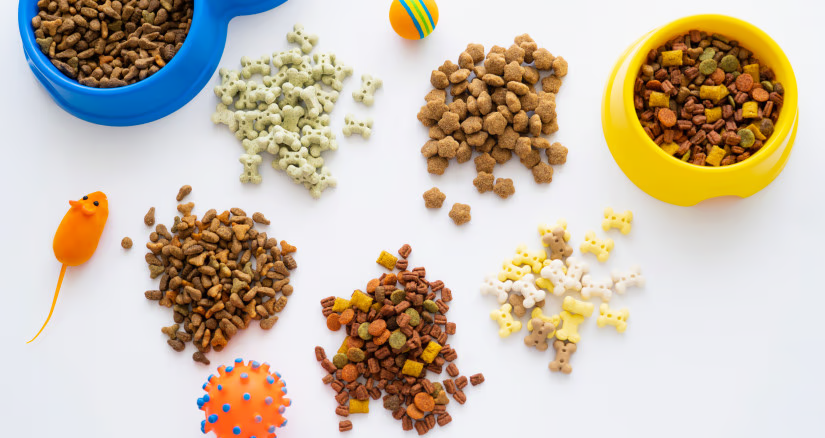
For puppies, store-bought pet foods come in two forms:
1. Puppy-Specific foods
These foods are made to cater specifically for the nutritional needs of puppies. For that reason they usually feature higher levels of protein, fat and the important minerals to allow for healthy growth and development.
2. All-lifestage foods
Another way to increase the amount of protein, fat and minerals going into your puppy is just to feed a 'regular' food, but more of it. This is essentially the idea behind 'all-lifestage' foods.
Although this approach is not as tailored as a puppy-specific food, it is arguably the more 'natural' way to feed puppies since dogs in the wild, along with all other mammals including us humans, tend to eat more or less the same foods throughout our lives after weaning, only varying the quantity of food rather than the type of food.
As long as the diet is of a high quality and agrees with the puppy, either approach can work equally well. Like all pet foods, both puppy foods and all-lifestage foods can vary enormously in quality so be sure to take a look at the nutritional ratings on the Dog Food Directory to get an idea of how the different options compare.
Making the change
Going to a new home for the first time is usually an extremely stressful period for puppies so the last thing you want to do is add to the stress by switching the diet. For this reason, it's always best to stick to whatever food the breeder has been feeding for at least the first 2 weeks before making any changes.

Once your puppy is properly settled in, it's still important to ensure that any dietary changes are made gradually, slowly introducing the new food over the course of a week or two to give the system plenty of time to adjust.
Feeding the right amount
Any complete food that is labelled as suitable for puppies should have suggested puppy feeding guidelines on the packaging. This is certainly the best place to start but as all puppies are different it's important to keep an eye on the individual's weight and adjust feeding amounts accordingly. You can find our brief guide on how much to feed here.
From puppyhood to adulthood
While 12 months is generally regarded as the point when dogs reach adulthood, some breeds mature at very different rates than others. Smaller breeds, for example, may reach full size as early as 9 months old while some giant breeds can continue growing until 18 months or even older.
As their growth slows, puppies naturally need less food and many have a reduced appetite. At this stage it is important to change on to an adult food (or reduce the feeding amounts if feeding an all-lifestage food) to avoid any excessive weight gain.
by David Jackson
You could be interested: From Claim to Credibility: The Case for Research-Backed Pet Food Ingredients

Events

IBERZOO PROPET
11 to 13 March, 2026
Madrid, España
https://www.ifema.es/iberzoo-propet

Simposio CS Petfood & Aquafeed
15 to 16 April, 2026
Pilar, Buenos Aires, Argentina
https://www.cliviosolutions.com/

PET FOOD FORUM KANSAS
27 to 29 April, 2026
Kansas City, Missouri, USA
https://www.petfoodforumevents.com/

interpack
07 to 13 May, 2026
Düsseldorf, Alemania
https://www.interpack.com/

Smart Pet Food Production
11 May, 2026
Sheraton Carlton Nürnberg
https://www.petfoodcompetencenet.com/events/
Interzoo 2026
12 to 15 May, 2026
Nuremberg, Germany
https://www.interzoo.com/en

FENAGRA 2026
12 to 14 May, 2026
Santana – São Paulo
https://www.fenagra.com.br/

XXIV CONGRESO DE PET DE LA CBNA
12 to 14 May, 2026
São Paulo Expo, Brasil
https://www.fenagra.com.br/congresso/cbna-pet/

EXPO PACK México 2026
02 to 05 June, 2026
Ciudad de México, CDMX.
https://www.expopackmexico.com.mx/

VICTAM 2026
02 to 04 June, 2026
Utrecht, Países Bajos
https://victaminternational.com/

VIV Europe 2026
02 to 04 June, 2026
Utrecht, the Netherlands
https://www.viveurope.nl/

Foro Mascotas 2026
24 to 26 June, 2026
Expo Guadalajara, Mexico
https://www.foromascotas.mx/en

Pet South America 2026
12 to 14 August, 2026
São Paulo Expo, Brazil
https://petsa.com.br/

Pet Fair Asia 2026
19 to 23 August, 2026
Shanghai, China
https://en.petfairasia.com/

CIPAL 2026
23 to 24 September, 2026
Buenos Aires, Argentina
https://cipal.com.ar/?lang=en

PETZOO Eurasia
07 to 10 October, 2026
İFM- İstanbul Expo Center
https://petfuari.com/en/

SINPET 2026
15 to 16 October, 2026
Porto Alegre, Brazil
https://www.instagram.com/sinpet2026/

FIGAP 2026
21 to 23 October, 2026
Guadalajara, Jalisco, Mexico
https://figap.com/

Pet Fair South East Asia
28 to 30 October, 2026
Bangkok, Thailand
https://petfair-sea.com/
Advertising