


4 min reading
Palatability & Manufacturing: Impact on Pet Preferences
The growth of the pet food market has intensified the need to offer highly palatable products. Understanding the behaviors and needs of cats and dogs is fundamental to developing foods that are irresistible to them.
The growth of the pet food market has intensified the need to offer highly palatable products. Understanding the behaviors and needs of cats and dogs is fundamental to developing foods that are irresistible to them.
Differences Between Cats and Dogs
To begin the discussion on palatability, we must first understand our main customers: cats and dogs. The variability between these companions —their behavior, eating habits, and nutritional needs— must be considered to satisfy them and encourage pet owners to repurchase their food. Understanding what makes cats and dogs want to eat will help optimize feed manufacturing and achieve greater palatability.
A key difference between cats and dogs is their feeding behavior. Cats are carnivores, while dogs are omnivores, which leads to different nutritional needs and formulas. For example, cats require higher levels and better quality of proteins compared to dogs. FEDIAF recommends between 18% and 25% protein for dogs and between 25% and 33% for cats, which affects the starch content in their recipes and the nutritional values of the food. These differences require adjustments in production parameters to improve palatability.

The sense of taste in cats and dogs, although both are based on a carnivorous pattern, varies significantly. Dogs enjoy sweet and sour flavors, such as carboxylic and phosphoric acids, while cats prefer bitter flavors and are not sensitive to sweetness. Dogs generally consume large meals quickly, possibly due to their pack heritage, and tend to take the food with their teeth and crush it, preferring softer foods. On the other hand, cats eat several small meals a day, mimicking their hunting habits, and use their tongues and molars to break the food, preferring harder and drier foods.
Finally, the sense of smell is a critical factor in palatability for both cats and dogs, with their sense of smell being much more sensitive than that of humans. Cats have twice as many sensory olfactory cells as humans, and dogs may have up to 300 million olfactory receptors compared to about 5 million in humans.
Importance of Ingredients
Improved palatability begins with the proper selection of raw materials. Factors, such as protein quality, freshness, lipid oxidation, and ingredient proportions directly influence the texture and flavor of the food.
In one trial, chicken meal and chicken liver were replaced with hydrolyzed chicken liver in a standard recipe. "Versus" tests showed a clear preference for diets that included the hydrolyzed liver, even with 5% and 10% inclusion rates. Choosing the right protein is, therefore, the first step toward higher food acceptance.
Processing: From Grinding to Drying
The initial processing stages, such as grinding and mixing, affect particle size and product homogeneity. Improper grinding can cause irregularities that negatively impact texture.
In extrusion, starch gelatinization is critical. This process, which begins with the preconditioner, improves food cohesion. Insufficient starch content can cause kibble to disintegrate, while excess increases density. For cats in particular, kibble hardness influences acceptance: they prefer more compact products.
A common challenge is balancing protein and fat levels in cat foods without compromising product expansion. The key is adjusting ingredients to achieve both the appropriate nutritional profile and an attractive texture.
Coating Optimization
Coating is one of the most decisive steps to achieve superior palatability. It is done by applying fat and liquid and/or powdered palatants. Fat, used at levels from 1% to 15%, serves nutritional functions and acts as an adhesive base for palatants. However, fat alone is not enough to ensure high acceptance.
Liquid palatants (1% to 4%) enhance aroma and are more used in dog foods, where higher moisture and softness are sought. On the other hand, powdered palatants (0.5% to 3%) add flavor and moisture control, being common in cat foods, which require low moisture content and high protein levels.
To maximize coating effectiveness, it is recommended to apply fat first, then the liquid palatant, and finally the powder. This ensures better adhesion and homogeneity.
Technical Factors of Coating
- Nozzles: The diameter and pressure of the nozzles affect coating quality. Very low pressure generates large droplets that do not disperse well, while excessive pressure produces a mist that can be lost in the air. Proper positioning and spacing ensure uniform coverage.
- Mixing: In batch systems, the mixing direction influences homogeneity. Mixing from the outside inward improves palatant distribution, while the opposite creates clumps. Optimizing this process enhances the sensory experience of the food.
- Types of applicators: Batch applicators allow greater control, better homogeneity, and adjustments per batch, ideal for super-premium products. Although slower and more expensive, their efficacy in palatability terms makes them preferable in high-end segments. In contrast, continuous applicators are faster and more economical but may have lower precision.
Conclusion
Understanding the unique needs and behaviors of cats and dogs is fundamental to optimizing the palatability of pet foods. Given their distinct feeding habits, nutritional requirements, and sensory preferences, it is clear that a one-size-fits-all approach is ineffective.
The manufacturing process, from grinding to drying, plays a crucial role in determining the texture and palatability of the final product. Proper starch gelatinization, precise mixing, and controlled extrusion and drying processes are essential to achieve the desired consistency and flavor of the food. Each stage must be carefully adjusted to maintain the integrity and appeal of the product, responding to the specific preferences of cats and dogs. Coating, one of the most critical stages to improve palatability, requires careful ingredient selection and application techniques. By optimizing fat and palatant use and ensuring both efficient application and homogeneous mixing, it is possible to develop a much more attractive product.
In conclusion, improving the palatability of pet foods involves a multifaceted approach that encompasses ingredient selection, precise manufacturing processes, and effective coating techniques. By addressing these factors, we can ensure that both cats and dogs receive foods that satisfy their flavor preferences.
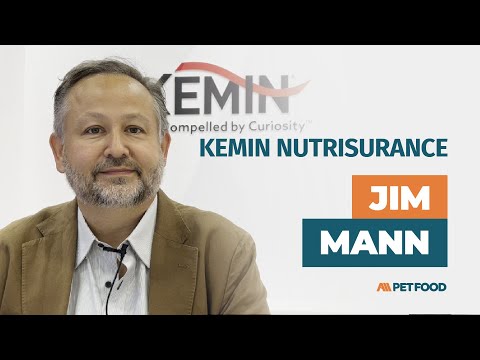
By Maïlys Le Thiec - Kemin Nutrisurance
Source: All Pet Food Magazine
You could be interested: Kemin Unifies Latin America, Expands Regional Structure, Announces 46 New Hires, and Brazil Becomes a Strategic Hub


About the company

About the company
Kemin is more than a supplier of ingredients; we are a global company that transforms the quality of life.
Kemin is the science inside the countless products you interact with every day. We create solutions that help strengthen your health and well-being. We provide nutrition and immune support for your pets and production animals. We protect the planet's natural resources and are dedicated to reducing our environmental impact, and we believe in protecting the global food supply chain for future generations.
At Kemin, we always look to tomorrow. Human imagination, scientific innovation and constant curiosity help shape our company and how we serve our customers now and in the future.
We see beyond what is, in order to see what could be.
The world has been transformed since R.W. and Mary Nelson founded Kemin in 1961, but our dedication and discipline in scientific research remain unwavering, as does our energy and enthusiasm to discover new ways to improve life. Every day, we ask ourselves how we can channel our experience and expertise into new opportunities to improve the quality of life around the world.


Videos



Events

IBERZOO PROPET
11 to 13 March, 2026
Madrid, España
https://www.ifema.es/iberzoo-propet

Simposio CS Petfood & Aquafeed
15 to 16 April, 2026
Pilar, Buenos Aires, Argentina
https://www.cliviosolutions.com/

PET FOOD FORUM KANSAS
27 to 29 April, 2026
Kansas City, Missouri, USA
https://www.petfoodforumevents.com/

interpack
07 to 13 May, 2026
Düsseldorf, Alemania
https://www.interpack.com/

Smart Pet Food Production
11 May, 2026
Sheraton Carlton Nürnberg
https://www.petfoodcompetencenet.com/events/
Interzoo 2026
12 to 15 May, 2026
Nuremberg, Germany
https://www.interzoo.com/en

FENAGRA 2026
12 to 14 May, 2026
Santana – São Paulo
https://www.fenagra.com.br/

XXIV CONGRESO DE PET DE LA CBNA
12 to 14 May, 2026
São Paulo Expo, Brasil
https://www.fenagra.com.br/congresso/cbna-pet/

EXPO PACK México 2026
02 to 05 June, 2026
Ciudad de México, CDMX.
https://www.expopackmexico.com.mx/

VICTAM 2026
02 to 04 June, 2026
Utrecht, Países Bajos
https://victaminternational.com/

VIV Europe 2026
02 to 04 June, 2026
Utrecht, the Netherlands
https://www.viveurope.nl/

Foro Mascotas 2026
24 to 26 June, 2026
Expo Guadalajara, Mexico
https://www.foromascotas.mx/en

Pet South America 2026
12 to 14 August, 2026
São Paulo Expo, Brazil
https://petsa.com.br/

Pet Fair Asia 2026
19 to 23 August, 2026
Shanghai, China
https://en.petfairasia.com/

CIPAL 2026
23 to 24 September, 2026
Buenos Aires, Argentina
https://cipal.com.ar/?lang=en

PETZOO Eurasia
07 to 10 October, 2026
İFM- İstanbul Expo Center
https://petfuari.com/en/

SINPET 2026
15 to 16 October, 2026
Porto Alegre, Brazil
https://www.instagram.com/sinpet2026/

FIGAP 2026
21 to 23 October, 2026
Guadalajara, Jalisco, Mexico
https://figap.com/

Pet Fair South East Asia
28 to 30 October, 2026
Bangkok, Thailand
https://petfair-sea.com/