


4 min reading
Pet Food Quality: A More Holistic Approach to Food Safety
Food safety for pet food is often viewed as minimizing the risks posed by pathogens, such as Salmonella. However, food safety encompasses more than managing recall risk. Pet food manufacturers invest significant resources into producing quality, nutritious, and safe pet food, so addressing microbial risks throughout the value chain is critical to a robust food safety program.
Food safety for pet food is often viewed as minimizing the risks posed by pathogens, such as Salmonella. However, food safety encompasses more than managing recall risk. Pet food manufacturers invest significant resources into producing quality, nutritious, and safe pet food, so addressing microbial risks throughout the value chain is critical to a robust food safety program.
Managing Inherent Safety & Quality Risks
Microbial hazards not only threaten pet safety but also create public health risks due to the potential for direct human contact with pet food. To protect their business and brand from risks related to pathogen contamination, pet food manufacturers should implement microbial management strategies throughout the value chain, including:
- Implementing Good Manufacturing Practices (GMPs) and Hazard Analysis and Critical Control Points (HACCP) programs
- Providing ongoing training to employees on quality, food safety and hygiene practices
- Developing regular testing plans on finished products
- Maintaining a clean and hygienic production and packaging environment
- Sourcing quality raw materials from reputable suppliers and conducting supplier audits
- Utilizing treatment intervention strategies to ensure safety and quality compliance

Implementation of these steps is necessary to ensure the safety and quality of pet food and to mitigate recall risks. However, understanding microbial challenges in raw materials, their impact to quality and how to effectively manage them is also vital to maintain freshness, shelf-life and palatability of pet food.
Protecting Your Quality and Investment
Ensuring the safety and quality of pet food is a challenging and complicated process for pet food manufacturers and renderers alike. Variability in raw materials, complex supply chains, and various product formats and processes can lead to oxidative deterioration and microbial contamination in both ingredients and the pet food itself.
Antioxidants are commonly used to manage quality, improve shelf-life, and minimize impact to palatability due to oxidation. However, antioxidants do not help with microbial issues. Managing microbial risks through the value chain (Figure 1) can be just as important as controlling oxidation and, in some situations, can help support the effectiveness of the antioxidant.
Microbial impacts to pet food begin as early as the initial raw material collection, such as when animal processing co-products are converted into valuable protein meals and fats that will become components of a pet food diet. At this early stage, high moisture levels, presence of endogenous bacteria and enzymes and elevated temperatures can lead to rapid microbial growth, hydrolysis of fats and breakdown of proteins.
Hydrolysis of triglycerides results in elevated free fatty acids (FFAs) levels in rendered fats and protein meals, which can impact pet food in two ways – reduced palatability and increased rate of oxidation. It is well known that elevated FFAs can have an undesirable impact on palatability of pet food. Additionally, FFAs are generally more prone to oxidation than trigylcerides1, and thus can reduce shelf-life of rendered fats, protein meals and ultimately finished pet food.
The breakdown of proteins can happen in both rendered raw materials and fresh or frozen meats. Protease enzymes hydrolyze proteins into peptides and amino acids, and amino acids can be further broken down into biogenic amines (BA). In low concentrations, BAs can play an important role in many physiological functions within the body. However, at high concentrations BAs have been shown to negatively impact palatability in both cat and dog food2,3 and may pose risks to animal health.4,5,6
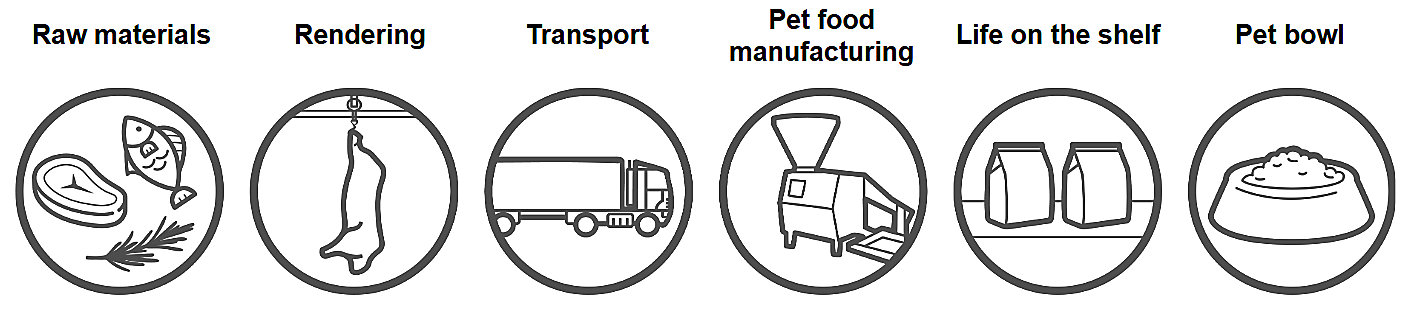
Figure 1: Pet Food Value Chain
An important first step in your food safety plan is to address the microbial quality concerns as early as possible in the process to minimize the downstream impacts on freshness, safety and quality. Using freshness control treatments like ALLINSUR™ and RENTERRA™ can help limit FFAs and control biogenic amine formation in raw materials thereby helping to ensure pet food is safe, high quality, fresh, and nutritious. Learn more about Food Safety Solutions from Kemin.
About the author
Jim has been at Kemin for over 30 years fulfilling a variety of roles in quality control, research and development, and technical services.
References
1 Theodore P. Labuza & L. R. Dugan Jr. (1971) Kinetics of lipid oxidation in foods, C R C Critical Reviews in Food Technology, 2:3, 355-405, DOI: 10.1080/10408397109527127
2 Kemin Source Document TPAS-22-2326
3 Kemin Source Document US21F276
4 Esposito F, Montuori P, Schettino M, Velotto S, Stasi T, Romano R, Cirillo T. Level of Biogenic Amines in Red and White Wines, Dietary Exposure, and Histamine-Mediated Symptoms upon Wine Ingestion. Molecules. 2019 Oct 8;24(19):3629. doi: 10.3390/molecules24193629. PMID: 31597389; PMCID: PMC6804232.
5 Ruiz-Capillas C. and Herrero A.M. (2019). Impact of biogenic amines on food quality and safety. Foods. 8: 1-16.
6 Ten Brink B., Damink C., Joosten H.M.L.J., Huis in't Veld J.H.J. (1990). Occurrence and formation of biologically active amines in foods. International Journal of Food Microbiology. 11: 73-84.
By Jim Mann, Global Platform Manager: Antioxidants & Food Safety | Kemin Nutrisurance
Source: Kemin Nutrisurance
You could be interested: Kemin Unifies Latin America, Expands Regional Structure, Announces 46 New Hires, and Brazil Becomes a Strategic Hub

About the company

About the company
Kemin is more than a supplier of ingredients; we are a global company that transforms the quality of life.
Kemin is the science inside the countless products you interact with every day. We create solutions that help strengthen your health and well-being. We provide nutrition and immune support for your pets and production animals. We protect the planet's natural resources and are dedicated to reducing our environmental impact, and we believe in protecting the global food supply chain for future generations.
At Kemin, we always look to tomorrow. Human imagination, scientific innovation and constant curiosity help shape our company and how we serve our customers now and in the future.
We see beyond what is, in order to see what could be.
The world has been transformed since R.W. and Mary Nelson founded Kemin in 1961, but our dedication and discipline in scientific research remain unwavering, as does our energy and enthusiasm to discover new ways to improve life. Every day, we ask ourselves how we can channel our experience and expertise into new opportunities to improve the quality of life around the world.


Videos
Events

IBERZOO PROPET
11 to 13 March, 2026
Madrid, España
https://www.ifema.es/iberzoo-propet

Simposio CS Petfood & Aquafeed
15 to 16 April, 2026
Pilar, Buenos Aires, Argentina
https://www.cliviosolutions.com/

PET FOOD FORUM KANSAS
27 to 29 April, 2026
Kansas City, Missouri, USA
https://www.petfoodforumevents.com/

interpack
07 to 13 May, 2026
Düsseldorf, Alemania
https://www.interpack.com/

Smart Pet Food Production
11 May, 2026
Sheraton Carlton Nürnberg
https://www.petfoodcompetencenet.com/events/
Interzoo 2026
12 to 15 May, 2026
Nuremberg, Germany
https://www.interzoo.com/en

FENAGRA 2026
12 to 14 May, 2026
Santana – São Paulo
https://www.fenagra.com.br/

XXIV CONGRESO DE PET DE LA CBNA
12 to 14 May, 2026
São Paulo Expo, Brasil
https://www.fenagra.com.br/congresso/cbna-pet/

EXPO PACK México 2026
02 to 05 June, 2026
Ciudad de México, CDMX.
https://www.expopackmexico.com.mx/

VICTAM 2026
02 to 04 June, 2026
Utrecht, Países Bajos
https://victaminternational.com/

VIV Europe 2026
02 to 04 June, 2026
Utrecht, the Netherlands
https://www.viveurope.nl/

Foro Mascotas 2026
24 to 26 June, 2026
Expo Guadalajara, Mexico
https://www.foromascotas.mx/en

Pet South America 2026
12 to 14 August, 2026
São Paulo Expo, Brazil
https://petsa.com.br/

Pet Fair Asia 2026
19 to 23 August, 2026
Shanghai, China
https://en.petfairasia.com/

CIPAL 2026
23 to 24 September, 2026
Buenos Aires, Argentina
https://cipal.com.ar/?lang=en

PETZOO Eurasia
07 to 10 October, 2026
İFM- İstanbul Expo Center
https://petfuari.com/en/

SINPET 2026
15 to 16 October, 2026
Porto Alegre, Brazil
https://www.instagram.com/sinpet2026/

FIGAP 2026
21 to 23 October, 2026
Guadalajara, Jalisco, Mexico
https://figap.com/

Pet Fair South East Asia
28 to 30 October, 2026
Bangkok, Thailand
https://petfair-sea.com/