4 min reading
The Ingredients that are making their way in the Pet Food Industry, did you know them?
Trends are, in general terms, what mark the path of innovation and growth of companies. In our pet food industry, alternative fruits, vegetables, and proteins are becoming more prevalent.
In this article we tell you about trends in new ingredients in pet food. As we mentioned in a previous article, the type of food that is chosen for a pet increasingly reflects the style of eating that its owners practice on a daily basis; This is already an indisputable trend that is constantly increasing.
A spokesperson for the US Highbush Blueberry Council says: 'A few years ago there was very little fruit in pet products. Back then, the idea of fruits and vegetables in pet food for cats and dogs seemed unusual, yet intriguing to many in the industry'.
More fruits among the components of pet food
Fruits as an ingredient are a relatively new category in the content of pet food; have been added to the classic ingredients embodying the concept of health, since it has been proven that the nutrients and fiber of the fruit increase the overall nutritional value and, in some cases, improve the flavor, texture, color and control of moisture. Furthermore, these ingredients allow to take advantage of inherent nutraceutical or phytonutrient qualities, especially fruits rich in antioxidants.
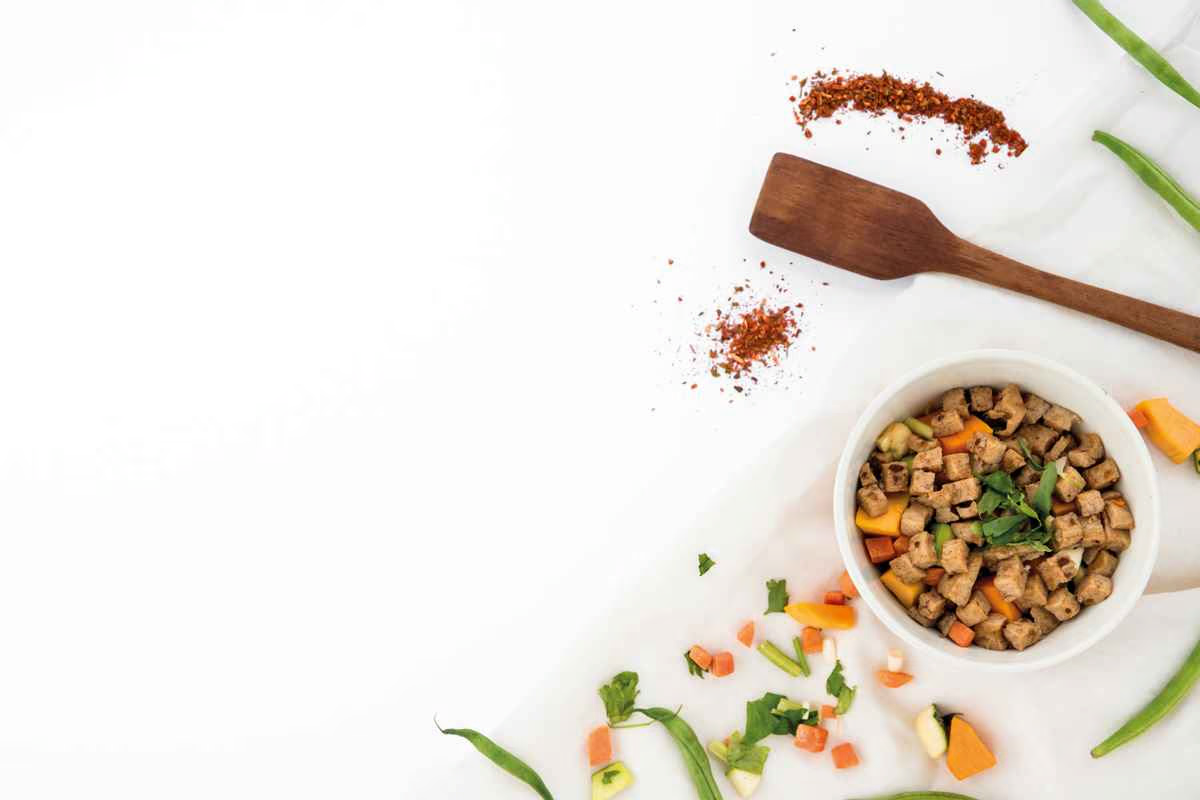
The fruits and components that are being used the most today are:
Strawberry or strawberry, raspberry and blueberry puree, since it is rich in fiber, and both dogs and cats reap the benefits of fiber.
The apple and its dried version, due to its high fiber value, as well as its water content that helps to maintain humidity in wet foods.
Citrus and its fiber: In early 2019, the citrus fiber used in the production of pet food had increased by 437%.
More vegetables among the components of pet food
Vegetables are currently being incorporated into pet food recipes as well, as they offer significant nutritional benefits. This change occurs essentially because there are certain nutrients that animals cannot obtain from ingredients that come from animals.
Thus, accompanying the trend of choosing organic and low-processed products, the market is replacing the adhesion of synthetic vitamins and minerals with those that can be obtained from organic fruits and vegetables and natural supplements. Vitamins, minerals, phytonutrients and antioxidants can also help pets overcome and fight serious diseases, such as cancer.
The vegetables and their components that are being used the most today are:
- Dark green leafy vegetables, such as broccoli or kale, for their high content of calcium, potassium and magnesium.
- Carrot and celery
Alternative plant proteins

Dogs and cats are considered carnivores, so meat is an essential component of their diet. Still, they don't always have to come from an animal. Some time ago, in the United States, work has been done on injecting genes from animal muscle proteins into microbes like yeast, so that they can then be fed and fermented. This results in proteins nutritionally identical to those from meat.

In parallel, pets that are allergic to conventional ingredients are pushing the development of exotic proteins to continue to please pets' taste buds while improving their health.
What are the disadvantages of these changes?
Although it is true that, like people, animals need fruits and vegetables in their daily diet to have a balanced and nutritious diet, when it comes to replacing a percentage of meat products with more vegetables and fruits, a problem arises: The sustainability.
The pet food industry is a fundamental part of the chain of sustainability and circular economy, essentially due to the use of meat by-products that are considered waste not suitable for human consumption. Manufacturers use the parts of animals that humans do not consume to produce pet food since, despite being 'waste' to humans, they are nutrient-packed components.
For example, poultry fat is commonly used in pet food to add calories and flavor chicken. The human consumption of these animals leaves internal organs, feathers and many other parts unconsumed. If it weren't because they are largely used to make pet food, these parts would form an unthinkable amount of waste.
That said, we can affirm that yes, fruits and vegetables are essentially necessary in the feeding of pets, and their increase and incorporation are beneficial for the general health and well-being of domestic animals.
Even so, the great challenge of the industry will be to find a new destination or purpose for the waste from human meat, or a way to coexist with the increase in vegetable ingredients in the pet food market.
In conclusion
It should be noted that companies in the industry have a responsibility, in a way, to educate consumers about the changes and improvements they make in their products and food. They can do this through their networks, their packaging, and by providing accurate information to local sellers and retailers, who are closest to the end consumer.
On the other hand, while pet owners are increasingly increasing the preference for ingredients of plant, organic and natural origin, the real reason is that they believe it will be the most beneficial for their pets. Thus, the question that arises is: will it improve the health of my pet? Will it present fewer digestive problems? Will it have more energy? After all, the function of the food formula is what is really important.

In any case, it is correct to affirm that the components of plant origin are much more than a mere trend, but rather a beneficial addition to the health and well-being of pets.
Are you already aware of these new additions to the industry? Tell us, we are interested in knowing your point of view.
Author: All Extruded
You could be interested: Keeping the Doctor Away With Algal Omega-3s Each Day


Events

IBERZOO PROPET
11 to 13 March, 2026
Madrid, España
https://www.ifema.es/iberzoo-propet

Simposio CS Petfood & Aquafeed
15 to 16 April, 2026
Pilar, Buenos Aires, Argentina
https://www.cliviosolutions.com/

PET FOOD FORUM KANSAS
27 to 29 April, 2026
Kansas City, Missouri, USA
https://www.petfoodforumevents.com/

interpack
07 to 13 May, 2026
Düsseldorf, Alemania
https://www.interpack.com/

Smart Pet Food Production
11 May, 2026
Sheraton Carlton Nürnberg
https://www.petfoodcompetencenet.com/events/

Interzoo 2026
12 to 15 May, 2026
Nuremberg, Germany
https://www.interzoo.com/en

FENAGRA 2026
12 to 14 May, 2026
Santana – São Paulo
https://www.fenagra.com.br/

XXIV CONGRESO DE PET DE LA CBNA
12 to 14 May, 2026
São Paulo Expo, Brasil
https://www.fenagra.com.br/congresso/cbna-pet/

EXPO PACK México 2026
02 to 05 June, 2026
Ciudad de México, CDMX.
https://www.expopackmexico.com.mx/

VICTAM 2026
02 to 04 June, 2026
Utrecht, Países Bajos
https://victaminternational.com/

VIV Europe 2026
02 to 04 June, 2026
Utrecht, the Netherlands
https://www.viveurope.nl/

Foro Mascotas 2026
24 to 26 June, 2026
Expo Guadalajara, Mexico
https://www.foromascotas.mx/en

Pet South America 2026
12 to 14 August, 2026
São Paulo Expo, Brazil
https://petsa.com.br/

Pet Fair Asia 2026
19 to 23 August, 2026
Shanghai, China
https://en.petfairasia.com/

CIPAL 2026
23 to 24 September, 2026
Buenos Aires, Argentina
https://cipal.com.ar/?lang=en

PETZOO Eurasia
07 to 10 October, 2026
İFM- İstanbul Expo Center
https://petfuari.com/en/

SINPET 2026
15 to 16 October, 2026
Porto Alegre, Brazil
https://www.instagram.com/sinpet2026/

FIGAP 2026
21 to 23 October, 2026
Guadalajara, Jalisco, Mexico
https://figap.com/

Pet Fair South East Asia
28 to 30 October, 2026
Bangkok, Thailand
https://petfair-sea.com/
Advertising