4 min reading
What are Microalgae and what are its benefits for Pets
The Pet Food Industry is in a boom and growth, due to all the changes and processes that speed up after 2020. Pet owners no longer want the cheapest food, on the contrary, they choose the food that provides increased nutrition, health and wellness to your best four-legged friends.
In this article we will tell you what microalgae are, Pet Foods being used and benefits.
What are microalgae?
Microalgae are photosynthetic, polyphyletic and eukaryotic unicellular aquatic organisms, which can grow autotrophically (they synthesize all essential substances for their metabolism from inorganic substances and do not need other living beings) or heterotrophic (they feed on other carbon sources organic, mainly plant or animal matter). They are generally highly efficient in fixing CO2 (the conversion of inorganic carbon into organic compounds) and in using solar energy to produce biomass.
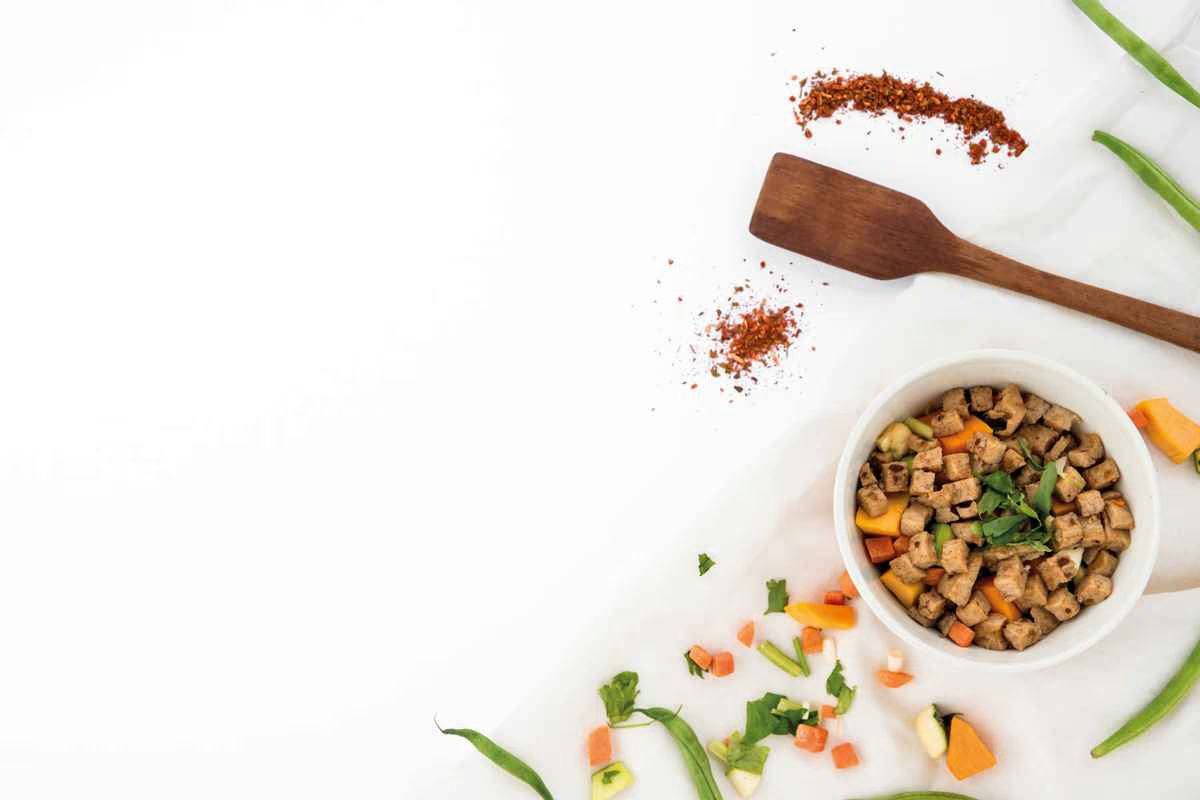
They grow and develop in open pond or closed tank systems.
What are they used for?
Currently, microalgae are used mainly as additives, both in balanced food and in supplements or snacks in pet food for Dogs and Cats.
What are the main benefits for Pet Food?
Microalgae are a great source of protein, fatty acids, antioxidants, vitamins, minerals, and fiber.
They contribute:
- Essential nutrients, such as proteins, fatty acids, antioxidants, vitamins, fiber and minerals (phosphorus, iron, zinc and magnesium, among others).
- Superior quality nutrition, as it is a natural product, free of metals, pesticides, microbes and other contaminants.
- An improvement in intestinal health: It is proven that microalgae improve intestinal health and activate the immune system of animals.
- An improvement in general health, since it increases oral hygiene and the shine and strength of the coat.
- For brain development, some microalgae burn macronutrients as a source of DHA (docosahexaenoic acid), which contributes to brain development. Its consumption in puppies, pregnant and lactating animals is essential.
What are the most common Microalgae used in Pet Food?
• Spirulina and Chlorella: These microalgae absorb light. They are currently used in supplements, treats, and whole foods for dogs and cats.
Spirulina is very rich in nutrients, and it is said to improve the health of the skin and the immune system, although there are still no studies that have been carried out exclusively to testing this effect in dogs and cats.

-In a study carried out in rats, it was found that, thanks to its intake (incorporated in 0.2 to 1.3% in dry food), the production of immunoglobulin A improved.
Chlorella is considered to detoxify and purify the body systems of pets, although there is no scientific evidence on its effects yet.
-In rodents, oral administration of a chlorella extract (between 0.9% and 2.8%) increased resistance against an intraperitoneal infection with Escherichia coli or Listeria.
In addition, a small-scale study suggests that incorporating chlorella powder into dry food by 0.6% can reduce the consequences of canine dermatitis.
Currently, products that contain microalgae in their formulas come in the form of:
• Seaweed flakes, of different sizes and thicknesses, which are suitable for use in croquettes and chews.
• Seaweed powder, an easily mixed powder used for granules and specialty products.
• Seaweed paste, easily soluble and used in dry food or feed.
• Small croquettes, easy to process once defrosted.
Algae rich in DHA
Green algae are characterized by having a higher percentage of DHA than other algae, such as Shizochytrium sp.
The intake of Omega 3 EPA and DHA can improve atopic dermatitis and osteoarthritis and some indicators of modular immunity in dogs.
-It was found that the inclusion of 0.4% DHA-rich algae in dry foods increases the apparent protein
-A small-scale study with 3 dogs fed a diet that included 0.4% DHA-rich algae for 30 days showed that DHA produces beneficial changes in canine electroretinography.
However, cognitive tests were performed with elderly dogs and the incorporation of 0.4% dehydrated whole cells of Schizochytrium sp in dry food did not show strong improvements.
The composition of the microalgae most used in Pet Food
Dried seaweed, oil and seaweed extract and meal are included in the European catalog of feed materials. Some approximate numbers of the composition of each can be given:
• Spirulina and autotrophic chlorella contain 57% crude protein in dry matter, 11% crude fat, 8% ash, 6% crude fiber, and 18% soluble carbohydrates.
Dried spirulina and chlorella contain about 1% chlorophylls and 0.1% carotenoids (although these numbers can vary widely). Both algae have a negligible content of EPA (eicosapentaenoic acid) and DHA, and have a high molecular weight polysaccharide, which comprises approximately 0.75% of the dry weight of microalgae; it differs in composition from a glycosyl group but shares the high solubility in water.

• Spirulina also has 10% phycocyanin as a photosynthetic pigment and 2% GLA (gamma-linolenic acid), absent in chlorella. The soluble polysaccharides in spirulina are mainly glucose and rhamnose, but there are some differences between species.
• Dried algae rich in DHA contain approximately 22% DHA, and less than 0.6% EPA.
• For Schizochytrium sp, the heterotrophic DHA vehicle, the values are: 11% of crude protein in dry matter, 51% of crude fat, 9% of ash, 2% of crude fiber and 27% of soluble carbohydrates.
Summary
Currently, the use of microalgae in Latin America is much more widespread exclusively for human consumption, with Brazil being the country with the most companies producing food based on microalgae, followed by Mexico, Peru, Chile, Ecuador and Cuba.
While studies and experiments continue to ensure the benefits of these components in Pets, we can prepare and make our own research and conclusions on how to take advantage of these discoveries and create new formulas with more nutrition and benefits to improve the quality of the Pet Food Industry.
Source: All Pet Food
You could be interested: Keeping the Doctor Away With Algal Omega-3s Each Day

Events

IBERZOO PROPET
11 to 13 March, 2026
Madrid, España
https://www.ifema.es/iberzoo-propet

Simposio CS Petfood & Aquafeed
15 to 16 April, 2026
Pilar, Buenos Aires, Argentina
https://www.cliviosolutions.com/

PET FOOD FORUM KANSAS
27 to 29 April, 2026
Kansas City, Missouri, USA
https://www.petfoodforumevents.com/

interpack
07 to 13 May, 2026
Düsseldorf, Alemania
https://www.interpack.com/

Smart Pet Food Production
11 May, 2026
Sheraton Carlton Nürnberg
https://www.petfoodcompetencenet.com/events/
Interzoo 2026
12 to 15 May, 2026
Nuremberg, Germany
https://www.interzoo.com/en

FENAGRA 2026
12 to 14 May, 2026
Santana – São Paulo
https://www.fenagra.com.br/

XXIV CONGRESO DE PET DE LA CBNA
12 to 14 May, 2026
São Paulo Expo, Brasil
https://www.fenagra.com.br/congresso/cbna-pet/

EXPO PACK México 2026
02 to 05 June, 2026
Ciudad de México, CDMX.
https://www.expopackmexico.com.mx/

VICTAM 2026
02 to 04 June, 2026
Utrecht, Países Bajos
https://victaminternational.com/

VIV Europe 2026
02 to 04 June, 2026
Utrecht, the Netherlands
https://www.viveurope.nl/

Foro Mascotas 2026
24 to 26 June, 2026
Expo Guadalajara, Mexico
https://www.foromascotas.mx/en

Pet South America 2026
12 to 14 August, 2026
São Paulo Expo, Brazil
https://petsa.com.br/

Pet Fair Asia 2026
19 to 23 August, 2026
Shanghai, China
https://en.petfairasia.com/

CIPAL 2026
23 to 24 September, 2026
Buenos Aires, Argentina
https://cipal.com.ar/?lang=en

PETZOO Eurasia
07 to 10 October, 2026
İFM- İstanbul Expo Center
https://petfuari.com/en/

SINPET 2026
15 to 16 October, 2026
Porto Alegre, Brazil
https://www.instagram.com/sinpet2026/

FIGAP 2026
21 to 23 October, 2026
Guadalajara, Jalisco, Mexico
https://figap.com/

Pet Fair South East Asia
28 to 30 October, 2026
Bangkok, Thailand
https://petfair-sea.com/
Advertising