Latest content from Manufacturing Process

Technology for a Sustainable Future: How Automation is Driving Eco-Efficient Packaging in the Pet Food Market
Automation

3+ MIN

Technology for a Sustainable Future: How Automation is Driving Eco-Efficient Packaging in the Pet Food Market

Sustainability is no longer just a brand differentiator; it has become a strategic pillar for the evolution of the global pet food market. Today's consumer is not only looking for the best nutrition for their pets; they also expect the food and its packaging to respect the environment. Sustainability, convenience and responsibility go hand in hand, demanding innovation across the entire production chain, from formulation to packaging, transport and distribution. It is in this context that industrial automation reveals its true value.
  Moreover, the humanization of pets is one of the main growth drivers in the global pet care sector. Recently, the global pet care market — which includes food, services and pet products — reached USD 197.6 billion, underscoring the importance of meeting rising consumer expectations.

  The Pet Food Packaging Market   The pet food packaging segment continues to show strong momentum. The global pet food packaging market is estimated to have reached USD 11.38 billion in 2024 and is expected to grow at an annual compound rate (CAGR) of 6–7% over the next few years (Global Growth Insights).

This market expansion is driven by key consumer and industry trends such as:
  Rising demand for premium products Preference for sustainable, recyclable, or mono-material packaging Greater convenience for end users Broader variety of package formats and sizes
  Adopting more advanced and sustainable packaging is no longer just a market expectation — it is also a powerful competitive advantage for brands seeking differentiation. As the pet food market continues to expand, demand for scale, efficiency, and customization grows as well, making automation, quality control, and modern filling and palletizing systems essential for success.   Automation as a Lever for Positive Environmental Impact   Integrating automation transforms sustainability from an intention into measurable results:
  Less product and packaging waste Reduced energy and resources per unit produced High consistency and repeatability, even with delicate materials Support for a greater variety of sustainable packaging options Ability to achieve ESG targets without compromising efficiency
  Automation ensures that environmental best practices move hand in hand with operational performance — delivering eco-efficient, reliable, and scalable packaging.   Premier Tech Solutions: Sustainability with Full Efficiency     OML 1140 — Automatic Bagging System for Pre-Made Bags
  Compatible with 5 to 50 kg bags Works with kraft paper, PE, PP, recyclable or mono-material films High throughput with consistent accuracy Magazine capacity of up to 600 bags for greater autonomy Modular design ready for future formats and sustainable materials   APC-1120 — Compact Automatic Palletizer
  Stable and secure stacking for protected transport Flexible setup for different logistics patterns, weights, and bag types Durable structure with low maintenance requirements Excellent cost-benefit for gradual automation transitions
  Together, OML 1140 and APC 1120 create a complete and eco-efficient packaging line — from filling to pallet — enabling brands to meet market demands sustainably and competitively.   Sustainable Benefits That Strengthen Business Performance   Significant reduction in waste and rework Lower use of raw materials and product loss Increased autonomy and continuous productivity Lower operational and energy costs Compliance with environmental regulations and market expectations Enhanced brand reputation with consumers and distributors   Sustainability and performance become strategic partners in growth!   Commitment to the Industry of the Future   At Premier Tech, we design technology that allows brands to scale their business without compromising environmental and social values — promoting innovation, sustainability, and competitiveness.
  If your company is ready to take the next step toward a smarter, more conscious supply chain, Premier Tech is ready to support this transition. With the right automation, challenges become new opportunities!   Source: Premier Tech

AI is Transforming the Pet Food Industry
Automation

2+ MIN

AI is Transforming the Pet Food Industry

The Current Challenge in Pet Food
Producers today face constant variations in raw materials, rapid formula changes, precise moisture control, and multi-ingredient dosing—along with growing demands for energy efficiency and sustainability. Addressing these challenges requires advanced automation that combines the physical robustness of machinery with the predictive power of AI.
The 'Eyes and Ears' of Industry 4.0
The use of sensors in plant engineering to measure variables, evaluate signals, and communicate with higher-level systems has long been a standard procedure. ANDRITZ takes it a step further by employing micro and wireless sensors, which expand data collection capabilities in critical plant areas. This enables much more detailed monitoring to optimize operations.
How AI Turns Operations into Tangible Benefits
The benefits that Metris brings to pet food plants are clear and measurable: production performance has increased by 7% to 16% thanks to automation and end-to-end process optimization, while energy consumption has been reduced by 3% to 17%, contributing to more sustainable operations. Additionally, the use of simulation and digital twins resolves up to 90% of issues before physical start-up, significantly reducing commissioning times. At the same time, proactive cybersecurity ensures asset protection through comprehensive monitoring under international standards such as IEC 62443, in collaboration with OTORIO.  
How Metris Boosts Pet Food Production
At ANDRITZ, automation in pet food production already enables precise dosing, moisture control, traceability, and flexibility in formula changes. Integration with Metris enhances these operations, making them even smarter. The platform allows for automatic adjustment of moisture and dosing based on the actual condition of each batch, predictive machine monitoring through sensors like Metris Vibe—which detect vibrations or temperature changes before they impact production—and direct interaction with the system via Copilot, which helps anticipate problems, suggests adjustments, and responds to operational queries in natural language.
Conclusion
With platforms like ANDRITZ Metris, the move toward more efficient, resilient, sustainable, and autonomous pet food plants is already a reality. At Clivio Solutions, we are ready to support the pet food industry in embracing the digital era by connecting technology, expertise, and results.
  By Clivio Solutions
Source: All Pet Food Magazine

Control System Upgrade Streamlines Pet Food Production
Automation

3+ MIN

Control System Upgrade Streamlines Pet Food Production

The facility was operating with outdated electrical equipment that had become increasingly difficult to maintain. The existing automation was minimal, with operators manually adjusting critical parameters like water and steam rates based on moisture content readings. What automation did exist was fragmented across multiple PLCs scattered throughout the plant, creating 'islands of automation' that required operators to physically walk the production line to monitor and adjust different systems.
  The original Motor Control Centers (MCCs) were particularly problematic. During NorthWind's initial design assessment, the team discovered that the MCC layout was confusing and poorly documented, with unclear connections between buckets and the systems they controlled. This disorganization made troubleshooting time-consuming and complicated routine maintenance tasks.
Our Approach
NorthWind developed a comprehensive control system modernization strategy that addressed both the electrical infrastructure and control system architecture. Rather than working with the existing MCCs as initially planned, NorthWind proposed designing and building new Motor Control Panels (MCPs) that would house all motor control equipment for each system in one organized location.
  A key advantage in NorthWind's approach was the coupling of automation and electrical installation services. Instead of the manufacturer having to coordinate between separate vendors, NorthWind's integrated teams worked directly together to identify and resolve equipment changes, determine I/O panel locations and quantities, and design the network architecture. This collaborative approach minimized the burden on the manufacturer's team and allowed for rapid problem-solving without overwhelming the end user.
Phased Implementation
The implementation was carefully phased to minimize production disruption.
  Phase 1, completed in August, involved removing the existing MCC and Dryer I/O panel and installing new MCPs and I/O panels to control the existing dryer and newly installed coater. Despite an ambitious two-week timeline for equipment removal, installation, electrical work, I/O checkout, and commissioning, NorthWind's automation and installation teams coordinated efforts enabled I/O checkout to begin two days ahead of schedule and equipment commissioning to start three days early.
  Phase 2, which began 2 months after Phase 1 implementation, focused on the complete replacement of the second extrusion line. The NorthWind team maintained the project schedule and even performed some initial I/O checkout ahead of schedule. Their on-site presence throughout the installation process allowed them to identify and address system changes proactively, preventing potential delays during commissioning.
  On the automation front, NorthWind transformed the manual processes into an integrated control system. The new system automatically adjusts water and steam rates based on recipe setpoints, eliminating the need for manual valve adjustments. Instead of scattered PLCs and HMIs for each subsystem, the facility now has one unified control system per line with HMIs that monitor all systems, allowing operators to control and monitor the entire process from centralized locations.   The Impact   The modernization project delivered significant benefits to the pet food facility:
  Streamlined Operations: The unified control system eliminated the need for operators to physically walk the line to monitor different systems, improving efficiency and reducing labor requirements.
  Enhanced Maintenance Support: Updated electrical and controls hardware, along with accurate documentation, significantly reduced troubleshooting time and simplified maintenance procedures.
  Improved Process Control: Automated adjustment of critical parameters based on recipe setpoints ensures consistent product quality and reduces operator intervention.
  Operational Consistency: Similar controls for both production lines facilitate operator training and flexibility, allowing staff to seamlessly transition between lines.
  Reduced Downtime: The organized electrical system design minimizes the time required to locate and replace components, improving overall equipment effectiveness.
  Future-Ready Infrastructure: The control system upgrade provides a foundation for further automation and data collection initiatives.
  The customer has expressed extreme satisfaction with both NorthWind teams, particularly noting the quality of the electrical installation work and the process knowledge demonstrated by the programmers and controls technicians.
  Learn more about NorthWind's Solutions the Pet Food Industry or reach out to schedule a walk through of a system.
  By Bryan Reinecke, Senior Project Manager
Source: NorthWind

Ensuring Food Safety: Kill Step and Validation in Pet Food Baking
Drying

5+ MIN

Ensuring Food Safety: Kill Step and Validation in Pet Food Baking

Growth of the Pet Food Market and Rising Safety Concerns   Growing pet ownership and greater nutritional awareness have fueled strong demand for commercial pet food in recent years. More consumers now prefer 'complete and balanced' foods, prompting a wave of manufacturers entering this dynamic market. While product variety is at an all-time high, the race for novelty sometimes overshadows food safety considerations.
  For example, raw diets, once regarded as the most 'natural' choice, have faced heavy scrutiny following avian influenza outbreaks linked to pet deaths (Goodman, 2025). But contamination risks extend well beyond raw products. A review of recalls from 2003-2022 found that up to 35% of pet food recalls were caused by biological contamination, most often Salmonella (DeBeer, J. et al., 2024). This presents a particular risk to young children and older adults exposed during handling (PetfoodIndustry, 2024).
  Even baked products, which undergo high temperatures during the baking process, are not immune if processes are inconsistent. A single safety lapse can erase years of brand trust, underscoring the importance of robust food safety controls. This paper explores the design and validation practices required to ensure an effective kill step in baked pet foods.   Challenges in Achieving the Kill Step in Pet Food Baking   Baked kibble is valued as a healthier, 'humanized' alternative to extruded products, yet ensuring every piece reaches a validated kill step is not guaranteed. Common risks include:
  Cold or dead spots in ovens: Inconsistent airflow or temperature distribution can leave small kibble (5-6 mm) under-processed. Extending bake times to compensate often results in over-browning or burnt products.   Figure 1: Customer expectation of consistently baked kibble.   Excessive product piling: Loading too much product onto the belt impedes heat penetration into the inner layers as the kibbles pile up, especially in single-pass systems where the oven is the bottleneck in line throughput.
  Post-baking contamination: Poor line layout or hard-to-sanitize conveyors can re-introduce pathogens after baking.
  These risks highlight why oven design and process validation are critical for consistently achieving a verifiable kill step.   The RBS Approach to Safe and Efficient Baking   RBS addresses these challenges with a two-stage baking and drying process designed for both safety and throughput.
  Step 1: Baking
RBS convection ovens feature a centralized penthouse system with independently controlled top and bottom airflow delivered through perforated plenums (Figure 2). Operation is simple—operators only need to set the penthouse air temperature, balance the airflow, adjust the exhaust fan speed, and control bake time. This is all done on the control screen, and recipes can be stored for easy and repeatable production.   Figure 2: RBS Convection Oven with centralized penthouse. Perforated plenums for consistent airflow.   This oven design delivers uniform airflow and precise temperature control, ensuring consistently baked products every time.  The oven functionality can be validated with the Scorpion® 2 Profiling System.  The Oven Air Velocity Graph (Figure 3) generated using data collected by Scorpion 2 shows different color lines to represent the sensors' position from left side to right side of oven belt. Overlapping lines indicate that air velocity from left to right side of oven belt is highly uniform. As the sensor travels along the tunnel oven from zone 1 to zone 5, velocities are largely uniform within each zone, where each peak represents the airflow surge from perforations on the plenum surface.   Figure 3: Scorpion 2 Air Velocity Graph.
  Products are loaded in mono- or bi-layers, maximizing heat penetration and ensuring each piece receives sufficient heat. Over-stacking is avoided to prevent uneven baking between outer and inner layers. This high-temperature, short-time bake achieves the kill step while maintaining color uniformity and maximizing throughput (Figure 4).
  Figure 4: Baked kibble entering the oven in one layer to ensure efficient baking.   Step 2: Drying
Once the kill step is secured, products move into a low-temperature, long-time drying phase to gently reduce residual moisture. Dryers use the same oven airflow design principles to maintain uniformity. Depending on space and capacity needs, customers may choose:
  Single-pass oven with separate 3-pass dryer, or 2-pass oven/kiln system that integrates baking (top pass) and drying (bottom pass) into one zone. This set-up allows for a smaller footprint.
  This separation allows shorter bake times with mono/bi-layer product loading for effective kill steps, followed by multi-layer drying (typically 4-5 product layers) for efficiency (Figure 5).   Figure 5: Multi-Pass Dryer for slower drying to gently reduce residual moisture.   Validating the Kill Step   Kill Step Validation requires direct measurement of the product's internal temperature during baking. The Reading Thermal Scorpion 2 Data Logger uses temperature probes for measurement of product internal temperature during the baking process (Figure 6).  By combining this data with specific thermal tolerance coefficients (Tref, Dref, z), lethality can be calculated using the Kill Step Calculator developed by AIB International, in cooperation with Kansas State University, the American Bakers Association (ABA), and the University of Georgia, to determine if kill step is complete (Kill Step Calculator | Bakery Process | BAKERpedia, 2016). Our SV8 software can then be used to generate the kill step report. Bake time and baking temperature can be further optimized by analyzing the lethality curve generated by SV8 software.     Figure 6: Scorpion 2 R&D Kit with product probes. Product probes for measuring internal product temperature.   Figure 7: Internal temperature vs time and cumulative lethality vs time graphs as part of kill step report generated by SV8 software.   Beyond kill step validation, the Scorpion 2 can be equipped with air velocity, temperature, humidity, and heat flux sensors to better understand oven performance. The air velocity sensor and air temperature sensor arrays can be used to validate the convection oven design to ensure that air flow and temperature distribution is uniform both across and along the oven belt (Figure 8).   Figure 8: Temperature and air velocity sensor arrays for oven profiling, temperature and airflow distribution data within tunnel oven can be collected and displayed as 2D or 3D graph in SV8 software to identify cold/ hot spots in oven chamber.   Conclusion   RBS mitigates these risks with proven baking and drying solutions, paired with the Scorpion® 2 profiling system, giving manufacturers confidence that every batch meets FDA FSMA kill step requirements. With RBS, you can achieve both safety and efficiency—ensuring your products earn consumer trust and stand out in a crowded market. By Readin Bakery Systems
Source: All Pet Food Magazine
  References
DeBeer, J., Finke, M., Maxfield, A., Osgood, A.-M., Mona Baumgartel, D. and Blickem, E.R. (2024). A Review of Pet Food Recalls from 2003 Through 2022. Journal of Food Protection, [online] 87(1), p.100199. doi:https://doi.org/10.1016/j.jfp.2023.100199. Goodman, B. (2025). With bird flu cases rising, certain kinds of pet food may be risky for animals – and people. [online] CNN. Available at: https://edition.cnn.com/2025/01/18/health/bird-flu-pet-food-cat-deaths/index.html [Accessed 12 Feb. 2025]. Kill Step Calculator | Bakery Process | BAKERpedia (2016) BAKERpedia. Available at: https://bakerpedia.com/processes/kill-step-calculator/ (Accessed: 25 February 2025). PetfoodIndustry. (2024). US pet food recalls: More than 40% due to Salmonella. [online] Available at: https://www.petfoodindustry.com/blogs-columns/adventures-in-pet-food/blog/15678178/us-pet-food-recalls-more-than-40-due-to-salmonella [Accessed 13 Feb. 2025].

How to Choose a Pet Food Extruder for Your Pet Food Line
Extrusion

4+ MIN

How to Choose a Pet Food Extruder for Your Pet Food Line

 Here is how manufacturers can choose the right pet food extrusions to produce a superior and consistent quality of pet food.   Key Factors to Consider When Choosing a Pet Food Extruder   While selecting the pet food extruder, consider the following factors:
  Production Capacity and Size
The right pet food extruder should match your production goals and expected output. Small and medium businesses may benefit from compact extruders that maintain efficiency without excessive power demand.
  However, large-scale manufacturers require high-capacity models that can handle continuous operation with consistent performance.
  Having said that, it is also a wise approach to plan ahead and choose the pet food processing equipment that not only meets current needs but also allows for future expansion as your production grows.
  Product Type and Recipe Flexibility
A flexible extruder allows you to produce a wide range of pet food types, from dry kibble to semi-moist products and specialty treats. This adaptability helps you cater to evolving consumer preferences, such as high-protein, grain-free, or functional formulations.
  A system that supports recipe customization gives your production line greater versatility and competitive strength in a dynamic market.
  Single-Screw vs. Twin-Screw Extruders
The choice between single-screw and twin-screw extruders depends on your production scale and product complexity.
  Single-screw extruders are ideal for straightforward formulations and lower production volumes. They are simpler to maintain and cost-effective for basic operations.
  On the other hand, twin-screw extruders deliver better mixing, cooking uniformity, and ingredient flexibility. They are preferred for complex recipes and high-performance production lines where precision and consistency are essential.
    Fresh Meat Injection Technology
Adding fresh meat during the extrusion process enhances both the nutritional value and flavor of pet food. This technology helps retain natural proteins, improving digestibility and taste appeal of the pet food.
  Automation and Control Features
Advanced automation and control systems in pet food extruders enable precise regulation of the extrusion process.
  Go for the pet food machines that bring features like temperature control, pressure regulation, and moisture management to ensure that the final product meets strict quality standards.
  Safety, Hygiene, and Compliance
In pet food production, maintaining hygiene is non-negotiable. The extruder must comply with EHEDG (European Hygienic Engineering & Design Group) and 3-A Sanitary Standards, which guarantee food-safe design and easy cleaning.
  A well-constructed machine prevents contamination and supports strict regulatory compliance. Smooth surfaces, tool-free disassembly, and easy washdown access are features that ensure consistent food safety during every production cycle.   Benefits of Investing in the Right Pet Food Extruder   When you invest in the right pet food extruder, it comes with the following features:
  Improved Product Quality
The right pet food extruder directly enhances product quality. It ensures every batch has a consistent texture, digestibility, and flavor that pets enjoy.
  Advanced temperature and pressure control preserve nutrients while improving the physical structure of the pellets. This consistency not only improves pet health but also helps brands maintain consumer trust.
  Cost Efficiency
Investing in the right extruder reduces waste, energy use, and operational costs. Efficient machines optimize feed conversion ratios and minimize ingredient loss during production.
  Energy-efficient systems also lower electricity consumption and extend equipment lifespan. Over time, this combination of precision and efficiency leads to a noticeable reduction in production expenses. The result is a more profitable and sustainable manufacturing operation.
  Flexibility and Innovation
A modern pet food extruder gives producers flexibility to meet shifting market demands. It allows easy adjustments to recipes, shapes, and textures without major equipment changes. This adaptability encourages innovation as manufacturers can develop new product lines or specialty diets faster.
  Competitive Advantage
High-quality extrusion technology provides you a clear competitive edge. Products made with precision-controlled extruders consistently outperform those made with outdated systems.
  This reliability helps manufacturers differentiate their brand through better nutrition, texture, and overall value.     Wrapping-Up
Choosing the right pet food extruder defines the consistency, quality, and efficiency of your production. A reliable system reduces waste, improves product texture, and ensures better nutrient absorption.
  The FAMSUN PX190 Pet Food Extruder is a strong choice for manufacturers aiming for consistent results. Its three-shaft conditioner with water-steam co-injection achieves up to 95% starch gelatinization, improving digestibility and pellet uniformity.
  It also meets strict hygiene standards and offers automated controls for stable, high-quality output. Backed by FAMSUN's global service network, this pet food extruder combines advanced performance with long-term reliability, making it a trusted solution for professional pet food production.
  Contact us today to upgrade your pet food production line!
  Source: FAMSUN


Laboratory

Laboratory Technological Advancements Improving the Quality of Pet Food

5+ MIN

Technological Advancements Improving the Quality of Pet Food

Although no specific laws characterize industrialized food (Standard, Premium, Super-premium, Special Premium, High-premium, etc.), the quality, research, and applied technologies in their manufacturing and evaluation are crucial to ensure their positioning in the market.   This article investigates the steps applied in the research process and the development of food in which science and technology are combined with the extrusion process using NIR evaluation and digestibility tests.   Extrusion process   The extrusion process has existed for centuries; Joseph Bramah developed the first report in literature in 1797 (England). It was not until 1900 that extrusion began to be used for food manufacturing by the Frenchman Alexandre P. Pigozzi and, in 1954, by the Ralston Purina Company to manufacture dog and cat food.   Extrusion is a thermal process that makes the material (powders) go through a die with holes to shape a specific kibble (ball, bones, heart, among others). It is a HTST process (High Temperature-Short Time), the most widely used method for manufacturing pet food, as dry diets are still the most sold.   Even being an old process, it always grows along with technology, aiming to meet the needs of the pet food industry and ensure excellence in its production and high-quality pet food. Besides being considered one of the most efficient, the technology offered by extrusion is also very economical for manufacturing dog and cat food, especially in terms of quality and food security compared to other processes.   Many extruders in the market aim to satisfy the most diverse process for dog and cat food. Single-screw extruders are the most affordable and used in manufacturing, especially for standard quality in which many formulations are extruded. However, double-screw extruders offer better quality and more options for shaping. Moreover, they can use more ingredients in the formulation, which is advantageous when industries want to diversify their products with Premium and Super-premium food.   Research has demonstrated that controlling its thermal or mechanical energy offers considerable benefits in feeding, for example, managing the effect on starch gelatinization by allowing it to reach the large intestine (colon) and act as prebiotics for dogs and cats. Jackson et al. (2020) discovered that identical formulated food processed in extrusion conditions of high and low shearing results in tough starch to dietary digestion, which produces potentially beneficial changes in the gut microbiome by altering starch digestion. Another benefit related to food, Alvarenga et al. (2021) altered the mechanical energy in the extrusion process and found that kibbles produced in low and middle shearing were denser (varying between 296 and 338 g/L) and less expanded than those in high shearing.   The pet food industry is constantly seeking innovation. With the high demand for new food, including fresh meat, such as Super-premium, fruits and vegetables, or insect proteins, extruders with advanced technology offer an improvement in the use of thermal energy and a reduction in mechanical energy, enhancing the nutritional quality and satisfying nutritional requirements and realities of each factory.   NIRS food evaluation   Near Infrared Spectroscopy is a technology widely used in factories to predict the bromatological condition of ingredients in pet food formulation. This technique has gained popularity in recent years with new advances in execution due to the rapidity and agility of results. Since then, this analytic technology has provided factories with rapid analysis of specifications such as the percentage of proteins, fats, ashes, moisture, and pH, among others.   With almost immediate results, it assists quality control in making decisions by accepting or rejecting the receipt of raw materials. Pet food factories also use NIRS to update the formulation program database and ensure that the composition matches the end product specifications, the labels, and the specifications of each product in its portfolio.   Technological advances make equipment calibration easier and faster for many food and animal ingredient analyses. In addition to macronutrients such as proteins and fats, it is also possible to carry out analysis with near-infrared spectroscopy, e.g., detecting if the sample is contaminated by mycotoxins or biogenic amines or calibrating it to detect adulterations and ensure product approval.   Research in other species (Montoro et al., 2023) examined chemical compounds in feces and the coefficients of apparent digestibility of the total tract. Hervera et al. (2012) evaluated the possibility of the NIRS to estimate the energy content in commercial dog and cat food. These studies strengthen the potential to help the analysis, ensuring food quality.   Therefore, nutrient composition and digestibility are essential to the qualitative evaluation of pet food since they provide results about the nutrient availability in that diet with a significant impact on animal health.   With this goal and ethical guidelines in animal experimentation, that seek to reduce the use of animals in research, many studies evaluate pet food digestibility through the in vitro method, which aims to reproduce apparent digestibility in dry extruded food for dogs and cats. Hervera et al. (2007) studied a two-step multienzyme incubation approach adapted to dogs' digestion characteristics. It consists of two consecutive incubations: the first for 2 hours with pepsin A to acidic pH and the second for 4 hours with pancreatin. After that, the material is filtered, dried, incinerated, and then the digestibility value of the dry and organic matter of the feed is calculated.   Using experimental animals to evaluate the nutritional value of food and raw materials for pets requires time, financial investment, and animal management. That is why industries can use the in vitro technique, a reliable methodology to estimate product digestibility with high reproducibility and repeatability. It also examines and probes new hypotheses in nutritional research in dogs and cats.   Figure 1: In vitro digestibility technique – Source: compiled by author   By: Josiane Volpato and Ingrid Caroline da Silva   Source: All Pet Food Magazine   References Camp Montoro, J., Solà-Oriol, D., Muns, R., Gasa, J., Llanes, N., Garcia Manzanilla, E., 2023. Predicting Chemical Composition and Apparent Total Tract Digestibility on Freeze-Dried Not Ground Faeces Using Near-Infrared Spectroscopy in Pigs. Animals 13, 2090. https://doi.org/10.3390/ani13132090 Corsato Alvarenga, I., Keller, L.C., Waldy, C., Aldrich, C.G., 2021. Extrusion Processing Modifications of a Dog Kibble at Large Scale Alter Levels of Starch Available to Animal Enzymatic Digestion. Foods 10, 2526. https://doi.org/10.3390/foods10112526 Hervera, M., Baucells, M.D., Blanch, F., Castrillo, C., 2007. Prediction of digestible energy content of extruded dog food by in vitro analyses. J. Anim. Physiol. Anim. Nutr. 91, 205–209. https://doi.org/10.1111/j.1439-0396.2007.00693.x Hervera, M., Castrillo, C., Albanell, E., Baucells, M.D., 2012. Use of near-infrared spectroscopy to predict energy content of commercial dog food. J. Anim. Sci. 90, 4401–4407. https://doi.org/10.2527/jas.2012-5106 Jackson, M.I., Waldy, C., Jewell, D.E., 2020. Dietary resistant starch preserved through mild extrusion of grain alters fecal microbiome metabolism of dietary macronutrients while increasing immunoglobulin A in the cat. PloS One 15, e0241037. https://doi.org/10.1371/journal.pone.0241037

By Josiane Volpato

Laboratory High-level nutrition: The revolution in pet health

3+ MIN

High-level nutrition: The revolution in pet health

In this context, science and technology have played a fundamental role in developing pet food that not only meets basic nutritional needs, but also promotes long-term health. The evolution of pet food processing and formulation technologies has enabled the creation of increasingly personalized diets for pets, meeting the specific demands of different breeds, ages, and health conditions. Through specialized proteins, probiotics, and functional ingredients, Kemin ensures that its products provide enhanced nutrition and immune support, which not only contributes to the animal's current health but also helps prevent potential issues in the years to come.   One of Kemin's goals is to bring innovations and drive the market to constantly evolve. Our Research & Development team focuses on creating practical and effective solutions for the pet food industry. We offer a wide range of products that, carefully formulated, contribute to the success and quality of the food. Each solution is developed to add value, ensuring that our partners are always a step ahead in an increasingly competitive market.   Thus, technological innovation becomes the main driver behind the continuous development of our solutions and services. It is not just about offering high-quality items; Kemin is constantly refining processes to ensure that our clients receive the most advanced products. This commitment to delivery and customer satisfaction is made possible through the services we provide: the Kemin Application Service (KAS), for example, is designed to integrate the latest technologies, enabling efficient implementation. Our specialists in pet food and rendering are constantly monitoring and updating application methods to ensure precise execution, guaranteeing maximum performance. Each strategy and plan are meticulously crafted to meet the specific needs of each client, making it possible to offer the highest quality equipment and service.   Additionally, our Customer Laboratory Services (CLS) are constantly evolving, incorporating advancements that ensure faster and more accurate analyses. This allows clients to obtain reliable and personalized results, essential for safe and informed decision-making. With the expertise of the Technical Service Managers (TSMs), we ensure that cutting-edge technical knowledge is always available to assist with any challenge, offering support that goes beyond the conventional.   Kemin's Research and Exploratory Services (RES) marks a significant advancement in our ability to innovate. Utilizing the latest research tools and techniques, we are exploring new frontiers and developing solutions that anticipate market needs. This proactive approach allows us not only to keep up with trends but to lead the way, ensuring we are always ahead in delivering products and services that exceed expectations.   The future of pet food is directly tied to the ability to innovate and adapt to new scientific discoveries and emerging technologies. With its customer-centric approach, Kemin is ready to lead this path, offering solutions that promote pet health and well-being in a sustainable and efficient manner. In doing so, Kemin not only strengthens its commitment to excellence but also reaffirms its role as an indispensable partner for all those seeking the best in animal nutrition.   By: Kemin Nutrisurance   Source: All Pet Food Magazine


Automation

Automation Veterinarians Should Know How Pet Food is Made and Its Innovations

2+ MIN

Veterinarians Should Know How Pet Food is Made and Its Innovations

Our pets, or patients, eat daily; if they don't, families and vets may worry and feel sad. From my perspective, I believe we should be informed about the manufacturing process, raw materials, manufacturers, quality, and innovation.
  Diet is a clinical tool, not an accessory. Our knowledge of pet physiology and disease behavior allows us to make diets the key to maintaining a pet's health or even to provide special treatment, which is necessary to maintain a patient's quality of life.
  Nowadays, innovation ensures process optimization, resulting in more complete and functional ingredients. Besides nourishing and meeting energetic requirements, they promote comprehensive health from naturally combining nutritious and 'pharmacological or medicinal' actions.
  Besides providing better and more natural alternatives, innovation allows understanding which ingredients are not appropriate or secure, so they must be removed from formulations. By knowing more and being involved in this topic, we have the tools to choose between attractive marketing offers and real quality food.
  Modern plants automate the process from the raw materials selection to final bagging and palletizing. In this way, human errors are reduced, and production speed is increased. Sensors measure critical parameters, such as moisture, temperature, density, and drying conditions, among others. Instead, AI and automatic learning allow for formula optimization, anticipation, and correction. In quality control, many companies are already employing automated inspection (e.g., computer vision, sensors) to identify faults, pollution, or size, density, and texture inconsistency. Digitalization follows each batch—from raw materials input to the final product—enhancing traceability and minimizing product recalls or complaints. It also ensures quality and food safety standards, which are crucial to avoiding contamination, nutritional variability, or production failures.
  What do these processes allow:
  Better quality testing of the prescribed or recommended food. Understanding how 'secure' a commercial food can be. Knowing changes within the industry to be updated with personalized or specialized food. Offering treatment and diagnosis, with improved capacity to prescribe therapeutic diets, recommending high-quality and specific food. Addressing the management of chronic diseases with food as the primary treatment for obesity, gastrointestinal, and dermatological diseases. Advising tutors on food quality, trends, and science. Also teaching about the importance of nutrition. Preventing diseases in the future by promoting appropriate diets since they are puppies.   Summary   These changes are of great interest to vets as the digitalization of pet food directly impacts the quality, security, and reliability of the food we recommend.
  Don't hesitate to reach out to attend courses in nutrition, food, and more. By Dr. M. Candela Bonaura
Source: All Pet Food Magazine

By Candela Bonaura

Automation Digital Transformation: Fairview Mill’s Journey to Data-Driven Manufacturing

3+ MIN

Digital Transformation: Fairview Mill’s Journey to Data-Driven Manufacturing

In 2024 Fairview Mills had a strategic goal to begin their digital transformation journey to ease the use of their plant-level systems, digitize the paper-based processes, and connect data across multiple locations for faster decision making.   MES Project Goals Provide Real-Time, user-friendly data for the whole team Data Centralization Paperless Plant Floor Make data-based decisions on the floor
  NorthWind designed and implemented an MES solution that digitized their production workflows, automated data collection, and provided real-time visibility into operations. The system was built on the Ignition platform using the Perspective module, creating a centralized source of truth for production data and eliminating paper-based processes.
Our Approach
NorthWind began with a thorough assessment of Fairview Mills' operations, working closely with operators, supervisors, and management to understand their specific challenges and requirements. The implementation team conducted extensive user interviews to identify pain points and opportunities for improvement.
  The project followed a phased approach, with weekly feedback sessions to ensure the system met the user's needs. NorthWind's team worked one on one with Fairview's operators and supervisors to ensure adoption and provide training on the new system.
The MES implementation included several key components:
Customized Dashboards for Different User Roles Operator dashboards showing current production status, upcoming work orders, and required forms Supervisor dashboards providing comprehensive visibility into all production areas Management dashboards with efficiency metrics and production performance data
  Digital Form Builder
NorthWind developed a flexible form builder that allowed Fairview to convert their 25-30 daily paper forms into digital formats. The system includes:
  Automated form triggers based on time or production events Digital signature capabilities for quality verification Searchable form history for easy retrieval during audits User-friendly interface allowing Fairview staff to create and modify forms without developer assistance   Real-Time Production Monitoring Custom efficiency tracking tailored to Fairview's specific metrics Production status visualization across all manufacturing operations Automated downtime tracking and reporting Integration with existing control systems   Enhanced Communication Tools Digital user notes replacing handwritten notes between shifts Centralized communication for production issues and status updates Visibility of customer specifications and order comments for operators
  Process Setting Management Digital 'cheat sheets' for machine settings by product Recommended values for operators to reference Consistent process parameters across shifts   The Impact   Eliminated 15+ daily paper forms, significantly reducing administrative burden and improving data accuracy Reduced production reporting time by 45-60 minutes per shift for supervisors through automated data collection and reporting Enhanced quality control with digital verification and improved process consistency Improved shift-to-shift communication through digital user notes and centralized information Streamlined audit processes by making documentation instantly searchable and accessible Increased visibility into production metrics allowing for real-time decision making rather than relying on day-old data Enabled real-time decision making rather than relying on day-old data, allowing management to respond immediately to production issues and opportunities Created a foundation for future digital initiatives including ERP integration and advanced analytics   Future Outlook
With the successful implementation of their MES foundation at the Fairview Kansas facility, Fairview Mills is now positioned for the next phase of their digital transformation journey.
  Integration with their ERP system for seamless data flow Expansion of the MES to additional production facilities Further automation and AI for scheduling processes
  Fairview Mills has expressed extreme satisfaction with MES solution NorthWind delivered. 'The MES implementation has fundamentally changed how we approach manufacturing at Fairview Mills,' stated Darrin Hermesch, Director of Operations. 'We're now making decisions based on real-time data rather than gut feel, and our operators have the information they need at their fingertips. This digital foundation positions us for continued growth and efficiency improvements in the future.'   Learn more about NorthWind's MES Solutions or reach out to schedule a walk through of a system. Source: NorthWind


Dosing

Dosing Innovating together: A new development for the premix pet food industry

3+ MIN

Innovating together: A new development for the premix pet food industry

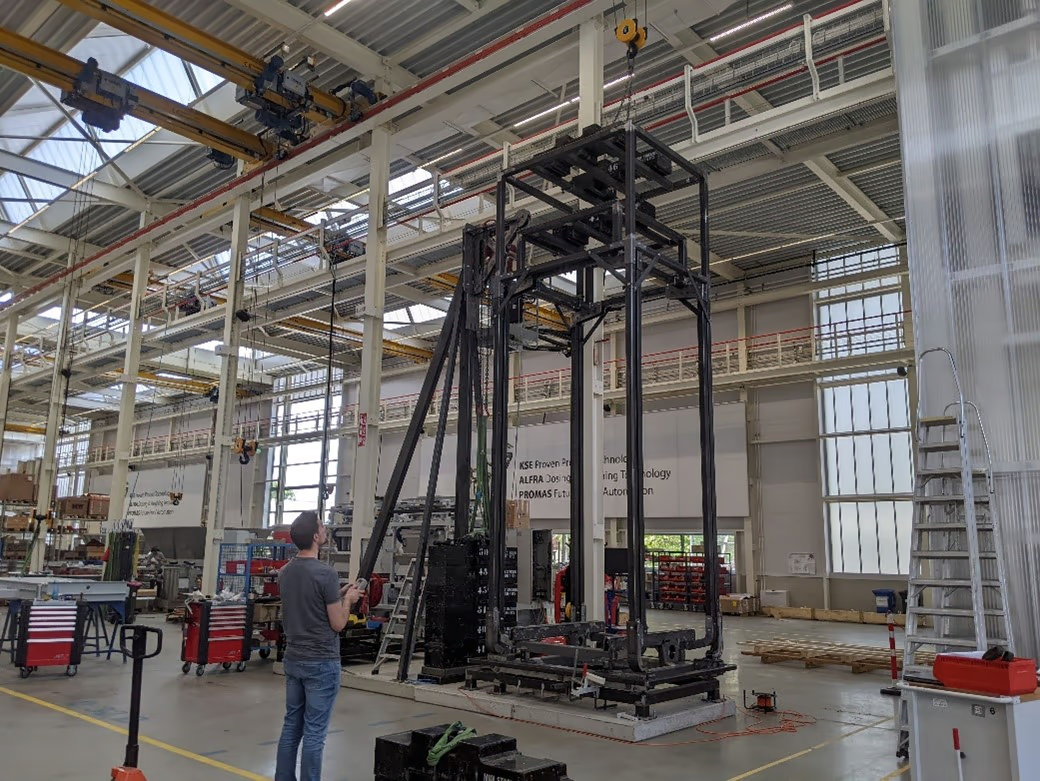
The customer's choice of the CS-WP solution   An American-based customer of KSE, operating in the premix industry, selected the CS-WP solution due to an urgent need to optimize space utilization in their production facility. This innovative solution enabled them to save significant vertical space, with reductions of 4 to 5 meters compared to a conventional weighing system. Additionally, the CS-WP system offers direct separation of contaminants for all raw materials, ensuring the entire facility remains free from contamination.   Another customer in Spain, a leading manufacturer in the food additive industry, has also expressed interest in the CS-WP solution because of their stringent contamination control requirements. The CS-WP system allows macro ingredients to be safely transported in dedicated containers, ensuring clean and flexible distribution to three separate mixing lines.   Exploration of market-based alternatives   The customer explored two alternative solutions. Initially, a traditional pneumatic conveying system was considered but dismissed due to hygiene issues and excessive energy consumption. The second option involved a container concept relying on AGVs (Automated Guided Vehicle). Ultimately, KSE's CS-WP concept emerged as the most fitting and seamlessly integrable solution, enabling the maintenance of the desired compact building height.   Future expansion and developments   The client positions the CS-WP project as the ''Next Generation Plant'', hinting at the possibility of establishing future plants based on the same concept. This marks the inaugural joint project for the Spanish customer and KSE, with aspirations to extend this concept to other facilities, thereby assuming a pioneering role in the Spanish food additive industry.   A breakthrough solution   The CS-WP emerged as a groundbreaking weighing solution within the ACT (Automatic Container Transfer) framework, renowned for its internal transport capabilities. Manufacturers are seeking space-saving solutions in their plants while aiming to achieve minimal contamination by dispensing products directly into containers. Tailored to accommodate a wide dosing range, this solution stands out for its versatility.   Intensive development process   The concept promptly resonated with our customers' needs and industry demands, particularly in sectors like premix and pet food. The development process of the CS-WP entailed tackling several design challenges, such as achieving optimal balance in the setup. With dimensions of approximately 1.5 meters x 1.5 meters and a height of 5 to 6 meters, this resulted in a column four times as tall as it is wide. This configuration posed potential tipping hazards, especially when the system was in motion while carrying weight at the top. To prevent this, rollover safeguards were implemented, and extensive testing was performed.   Another crucial aspect involved a meticulous examination of the system's extraction process. Customers typically invest in an ACT system to maintain a pristine working environment with minimal contamination. However, if dust escapes through open joints during each movement, this objective is compromised. Moreover, the extraction process must not interfere with the weighing signal during the dosing process, ensuring that accuracy is not compromised.   Following extensive consultation and collaboration with suppliers, multiple concepts were devised and executed by the mechanical, electrical, and software teams. Presently, two variants are available: one where dust from the filters returns with the product, minimizing contamination but ensuring all product accompanies it through processing, and another where dust extraction directs waste to a remote unloading point, eliminating contamination but resulting in waste. The selection between these variants depends on the customer's specific needs and requirements.   The operational phase   During the implementation phase of industrial solutions, addressing technical challenges is only part of the equation; understanding real-world usage is equally vital. Hence, KSE engages its service department from the beginning of a project to ensure that aspects, such as cleaning positions, accessibility, and installation safety are meticulously accounted for. This approach establishes a robust groundwork for a successful project, enhancing both efficiency and safety.   By: KSE Process Technology   Source: All Pet Food Magazine


Grinding

Grinding Increasing Efficiency in Pet Food Production - Why You Should Think About Grinding

6+ MIN

Increasing Efficiency in Pet Food Production - Why You Should Think About Grinding

The main challenges pet food producers face in grinding today are:
  New high fat and protein rich recipes for optimal nutrition. Demand for fine uniform texture and well looking appearance requires fine grinding.  Increased energy cost decrease margines and grinding is one of the most energy consuming process steps.   Evolving Ingredients, Evolving Demands   Modern pet food recipes incorporate a growing variety of ingredients or higher meat and bone meal content causing unique milling challenges due to higher protein, fat, and moisture content. Premium pet food recipes often contain bone meal and meat content of more than 30% and a fat level higher than 8%.
  Older hammermills struggle with these recipes, tend to clog when processing such components, leading to increased energy consumption and heat buildup. These issues not only drain more power but also degrade sensitive nutrients, compromise product quality, and necessitate more frequent maintenance.   FD 32 Pro hammer mill installed in pet food production   Fine Grinding and Extrusion Performance   Beyond the nutritional benefits, particle size has a significant impact on extrusion performance. Finer and more uniform grinding improves water absorption and starch gelatinization during the extrusion process. These factors influence the consistency, fineness, and bulk density of pet food. In addition, finer and more uniform grinding reduces wear on extrusion equipment, thereby reducing maintenance costs and downtime.
  While fine grinding offers clear advantages in terms of nutritional value and processing, it also poses a significant challenge for hammer mills. Smaller screen sizes are required to achieve finer grinding, which often results in lower throughput and higher energy consumption. In addition, the risk of screen clogging increases and more heat is generated due to longer grinding times.
  Excessive heat can break down sensitive nutrients and cause starch to gelatinize prematurely. This heat can also overheat mechanical parts and, in extreme cases, increase the risk of fire.
  Many hammer mill systems were not designed for fine grinding. Older systems were designed for coarser grinding degrees, where a medium fineness was completely sufficient. Fine grinding requires higher rotor speeds, larger screen areas, optimized air flow, and intelligent process integration. Without these prerequisites, manufacturers are faced with rising operating costs, production losses, and unnecessary losses that have a direct impact on profitability.   The FD 32 Pro: Modern Hammer Mill Made for Pet Food Producers   Tietjen new FD 32 Pro hammer mill was designed to face these challenges and is engineered to address precisely these energy and process challenges. Key innovations include:
  Expanded 4.8 m² screen area: Allows high capacity grinding to feed the new generation of extruders with only one mill. This saves investment and operational costs 
  Reduced beater-to-screen gap: Minimizes screen clogging even with high-fat ingredients
  Variable speed drives: Permit optimized rotor speed, so the mill only uses as much energy as needed for each recipe
  Impact plates & modular screens: Shorter retention time of the product in the mill and screens that fit ideally for the product allow for faster grinding with less energy 
  Quick-change beater frame system and User-Friendly Design: Large sliding doors, easy beater change, and robust construction allow for long service life, further lowering downtime.
  In sum, the FD 32 Pro is the next step in hammer mill design—a focus on energy efficiency, high-capacity fine grinding, and operational simplicity—helping pet food manufacturers turn modern processing into opportunities for sustainable, profitable growth.    0.8 mm (20 -25 mesh) screens after grinding fat and protein rich pet food recipes   Due to its large size, the FD 32 Pro mill enables pet food producers to achieve both high throughput and fine particle size simultaneously when grinding pet food formulations. The throughput of the hammer mill complies with the requirements of the newest generation of high-capacity extruders.   The FD 32 Pro can process even protein- and fat-rich recipes through a 0.8 mm screen (roughly mesh size: 20 to 25) without clogging—something most mills cannot achieve without repeated stoppages or multiple machines.   Save More Energy with an Optimally Designed Grinding System   To achieve even greater improvements and maximize both energy and production efficiency, it is essential to rely not only on the high-capacity FD 32 Pro hammer mill, but on the entire grinding system. Looking at the grinding process as a whole opens up several opportunities for significant energy savings and operational improvements. 
  Pre-crushing of coarse ingredients
By integrating a pre-crusher such as the CR900 from Tietjen, coarse ingredients (legumes or large pellets) can be pre-crushed before entering the hammer mill. The result is a more homogeneous product that requires less time in the hammer mill, reducing both residence time and heat generation.
  Optimized aspiration and product transport save energy
Correctly designed aspirations contribute significantly to increasing process efficiency in hammer mills.
  Improved product discharge
The extraction system supports the targeted removal of particles that have reached the desired fineness. Coarse components remain in the grinding chamber until they are sufficiently crushed. Insufficient extraction would also leave fine particles in the grinding chamber, resulting in reduced throughput, higher energy consumption, and unnecessary strain on the machine.
  Thermal stabilization of the ground material
During the grinding process, frictional heat is generated, which can significantly heat up the ground material. Aspiration reduces this effect, as the air flow continuously cools the material. This prevents temperature-related damage to sensitive ingredients, helps to ensure consistent product quality and minimizes the risk of dust explosions.
  The professional design and integration of aspiration is therefore a key factor for operational safety, energy efficiency and product quality in the hammer mill process.   Uniform product distribution
The feed device of a hammer mill performs several key tasks: it distributes the feed material evenly across the entire width of the mill in order to make optimum use of the impact and sieving surface, keep the wear uniform and use the drive power efficiently. For product mixtures with components of different weights and that are difficult to grind, the system automatically adjusts the feed rate—controlled by the motor load of the mill (load-dependent dosing)—so that the operating point always remains optimal. In addition, the feed system ensures the separation of foreign objects such as metal or stones to prevent damage to the mill and explosion hazards.
  It also supplies the intake air for grinding. Tietjen has developed a new DA 376 drum feeder for the FD 32 Pro, which is specially designed for the mill and the properties of pet food and aquafeed. 
  A magnet separates magnetic foreign matter, and the aspiration air is used for heavy material separation. The throughput is regulated by the speed of the drum.   Conclusion   Fine and homogeneous grinding is the key to producing high-quality premium pet food. 
  With the specially developed FD 32 Pro hammer mill, Tietjen offers a powerful solution that combines maximum grinding fineness with high throughput thanks to innovative technology and is ideal for processing demanding, fat- and protein-rich recipes.
  However, the overall system remains crucial for maximum efficiency and product quality: The optimal coordination of hammer mill, pre-crushing, aspiration, and regular maintenance results in energy-efficient operation, reduces downtime, and ensures a consistently high-quality end product. Those who rely on modern grinding technology from Tietjen and a well-designed system are ideally equipped for the pet food production in the future. By Tietjen
Source: All Pet Food Magazine

This is Tietjen
We have been developing, designing, and producing hammer mills and size reduction technology in Germany since 1959. Complex customer requirements are our specialty: from first contact to design and delivery of the optimal plant, to after sales service, we are your competent partner for all types of impact grinding. We develop your grinding solution and take care of the implementation—worldwide.  

Grinding FD 24 Pro, the New Hammer Mills for the FD Pro Series

2+ MIN

FD 24 Pro, the New Hammer Mills for the FD Pro Series

The proven characteristics of Tietjen hammer mills, such as robustness, ease of operation and smooth rotor running, have been retained and supplemented with innovative details. For example, the rotor diameter has been increased by 100 mm to achieve a higher circumferential speed of the beaters. In addition, the distance between the hammer tips and the screen has been reduced, effectively reducing clogging of the screen openings in high-fat and high-protein recipes.
In the FD 24, the grinding chamber is 1200 mm long and divided by a centre wall, making the 600 mm wide screens easy to handle. The screen area is 3.6 m² (5,580 sq in), with four screens used per chamber segment. A special screen fastening seals the screens so that no oversize particles can get into the product.

The particle size distribution can be specifically influenced towards finer structures with a narrower grain size range if impact plates are used instead of the upper screen. Additional impact zones between the screen segments create further opportunities for optimisation. This allows larger screen apertures to be used without compromising product quality–resulting in noticeable energy savings.

In operation, the FD 24 Pro impresses with its ease of maintenance and efficiency. Sliding doors on both sides of the machine facilitate access when changing screens and beaters. The beaters are changed using the proven beater frame system. The result: faster service, short downtimes and a more energy-efficient operation overall.
  Source: Tietjen Verfahrenstechnik GmbH

Contact
Tietjen Verfahrenstechnik GmbH
Marketing
Sandra Mohr
Vor der Horst 6
25485 Hemdingen
Email: pr@tietjen-original
Website: www.tietjen-original.com


Extrusion

Extrusion How to Choose a Pet Food Extruder for Your Pet Food Line

4+ MIN

How to Choose a Pet Food Extruder for Your Pet Food Line

 Here is how manufacturers can choose the right pet food extrusions to produce a superior and consistent quality of pet food.   Key Factors to Consider When Choosing a Pet Food Extruder   While selecting the pet food extruder, consider the following factors:
  Production Capacity and Size
The right pet food extruder should match your production goals and expected output. Small and medium businesses may benefit from compact extruders that maintain efficiency without excessive power demand.
  However, large-scale manufacturers require high-capacity models that can handle continuous operation with consistent performance.
  Having said that, it is also a wise approach to plan ahead and choose the pet food processing equipment that not only meets current needs but also allows for future expansion as your production grows.
  Product Type and Recipe Flexibility
A flexible extruder allows you to produce a wide range of pet food types, from dry kibble to semi-moist products and specialty treats. This adaptability helps you cater to evolving consumer preferences, such as high-protein, grain-free, or functional formulations.
  A system that supports recipe customization gives your production line greater versatility and competitive strength in a dynamic market.
  Single-Screw vs. Twin-Screw Extruders
The choice between single-screw and twin-screw extruders depends on your production scale and product complexity.
  Single-screw extruders are ideal for straightforward formulations and lower production volumes. They are simpler to maintain and cost-effective for basic operations.
  On the other hand, twin-screw extruders deliver better mixing, cooking uniformity, and ingredient flexibility. They are preferred for complex recipes and high-performance production lines where precision and consistency are essential.
    Fresh Meat Injection Technology
Adding fresh meat during the extrusion process enhances both the nutritional value and flavor of pet food. This technology helps retain natural proteins, improving digestibility and taste appeal of the pet food.
  Automation and Control Features
Advanced automation and control systems in pet food extruders enable precise regulation of the extrusion process.
  Go for the pet food machines that bring features like temperature control, pressure regulation, and moisture management to ensure that the final product meets strict quality standards.
  Safety, Hygiene, and Compliance
In pet food production, maintaining hygiene is non-negotiable. The extruder must comply with EHEDG (European Hygienic Engineering & Design Group) and 3-A Sanitary Standards, which guarantee food-safe design and easy cleaning.
  A well-constructed machine prevents contamination and supports strict regulatory compliance. Smooth surfaces, tool-free disassembly, and easy washdown access are features that ensure consistent food safety during every production cycle.   Benefits of Investing in the Right Pet Food Extruder   When you invest in the right pet food extruder, it comes with the following features:
  Improved Product Quality
The right pet food extruder directly enhances product quality. It ensures every batch has a consistent texture, digestibility, and flavor that pets enjoy.
  Advanced temperature and pressure control preserve nutrients while improving the physical structure of the pellets. This consistency not only improves pet health but also helps brands maintain consumer trust.
  Cost Efficiency
Investing in the right extruder reduces waste, energy use, and operational costs. Efficient machines optimize feed conversion ratios and minimize ingredient loss during production.
  Energy-efficient systems also lower electricity consumption and extend equipment lifespan. Over time, this combination of precision and efficiency leads to a noticeable reduction in production expenses. The result is a more profitable and sustainable manufacturing operation.
  Flexibility and Innovation
A modern pet food extruder gives producers flexibility to meet shifting market demands. It allows easy adjustments to recipes, shapes, and textures without major equipment changes. This adaptability encourages innovation as manufacturers can develop new product lines or specialty diets faster.
  Competitive Advantage
High-quality extrusion technology provides you a clear competitive edge. Products made with precision-controlled extruders consistently outperform those made with outdated systems.
  This reliability helps manufacturers differentiate their brand through better nutrition, texture, and overall value.     Wrapping-Up
Choosing the right pet food extruder defines the consistency, quality, and efficiency of your production. A reliable system reduces waste, improves product texture, and ensures better nutrient absorption.
  The FAMSUN PX190 Pet Food Extruder is a strong choice for manufacturers aiming for consistent results. Its three-shaft conditioner with water-steam co-injection achieves up to 95% starch gelatinization, improving digestibility and pellet uniformity.
  It also meets strict hygiene standards and offers automated controls for stable, high-quality output. Backed by FAMSUN's global service network, this pet food extruder combines advanced performance with long-term reliability, making it a trusted solution for professional pet food production.
  Contact us today to upgrade your pet food production line!
  Source: FAMSUN

Extrusion JBT Marel: Transforming The Future of Pet Food Production

2+ MIN

JBT Marel: Transforming The Future of Pet Food Production

Hosted by JBT Marel, and powered by the expertise of Wenger, Extru-Tech®, and Source Technology, this exclusive two-day event showcases how integrated solutions bring emerging formats to life, without sacrificing efficiency, safety, or scale. 
  Pet Food Demo+ Days 2025: Emerging Trends in Action    On September 24–25, 2025, JBT Marel will host Pet Food Demo+ Days at its Customer Center in Des Moines, Iowa, with additional live-streamed sessions from Sabetha, Kansas. This exclusive two-day event, Emerging Trends & Next-Level Pet Food Processing Solutions, is designed to showcase how alternative and minimal processing methods are revolutionizing pet food production. 
  Participants will discover how integrated solutions bring emerging formats such as fresh-style meals, shreds, toppers, and air-dried treats to life, while maintaining efficiency, safety, and scalability.    Live Demos and technology in action    The event will feature live demonstrations of cutting-edge systems for meat preparation, mixing, emulsification, hot cooking, forming, extrusion, and drying. Attendees will also witness how connected solutions help producers: 
  Gain greater control and consistency  Reduce waste and improve yields  Meet sustainability and efficiency goals 
  These demos will highlight the combined expertise of JBT Marel, Wenger, Extru-Tech®, Source Technology, and 1Solution Group, underscoring how collaborative innovation drives the industry forward.    Real success stories and practical insights    Beyond technology, Pet Food Demo+ Days will present real-world case studies, such as Especially Pet Food, which showcase how processors are already scaling up, reducing waste, and improving efficiency with JBT Marel's integrated solutions. Attendees will also have direct access to specialists who understand the daily challenges of pet food manufacturing, from labor and cost pressures to sustainability targets, and will walk away with actionable strategies.    A glimpse into the agenda    Day 1 (September 24): Innovation and trends in pet food, meat preparation presentations and demos, HPP technology, forming sessions, and a product review. 
  Day 2 (September 25): Overview of extrusion-based and alternatively processed pet food products, Power Heater demos, and discussions on potential applications to close the event.    Why it matters    The shift toward alternative processing reflects a broader transformation of the pet food industry. Consumers increasingly demand nutrient-rich, minimally processed, purpose-driven foods for their pets. JBT Marel's vision is to enable producers to meet these expectations with confidence, through equipment, technology, and expertise that work seamlessly together. 
  As JBT Marel continues to power the future of pet food, Pet Food Demo+ Days 2025 stands as a testament to its commitment to innovation, sustainability, and collaboration with industry partners worldwide. 
  For more information and book your place, visit https://cloud.go.marel.com/transform-the-future-of-pet-food-production-2025  


Source: All Pet Food


Drying

Drying Ensuring Food Safety: Kill Step and Validation in Pet Food Baking

5+ MIN

Ensuring Food Safety: Kill Step and Validation in Pet Food Baking

Growth of the Pet Food Market and Rising Safety Concerns   Growing pet ownership and greater nutritional awareness have fueled strong demand for commercial pet food in recent years. More consumers now prefer 'complete and balanced' foods, prompting a wave of manufacturers entering this dynamic market. While product variety is at an all-time high, the race for novelty sometimes overshadows food safety considerations.
  For example, raw diets, once regarded as the most 'natural' choice, have faced heavy scrutiny following avian influenza outbreaks linked to pet deaths (Goodman, 2025). But contamination risks extend well beyond raw products. A review of recalls from 2003-2022 found that up to 35% of pet food recalls were caused by biological contamination, most often Salmonella (DeBeer, J. et al., 2024). This presents a particular risk to young children and older adults exposed during handling (PetfoodIndustry, 2024).
  Even baked products, which undergo high temperatures during the baking process, are not immune if processes are inconsistent. A single safety lapse can erase years of brand trust, underscoring the importance of robust food safety controls. This paper explores the design and validation practices required to ensure an effective kill step in baked pet foods.   Challenges in Achieving the Kill Step in Pet Food Baking   Baked kibble is valued as a healthier, 'humanized' alternative to extruded products, yet ensuring every piece reaches a validated kill step is not guaranteed. Common risks include:
  Cold or dead spots in ovens: Inconsistent airflow or temperature distribution can leave small kibble (5-6 mm) under-processed. Extending bake times to compensate often results in over-browning or burnt products.   Figure 1: Customer expectation of consistently baked kibble.   Excessive product piling: Loading too much product onto the belt impedes heat penetration into the inner layers as the kibbles pile up, especially in single-pass systems where the oven is the bottleneck in line throughput.
  Post-baking contamination: Poor line layout or hard-to-sanitize conveyors can re-introduce pathogens after baking.
  These risks highlight why oven design and process validation are critical for consistently achieving a verifiable kill step.   The RBS Approach to Safe and Efficient Baking   RBS addresses these challenges with a two-stage baking and drying process designed for both safety and throughput.
  Step 1: Baking
RBS convection ovens feature a centralized penthouse system with independently controlled top and bottom airflow delivered through perforated plenums (Figure 2). Operation is simple—operators only need to set the penthouse air temperature, balance the airflow, adjust the exhaust fan speed, and control bake time. This is all done on the control screen, and recipes can be stored for easy and repeatable production.   Figure 2: RBS Convection Oven with centralized penthouse. Perforated plenums for consistent airflow.   This oven design delivers uniform airflow and precise temperature control, ensuring consistently baked products every time.  The oven functionality can be validated with the Scorpion® 2 Profiling System.  The Oven Air Velocity Graph (Figure 3) generated using data collected by Scorpion 2 shows different color lines to represent the sensors' position from left side to right side of oven belt. Overlapping lines indicate that air velocity from left to right side of oven belt is highly uniform. As the sensor travels along the tunnel oven from zone 1 to zone 5, velocities are largely uniform within each zone, where each peak represents the airflow surge from perforations on the plenum surface.   Figure 3: Scorpion 2 Air Velocity Graph.
  Products are loaded in mono- or bi-layers, maximizing heat penetration and ensuring each piece receives sufficient heat. Over-stacking is avoided to prevent uneven baking between outer and inner layers. This high-temperature, short-time bake achieves the kill step while maintaining color uniformity and maximizing throughput (Figure 4).
  Figure 4: Baked kibble entering the oven in one layer to ensure efficient baking.   Step 2: Drying
Once the kill step is secured, products move into a low-temperature, long-time drying phase to gently reduce residual moisture. Dryers use the same oven airflow design principles to maintain uniformity. Depending on space and capacity needs, customers may choose:
  Single-pass oven with separate 3-pass dryer, or 2-pass oven/kiln system that integrates baking (top pass) and drying (bottom pass) into one zone. This set-up allows for a smaller footprint.
  This separation allows shorter bake times with mono/bi-layer product loading for effective kill steps, followed by multi-layer drying (typically 4-5 product layers) for efficiency (Figure 5).   Figure 5: Multi-Pass Dryer for slower drying to gently reduce residual moisture.   Validating the Kill Step   Kill Step Validation requires direct measurement of the product's internal temperature during baking. The Reading Thermal Scorpion 2 Data Logger uses temperature probes for measurement of product internal temperature during the baking process (Figure 6).  By combining this data with specific thermal tolerance coefficients (Tref, Dref, z), lethality can be calculated using the Kill Step Calculator developed by AIB International, in cooperation with Kansas State University, the American Bakers Association (ABA), and the University of Georgia, to determine if kill step is complete (Kill Step Calculator | Bakery Process | BAKERpedia, 2016). Our SV8 software can then be used to generate the kill step report. Bake time and baking temperature can be further optimized by analyzing the lethality curve generated by SV8 software.     Figure 6: Scorpion 2 R&D Kit with product probes. Product probes for measuring internal product temperature.   Figure 7: Internal temperature vs time and cumulative lethality vs time graphs as part of kill step report generated by SV8 software.   Beyond kill step validation, the Scorpion 2 can be equipped with air velocity, temperature, humidity, and heat flux sensors to better understand oven performance. The air velocity sensor and air temperature sensor arrays can be used to validate the convection oven design to ensure that air flow and temperature distribution is uniform both across and along the oven belt (Figure 8).   Figure 8: Temperature and air velocity sensor arrays for oven profiling, temperature and airflow distribution data within tunnel oven can be collected and displayed as 2D or 3D graph in SV8 software to identify cold/ hot spots in oven chamber.   Conclusion   RBS mitigates these risks with proven baking and drying solutions, paired with the Scorpion® 2 profiling system, giving manufacturers confidence that every batch meets FDA FSMA kill step requirements. With RBS, you can achieve both safety and efficiency—ensuring your products earn consumer trust and stand out in a crowded market. By Readin Bakery Systems
Source: All Pet Food Magazine
  References
DeBeer, J., Finke, M., Maxfield, A., Osgood, A.-M., Mona Baumgartel, D. and Blickem, E.R. (2024). A Review of Pet Food Recalls from 2003 Through 2022. Journal of Food Protection, [online] 87(1), p.100199. doi:https://doi.org/10.1016/j.jfp.2023.100199. Goodman, B. (2025). With bird flu cases rising, certain kinds of pet food may be risky for animals – and people. [online] CNN. Available at: https://edition.cnn.com/2025/01/18/health/bird-flu-pet-food-cat-deaths/index.html [Accessed 12 Feb. 2025]. Kill Step Calculator | Bakery Process | BAKERpedia (2016) BAKERpedia. Available at: https://bakerpedia.com/processes/kill-step-calculator/ (Accessed: 25 February 2025). PetfoodIndustry. (2024). US pet food recalls: More than 40% due to Salmonella. [online] Available at: https://www.petfoodindustry.com/blogs-columns/adventures-in-pet-food/blog/15678178/us-pet-food-recalls-more-than-40-due-to-salmonella [Accessed 13 Feb. 2025].

Drying Carousel dryer/cooler from CPM's IDAH offers sustainability in petfood industry

3+ MIN

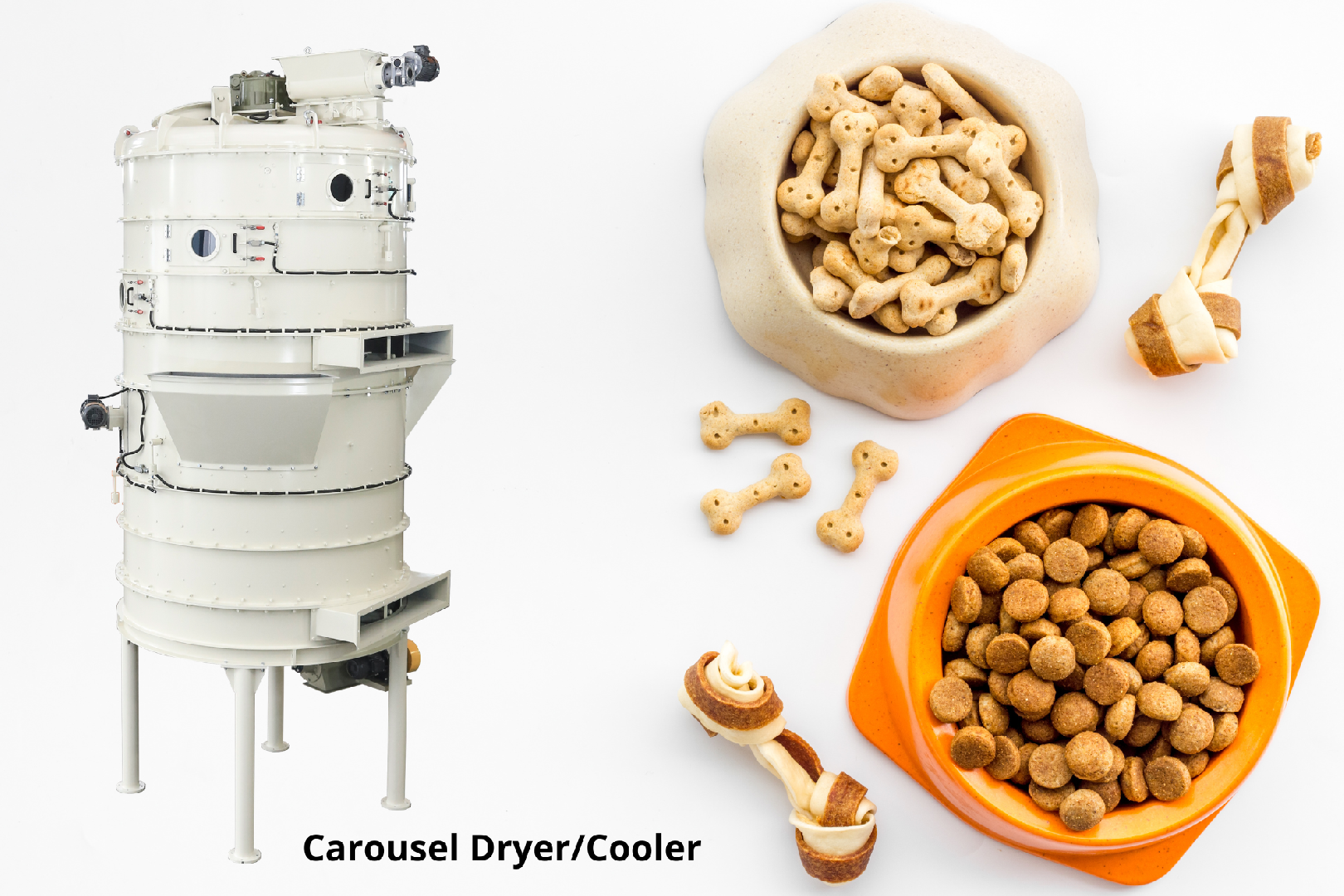
Carousel dryer/cooler from CPM's IDAH offers sustainability in petfood industry

The carousel working principle   In the carousel dryer, the product enters through a rotary valve onto the revolving trays. The Carousel system ensures a first in, first out (FIFO) principle, after nearly one revolution, the product is gently discharged and mixed into the next lower tray. This process is repeated until the product drops from the last tray into the outlet where a rotary valve prevents air leakage. The revolution means that the product undergoes the same treatment all along the decks, ensuring that the product comes out in uniform moisture. Furthermore, the multiple tumbling action gives an efficient heat exchange with the air, resulting in a low dryer exhaust air temperature.   Integrating dryer and cooler as one solution   The Carousel technology is a unique solution for both energy efficiency and precise moisture control. Optimal moisture control is made easy by using carousel technology in both the dryer and cooler. Additionally, the exhaust air from the cooler can be directed as make-up air for the drying process. Therefore, an integration of the dryer and cooler into one compact machine with a FIFO discharge principle like the carousel dryer will give an outstanding moisture control performance. Ambient air cools the product and after filtered and heated it is used as drying air for the upper section. This carousel model offers many benefits and features when compared to traditional equipment.   Improving product moisture control   Managing the temperature and moisture content of the finished product is the main task for the drying and cooling process. However, when the feed is overdried, it causes material loss, as well as extra energy consumption. When the feed is too wet, the product will have a higher risk of quality degradation and mold growth.   Due to its unique working principle, all the products in this carousel dryer will get the same heat treatment and retention time. This is combined with a unique and easy control system, along with real-time monitoring and modification of the drying parameters. The carousel dryer will give a uniform and constant moisture level that makes it easier to achieve the target average moisture, which will save energy and raw materials.   Improving energy efficiency   The drying and cooling process accounts for a significant part of the overall energy consumption. Rising energy costs and sustainability awareness regarding energy consumption have driven feed manufacturers to request further support to improve their drying and cooling functions. To maximize energy efficiency, we have to look into: Maximizing the use of warm product energy. Minimizing the amount of water evaporation. Minimizing energy loss with the exhaust air.   By using the cooling air as makeup air into the dryer, the heat energy can be reused. Also, efficient heat exchange lowers the amount of exhaust air. Low exhaust air volumes will reduce the cost needed for odor treatment.   Reducing the space required   While upgrading the production capacity of a feed mill or improving the production process, the introduction of new equipment into the facility is required and space limitations may arise. The carousel dryer is already more compact than a typical dryer.   Potential savings   A direct result of using cooling air as makeup air for the dryer is savings. If you assume that the temperature differential between the ambient and cooler exhaust air is 25°C, you save up to 30 kg/t steam. At the same time, you will reduce the amount of exhaust air by 50%, reducing odor treatment costs significantly. Getting better moisture control, for example 0.5%, is saving not only about 10 kg/t steam consumption in the dryer but, even more importantly, saving 0.5% raw materials cost and having a 0.5% higher output capacity.   For more information, contact Idah@cpm.net.   Source: CPM IDAH


Coating

Coating Technology Behind Spraying: Enhancing Nutrition in Pet Food and Animal Feed

5+ MIN

Technology Behind Spraying: Enhancing Nutrition in Pet Food and Animal Feed

In a wide range of industrial sectors, from animal feed to pet food processing, the efficient combination of liquids and solids is essential. Whether injecting liquid formulations into batch mixers or coating products with additives or flavour enhancers, the key lies in effectively dispersing the liquid over a broad surface area.
  This process plays a particularly important role in pet food and animal feed production, where liquids such as palatants, vitamins or nutritional additives are applied to enhance product quality and appeal.
  There are three primary methods used to achieve this liquid-solid integration: spraying, atomizing, and nebulizing. Each technique is based on distinct technologies designed to accommodate different types of liquids and application needs.
  Among these, advanced solutions such as PLP Systems' SMOG atomization technology stands out, offering highly efficient dispersion that improves palatability and consistency in the final product. OPTIMIZING LIQUID DISPERSION: SPRAYING, ATOMIZATION AND NEBULIZATION TECHNOLOGIES
SPRAYING
Is the most common method and widely used across various applications. It is suitable for liquids of different viscosities, producing relatively larger droplets, typically in the range of hundreds of micrometers in diameter. These droplets are generally more visible and can cover surfaces more thoroughly, delivering a larger amount of liquid.
  Spraying is often employed when a medium or large amount of liquid needs to be added to a batch mixer. The larger droplets tend to fall quickly due to gravity, making spraying ideal for applications where homogenous absorption of the liquid by the solid is desired.
  Spraying is mechanically generated by reducing the exit section, or 'nozzle,' and increasing the pressure in the pipeline.
  The shape of the nozzle allows for different spray patterns, including:
  Flat Fan, with angles ranging from 25° to 110° Full Cone, with angles ranging from 40° to 120° Hollow Cone, with angles ranging from 50° to 180°
  ATOMIZING
Involves breaking the liquid into very fine droplets. While it is possible to use viscous liquids, not all atomizing technologies can handle higher viscosities. The droplet size typically ranges from 10 to 300 micrometers in diameter.
  This method is used when a medium or small amount of liquid is added to a batch mixer, enhancing the homogeneity and dispersion of the product within the solid. Atomizing is also common in coating processes where even coverage of a solid surface is critical, such as in painting, food flavouring and pet food greasing.
  Different technologies are used for atomization, depending on the application and liquid properties:
  High-Pressure atomization: High pressure forces the liquid through a small nozzle, creating fine droplets.
  Ultrasonic atomization: Ultrasonic waves break the liquid into very fine droplets, producing a mist-like aerosol. This method is suitable for small amounts of liquid with limited viscosity.
  Air-Assisted atomization: Air jets break the liquid into droplets as it exits the nozzle.
  Rotary atomization: Commonly used in spray drying, coating and various industrial processes, where a spinning disc disperses the liquid, with droplet size dependent on the speed of rotation and liquid properties.
  Motorized SMOG atomization: This method, used by PLP Systems, combines rotary and air-Assisted atomization. The liquid passes through a spinning closed chamber; when the small droplets exit the nozzle, air jets further reduce the particle size. This technique is particularly useful for viscous liquids such as oils, fats, creams, hydrolysed pastes, molasses, syrups, chocolate, honey and more.
  NEBULIZING
Nebulizing produces much finer droplets, often only a few micrometers in diameter. These droplets are so small that they can remain suspended in the air as a mist or aerosol. Due to this characteristic, nebulizing is not typically used for adding liquids in mixers or coating applications. Instead, it is commonly employed for dispersing aerosols into the air for disinfection purposes.   ATOMIZING TECHNOLOGY FOR APPETIZING KIBBLES
In pet food production, palatants are typically applied post-oil coating to enhance the external flavor profile of kibbles. Achieving optimal palatability hinges on the even distribution of these viscous substances across all kibble surfaces. Traditional spraying methods often struggle with high-viscosity liquids, resulting in inconsistent coverage and potential nozzle clogging.
  To overcome these challenges, PLP Systems developed the SMOG technology. This advanced atomization system excels in spraying high-viscosity liquids onto kibble surfaces or within batch mixers, ensuring precise and uniform application.
  The SMOG XL series of sprayers is specifically engineered to handle molasses, a highly viscous liquid, across a broad range of viscosities. Achieving optimal spray quality with molasses necessitates careful control of the flow rate. As viscosity increases, the flow rate must be reduced to maintain a consistent and fine spray pattern.
    The higher is the viscosity of the molasses the less should be the flow rate in order to obtain a good quality of spray.
  Below an example of the curve trend of molasses spraying at different flow rates. This however depends on the viscosity, the temperature of molasse, the quantity of air of the blower, the type of pump used and the application.
  PLP Systems specializes in both liquids and powders, with a special focus on the pet food and feed industries. An important area for PLP is the accurate and precise handling of liquids and powder for pet food and feed production, with a specific focus on post-pellet coating and kibble palatability enhancing.
  This process involves adding micro-liquids such as enzymes, vitamins, flavors, probiotics amd yeast to the pellets, aiming to enhance their quality and oils, digest and palatants to kibbles.
  Whether you're looking to improve your current production line or explore innovative methods to increase product appeal, our technologies offer the reliability and excellence you need.
  Need more information or want to dive deeper into our systems? We're here to provide tailored solutions and answer all your questions. Call us today at +39 0523 891 629 or email us at info@plp-systems.com for a free consultation.
We're here to help you find the perfect solution for your needs!


Source: PLP Systems

Coating Palatability & Manufacturing: Impact on Pet Preferences

4+ MIN

Palatability & Manufacturing: Impact on Pet Preferences

Differences Between Cats and Dogs   To begin the discussion on palatability, we must first understand our main customers: cats and dogs. The variability between these companions —their behavior, eating habits, and nutritional needs— must be considered to satisfy them and encourage pet owners to repurchase their food. Understanding what makes cats and dogs want to eat will help optimize feed manufacturing and achieve greater palatability.
  A key difference between cats and dogs is their feeding behavior. Cats are carnivores, while dogs are omnivores, which leads to different nutritional needs and formulas. For example, cats require higher levels and better quality of proteins compared to dogs. FEDIAF recommends between 18% and 25% protein for dogs and between 25% and 33% for cats, which affects the starch content in their recipes and the nutritional values of the food. These differences require adjustments in production parameters to improve palatability.
  The sense of taste in cats and dogs, although both are based on a carnivorous pattern, varies significantly. Dogs enjoy sweet and sour flavors, such as carboxylic and phosphoric acids, while cats prefer bitter flavors and are not sensitive to sweetness. Dogs generally consume large meals quickly, possibly due to their pack heritage, and tend to take the food with their teeth and crush it, preferring softer foods. On the other hand, cats eat several small meals a day, mimicking their hunting habits, and use their tongues and molars to break the food, preferring harder and drier foods.
  Finally, the sense of smell is a critical factor in palatability for both cats and dogs, with their sense of smell being much more sensitive than that of humans. Cats have twice as many sensory olfactory cells as humans, and dogs may have up to 300 million olfactory receptors compared to about 5 million in humans.   Importance of Ingredients   Improved palatability begins with the proper selection of raw materials. Factors, such as protein quality, freshness, lipid oxidation, and ingredient proportions directly influence the texture and flavor of the food.
  In one trial, chicken meal and chicken liver were replaced with hydrolyzed chicken liver in a standard recipe. "Versus" tests showed a clear preference for diets that included the hydrolyzed liver, even with 5% and 10% inclusion rates. Choosing the right protein is, therefore, the first step toward higher food acceptance.   Processing: From Grinding to Drying   The initial processing stages, such as grinding and mixing, affect particle size and product homogeneity. Improper grinding can cause irregularities that negatively impact texture.
  In extrusion, starch gelatinization is critical. This process, which begins with the preconditioner, improves food cohesion. Insufficient starch content can cause kibble to disintegrate, while excess increases density. For cats in particular, kibble hardness influences acceptance: they prefer more compact products.
  A common challenge is balancing protein and fat levels in cat foods without compromising product expansion. The key is adjusting ingredients to achieve both the appropriate nutritional profile and an attractive texture.   Coating Optimization   Coating is one of the most decisive steps to achieve superior palatability. It is done by applying fat and liquid and/or powdered palatants. Fat, used at levels from 1% to 15%, serves nutritional functions and acts as an adhesive base for palatants. However, fat alone is not enough to ensure high acceptance.
  Liquid palatants (1% to 4%) enhance aroma and are more used in dog foods, where higher moisture and softness are sought. On the other hand, powdered palatants (0.5% to 3%) add flavor and moisture control, being common in cat foods, which require low moisture content and high protein levels.
  To maximize coating effectiveness, it is recommended to apply fat first, then the liquid palatant, and finally the powder. This ensures better adhesion and homogeneity.   Technical Factors of Coating   Nozzles: The diameter and pressure of the nozzles affect coating quality. Very low pressure generates large droplets that do not disperse well, while excessive pressure produces a mist that can be lost in the air. Proper positioning and spacing ensure uniform coverage.
  Mixing: In batch systems, the mixing direction influences homogeneity. Mixing from the outside inward improves palatant distribution, while the opposite creates clumps. Optimizing this process enhances the sensory experience of the food.
  Types of applicators: Batch applicators allow greater control, better homogeneity, and adjustments per batch, ideal for super-premium products. Although slower and more expensive, their efficacy in palatability terms makes them preferable in high-end segments. In contrast, continuous applicators are faster and more economical but may have lower precision.   Conclusion   Understanding the unique needs and behaviors of cats and dogs is fundamental to optimizing the palatability of pet foods. Given their distinct feeding habits, nutritional requirements, and sensory preferences, it is clear that a one-size-fits-all approach is ineffective. 
  The manufacturing process, from grinding to drying, plays a crucial role in determining the texture and palatability of the final product. Proper starch gelatinization, precise mixing, and controlled extrusion and drying processes are essential to achieve the desired consistency and flavor of the food. Each stage must be carefully adjusted to maintain the integrity and appeal of the product, responding to the specific preferences of cats and dogs. Coating, one of the most critical stages to improve palatability, requires careful ingredient selection and application techniques. By optimizing fat and palatant use and ensuring both efficient application and homogeneous mixing, it is possible to develop a much more attractive product.
  In conclusion, improving the palatability of pet foods involves a multifaceted approach that encompasses ingredient selection, precise manufacturing processes, and effective coating techniques. By addressing these factors, we can ensure that both cats and dogs receive foods that satisfy their flavor preferences.


By Maïlys Le Thiec - Kemin Nutrisurance
Source: All Pet Food Magazine


Conveying Systems

Conveying Systems Countdown to Pet Food Conveyor Launch:  Starting Up On Time and With Confidence

6+ MIN

Countdown to Pet Food Conveyor Launch: Starting Up On Time and With Confidence

To move delicate pet food products or powders, most processors do extensive homework before purchasing a tubular drag cable conveyor to ensure that it meets their needs in terms of function and price. After the purchase, the conveyor must be expertly assembled and tested to ensure smooth production startup and continued performance. The challenge is that the typical third-party contractors installing various plant systems might need to become more familiar with specialized pet food conveyors and, thus, are more prone to make costly errors. A more prudent choice is using the OEM's team of experienced technicians. The OEM's experts have the advantage of designing the specialized conveyor and understanding its installation, operational requirements, and potential problem areas. 'If a tubular drag cable conveyor is installed incorrectly by a third party, it often needs to be completely pulled apart and rebuilt, which is costly and time-consuming. If the conveyor is run incorrectly, damage will occur, and components must be replaced. All this only delays startup,' says Terry Derby, Director of Parts and Field Service for Automated Handling Solutions (AHS). AHS is the service-focused subsidiary of Cablevey Conveyors, an Oskaloosa, Iowa-based conveyor manufacturer that has been designing, engineering, and servicing enclosed cable and disc tube conveyors for 50 years and is in more than 65 countries. As a solution, pet food processors seeking superior conveyor performance from the start rely on expert-supervised installation and commissioning to ensure they will be ready to run products on time, at the necessary volumes. Today, a tubular drag cable conveyor requires considerable expertise to install. These systems gently move material through a sealed tube using a coated, flexible, stainless-steel drag cable pulled through on a loop. Solid circular discs (flights) attach to the cable, pushing the product through the tube without air.  'This type of conveyor is uniquely engineered to transport delicate materials gently. The tubes form a continuous loop that must be carefully assembled for a tight fit to ensure no misalignment or gaps between sections. While the modular components lend great flexibility to system design, each component must act in concert with the rest for proper conveyor functionality,' explains Derby. After selecting and purchasing a conveyor, the pet food processor's next step is installing it, which often requires professional assistance. Reliability Starts with Supervised Installation Whether relying on internal staff members for installation or contracting the job to an outside team of millwrights or skilled pipefitters, supervised conveyor installation can ensure proper system installation. Getting expert assistance is still essential during installation, even with the manual that has detailed instructions and QR-code links to videos for each conveyor component. 'Supervised installation is important to ensure that your system is installed properly so you don't run into maintenance problems due to an improper install,' says Derby. Derby insists that 'supervised installs are probably the most important support service we offer.' This step is often neglected when a less experienced third party performs the installation, which can escalate costs. At this point, AHS is frequently asked to complete final preparations and correct any problems before production startup, a process known as commissioning.  'When a processor brings us to their facility after declining a supervised installation, we often have to work backward for a day or two to correct issues. Having us there for supervised installation eliminates the need for correction and any idle contractors waiting on us for the repair, so it pays for itself,' says Derby. In the case of AHS, the company's technicians have logged hundreds, if not thousands, of hours on-site in various manufacturing facilities worldwide. This singular focus gives them the knowledge and expertise to streamline the installation process and prevent issues that can lead to system inefficiencies, product loss, or complete system failure. As part of the supervised installation, skilled technicians ensure the correct positioning of the conveyor's hangers and the proper torque for couplings. The system is properly cleaned to remove any metal fragments or foreign contaminants introduced during installation. In addition, the technician confirms that all conveyor inlets are in place and that all discharges are functioning. Even seemingly minor gaps or misaligned areas in the conveyor tubing can become a severe issue. 'If gaps are in the conveyor's tubes, the discs will 'catch' when crossing the joint, causing excessive wear on the cable and motor. If not corrected, this could lead to premature failure, production downtime, and added repair and replacement costs,' says Derby. According to Derby, another common wear item in tubular drag cable conveyors is sweeps, areas where the tube changes direction. He explains that sweeps are where the cable is under the most significant tension and where the discs rub inside the tube. Since sweeps show the first signs of wear, proper installation can reduce the wear and significantly prolong tube and cable life, simplifying maintenance. 'With a supervised install, processors can ensure that their conveyor is assembled correctly to enable seamless startup, reliable production, optimal output, and greater longevity for the system and its parts. Our reputation is on the line to get it right from the start,' says Derby. In addition, a supervised installation includes a full report outlining actions to correct any issues found. Due to the attention to detail, a supervised installation also preserves the standard warranty for the system's components. Of course, operators also play a critical role in conveyor performance. For this reason, having experts onsite can be one of the best ways to train the operators and maintenance crew on properly running, cleaning, and maintaining the system.    Reliable Production Requires Expert Commissioning When the installation is complete, the next step is to schedule commissioning. The average commissioning visit for a single-system installation usually lasts an entire day.  The onsite commissioning process readies the conveyor for total production and identifies any immediately correctable issues to keep the startup on schedule. At this point, the system must be installed entirely, including all mechanical and electrical components. The conveyor material must also be ready for introduction to the system. This is where a botched installation by a third party can come to light without supervised installation by the OEM. 'We are often asked to 'fix' poor installations by third-party contractors. We have had to tear whole systems apart. This frequently requires a complete rebuild and replacement of damaged parts, which adds cost, creates downtime, and delays startup,' says Derby. In the case of AHS's commissioning service, the technician conducts an inspection using a camera that runs through the entire system layout to ensure that everything is correctly assembled and ready for testing. The technician then performs a test run of the product, from the inlet feed through the sweeps to the discharge outlet, and verifies that it flows at the desired speed. 'Tailoring the conveyor to the material conveyed can require adjustments to fine-tune the process. With the commissioning, the goal is to increase efficiency, production volume, and reliability,' says Derby. He adds that 'checking the system's health' also uncovers any issues that might arise, which technicians can address to prevent production downtime. He points out that commissioning also extends Cablevey's standard warranty. As a final step in the commissioning process, the technician issues a report for the processor that documents all findings from the full-system inspection. Completing conveyor installation, commissioning, and start-up is only the start of the OEM's and processor's relationship since the system's lifespan can be decades. In addition to traveling on-site for emergency service calls, the company offers an annual service visit to conduct a detailed system inspection and address any issues, identify worn parts, ensure predictive maintenance is being conducted, and provide any additional training needed. This complete system audit aims to extend the conveyor's lifespan and prevent unexpected downtime. 'Our mission is to provide conveying equipment and ensure it performs as required, with minimal downtime and maintenance. Once a pet food processor buys a system, they become part of our family. We will continue to support them every way we can, even as their needs evolve,' concludes Derby. By Del Williams is a technical writer based in Torrance, California. Source All Pet Food

Conveying Systems Mobile 'Smart Cart' Automates Food Conveyor CIP for Pet Food Manufacturers

4+ MIN

Mobile 'Smart Cart' Automates Food Conveyor CIP for Pet Food Manufacturers

To promote food safety and sanitary compliance, pet food manufacturers are increasingly seeking the ability to clean-in-place (CIP), an automated method of cleaning the interior surfaces of tubular drag conveyors without disassembly. Now, with the advent of mobile tools like an innovative 'smart cart' that quick-connects to any tubular conveyor and enables simple, customizable 'single button cleaning recipes,' CIP is becoming easier, faster, less labor-intensive, more repeatable, and almost fully automated. Tubular drag conveyor systems gently move product through a sealed, enclosed tube using a drag cable and circular discs pulled through on a loop, so they are ideal for delicate items. Designed to handle a variety of different forms and sizes, from kibble to seeds or pellets and nutrients, tubular conveyors maintain both quality and proper proportions. In a wet CIP process, the system is flooded with water, flushed, rinsed, cleansed, and thoroughly sanitized. Although the process is very effective, streamlining its automation and simplifying the process for all a facility's tubular drag conveyors has been a priority for leading innovators in the industry. 'The standard system required port hookups to water lines and installing piping. The processor also had to make decisions, such as which water temperatures to utilize, or whether to use a cleaning solvent - and the correct amount to add manually,' says John Adair, Engineering and Quality Director for Cablevey Conveyors, an Oskaloosa, Iowa-based conveyor manufacturer that has designed, engineered, and serviced enclosed cable and disc tube conveyors for 50 years, and is in more than 65 countries. To simplify the wet cleaning process, Adair and his engineering team at Cablevey have developed a small, mobile 'smart cart' with integrated water line hookups that a single technician can easily take to any tubular drag conveyor in a facility. The cart is specifically designed to be a fraction of the size of similar carts on the market to facilitate mobility. When the cart is in position and connected to water lines, the CIP process is automated and controlled by a programmable logic controller (PLC) that reduces the need for manual labor and virtually eliminates the risk of improper cleaning. 'Once it is set up, all you do is press a button, and it will bring in the required amount of water at the correct temperature with the necessary amount of solvent for cleaning,' says Adair. The smart cart is designed to store and utilize pre-programmed CIP recipes to flush various residual materials from the tubular drag cable conveyors in a facility before new production runs. The cleaning recipes enable even those with very little training to use the cart, which is helpful in today's tight labor market and allows the technician to move on to other tasks once the cleaning process begins. The use of easily executable recipes ensures a superior, repeatable clean that essentially 'error-proofs' the process. This is particularly important when the technician may be new or less familiar with the production equipment. 'Depending on the product conveyed, sometimes all you need is a wet rinse or a specific cleaning solvent. All that information is saved, so after the first cleaning, it can be automatically repeated. Just push a button to start the appropriate recipe, whether you have one conveyor running multiple products or dozens of conveyors running various products,' says Adair. To meet strict compliance standards, the smart cart also documents all critical CIP information, such as water volume and temperature, chemicals used, and cleaning time by date, in an easily retrievable data log. Since decreasing production downtime between conveyor cleanings is a priority for pet food manufacturers, Cablevey provides new capabilities with the cart that expedites the CIP process. Currently, the CIP process floods the tubular conveyor system but is not designed to clean the discs specifically. 'Operators would manually clean each disc and advance the system disc by disc when the discs had to be cleaned of particularly viscous substances,' says Adair.   Once it is set up, all you do is press a button and it will bring in the required amount of water at the correct temperature with the necessary amount of solvent for cleaning.   Now, as an option on the cart, a disc washer can be integrated with the conveyor turnaround to spray a pressurized cleansing solution on the discs. This helps to remove stickier substances that could remain after routine CIP cleaning. 'The disc washer sprays high-pressure water directly on the discs, so it acts like an automatic car wash. At the push of a button, the discs and cable are run through, and spray cleaned, which reduces CIP time and eliminates the need to manually clean the discs,' says Adair. To further reduce downtime, Cablevey also offers a new sanitary blower option. 'After the wet CIP process, a sanitary blower attachment on the smart cart can dry the discs and other parts of the system 75% faster than typical air drying,' says Adair. He points out that the faster the conveyor is cleaned and dried after a product change, the sooner it can be put back into service, which improves profitability. According to Adair, Cablevey's Mobile Smart Cart was already available since it was officially unveiled at Pack Expo, a premier packaging and processing show held at the Las Vegas Convention Center in September. The event featured full-scale setups of machinery in action. The company also offered traveling demo smart cars to customers in September for free so clients could test drive the units. Pet food manufacturers can now purchase the demonstration unit used in their facilities, with hands-on training available immediately. While the pet food manufacturing industry is aware that automated CIP can improve conveyor system production uptime, barriers to implementation have slowed adoption. Utilizing a mobile smart cart with integrated water hookups will help manufacturers easily implement CIP in tubular drag conveyors throughout their facilities: expediting conveyor cleaning, production changeover, and sanitary compliance. By: Del Williams - Technical writer based in Torrance - California Source: All Pet Food Magazine


Packaging

Packaging STATEC BINDER: packaging machines for a wide range of animal feed products

3+ MIN

STATEC BINDER: packaging machines for a wide range of animal feed products

Dog food in PE bags, bird feed in paper bags, horse feed in big bags. The global feed industry is booming. According to estimates, the sector will grow to $816 billion by 2030—a gigantic market. The largest feed manufacturers are located in China and the US. Soy and corn are among the most important resources, closely followed by wheat and rapeseed. But whether it's feed for farm animals or beloved pets, all these products must not only comply with quality guidelines but also be carefully packaged. And this is where modern high-tech packaging systems play a key role. Austrian manufacturer STATEC BINDER specializes in precisely this area.   A Wide Range of Products Requires a High Degree of Flexibility   Packaging machines from STATEC BINDER combine a number of advantages: from high-quality components that guarantee durability and robustness to sophisticated software that makes them easy to operate. Above all, however, one special aspect runs like a thread through development and production and sets the direction: flexibility. The reason for this is easy to explain: not all animal feed is the same. On the contrary, there are numerous different products of varying sizes and with different flow characteristics—from powdery and dusty goods to free-flowing ones. 
  What does this mean for packaging machines? They have to cope with this wide variety of goods and what's more important, they have to be perfectly aligned with them. For STATEC BINDER, high flexibility in machines is therefore not only desirable, but has long since become a core value. Only in this way can the respective system be optimally integrated into the company setting and be 100% compatible with the product.   Flexibility as a Central Part of the Company Concept   This flexibility manifests itself at STATEC BINDER on several levels:
  Sophisticated systems: Start with selecting the right packaging machine. The product portfolio includes both open-mouth packaging systems and FFS machines.
  Customization options: In the next step, the machine is customized. For example, with a wash-down design for easier cleaning, a bag air press device for even more efficient results, or labeling features.
  Effective accessories: Accurate net weighers dose the exact amount into the bag. Modern bag-sealing machines guarantee secure closure. Finally, metal detectors ensure that no foreign objects end up in the bag.
  The result is high-quality, reliable, and durable packaging machines for pet food that reflect STATEC BINDER's many years of experience.  
  Because pet food not only has to be securely packaged but also stacked quickly and neatly on pallets for further transport, every packaging machine can be supplemented with a STATEC BINDER palletizing system. This further increases the degree of automation.   Strong Professional and Interpersonal Skills   STATEC BINDER is not only a developer, manufacturer, and supplier but also a long-term partner for every customer. This is because it is not just a matter of designing the ideal packaging machine for the respective feed and company, but also of ensuring its smooth operation for many years and continuously developing the system. That is why STATEC BINDER relies on comprehensive, worldwide customer service. This strong human component, combined with technical expertise, makes STATEC BINDER one of the leading suppliers of packaging machines in the feed industry. By STATEC BINDER
Source: All Pet Food Magazine

Packaging Trends in Pet Food Bagging: Innovation, Precision, and Efficiency for a Growing Industry

4+ MIN

Trends in Pet Food Bagging: Innovation, Precision, and Efficiency for a Growing Industry

This growth not only impacts food formulation, but also the industrial processes that ensure its preservation, safety, and presentation. In this context, pet food bagging has come to occupy a strategic place within the production chain.

The final packaging serves multiple purposes: protecting the food from moisture and contamination, facilitating storage and transport, and providing attractive presentation at the point of sale. At the same time, it must be practical and resistant for the end consumer. For this reason, pet food manufacturers are seeking technological solutions that combine efficiency, versatility, and quality control throughout the bagging process.
Formats and materials: versatility as a competitive advantage
The bag format is one of the most decisive factors in the industry. Dry pet food is usually packaged in polypropylene or laminated polyethylene bags, materials that offer high mechanical resistance and protection against moisture, oxygen, and pests. These materials preserve the crunchy texture of the product and extend its shelf life.

Traditionally, the most common formats are between 5 and 20 kg, ideal for owners with several pets or for distributors. However, the current trend shows sustained growth in demand for smaller bags, less than 5 kg, designed for consumers seeking convenience or higher turnover products.

This change requires manufacturers to have flexible bagging equipment that can quickly adapt to different bag sizes and types without compromising production speed.

PAYPER automatic pet food bagging machines are designed precisely to offer this versatility: they allow for quick and automatic format changes, with systems that adjust measurements without the need for manual intervention. In addition, the horizontal empty bag storage system provides operational autonomy, as it can hold up to six stacks of bags ready for the next cycle.

Before sealing, an automatic alignment system ensures that the bag mouth is perfectly level, guaranteeing a precise and professional finish. If the process requires it, double welding adds an additional layer of protection against moisture and contamination.
Dosing and weighing: accuracy in every bag
In pet food, product homogeneity and weight accuracy are essential to meet quality standards. PAYPER has developed the MSX weighing controller, one of the most accurate technologies on the market. Accredited by official metrology institutions, this system was specifically designed for high-speed bagging processes and ensures accurate dosing even on lines with high production throughput.

The MSX combines speed and reliability, maintaining product consistency without generating overweight or losses. Depending on the characteristics of the food—density, particle size, or flowability—the most suitable dosing system is selected, ensuring a stable and controlled flow at all times.
Product protection: guaranteed freshness and preservation
Maintaining the quality of dry food throughout its life cycle is a key challenge. PAYPER pet food bagging lines incorporate residual air extraction and deaeration technologies, which remove excess air from inside the bag and achieve a more compact and stable package. In some cases, the air is replaced by inert gas (such as nitrogen), a technique that prevents oxidation and deterioration of the ingredients, prolonging the freshness of the product.

In addition, the double top seal reinforces the airtight closure and provides extra protection against moisture, dust, and temperature variations. In this way, manufacturers can ensure that each batch retains its nutritional and organoleptic properties until it reaches the consumer.
Quality control: safety at every stage of the process
The pet food industry shares very similar standards to those of the human food sector. For this reason, PAYPER lines incorporate automatic inspection and control systems that verify compliance with all safety and quality parameters.

These include: Checkweighers, which verify that each bag meets the nominal weight. Metal detectors, which guarantee the absence of metal contaminants. Automatic rejection systems, which remove any bag that does not meet the standards from the line.
  This total control ensures that only compliant products reach the market, reinforcing the end customer's confidence and the manufacturer's reputation.
Palletizing and wrapping: presentation and logistics in balance
Once the bag has been sealed, the next step is to ensure flawless handling and presentation. PAYPER bag palletizing systems, available in robotic palletizing and conventional palletizing versions, are designed to handle each bag gently and precisely. The result is a perfectly square and stable pallet, ready for storage or transport.

High-speed palletizers incorporate telescopic belt feeders and specialized gripping heads, capable of maintaining the integrity of the bag even at intensive production rates.

Finally, Stretch Hooding and Stretch Wrapping protects pallets from moisture, dust, and UV rays, ensuring their stability during transport. This stage not only contributes to logistical safety, but also improves the final image of the product, an aspect that is increasingly valued by brands.
Commitment to innovation and customer focus
With over 50 years of experience and more than 5,000 projects completed in over 80 countries, PAYPER has established itself as a global leader in complete bagging lines. Its network of eight international subsidiaries and local technical service teams enable it to offer immediate and personalized assistance, adapting to the specific needs of each customer and region.
Conclusion: Pet Food bagging as an essential part of product value
Current trends in the pet food market point to greater automation, precision, and sustainability. Pet Food bagging is no longer considered a secondary stage in the process, but rather a key element in ensuring the quality and competitiveness of the final product.

PAYPER bagging solutions integrate all critical elements—dosing, weighing, bagging, palletizing, and strapping—into complete, flexible, and customized lines. Thanks to its focus on efficiency and technological innovation, PAYPER accompanies the pet food industry toward a more secure, sustainable, and profitable future. Source: PAYPER

Advertising

260x430 260x430 260x430 260x430 260x430 260x95 260x95