Latest content from Palatants

Delayed Dry Palatant Coating: Does it Affect Palatant Recovery Rate and Palatability?
Palatants

3+ MIN

Delayed Dry Palatant Coating: Does it Affect Palatant Recovery Rate and Palatability?

In dry pet food manufacturing, the standard palatant application sequence typically follows three steps: (i) fat spraying, (ii) liquid palatant spraying, (iii) dry palatant application. Most fats must be heated (30-40 °C) to remain liquid. Once the fat is applied, palatants are usually layered on top, as depicted in Figure 1.

However, in certain situations –such as when the dry palatant is applied at a different location– it may be necessary to coat pre-fat-coated kibbles with dry palatants at a later stage.

This study investigates two key questions: Does applying dry palatant on room-temperature fat-precoated kibbles reduce palatant adhesion efficiency? Does this delayed application affect palatability?  
EXPERIMENTAL DESIGN
Three coating conditions were tested: Direct dry palatant application: 3 % of fat was sprayed onto 3 % fat-precoated kibbles. The 3 % fatprecoated kibbles were produced in a standard way, with the fat being sprayed on warm dried kibbles exiting the dryer.There was a three-week interval between the two fat applications, and the latter was followed by an immediate dry palatant application.
  Delayed dry palatant application #1 (3 weeks delay): 6 % of fat was sprayed onto uncoated kibbles. After three weeks of storage, the dry palatant was applied.
  Delayed dry palatant application #2 (3 months delay): Same as Condition 2, but with a three-month storage period before applying the dry palatant.
  Each condition was tested on both cat and dog kibbles, using dry palatant application levels of 1.5 % and 2.0 %.

The same poultry fat (applied at 35 °C) was used across all conditions.
Measurements   Recovery Rate (RR): using analytical tracers, the actual percentage of dry palatant recovered on the kibbles was calculated. Palatability testing: carried out in AFB dog and cat kennels with 30 animals over two days; versus tests were analyzed using paired t-tests for dependent samples. Moisture content: controlled to ensure it did not influence palatability results (cat: 5.8 % ± 0.1, dog: 7.0 % ± 0.1). Crude fat content: verified for coating uniformity (cat: 11.9 % ± 0.3, dog: 10.4 % ± 0.3).
  RESULTS
Recovery Rate of dry palatant Figure 2 illustrates the RR of the dry palatant for each condition. Key finding: the RR remained consistent across all conditions, indicating that at this fat level (6 %) dry palatant
 
Palatability results
Table 1 summarizes the results of the versus tests.

Key observations: the tests showed no statistically significant difference in palatability. one case showed a significant preference: cat kibbles with 1.5 % dry palatant, applied after 3 weeks.
 
CONCLUSION   Delaying dry palatant application does not reduce adhesion efficiency. Palatability remains unchanged, except in one specific case.
These findings indicate that dry palatant application can be delayed by days, weeks, or even months after fat coating without compromising product performance or dry palatant adhesion.

This flexibility could be particularly useful when: applying dry palatants in a separate coating line (e.g., liquids in a batch coater, powders in a continuous coater). manufacturing two diets that differ only in the coating step. conducting trials in AFB facilities using customer-specific fat and application conditions.
  Cautionary note: These results are based on a limited set of conditions (one type of fat, one type of kibbles, one dosage of fat…) and should not be taken as universally representative. They are intended to provide insights rather than conclusive evidence.
To learn more about this topic, or to speak with our Science & Technology experts, please reach out to your AFB Sales representative or afbinternational.com/contact.


Source: AFB International  

Solutions for drugs and dietary supplements
Palatants

2+ MIN

Solutions for drugs and dietary supplements

Pet parents sometimes struggle to administer oral drugs and dietary supplements.

Giving daily medication for treatment of chronic disease can be especially frustrating, resulting in unpleasant moments for both the pet and the pet parent.
  Bad experience while administering drugs or dietary supplements may have significant impacts:
 
SPF palatability solutions are your best ally to increase drug and dietary supplement acceptance by pets and guarantee compliance of pets in taking the treatment and pet parents in giving the treatment. Increased palatability is your best ally to make pet parents happy and pets healthy.
  Our solutions for drugs and supplements
Solutions for every galenic to delight each pet!
  Palatability enhancers are your best ally to achieve compliance. Thanks to their holistic knowledge of pets, products, and pet parents, SPF solutions have been improving the taste of pills, tablets, chews, pastes, and liquids for more than 15 years.
  Our solutions have a minimum shelf life of 12 months and we can guarantee recipe stability for the lifetime of your drug.
  Find the right SPF solution for each of your galenic and significantly increase the palatability performance of your product!

Adapted to every galenic
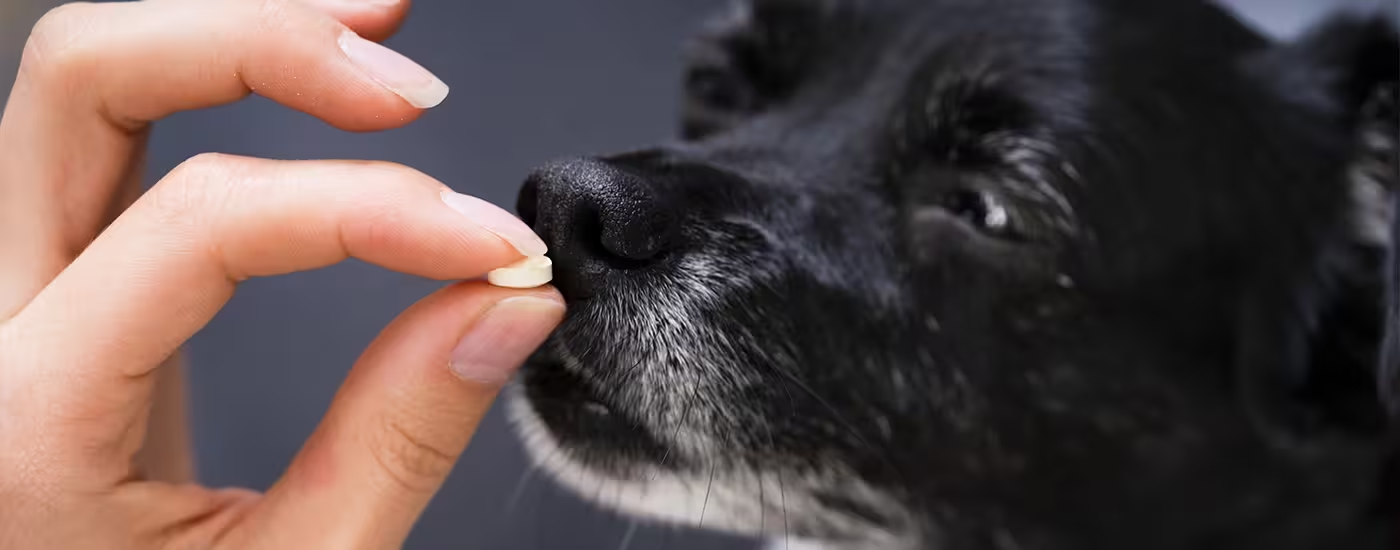
Palatability studies conducted on a placebo tablet demonstrate that SPF palatability solutions significally improve the consumption of tablets by cats and dogs.
    Catering to the specific preferences of each pet
SPF researches have demonstrated that pets express different preferences, which can be innate or acquired. Cats and dogs have different anatomical and sensorial equipment, which explains why they respond differently to smells and tastes.
  SPF product portfolio includes a specific range of palatability solutions for cats and a specific one for dogs.
 
Vegetable-based palatability solutions
To meet the challenges of the growing needs of the planet (animal protein availability, food safety crisis, custom barriers, and sustainability), SPF researched and developed vegetable-based palatability solutions.
  The promise of a sustainable generation of high-level palatability without animal proteins solutions is no longer a dream for manufacturers and will delight cats and dogs around the world.


Source: Symrise

How can palatants enhance the appeal of gently cooked meals?
Palatants

2+ MIN

How can palatants enhance the appeal of gently cooked meals?

Over the years, pet nutrition has evolved from feeding table scraps and home-cooked meals to biscuits, kibble, wet pet food and, now, a return to home-cooked style meals. Why, after decades of innovation and refinement in pet food production, has the industry circled back to this approach? The answer lies with the consumer.
  Pet owners today are faced with an overwhelming array of options when it comes to pet food, from kibble to raw, freeze-dried and wet diets. The decision-making process can be daunting. With so many choices available, it's challenging to determine which is best, and navigating the many labels and packages often adds to the confusion. This is where gently cooked products come into play.
  Trust and transparency   Gently cooked pet food has seen rapid growth in recent years, and its success can be attributed to a few key factors. First, the straightforward packaging and labeling make it easy for pet owners to understand what they're buying. When opening a package, the sight and smell of the food enhance the trustworthiness of the product. Additionally, the inclusion of vegetables and herbs appeals to pet owners' desire to provide the healthiest options for their pets.
  Building the right customer experience   While gently cooked meals tap into the desire for wholesome, home-cooked food, they come with some challenges from a palatability perspective. The cooking methods used in this category – such as steaming, sous-vide or low-temperature cooking – result in different flavor profiles and levels of palatability. Also, the appearance of the food, including its color and texture, can be influenced by the cooking method.
  To enhance palatability, the right palatants are essential. These must be adjusted to the cooking technique to help achieve the ideal flavor profile and improve the product's attractiveness.
  The goal is to replicate the experience of home-cooked meals, where the smell and appearance of the food are just as important as the taste. When pets enjoy every bite, it not only makes them happy, but also reinforces the trust pet owners have in the product.
  Expert collaboration AFB International specializes in collaborating with manufacturers to find the most suitable palatants for gently cooked pet food products. The company's team of application technologists is dedicated to helping producers select the best flavor solutions, and offers training and insights tailored to each manufacturer's needs.

Read the paper here! 


Source: AFB International

7 Trends For Pet Food In 2025
Palatants

7+ MIN

7 Trends For Pet Food In 2025

DISCOVER THE MAIN PET MARKET TRENDS FOR 2025!   Attentive to the pet market's needs and pet owners' expectations, we highlight the 7 trends that will shape 2025!   We invited our experts to analyze each one and highlighted our solutions, products, and content that aligned with these demands, adding even more value to our clients' products.   Sources: Mintel - Patent insights: revolutionise the future of pet food (Nov/2024) Pet Food Industry - Top human food trends for 2025: Insights for pet food   FOCUS ON INGREDIENT QUALITY   Price, freshness, health benefits, nutritional content, shelf life, and safety. The industry is expected to explore technologies that improve nutritional quality and reduce production costs for pet food.   With the growing humanization of pets and the strengthening of the bond between animals and their families, who increasingly welcome them into their homes, the quality of the ingredients in pet products becomes essential. This not only ensures the consistency of the items but also prevents recalls and ensures the best nutrition and health for pets.   'Pet owners are increasingly paying attention to the quality of ingredients in animal nutrition. With this in mind, Biorigin goes beyond developing innovative products: it offers high-quality, naturally derived ingredients derived from Saccharomyces cerevisiae yeast. With full control over the production process and complete traceability, we ensure maximum reliability at every stage. Our highly qualified technical team is driven by the mission of promoting animal health and well-being, reflecting this commitment to constant investments in research and innovation to deliver the best solutions to the market.' EDUARDO YAMASHITA, Global Feed Product Manager at Biorigin.   PERSONALIZED HEALTH AND NUTRITION   Search for foods tailored to the needs of each pet, with specific diets approved by veterinarians that improve health and well-being. Health benefits include increased satiety, better digestion, and weight control.   Pet owners are increasingly seeking a diet for their dogs and cats that is similar to their own, reflecting a more significant concern with the quality of the nutrients consumed. They want products that meet the various needs of their animals, such as fur care, strengthening the immune system, improving metabolism, and using clean labels and sustainable ingredients. In this context, Biorigin products stand out, offering solutions suitable for all stages of the lives of dogs and cats.   'Biotechnology, applied to producing yeast-derived products for pet nutrition, brings countless benefits, combining personalization, high nutritional quality, and sustainability. Biorigin solutions are developed with a focus on the health and well-being of pets, offering complete support to owners who seek the best care for their companions. With benefits such as support for natural defenses, intestinal health, improved palatability, and a rich source of proteins, our products support health through nutrition so that pets live happier and healthier lives.' ROBSON BARDUCCI, Animal Nutrition and Health Specialist III at Biorigin R&D Center   DOWNLOAD THE E-BOOK! - Discover 5 reasons to choose MacroGard!   SUSTAINABILITY   Consumers are increasingly aware that climate change can impact the prices of various products   Biorigin ensures full traceability of its ingredients, as the raw material used, sugarcane, is produced by Zilor, our parent company. This guarantees quality at every stage of the production process, from the source to the final product. Furthermore, Zilor has signed the UN Global Compact, an initiative that brings together companies committed to sustainable development and transparency in their actions, and Biorigin has also made this commitment.   "Biorigin's emissions reflect a positive path about climate change. While there is still a long way to go in combating climate change and transitioning to renewable energy, at Biorigin, we are advanced in this area, with over 90% of our energy coming from renewable sources." WALTER JOSÉ SARNO SANTOS, Environmental Coordinator at Biorigin   WORTH READING! - Check out the article on Biorigin's blog.   RECYCLED INGREDIENTS TO REDUCE WASTE   Transforming waste from the food industry into sustainable ingredients for pet food reduces the sector's environmental impact and carbon footprint.   Environmental concerns are essential, including those related to pet nutrition. The industry can contribute by upcycling ingredients, reusing food that would otherwise be discarded, and reducing waste and environmental exploitation. The extrusion process efficiently produces dry or semi-moist food, transforming raw ingredients into high-quality products with varied shapes, textures, and nutrients.   "The pet industry can transform waste from the food industry into nutritious and safe ingredients for pets. Biorigin's yeast-derived products are the best example of this, as some come from the food industry and the sugar cane industry, which have several benefits for animal health and are safe and fully traceable." LETÍCIA PACHECO, Research and Development Specialists at Biorigin   WORTH READING! - Check out the article on Biorigin's blog   PLANT-BASED FOODS   37% of pet owners in Thailand want a more sustainable diet, such as plant-based options.   The vegan market is expanding, both for humans and pets. More than a lifestyle choice, this trend is gaining strength in the face of a growing concern: the scarcity of animal protein, driven by the increase in the global population and climate change. This issue also affects the growing pet population, challenging the industry to develop attractive formulations, considering that dogs and cats have a greater acceptance of proteins of animal origin. Between 2021 and 2024, according to Mintel, 216 vegan and vegetarian products were launched in the pet market, highlighting the growth potential of this niche. In this context, Biorigin yeast is an ideal alternative, adding appeal and flavor to pet food and meeting the demands of this growing segment.   "Biorigin's ingredients are of natural origin, vegan, and highly safe, meeting the growing demands of the pet food market. With increasingly discerning consumers, our solutions offer quality and safety aligned with global sustainability trends. Our ingredients, developed to guarantee health, flavor, and functionality, are ideal to meet the expectations of owners who seek the best for their companions." ANDERSON APARECIDO DIAS SANTOS, Specialist I in Research and Development at Biorigin   ORAL CARE, SKIN AND COAT   Other concerns for pet owners include oral care for dogs and cat foods that prioritize skin and coat benefits.   Although essential, brushing your pet's teeth can be a challenge for their owners. Therefore, foods that help with oral hygiene represent an excellent opportunity for the market, helping to prevent bad breath and oral diseases. Taking care of the health of the skin and fur is crucial for the well-being of animals and for minimizing allergens, microorganisms, and parasites that can affect both pets and humans. Furthermore, this care is essential to ensure our four-legged companions' quality of life and longevity.   MacroGard, a source of purified beta-glucans from the yeast S. cerevisiae, strengthens natural defenses, maintaining your pet's health and making it stronger, more resistant, and ready to face the challenges of a longer life. WORTH READING! - Check out the article on Biorigin's blog.   DOWNLOAD THE E-BOOK! - Discover how MacroGard helps you achieve healthier skin and coat.     INTESTINAL HEALTH   Digestive health is one of dog and cat owners' main concerns and priorities.   The intestine is one of the most critical and extensive organs in the body of dogs and cats and is essential for their overall health. It is responsible for the digestion and absorption of nutrients and houses a significant part of the immune system. In addition, it plays an essential role in regulating pets' moods and improving their quality of life. Another relevant aspect is the coexistence that animals have with their owners, making it necessary to ensure the quality of the feces of pets. This reflects intestinal health and directly impacts the well-being and daily coexistence between animals and their owners.   THE BETTER THE INTESTINE, THE BETTER THE MOOD! - HyperGen, Biorigin's 2nd generation prebiotic, is derived from the primary fermentation of the yeast S. cerevisiae. It contributes to a balanced intestinal environment, optimizing nutrient absorption and strengthening the intestine's natural defenses.   DOWNLOAD THE E-BOOK! -  Discover how HyperGen helps with intestinal health. PREBIOTICS: IT ALL STARTS IN THE INTESTINE - ActiveMOS is rich in mannan oligosaccharides (MOS) that function as substrates for the microbiota and promote more production of short-chain fatty acids, essential for maintaining intestinal health. Discover how ActiveMOS helps with intestinal health.     INSIGHTS THAT MATTER   'The pet market is increasingly focused on trends such as sustainability, specific oral and coat health care, personalized nutrition, and high-quality ingredients. At Biorigin, we are proud to have offered solutions that have met these demands for over 20 years, always combining innovation, animal welfare, and environmental respect. With a focus on ingredients of natural origin, our company stands out for its technical quality and strong research performance, ensuring reliable products with full traceability and alignment with the expectations of an increasingly demanding and constantly evolving market.' THAILA CRISTINA PUTAROV, Global Business Manager of Animal Nutrition and Health at Biorigin   'At Biorigin, the satisfaction of our customers is our highest priority. That is why we develop products and solutions that meet the diverse needs of the pet market. Our commitment goes beyond offering innovation and safety: we deliver results that add value to our partners and delight demanding owners, providing the best for their pets.' ROBSON BARDUCCI, Animal Nutrition and Health Specialist III at Biorigin R&D   VISIT OUR WEBSITE AND FOLLOW US ON LINKEDIN: https://www.linkedin.com/showcase/biorigin-animal-health-and-nutrition/ https://www.linkedin.com/company/biorigin-zilor/   Contact our technical-commercial team for more details about the product. Send an email to biorigin@biorigin.net
*Regulations may vary by country. Always consult local laws and requirements for product use and its claims. This product is not intended to diagnose, treat, cure, or prevent any disease.   Source: Biorigin  

The Palatability Puzzle: New Innovations Unlocking Pet Preferences
Palatants

7+ MIN

The Palatability Puzzle: New Innovations Unlocking Pet Preferences

Sensory analysis has long been integral to the human food industry. However, its application in pet food is increasingly recognized as critical in ensuring product quality, palatability, and consumer satisfaction.1
  Palatability directly influences pets' dietary intake to meet their nutritional needs. For pet owners, knowing their pets enjoy their meals brings emotional satisfaction and builds loyalty to a particular brand. As the pet food industry grows and evolves, leveraging sensory analysis strategically is vital for fostering innovation and meeting the increasing expectations of discerning pet owners.
  Expert vs. Consumer Evaluations: Understanding the Basics
There are two main ways to evaluate a food's taste and appeal: expert evaluations and consumer feedback. Expert evaluations use trained tasters who carefully analyze and describe a food's qualities. They may compare samples to find subtle differences or describe in detail what makes each unique. These tests are used for a variety of purposes, from marketing research to developing new products or quality control.1; 2 On the other hand, consumer feedback involves everyday people who use the product. Their feedback is based on their perception and assessment of a food product.
  Palatability Testing: Key Methodologies
With pet food, we can easily perform expert analyses in the form of palatability tests to determine pets' preferences. Palatability refers to how enjoyable an animal finds the taste of its food, which is determined by sensory qualities like taste, flavor, and texture.2 Palatability tests play a key role in developing new pet foods or improving old ones, and they are often a crucial factor in determining customer repurchase rates. Ultimately, palatability can make or break a brand.
  The palatability of pet foods, at the most basic level, is measured with two different methodologies:  One-Bowl Test: Measures the acceptability of a food by analyzing how much of it is consumed. This method is particularly well-suited for in-home testing environments commonly referred to as IHUTs, or in-home usage tests.
  Two-Bowl Test: Evaluates preference by offering two food options simultaneously to measure the first choice, total consumption, and intake ratio between the two foods. This method is often used in controlled environments with kennel or laboratory animals, although variations can be adapted for in-home testing.1-3
  Innovative Approaches to Palatability Testing
While these two approaches have been used widely in the past, there are a few new methodologies that allow researchers to gather more in-depth insights into pet food palatability:
  Olfactometry
Combining olfactory evaluation with traditional palatability methodologies enhances understanding by isolating and analyzing the critical role of aroma in pet food preferences. Tools like olfactometers and false-bottom bowls help isolate scents, enabling the creation of highly appealing products that enhance both attraction and sustained palatability.4-7
  Behavior Evaluation
Integrating pet behavior evaluation with traditional palatability testing improves understanding by linking observable behaviors to food consumption to assess emotional responses to food. Advanced systems, such as automated feeding stations, track detailed metrics like feeding duration, weight consumed, and eating styles, providing deeper insights into individual preferences and consumption patterns.8
  Physiological Evaluation
Combining pet physiological evaluation with traditional palatability testing can reveal how physiological responses, such as changes in body temperature and heart rate variability (HRV), correlate with emotional reactions to food. Techniques like infrared thermography and heart rate monitoring provide non-invasive methods to measure responses to palatable stimuli, such as increased eye surface temperature or positive HRV changes.8
  Cognitive Evaluation
The Conditioned Place Approach Protocol (CPAP) uses associative learning to reveal food preferences and provides stable results less influenced by prior feeding or satiety. While it complements traditional methods like the two-bowl test, its time requirements and training challenges call for careful integration into palatability studies.3; 9
  The Role of Human Sensory Panels in Pet Food Development
While palatability tests utilizing pets provide valuable insights into food preferences through observable behaviors like consumption patterns and first-choice selection, these methods have inherent limitations because pets cannot verbalize their experiences or preferences.3 As a result, researchers must rely on indirect measures, such as food intake, body language, or physiological responses, which may not fully capture the complexity of sensory perception or emotional satisfaction. This lack of direct feedback makes it challenging to understand which specific factors drive acceptance or rejection, highlighting the need for human sensory analysis of pet foods to bridge this communication gap.
  Human sensory analysis can provide significant insights in the development and assessment of pet food, particularly in the early stages of product testing. Expert human sensory panels evaluate pet food's appearance, aroma, texture, and flavor, describing these attributes with precision using a well-defined lexicon. For instance, attributes such as "barnyard," "brothy," "toasted," and "oxidized oil" are used to characterize aroma and flavor profiles, while physical attributes like "cohesiveness of mass" and "crispness" define texture.10
  Although humans perceive taste and flavor differently than pets—dogs and cats have a heightened olfactory sense and less-developed taste perception—human analysis serves as a valuable proxy for assessing sensory consistency and identifying potential issues before testing on animals. Human panels can offer quantitative and predictive insights into how processing methods and ingredient variations affect palatability.2 By integrating human sensory evaluation with advanced instrumental analysis, pet food manufacturers can refine formulations, enhance palatability, and predict how pets and their owners might respond to new products more efficiently and effectively.
  Technological Advancements in Sensory Analysis
The recent advancements in sensory analysis for pet food have been driven by technological innovations, data-driven approaches, and sustainability considerations. Tools such as the electronic nose (E-nose) and electronic tongue (E-tongue) are revolutionizing how palatability is assessed, offering faster and more objective methods for analyzing volatile compounds and taste components. Studies have shown that these devices can effectively correlate sensory characteristics with pet preferences, making them valuable for quality control, although their ability to fully capture complex sensory properties remains limited.2; 7 Additionally, big data and artificial intelligence are being utilized to predict and enhance palatability, allowing manufacturers to optimize formulations with greater precision. 
  Sensory analysis is a vital tool in the pet food industry. It combines traditional methods like one- and two-bowl tests with innovative approaches such as olfactory, behavioral, physiological, and cognitive evaluations to deepen the understanding of palatability. Advanced technologies like electronic noses, electronic tongues, and AI-driven analysis further enhance precision and efficiency. By integrating human and pet-based methodologies, the industry can create highly palatable, high-quality products that meet the needs of pets and their owners, driving satisfaction and brand loyalty in a competitive market.
  How BSM Partners Can Help
At BSM Partners, our team of palatability experts is equipped with cutting-edge methodologies and industry-leading insights to help your brand unlock the full potential of your pet products. Whether you're developing a new formulation or refining an existing recipe, we offer tailored solutions to improve palatability and ensure your products delight pets and satisfy their owners.
  Partner with us to gain a competitive edge in the pet food market—let's create products pets will love and owners will trust. Reach out today to learn how we can help elevate your brand!   Source: BSM Partners    About the Author Neeley Bowden is a Manager of Special Services on the BSM Partners Product Innovation team. She earned her bachelor's degree in pet food production and is pursuing her master's in food science. In her early career, she worked in product innovation of pet food ingredients, focusing on the development of palatability enhancers. Bowden calls her horse farm in South Carolina home, along with her faithful canine, Allie.   References Calderón N, White BL, Seo H-S. 2024. Measuring palatability of pet food products: Sensory components, evaluations, challenges, and opportunities. Journal of food science. Koppel K. 2014. Sensory analysis of pet foods. Journal of the science of food and agriculture. 94(11):2148-2153. Aldrich GC, Koppel K. 2015. Pet food palatability evaluation: A review of standard assay techniques and interpretation of results with a primary focus on limitations. Animals. 5(1):43-55. Hall NJ, Péron F, Cambou S, Callejon L, Wynne CDL. 2017. Food and food-odor preferences in dogs: A pilot study. Chemical senses. 42(4):361-370. Basque C, Cambou S, Peron F, Le Paih L, Marzin C, Hanaoka K, Callejon L, Prost C, Lethuaut L. 2019. Food preference and olfactory discrimination tests: A complementary approach to understand the drivers of hedonic responses in dogs. Journal of sensory studies. 34(2):n/a. Pétel C, Baron C, Thomsen M, Callejon L, Péron F. 2018. A new method to assess the influence of odor on food selection in dogs. Journal of sensory studies. 33(1):n/a. Jeong H, Youn MY, Yoon S, Hong SJ, Jo SM, Kim KS, Jeong EJ, Kim H-W, Shin E-C. 2023. Evaluation of the chemosensoric properties of commercially available dog foods using electronic sensors and gc-ms/o analysis. Molecules (Basel, Switzerland). 28(14):5509. Roguès J, Le Paih L, Forges C, Niceron C, Mehinagic E. 2016. Kinetics of consumption, an innovative tool to measure cat food palatability and satiety. Agricultural and Food Sciences. Tobie C, Péron F, Larose C. 2015. Assessing food preferences in dogs and cats: A review of the current methods. Animals. 5(1):126-137. Di Donfrancesco B, Koppel K, Chambers Iv E. 2012. An initial lexicon for sensory properties of dry dog food. Journal of sensory studies. 27(6):498-510.