Formulation Think Globally, Formulate Regionally: The Sustainable Future of Pet Nutrition
Formulation Raw Materials and Real Value in Pet Food

4+ MIN

Raw Materials and Real Value in Pet Food

By Armando Enriquez de la Fuente Blanquet


Latest content from Formulation

Holistic Stability with Functional Ingredients and Real Value
Formulation

5+ MIN

Holistic Stability with Functional Ingredients and Real Value

3A BIOTECH and Real Value: You Don't Buy It, You Protect It
The value of a raw material is not defined only by its specification sheet, but by its ability to remain stable over time. Pet food is a living system, exposed to chemical changes, sensory alterations and microbiological hazards during processing, storage and transport—and finally when the pack is opened at home. Throughout that journey, stability determines whether the formulation delivers on its promise.

How to Prevent Loss of Real Value    
Fats and oils, meals and proteins are core pillars of metabolisable energy, palatability and the supply of essential nutrients. At the same time, they are the components most vulnerable to degradation. Lipid oxidation generates free radicals and peroxides that damage vitamins and other fat-soluble compounds, alter aroma and reduce the food's actual bioavailability. These processes begin as soon as the raw material is exposed to air and continue throughout the entire shelf life.

The consequences are direct: a drop in real energy delivery, loss of palatability, the formation of undesirable secondary compounds and reduced aroma stability. In practice, the lipid profile the animal consumes may no longer match what is declared. That is why oxidative stability is a central parameter of real value: if an ingredient oxidises easily, its nutritional and functional value diminishes long before it reaches the consumer.

Moreover, oxidation is not only a sensory issue. Certain compounds derived from rancidity can contribute to digestive imbalances. In pet food—where tolerance and the microbiome matter—protecting against oxidation also protects the nutritional experience.
3A BIOTECH and Microbiological Safety: The Other Pillar of Real Value
Alongside oxidative loss comes microbiological instability. Animal-origin raw materials and certain cereals can promote the growth of moulds and bacteria if not properly controlled. The challenge is compounded by the potential presence of heat-stable mycotoxins, which can survive processing and compromise final product safety.

Even moderate microbial loads can accelerate degradation and shorten shelf life in ways that are not immediately visible. For that reason, microbiological quality is a critical component of real value: it determines safety, stability and formulation performance, and it also influences batch-to-batch consistency.

Beyond Price: Technological Efficiency and Functional Value 
In a market that has historically competed in cost, more and more manufacturers recognise that differentiation is not only about purchase price, but about true functional value: what an ingredient delivers, what it preserves, and what it guarantees. Evaluation moves beyond '€/tonne' and starts to include stability, digestibility, control of wastage, sensory consistency and fewer issues/complaints.

This evolution reflects a more demanding end consumer seeking premium, natural products with tangible benefits. It also pushes the industry towards integrated systems that not only protect raw materials but also provide technological and biological functionality.
3A BIOTECH Functional Ingredients: Protect, Complement, Optimise
A functional ingredient—typically natural in origin, derived from plants, microorganisms or bioactive extracts—provides additional benefits either to the organism or to the formulation itself. In pet food, this translates into improvements, such as gut-health support, immune reinforcement, oxidative stabilisation, microbiota modulation, cellular protection against oxidative stress, and improved digestibility.

From a technological perspective, functional ingredients extend product stability, preserve organoleptic integrity and reduce degradation during storage. They can also help optimise texture, stabilise emulsions, minimise unwanted reactions and support preservation, by reducing variability and enabling more consistent nutritional claims.
Holistic Stability with 3A BIOTECH: Antioxidants + Preservatives, By Design
To preserve real value, the industry relies on carefully designed antioxidant and preservative systems. Antioxidants work by preventing free-radical formation and protecting lipid integrity. In parallel, preservatives based on organic acids help keep microbial loads under control, avoiding deterioration that would reduce the initial nutritional value.

When these systems are formulated with an integrated approach—synergy, correct dosing and process compatibility—they stop being 'additives' and become functional ingredients: they influence stability, safety and overall formula performance.
3A BIOTECH in Dry and Wet: Two Challenges, One Goal
In dry foods, the risk of rancidity increases when oxidation-susceptible meals are combined with oils applied as coatings. Processing and storage time can intensify degradation, affecting aroma, flavour and acceptance by the animal.

In wet foods, although wax coatings can help minimise drying out—particularly relevant for cats due to their more fragmented feeding pattern—it remains essential to stabilise emulsions and control oxidative and microbiological degradation. Here, emulsion physical stability is key to maintaining texture, appearance and palatability: small variations can trigger defects visible to the consumer.
3A BIOTECH TOCOTYROSOL: Stability + Functionality in One Solution
A balanced combination of antioxidant protection and functional support is found in formulations such as TOCOTYROSOL by 3A BIOTECH. This solution is developed using natural antioxidants—tocopherols and extracts of rosemary, olive and green tea—and is designed to integrate efficiently into manufacturing processes for both dry and wet foods.

Its antioxidant synergy helps preserve sensory and nutritional stability from production through to consumption, supporting lipid profile integrity, palatability and product consistency. In addition, it incorporates a prebiotic angle that supports the intestinal microbiota and digestive efficiency, aligning with the growing demand for more functional formulations.

From the manufacturer's perspective, these solutions deliver value at the technological stage (oxidation control, stability, preservation and reduced variability) and help sustain formulation performance over time. In other words, they enable the final product to fulfil the brand promise—batch after batch.
Conclusion: Raw Material, Real Value
The pet food industry no longer competes to be the cheapest, but to be the most efficient, stable and functional. In a sector where every ingredient is an investment, ensuring raw materials retain their real value is a strategic decision: it improves final quality, reduces issues and strengthens consumer trust.

At 3A BIOTECH, we help brands protect that value with natural solutions based on functional ingredients and holistic stability systems. 

Would you like to validate it on your own line? Request a technical assessment or a pilot trial with TOCOTYROSOL and see how well-designed protection can translate into greater stability, a better consumption experience and a more consistent product. By 3A BIOTECH
Source: All Pet Food Magazine

Precision Innovation in Pet Food
Formulation

4+ MIN

Precision Innovation in Pet Food

By Armando Enriquez de la Fuente Blanquet

Innovation in pet food is an evolving topic driven by trends, including pet humanization, sustainability, and the pursuit of improved nutrition. Innovations in pet food production and processing aim to enhance specific nutrition, functional health, and digestive performance by using the right amount of bioactive compounds and nutrients. We will address this issue from the perspective of ingredient innovation.
  Protein is one of the most important compounds for pet parents when purchasing pet food. Innovation is not the exception to this nutrient in the formulation process. Animal proteins (chicken, lamb, fish, etc.) are the most commonly used, but there are some alternatives. Moreover, others are in the initial implementation phase or used only in a few segments: 
  Insect proteins: Cricket flour, black soldier fly larvae, etc. are highly digestible, sustainable sources, rich in proteins and with less environmental impact.
  Vegetable proteins: Different from traditional sources, such as soybean paste. Nowadays, it is not surprising to see lentils, chickpeas, peas, and/or quinoa, among others.
  Cell culture: Cultured meat for super-premium food is being studied.
  Emerging functional ingredients are another important aspect of innovation in nutrients. They are not only nutritious but also beneficial for health. Sometimes, they result in superfoods that are detailed below:
  Spirulina, chia seeds, and blueberries were widely used in the pet food industry due to their antioxidant and anti-inflammatory benefits.  
  Prebiotics, such as FOS (fructooligosaccharides), MOS (mannan oligosaccharide), XOS (xylooligosaccharides), and beta-glucans are known as gastrointestinal microbiome enhancers that improve the growth of beneficial intestinal bacteria. 
  Probiotics are microorganisms that help the digestive system and the gut microbiome. Innovation in pet food is associated with probiotic capsules or spore-forming probiotics (e.g., Bacillus coagulans, Enterococcus faecium) which support extrusion thermal processing. 
  Postbiotics are by-product metabolites from beneficial bacteria that promote gut and immune health. They also reduce inflammation without needing living organisms.
  Enzymes, such as amylase, protease, and lipase are added to enhance nutrient digestibility, especially in diets with alternative ingredients. However, you should be careful since enzymes are thermolabile and need accurate technology to withstand the thermal process, for example, the extrusion. 
  Organic minerals are more bioavailable than traditional sources (sulfate or oxides); they strengthen metabolism, bone health, dermal health, and the immune system. In this segment, there are different organic sources, depending on the metal-binding element. Beginning with the most advanced technology, these can be bisqueled with HMTBa [(hydroxymethyl)butanoic acid]; followed by chelates, essential and non-essential amino acids, complex polysaccharides, or complex propionic acids (according to the AAFCO's classification).
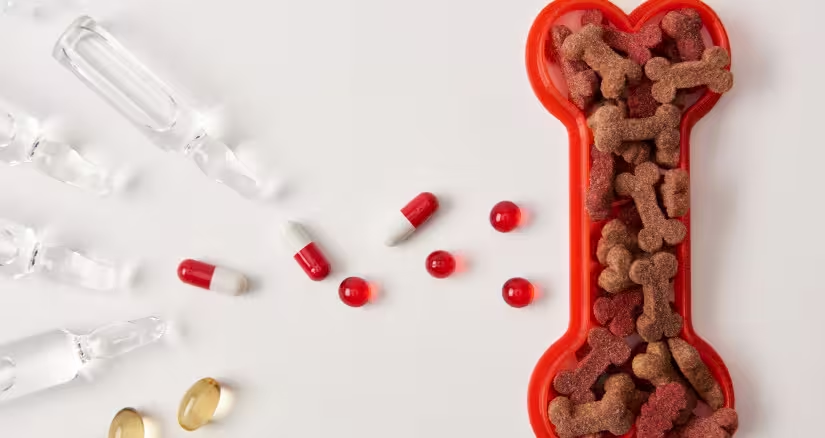
  Vitamins are essential nutrients for pets' health and well-being. Food and vitamin capsules are typically combined in the pet food industry because they protect from heat and oxidation during the extrusion or cooling processes, improving the final product's stability.
  Phytonutrients and/or botanical extracts, such as polyphenols, flavonoids, and essential oils (e.g., rosemary, turmeric, and oregano) are an alternative due to their antioxidant, anti-inflammatory, and natural preservative properties. 
  Specific fatty acids can be a good source of polyunsaturated fatty acids or omegas. The controlled incorporation of EPA/DHA (omega-3) microalgae as a more sustainable ingredient than fish oil is not surprising. Medium-chain fatty acids are widely used as immediate sources of energy.
  Bioactive peptides are hydrolyzed protein by-products, for example, hydrolyzed collagen with specific functions (immune response modulator, joint health enhancers, cartilage regeneration, and skin elasticity). 
  Functional fermented vegetable foods, such as miso or kefir (adapted for pets), are beneficial as they provide natural digestive enzymes and beneficial microorganisms.
  Adaptogens (e.g., ashwagandha, ginseng, or rhodiola) are natural ingredients that help the body manage stress. Usually, they are used in supplements to reduce anxiety, support the nervous system, and adapt to changes. 
  On the other hand, there is a trend to reduce toxic ingredients in food; in those cases, we must look for innovative alternatives.
  Reduce sodium, sugar, and synthetic additives by replacing artificial colorants with natural pigments (e.g., beta-carotenes, spirulina) or substituting artificial antioxidants with natural products. 
  Referring to precision innovation, we cannot forget about integrating technology, such as apps that recommend diets or provide nutritional follow-up or intelligent vending machines that ration food and compile consumption data. 
  Another innovative area we must follow closely is innovation in formulation and dosing. Microencapsulation technologies are still evolving to enhance the stability of sensitive compounds (vitamins, oils, and probiotics). Some lab tests allow the understanding of certain genetic predispositions and the gut health of our pets. The applied nanotechnology area is being developed, related to the use of nanoparticles that improve the absorption of minerals and antioxidants (even in the experimental or regulatory stage). Finally, data-driven formulation employs AI and nutritional algorithms that adjust the right amount of micro-ingredients according to age, breed, activity or pathologies, sleep, and pet food consumption in real time. 


By MVZ Armando Enriquez de la Fuente Blanquet
Source: All Pet Food Magazine

From Claim to Credibility: The Case for Research-Backed Pet Food Ingredients
Formulation

4+ MIN

From Claim to Credibility: The Case for Research-Backed Pet Food Ingredients

The pet food industry is unique in that of all the 602 standard pet food ingredients used today, 44% of them are upcycled, which means that they are derived from animal and plant sources that would not be used in human food. This makes pet food a great source to utilize ingredients that otherwise would be wasted, and reduces the competition between human food and pet food for ingredients that span both categories.
  This becomes increasingly important as currently 9% of the world's population is considered hungry, according to a recent report by the World Health Organization. Unfortunately, these upcycled ingredients may not be viewed as premium ingredients by consumers who have decided that descriptions such as 'by-product' are not good for their pets. Many times, these decisions are not based on nutritional research but on messaging from pet food companies. Starches, flours, and functional dietary fibers have been described by many pet food brands as 'fillers,' when there actually is no definitive or regulatory definition for that term. In most cases, these ingredients not only provide nutritional value for pets but also deliver functional benefits that make the pet food easier to actually manufacture.   
  New pet food ingredients and categories have become more popular. The pet food protein category has seen many new entries and continues to see new types of proteins entering the market. Examples of these proteins include cultured meat, insect-based, bacteria- and yeast-based cultures, and upcycled food ingredients. All these new and novel pet food proteins collectively have the potential to help decrease the competition of using animal-based proteins in pet food that could be used in the human food supply. Each one has valid reasons for use, including sustainability, low carbon footprint, as well as delivering needed alternative protein sources for pet food in a competitive landscape. 
  Beyond protein, it is well accepted that Omega-3 fatty acids can help deliver benefits such as skin and coat support, joint health, cognitive health, as well as immune benefits to pets. Most of the Omega-3 fatty acids in pet food, such as EPA and DHA, come from fish oil. As with animal protein ingredients, there is higher competition for fish oil products in human goods when compared to pet food and pet supplement use. Microalgae products have become more prevalent in the pet food world, being described as more sustainable alternatives to fish oil and helping to decrease the reliance on fish oil to deliver the health benefits of Omega-3 fatty acids. 
  Another new trend in the past few years is the promotion of postbiotics. These are inactivated microorganisms, such as yeast or bacteria, and their components that are released after probiotics are no longer alive, which have many health benefits, including digestive health, immune support, and even oral health benefits for pets. Another claimed benefit is that they do not require live bacteria like probiotics do, which may make them more user-friendly in pet food manufacturing.
  These are all examples of new pet food ingredients and categories. Many of these novel pet food ingredients have the potential to help deliver functional benefits to our pets, as well as contribute to the sustainability of the pet food industry as a whole. However, when it comes to the business of the pet food industry, there is a lot of competition in the ingredient space. Many of these newer ingredients come at a premium price when compared to their traditional ingredient counterparts. This means that even though pet food brands may want to use them in products because of the benefits and claims they provide, they have to be affordable and must deliver value that the pet food company and consumer understand. 
  A good way to determine the value of an ingredient is by looking at the extent of research that has been done by the ingredient company to substantiate the claims they promote. Pet food ingredient companies should be conducting feeding study research to validate the claims they make. In vitro (laboratory) studies are helpful for screening tests. However, to actually demonstrate ingredient value, the pet food ingredient industry should be conducting feeding studies to show health benefits in pets. Long-term feeding studies using new ingredients and measuring health parameters are sorely needed to gain credibility for ingredient companies. 
  Ingredient companies should be working with experts in nutrition, physiology, and veterinary medicine, such as those at BSM Partners, to design, implement, and interpret clinical research to help substantiate claims and deliver the value that pet food brands and consumers deserve. After all, if ingredient suppliers and pet food brands don't do feeding studies with their products before they hit the market, pet parents' companions become the defacto study subjects and nobody wants that.


By Bradley Ques
Source: BSM Partners

About the Author
Dr. Bradley Quest, DVM, is the Principal Veterinarian at BSM Partners. He has practiced clinical veterinary medicine, developed and tested hundreds of pet food and health products, performs extensive animal health research, and helps navigate pet food ingredient approval for clients.

Understanding Minimally Processed: What It Really Means for Your Pets Food
Formulation

5+ MIN

Understanding Minimally Processed: What It Really Means for Your Pets Food

Processing simply means altering an ingredient's chemistry, structure, or safety profile. It can be as gentle as hydrating a pulse or fermenting kefir, or as intensive as retort canning. In other words, each processing step exists because it solves a specific problem, such as improving digestibility, extending shelf life, controlling pathogens, enhancing palatability, preserving texture, or maintaining color, often addressing multiple issues simultaneously.  
  The real question is how much processing is happening, why, and what does it mean for nutrition and safety? 
  Regulatory Definitions 
There are currently no regulatory definitions for 'minimally or lightly processed,' 'gently cooked,' or even 'fresh' pet food established by the Association of American Feed Control Officials (AAFCO). The closest AAFCO definition pertains to the 'natural' claim, which allows for common heat or mechanical steps such as rendering, extrusion, purification, and fermentation. Even then, there is no use of the phrase 'minimally processed.'  
  However, the USDA's 'natural' claim states: 'A product containing no artificial ingredient or added color and is only minimally processed. Minimal processing means that the product was processed in a manner that does not fundamentally alter the product.' But there is no numerical cap for 'minimal.' The Food, Drug, and Cosmetic Act, established by the Food and Drug Administration (FDA), does not define 'minimally processed' either, and no temperature limits are specified.  
  Photo by Nadtochii   Enter NOVA System—Helpful Lens or Marketing Hammer? 
In 2009, nutrition scientists at the University of São Paula proposed the NOVA classification system. This four-tiered system ranks foods by the extent and purpose of industrial processing. The tiers are as follows: 
  Group 1: Unprocessed/Minimally Processed—Edible parts of plants, animals, fungi, algae, or water used almost as found in nature, or altered only by basic preservation steps (washing, peeling, drying, chilling, freezing, pasteurizing, fermenting, etc.) 
  Group 2: Processed Culinary Ingredients—Substances extracted from Group 1 foods or nature (oils, butter, lard, sugar, honey, salt) via pressing, milling, refining, evaporating, or drying. 
  Group 3: Processed Foods—Group 1 foods modified by adding Group 2 ingredients (salt, oil, sugar) and/or by preservation or non-alcoholic fermentation; usually have 2–3 ingredients and remain recognizable as the original food. 
  Group 4: Ultra-Processed Foods—Industrial formulations made mostly or entirely from refined food fractions (starches, sugars, oils, proteins) plus additives that create colors, flavors, textures, or extend shelf-life; contain little if any intact whole food.  
  The model was never intended to regulate pet food; yet, the term 'ultra-processed' has been eagerly adopted by bloggers and marketers to cast conventional kibble as nutritionally suspect. The trouble is that NOVA's criteria focus on how a product is assembled, rather than whether it meets nutrient profiles, safety standards, or digestibility targets.  
  Here's the bottom line: NOVA does provide a consumer-friendly shorthand for human diets, but it isn't recognized by the FDA, USDA, or AAFCO, and can be misleading when pasted onto pet nutrition. So, when you see 'ultra-processed' used to dismiss a pet food, first ask: 'What nutrient, safety, or digestibility metric is actually falling short? Or is this just another buzzword trying to 'make fetch happen?'' 
  Is 'Minimally/Lightly Processed' Automatically Better? 
Again, it depends on the product's ultimate goal. Is it always better? No, not always. Less heat means fewer automatic kill steps for pathogen safety. In these cases, it is prudent to add a kill step. High-pressure processing (HPP) or steam pressurized pasteurization (SPP) are two methods that can be used to reduce microbial load. The major difference between the two is that HPP is technically a non-thermal process, while SPP relies on heat to inactivate microbes.     Certain ingredients, such as beans or potatoes, require processing to reduce anti-nutrient factors and enhance the digestibility of their starches. Without the appropriate process, there is an increased chance of your pet consuming an ingredient that is not healthy for them. On the other hand, ingredients that are not exposed to high levels of heat often have higher nutrient retention, albeit at the cost of increased retention of anti-nutrient factors.  
  Even the gentlest recipe requires a validated kill step. Whether a brand relies on HPP, SPP, or heat in extrusion or retort, the goal is the same: to achieve at least a 5-log reduction of pathogens such as Salmonella and Listeria without overcooking nutrients. 
  Bottom line, the degree of processing should not be on the product as a whole, but on the individual ingredients and what is appropriate from a safety and nutritional perspective.  
  Looking Ahead: How the PURR Act Could Bring Clarity 
The Pet Food Uniform Regulatory Reform (PURR) Act of 2025, now pending before the House of Representatives, proposes a single federal standard for labeling dog and cat food. If passed, it offers a viable vehicle to define descriptors like lightly cooked, air-dried, and freeze-dried raw in measurable terms—think core temperature limits, required pathogen-reduction methods, and even minimum digestibility disclosures.   
  However, the proposed bill is not without its flaws, which BSM Partners has addressed in articles, 'Time for change: Addressing regulatory reform in pet food,' and, 'AAFCO: PURR Act Places Pet Food Transparency on the Chopping Block,' as well as in an episode of the Barking Mad podcast, 'Barking Up the Wrong Tree: How the PURR Act Could Undermine Pet Food Transparency and Safety'.  
  By checking the Federal Register and Regulations.gov, you can keep up to date on any scheduled public hearings or if there is an open comment period for the PURR Act. By participating in this process, brands can help ensure that "minimal processing" becomes a transparent promise backed by science, not just clever marketing copy. 
  Whether you're perfecting your recipe, validating a kill step, or trying to understand where your next opportunity is in the industry, our experts at BSM Partners specialize in audits that keep nutrition, safety, and regulatory compliance in balance, understand market trends, and formulate a nutritious formula for your desired format.  
  About the Author
Dr. Sydney McCauley is a Board-Certified Companion Animal Nutritionist and earned both her bachelor's and doctoral degrees at Virginia Tech in Animal and Poultry Sciences. McCauley's research was in nutritional physiology with a focus on understanding the effects of low birth weight on glucose, fatty acid, carbohydrate, and amino acid metabolism in skeletal muscle and overall metabolic homeostasis during neonatal development.


By Sydney McCauley
Source: BSM Partners

Pet Supplements: When Science, Cost, and Chews Collide
Formulation

6+ MIN

Pet Supplements: When Science, Cost, and Chews Collide

During those 11 years, I evaluated hundreds, possibly thousands, of products. Over and over, I saw the same issues: questionable scientific support, underdosed active ingredients, and formulations that just didn't deliver. As a veterinarian and consumer, it was perplexing. I remember thinking, 'How hard can it be to make a supplement that works?' You just find ingredients with solid science behind them, combine them into a formula, and voilà, a great supplement, right?  
  Then I joined BSM Partners and had the opportunity to develop my first veterinarian-formulated supplement. I was thrilled! This was the chance I had been waiting for—a chance to do it right. However, what became abundantly clear was that the roadblocks I had previously attributed to poor product development were not just isolated cases or evidence of carelessness. They were symptoms of deeper, industry-wide challenges that even the most seasoned professionals must navigate with care. 
  Step 1: Scientifically Backed Ingredients  
Finding ingredients with strong, species-specific scientific support for safety and efficacy is the foundation for an efficacious product. Surprisingly, sometimes studies supporting the use of functional ingredients specifically for dogs and cats are scarce. While there is plenty of data from rodents and humans, the companion animal section is sparse. Then, when it's narrowed down to studies that include safety data or effective doses, the list shrinks dramatically for dogs and is almost nonexistent for cats.  
  This is an industry-wide limitation that product developers must contend with across the board. Does that mean a supplement is ineffective if there is no supporting data? Not necessarily. Formulators may often extrapolate from other species or use synergistic combinations at sub-efficacious levels. But when that approach is taken, validating the finished product through clinical testing is key, but that's where the industry often stumbles. Testing finished products for efficacy is arguably the most critical step in supplement development, and it is often skipped because it can be expensive, time-consuming, and a strain on resources. However, if you're not testing your product before it goes to market, you're essentially using customers' pets as test subjects. 
  Step 2: Making It Fit 
Next is formulation. An ingredient with solid scientific backing still has to 'fit' within a chew or powder scoop, and that's where another layer of difficulty emerges. Many efficacious ingredients' research shows results at high inclusion rates —doses that simply don't fit in a chew or daily serving. For example, take fructooligosaccharides (FOS), which support digestive health, but the dose that actually works in dogs is far more than can be realistically delivered in a small, palatable chew.  
  Then there are cats —if finding data for dogs is hard, cat research is like finding water in the Sahara desert. When formulating for cats, the problem compounds: limited data, stricter palatability demands, and dosing constraints make feline supplements one of the most complex categories in the market. These are not niche concerns; they are fundamental limitations that affect nearly every company trying to build a meaningful product. 
  Step 3: Cost vs. Efficacy 
Once a feasible ingredient is identified, it's time to calculate the cost. Here's the kicker: the best-supported ingredients—for example, postbiotics with species-specific clinical trials—can cost hundreds of dollars per kilogram. Delivering a daily dose at the study-supported level could cost the consumer $15 to $20 per day, which may not be economically viable for pet parents – especially in today's world. Companies face this dilemma: how to balance scientific rigor with cost-accessibility. It's a strategic, not just scientific, decision, and one that profoundly shapes the final product.    Step 4: Will It Even Work in Manufacturing? 
Now, the ingredients that are efficacious, cost-effective enough, and fit into a chew or scoop have been identified. The next question: can it be manufactured? Sometimes, a last-minute consideration, but food science and formulation engineering are critical to the process. Some ingredients are incompatible or can be rendered ineffective with certain processing methods.    Step 5: The Marketing Reality Check 
Next, customer perception is layered into the equation. For example, a novel ingredient with supporting evidence for efficacy has been identified. Is it familiar with pet parents? Do pet parents understand the connection between the ingredients and the functionality? Formulators must balance new, innovative active ingredients with those consumers know and love.     Step 6: Palatability Hurdle 
The steps have been taken to create an effective supplement with evidence supporting claims, and consumer perception considered, it is time to tackle palatability. Creating a tasty product is where the rubber meets the road. If this supplement is perfect on paper, but if pets won't eat it, it might as well not exist.  
  Palatability isn't just a finishing touch; it's a gatekeeper. Texture, aroma, flavor profiles, and even how the product breaks apart in the mouth —all these things matter, especially for cats, who can be notoriously picky. A core formulation challenge faced by every brand is making something taste good to a dog or cat while preserving the stability of active ingredients; it is a whole science of its own! 
  For personal experience, when I finally finished formulating my first supplement, I felt like celebrating. Real-world experience taught me that reviewing supplements versus creating them is two separate beasts. Creating a supplement that delivers and that pets will willingly consume is harder—yet can be even more rewarding—than I ever imagined. 
  Step 7: Clinical Efficacy Testing 
Here's the piece most often missing: does the final product actually work, and is it safe? Not the individual ingredients in isolation, but the fully formulated product in the chosen format (like a chew or powder). That's where clinical efficacy and safety testing come into the picture. This step validates whether the supplement delivers meaningful benefits in pets and whether the formulation is safe. It also helps uncover synergistic effects or limitations that cannot be predicted on paper. Unfortunately, few companies invest in this step, despite it being critical for establishing credibility and long-term success. At BSM Partners, we emphasize this phase because it closes the loop between formulation and function, allowing pet owners to truly trust that what they are purchasing is effective and safe. 
  So, How Do You Make a Good Supplement? 
What I learned during this project at BSM Partners is that building a supplement that is safe, effective, manufacturable, and palatable is not simply a matter of good intentions or veterinary knowledge. It's an exercise in navigating a complex landscape of real-world tradeoffs that impact every brand in this space. These aren't just personal lessons; they are industry-wide realities that demand technical fluency, strategic restraint, and scientific integrity. That's what makes this work both challenging and deeply rewarding. 
  At BSM Partners, we bring all these elements together under one roof. Whether building a new supplement brand or refining an existing product line, we can help strike the balance between scientific integrity, practical formulation, and consumer appeal. It's not easy, but when done right, it's worth it. 
  About the Author
Dr. Katy Miller works as the Director of Veterinary Services at BSM Partners. She earned her veterinary degree at Ross University and completed her clinical year at Louisiana State University. She previously served for 11 years as the Director of Dog and Cat Health and Nutrition for Mud Bay where she earned multiple certifications and specialized in pet food nutriton, prior to which she practiced general and emergency medicine for seven years. She is also a competitive three-day eventer, licensed falconer, and claims only two (Golden and Mini Doxie) of their nine dogs.


By Katy Miller
Source: BSM Partners