Latest content from Dosing

Dosing slide vs. screw feeder
Dosing

5+ MIN

Dosing slide vs. screw feeder

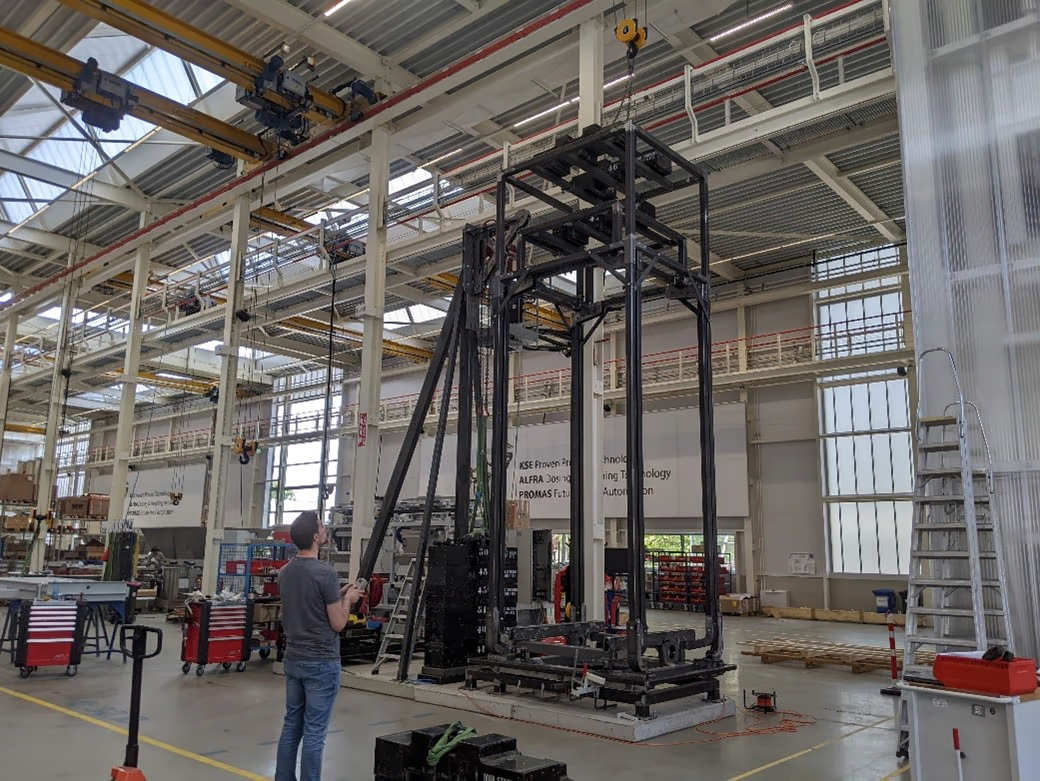
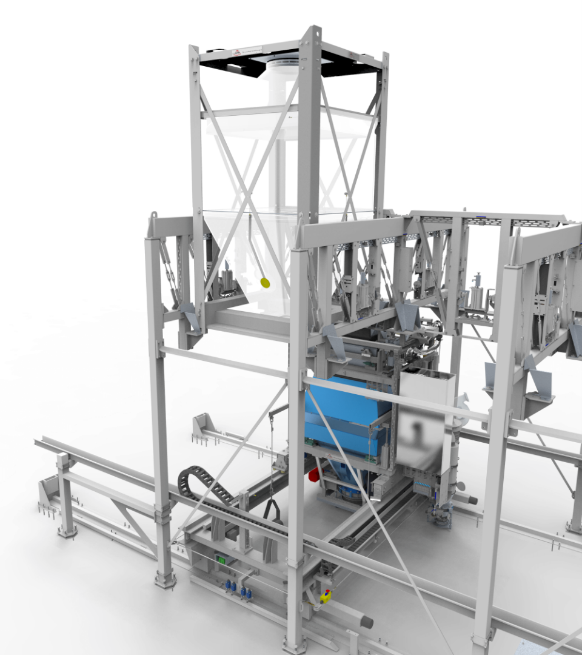
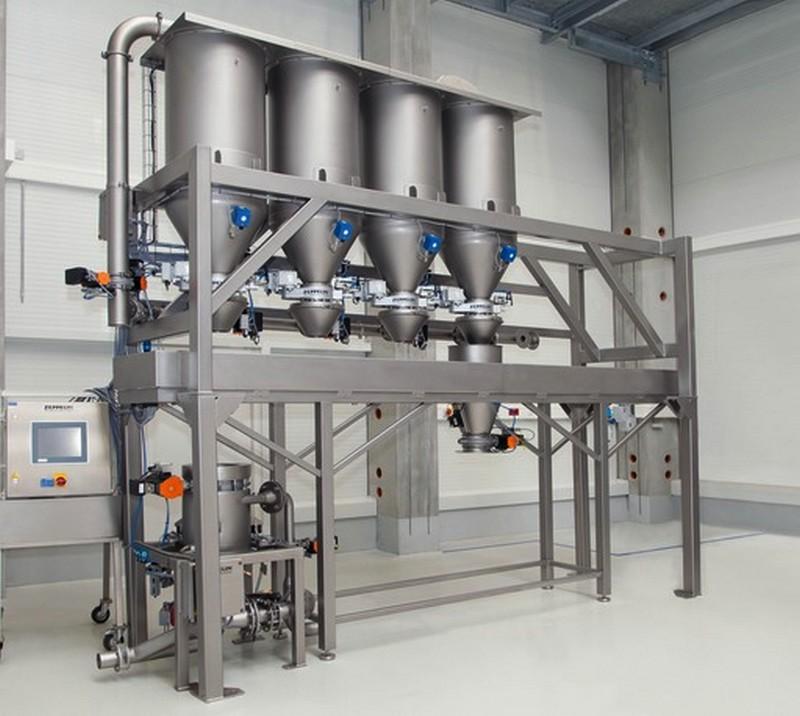
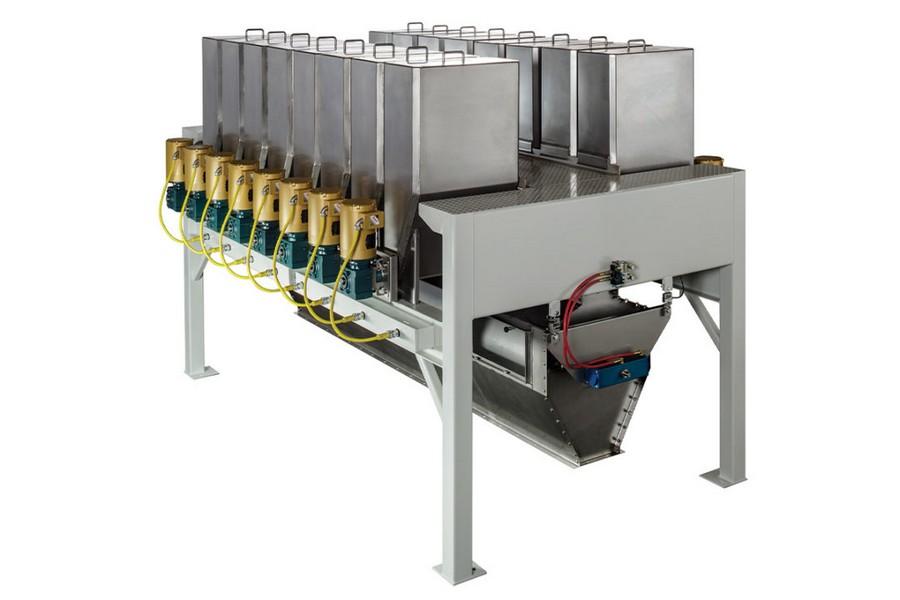
It is a challenge to find the most optimal solution for the silo discharge system within a specific process installation. In many cases, it is a question weighing up a dosing slide against a screw feeder. To make a responsible choice, insight into the operation and qualities of both the dosing slide and the screw feeder is required.   Activation   The dosing slide consists of a fixed upper lower grid and an upper grid that moves back and forth during the dosing process. This ensures that the product in the silo is loosened by means of a product-friendly activation. The dosing slide moves the product without transporting it. This means that the product flows straight in a vertical direction, by use of gravity. In contrast to a screw feeder (in which the material is extruded in one direction), no energy is supplied which means no product damage or compaction occurs. The simple design of the dosing slide makes it a particularly durable discharge system. A dosing slide can be in operation for decades.   Mass flow   The discharge system determines, to a certain extent, the silo's geometry and therefore also the flow image of the product inside the silo. It prefers to not place the discharge system in the middle of the silo funnel, to reduce the risk of product bridging in the silo. A dosing slide generally offers a much larger discharge surface than a screw feeder. The screw feeder's discharge surface is determined by the relatively small diameter and length of the screw itself. The larger discharge surface of the dosing slide ensures an equal discharge flow where mass flow occurs in the silo (the FIFO principle). For a given storage capacity (in case of an equal funnel triangle), less building height is also required.   Dosing range   An important feature of the dosing slide is the enormous dynamic flow range. The ratio between the minimum and maximum flow rate is easily 1:1000 (from grams to kilograms per second), with a dosing accuracy of approximately 2 grams. With a screw feeder, the dynamic flow range is no better than 1:20. An increase in speed not only translates into an increase in capacity, but also into an increase in slippage. It is true that placing a second screw under the main screw reduces the flow to, for example, 1 % of the maximum flow, however, the investment costs for materials and especially the control system will strongly increase. In addition, starting a pull-out screw at low speed requires an extra strong motor with a frequency controller. This extra power is necessary I order to provide the breakaway torque. This requirement does not apply to a dosing slide.   Dosage precision   With a dosing slide, minimum dosage quantities approach 0 grams; with a dosing screw, this quantity is determined by the volume in one turn of the screw. Once the dosing screw's discharge opens a screw compartment, this compartment flows out completely. In addition, there is the risk of the product's continuing to flow (primarily if the product has the tendency to become fluid). It is, of course, possible to install a shut-off after the dosing screw for more precise dosages, but the next dosage then amounts to at least that quantity of material that the shut-off held back. By contrast, a dosing slide closes immediately and completely. The dynamic flow range results in the dosing slide's being able to provide both rapid and precise dosing. With a dosing slide/scale combination, the limiting factor to precise dosage is the scale, not the dosing slide. For this, a weigher-in-weigher can be helpful. This offers the possibility of dosing both 50 g and 100 kg from the same silo in a single batch weighing system with the precision of a few grams within flow ranges up to 5 kg.   Controls   A dosing slide requires a greater investment than a dosing screw, but with the deployment of six or more dosing slides under a silo block, it is cheaper than using six dosing screws with shut-offs. This is because dosing slides (whether this be 4, 6 or even 24 dosing slides) are all powered by one single hydraulic cylinder. This single cylinder activates a framework to which the dosing slides can be linked at will. The power consumption of a dosing slide is extremely low. For example, it is possible to dose up to 50 kg/second with a 3 kW motor. For this same amount of effort, a dosing screw requires at least a 25 kW motor. Furthermore, every dosing screw requires its own power unit and frequency controller.   Discharge characteristics   The controls for a dosing slide are more intelligent and, consequently, more complex than those of a dosing screw (for a screw, flow is proportional to RPM, within certain limits). A dosing slide, however, allows for variation in the percentage of opening, stroke length and frequency. For certain applications, the shape of the vanes can also be adjusted (more or fewer progressive openings). This allows the achievement of optimum discharge properties for the material to be dosed.   Image 1: Dosing slides have a fixed lower grid and upper grid that moves back and forth during the dosing process.     Image 2: A platform of dosing slides is operated by a single drive motor.     Image 3: A dosing slide in operation.       About KSE   Partner in optimizing production processes Increasing complexity forms the biggest challenge for animal nutrition manufacturers; more recipes, a growing number of ingredients, additions that are difficult to dose and higher quality standards contribute to this trend. For over 50 years, KSE has been supplying future proof solutions to stay ahead of the trend in the form of modular machinery and smart software that fit together perfectly. We create flexible processing solutions that enable a responsive production process. Automation, accuracy and contamination control are at the basis of our future-proof innovations. Our aim is to not only improve the production process, but also to make a significant contribution to increasing margins and achieving targets.   Together we create the solutions with the best results! For more information about KSE click HERE.   By KSE Source: All Pet Food 

Efficient and Safe Production of Pet Food
Dosing

5+ MIN

Efficient and Safe Production of Pet Food

The production of pet food requires efficient production lines with high availability rates and reproducible quality. This only works with optimal system technology and processes that are designed to meet the specific requirements of the product in question. This article shows what else is important. Pets have not only been popular companions since the Corona pandemic; in Germany alone, almost every second household has some sort of pet. As a result, the demand for high-quality pet food is increasing, and this is happening worldwide. 'The USA, Europe and Asia are still growing markets in terms of pet food, and this means that we are in demand as plant manufacturers,' says Ingo Pütz, responsible for global sales at Zeppelin Systems in Rödermark, describing the market situation. In addition, the technological demands on plants and components are growing, as Pütz explains, 'Pet food formulas now consist of 20 to 50 different raw materials, each of which has its own unique properties.' This can be extruded material that is mixed in particularly gently or a moisture-sensitive raw material that has to be conveyed in a very dry state. Smooth production therefore requires not only knowing the properties of a wide range of products, but also understanding the process down to the last detail. 'Ultimately, the consumer must be able to rely on the feed always having the exact composition as well as the same shape and consistency. The feed must neither stick nor crumble,' says Pütz, describing the difficult balance. Flexibility in plants is a necessity In general, the production quality requirements for pet food are similar to those of human food. Among other things, this means eliminating or minimizing cross-contamination, easy to clean, maintaining clean production and compliance with hygiene standards. And as with food for humans, pet food is subject to special scrutiny and requires, for example, extremely accurate measurement technology. Moreover, in pet food, new formula concepts are being developed to meet the needs of individual animals, whether young, old, prone to obesity, wheat intolerant, etc. At the same time, manufacturers must be able to deal with changing raw materials – for example, some raw materials used to be available as powders, but are now marketed as granules. Raw materials may also vary from region to region. These variations can, for example, affect different bulk densities, which in turn affects handling. Manufacturers therefore require a very high degree of flexibility in their plants. It must be possible to adapt them without major conversions. High reliability and availability of the plants, which run around the clock, are a given.
Coordinated plant processes Zeppelin Systems accompanies almost every processing stage in pet food production. This starts with raw material intake, through filling into the silos, grinding technology, up to recipe-accurate dosing including inline screening machines upstream of the mixers and gentle dense phase conveying. Drying and coating processes have to be integrated just as much as systems for dust removal, temperature control, quality assurance measures, and concepts for explosion protection. A striking feature of developments in recent years: Plants are being operated ever closer to their peak performance without diminishing any accuracy. 'This can only be achieved by keeping an eye on the entire raw material handling process. We master all process steps and the respective process and measurement technology. That's why we can offer comprehensive, perfectly coordinated solutions from a single source,' Pütz explains further. Kibbles without break At first glance, the individual process steps do not appear complicated, yet the processes are changing. For example, gentle pneumatic conveying of dry feed now plays an increasingly important role. Neither the animal lover nor the producer wants to find crumbs in the feed. With Dense-Tec conveying and sometimes extended lines, conveying succeeds without destroying the structure of the raw materials. Dense-Tec is mainly used in the pet food industry as a continuous conveying system, because the individual process steps, such as cooling or coating, are also mainly carried out continuously. Precise dosing of even the smallest quantities When weighing and dosing very small quantities, such as vitamins, components in the 2-3 kilogram range have to be added evenly distributed throughout mixtures weighing several tons. 'We have developed innovative manual and automated solutions especially for these small components,' reports Pütz. For example, Zeppelin Systems offers customized solutions ranging from components for batch weighing to differential scales including controls. For handling liquids, on the other hand, volumetric systems or gravimetrically operating components such as liquid scales and mass flow meters are used. 'It is crucial that the dosing and weighing is done accurately contamination-free,' Pütz lists additionally. 'After all, ingredients are being scrutinized more and more critically by consumers.' High demands on hygiene and quality Hygiene requirements have also increased in the pet food sector and are now oriented toward the food industry. 'For example, we have long relied only on stainless steel in our plants,' says Pütz 'Batches have to be traceable just as they are in human food. This is where the process management system we developed helps.' This logs every change in the recipe and allows all raw materials supplied and batches delivered to be traced. All production data, batch records, etc. are archived and can be retrieved at any time. Accordingly, there is greater focus on control, automation and documentation. This gives the consumer peace of mind. Summary and outlook Regional differences require country- specific solutions. Since production follows the customer, plant engineering know-how is needed directly on site. Zeppelin Systems is globally oriented, which ensures nationwide support. Moreover, digital services, such as remote access to the plants, are now part of everyday life. Another topic of concern to the pet food industry is energy use and efficiency levels. This is particularly important for large plants with higher conveying capacities, for example, 40 to 60 tons per hour. 'We supply solutions that allow more output from the plants. For example, we replace mechanical conveyors with pneumatic ones because they deliver faster and display higher performance with larger volumes. They also work more energy- efficiently, can cover greater distances, and require less maintenance,' says Pütz, listing one example, but concluding with a completely different yet decisive factor for success: 'Our customers don't really care how their process works; they want process reliability and high plant availability. We ensure this with on-site service, but also with intelligent automation technology and a wide range of sensors that safeguard the process. by Ingo Pütz ist General Manager Sales Food Processing Plant at Zeppelin Systems GmbH

Benefits of modern batching systems
Dosing

8+ MIN

Benefits of modern batching systems

Batching systems play an important role in product quality and plant efficiency for pet food and treat processors. Equipment design can ensure product uniformity, consistent product flow, and efficient changeovers from batch to batch. There are a number of common options for batching systems in pet food and treat applications, and processors must consider several factors when looking to upgrade their facilities. Evaluating batching systems 'When considering an automated batching system for pet food ingredients, it is important to look at several factors which will influence the type of batching system recommended and optimize ingredient cost savings and overall ROI,' said Sharon Nowak, business development manager, Coperion K-Tron USA Food & Pharmaceutical Industries, Sewell, N.J. 'The top three for consideration include batch accuracy required for the specific ingredient, desired batch times, and overall plant design considerations including height limitations, space requirements, and support structures for the batching system.' 'It's a little different for everyone,' added Matt Lueger, vice president of sales, NorthWind Technical Services, Sabetha, Kan. 'But the big factors that we typically see are accuracy, traceability and flexibility. Most customers not only want a system that consistently produces a quality product, but also tells them what went into each batch without restricting their ability to continually change their ingredients or recipes.' Pete Ensch, chief executive officer, WEM Automation, LLC, New Berlin, Wis., agreed on the importance of traceability for today's processors. 'The batch system needs to incorporate lot code traceability,' he said. 'Pet food producers' value is directly linked to their track record of producing safe quality food. In the event that something goes wrong, you need the ability to quickly track the problem and contain it. Traceability needs to be automated and working in the background. Beyond the safety side, traceability also helps to control inventory management and control, and can be linked back to your ERP to help automate purchasing. This keeps production flowing and controls cost.' Other factors to take into consideration include throughput, types and quantities of product that need to be conveyed, and quality and repeatability. 'At the end of the day, you need a batching system that can accurately weigh out your ingredients and consistently mix them,' Ensch explained. 'Pet food has some unique challenges in that there are many different ingredients with a variety of densities and flow rates. Several of the raw ingredients, because of the nature of protein, have a significant amount of variability. Equipment and controls need to be able to handle the de variety. All of the downstream processes like extrusion and drying perform better if you provide them a consistent, quality input.' Batching options Modern batching systems are designed with factors such as accuracy, reliability, traceability, flexibility and food safety in mind. 'Due to the increased food safety regulations and requirements to adhering to exact ingredient percentages in a given pet food recipe, the use of high accuracy LIW [loss-in-weight] batching using gravimetric screw feeders is quickly becoming the most reliable batching device of choice,' Nowak said. 'LIW batching utilizing Coperion K-Tron high-accuracy screw feeders provides a significant accuracy and process time advantage over traditional GIW [gain-in-weight] batch techniques. LIW batching is used when the accuracy of individual ingredient weights in the completed batch is critical or when the batch cycle times need to be very short. In addition, LIW feeding affords broad material handling capability and thus excels in feeding a wide range of materials from low to high rates.' Regardless of feed rates, LIW batching can offer accuracy, speed and variability benefits over traditional GIW methods. (Source: Coperion) 'There are several different types of batching systems,' added Joe Lewis, marketing, Sterling Systems & Controls, Inc., Sterling, Ill. 'These include semi-automatic hand prompt/add batching systems, semi-automatic self-contained 'kitchen type' batching systems, and automatic batching systems.' Utilizing different systems and features allows pet food and treat processors to fine-tune the batch process from start to finish. Options include manual or automatic batch delivery, various ingredient storage methods, and integration to the ERP system to communicate production schedules and ingredient usages. 'Most modern batch controls have dozens of features, but a couple of useful ones for pet food are an order grid and automatic bin level checking,' Ensch said. 'An order grid includes order number, formula name, the amount of material to be produced, the required date, destination bins and comments. The grid can have orders entered direct or interfaces with your ERP system. Automatic bin level checking has the system check bin levels of each ingredient in a production run prior to starting the batch. The system will alert the operator of any insufficient ingredients. 'Another useful feature is production usage tracking and inventory management with lot code tracking,' Ensch added. 'This allows the batch system to track material used for each production run, batch, and track respective lot codes for ingredients. Statistical process control (SPC) charting is one more feature that's great for fine-tuning the batch process. A system tracks the production data to the level to produce statistical process control charts. Being able to understand when a system is in control or out of control and having the data to either troubleshoot it or reduce variation for greater accuracy can change your business.' Product quality  There are several ways in which batching systems can impact product quality. 'Vacuum conveying systems help to provide the right amount of ingredients or final products to the next processing or packaging step,' said Andrea Bodenhagen, communication and content manager, Piab Vakuum GmbH, Butzbach, Germany. 'Thanks to the closed system, it also provides a dust free environment and protects the product from contamination. While the pet food industry is often still using mechanical or manual material handling, vacuum conveying systems are state of the art in the pharma and food sector. Pet food manufacturers, therefore, benefit from the long-term experience of Piab in these sectors as well as all the developments that have been done for these industries to keep the original product quality during the conveying process.' 'Batching systems play a significant role in the overall product quality of pet food and treats,' Lueger said. 'Not only in the accuracy and consistency of the ingredients that make up the product, but also in the visibility of what went into the product in the event of a quality issue. Batch reports and historical trends can go a long way toward preventing future product quality issues.' Jim Gaydusek, sales director, United States and Canada, Cozzini LLC, Chicago, agreed that batching systems have an important role to play in consistency and product quality. 'One of the greatest benefits is consistency from batch to batch,' he said. 'Auto management of recipes removes much of the human factor and reduces processing error. Scales accurately weigh the ingredients to ensure the proper weight(s) get added and the HMI [human-machine-interface] can sequence through the processing steps according to the program.' Plant efficiency Batching systems can also impact plant efficiency for pet food and treat processors. 'In addition to improving product quality over traditional manual weighing methods, the automation of the material handling/product transfer as well as the batching can greatly affect overall efficiency,' Nowak said. 'The use of automated dispensing systems, which can also integrate pneumatic conveying systems for material transfer, can greatly reduce the amount of human interaction as compared to manual methods of weighing and transfer. This maximizes social distancing and adheres to strict COVID guidelines of safety. 'Properly weighing and accurately delivering the ingredients without manual intervention can result in a number of process advantages, including overall food safety, fewer mistakes, better accuracy, lower bulk costs, improved product quality and savings in manufacturing costs,' he added. 'Eliminating manual batching reduces scrap costs, increases efficiency and throughput,' Lewis noted. 'Automatic systems can be customized with multiple scales for speed of batch production without sacrificing accuracy or quality, resulting in fast high batch rates and accuracy of weighments. Dust containment and collection options for automatic batching systems improves safety and operator efficiency.' Processors must be able to track and trace each ingredient throughout the process to ensure quality and safety and, in the case of a product issue, pinpoint exactly where and what went wrong. (Source: Coperion) To maximize overall efficiency, factors such as system design and sequencing must be taken into account. 'You want a system that moves from one batch to the next seamlessly and with little idle time between batches,' Ensch said. 'Some of this is system design, things like having holding vessels, surge bins and multiple scales so that you can weigh up ingredients before the mixer; optimizing cleanout times between batches and changeovers; the use of high and low bin level indicators and automated routing to make sure the batching system is never starved for ingredients. The system must manage all the timing, so the batching process is nearly continuous in nature.'  New advancements Batching systems continue to evolve to meet changing needs and requirements. Modern batching systems now have huge advantages over their predecessors in a multitude of areas. 'Over the past decade the number of different types of formulations and the raw ingredients used has grown exponentially,' Ensch said. 'This has made batching systems larger and more complex. Having a blending control system that has formula-based scaling and mixing parameters is extremely helpful. The trend of higher protein pet food has also increased the content of fibrous protein ingredients, which have the much greater variation. Formulations contain many ingredients and there is a need for a batch system that can measure major, minor and micro ingredients with very low dispersions like vitamins and minerals.' 'There have been a significant number of design improvements to batching systems for pet food and treat processing,' Nowak said. 'They include improvement in weighing technologies and batching controls, improvements in overall design of equipment to improve cleanability and food safety while minimizing downtimes, improvements in feeder design options ideal for difficult flowing materials, and improvements in feeder technology to alleviate pressure/vacuum influences on the feeder output.' Advancements in technology have also vastly improved traceability of ingredients. 'The amount of technology that is utilized to track and trace ingredients continues to evolve,' Lueger noted. 'From simple bar-coded lot numbers on bags to RFID [radio-frequency identification] tracked totes/IBCs [intermediate bulk containers] and hoppers on tracks or AGVs [automated guided vehicle]. Innovation and technology gains continue to support traceability regardless of size, equipment configuration, system capacity, etc.' By Richard Rowlands & Matt Lueger  Northwind Technical Services - Pet Food processing 

Key Technology designs sorting solution for Pet Food Processors
Dosing

2+ MIN

Key Technology designs sorting solution for Pet Food Processors

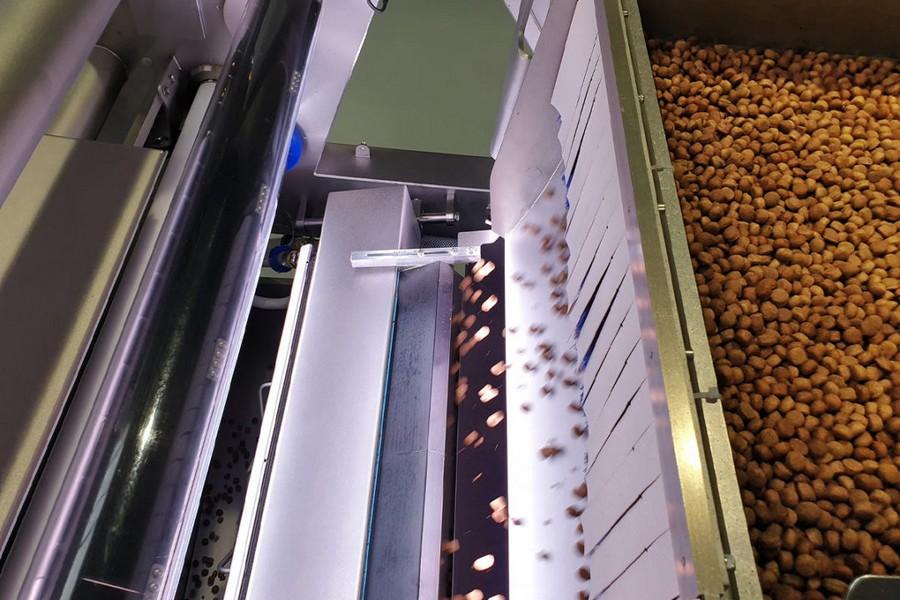
 The sorter is designed to identify and remove foreign material and product defects to eliminate cross-contamination, improve product quality and safety, and minimize labor. The solution can be configured for various pet food formats and products, including kibble, chews and treats that are dried, dehydrated or freeze-dried. The VERYX sorter can be installed at the end of a production line to ensure final product quality, or upstream near raw receiving to inspect ingredients for a wide range of products, including wet pet food formulas. The VERYX sorter can detect color, size, shape and structural properties, with the capability of removing defective products or ingredients, plastics, glass, paper and other foreign materials. 'Our vibratory conveyors and mechanical grading systems have had a strong presence in this industry for a long time – almost every leading pet food brand around the world relies on our equipment, and we understand their unique needs,' said Marco Azzaretti, director of marketing at Key Technology. 'Now that these processors are seeing the value of digital sorting, we've leveraged our pet food application expertise to develop VERYX for these applications. Consumers are demanding higher and higher quality pet food, and VERYX can help manufacturers elevate their product quality to the level of human grade while improving the efficiency of their operation.' VERYX sorters are equipped with optimal cameras, laser scanners, lighting, ejection systems, product handling and software tailored to each customer's needs. The laser scanners and cameras provide images that are twice the resolution of previous sensor technology, which increases its ability to find small foreign material or defects. The solution also offers a 360-degree view of each piece of product. The sorter can also be fitted with proprietary Pixel Fusion™ technology by Key Technologies, which can combine data from multiple cameras and laser scanners to provide a clear identification of difficult materials or products. This tool also enables the company's FMAlert™ tool to notify operators of critical quality problems so corrective action can be taken quickly. It also helps with documentation of quality events. Key Technology includes its Discovery™ software suite with every VERYX sorter, which collects, keeps and analyzes data in real-time. This software can help manufacturers identify patterns and trends to improve operations from raw materials to sorting. VERYX can be integrated with Key Technology's vibratory and mechanical grading solutions applicable in pet food processing environments. The company's material handling solutions are designed for sanitation with fully-welded frames, nickel-plated finishes, oil-free drives, optional pan covers and other hygienic features. By Jordan Tyler – Pet Food Processing

PLP Systems pilot plant for continuous coating
Dosing

2+ MIN

PLP Systems pilot plant for continuous coating

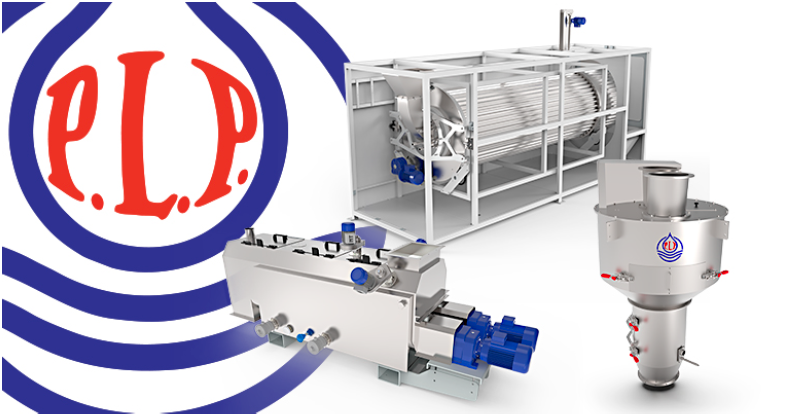
There was a key change once a continuous coating test plant was developed in our company that can reproduce the full capacity of the industry demands, to minimize the difference in results between a laboratory test compared to actual production. This internal continuous coating test plant is used for: Technological innovation of PLP and know-how to compete in the market with the application of pellet coating. Customers looking for creative applications are available to perform testing and developing new products for your pet food by coating them with powders or flakes such as spices, vegetables, cheese, flavors, nutritional agents, etc. Too to coat semi-moist or baked pet food. Customers who want to test PLP technology before purchasing the system can perform the test of the complete coating line.     The pilot plant can be adapted for different products with a production capacity from 300 kg / h to 15 ton / h, managing different densities. It is equipped with a precise gravimetric continuous dosing of the main product (croquettes) carried out by means of a weighing tape or a weighing thread. Dosing of liquids by pump and flow meter and dosing of powders by weight loss feeders. All controlled by the automation and proportional dosing adjusted by frequency control drives. The test plant can be integrated with 3 different PLP coating technologies: DRUM ROTARY; COVER WITH DOUBLE AXLE BLADES; MASS SPIN COATER.   ROTARY DRUM       The latest development over the more traditional rotary drum, this machine is specially recommended for semi-wet products, small extruded or granulated pellets and lower production capacity. The special corrugated shape of the drum increases the rotation of the product, at the same time protects it from damage and reduces waste inside the machine, making it a perfect machine to be used in food application or with special kibbles for pet food.   CONTINUOUS COVER WITH DOUBLE AXLE PADDLES     It is our most widely used machine for standard pet food production and has received the majority of R&D improvements during the last years. There are different models that can cover all required production ranges with high liquid inclusion rates or fats. The focus of the machine is the retention time and this is achieved by regulations of speed independent of the axles, internal dampers and automatic check valve in the output of the product. The retention time in standard pet food production it can reach up to 200 seconds.   MASS SPIN COATER     Compact continuous cover used to add micro liquids up to 1%. The MSC integrates a continuous precision weighing technology, based on Coriolis forces. Thanks to a nozzle special is able to obtain a perfect homogeneity even when the inclusion rates are less than 0.1%.   Source: PLP Systems