4 min reading
Rethinking Meat Inclusion: A Smarter Approach to Extruded Pet Food
In today’s pet food landscape, one thing is clear: higher meat trends are here. Consumers are paying closer attention to ingredient lists, and high meat inclusion has become a defining feature of premium formulations. But behind the label, formulators know the reality. Pushing meat levels higher in extruded diets is not always straightforward. It introduces challenges that can quickly compromise product quality. So, the question becomes: how do you deliver higher meat inclusion without sacrificing kibble performance?
In today’s pet food landscape, one thing is clear: higher meat trends are here. Consumers are paying closer attention to ingredient lists, and high meat inclusion has become a defining feature of premium formulations. But behind the label, formulators know the reality. Pushing meat levels higher in extruded diets is not always straightforward. It introduces challenges that can quickly compromise product quality. So, the question becomes: how do you deliver higher meat inclusion without sacrificing kibble performance?
Where Formulation Meets Reality
Extrusion is a balancing act. As meat levels increase, so does process complexity. Higher inclusion can lead to:
- Excess moisture in the system.
- Reduced structural integrity.
- Increased breakage and deformation.
- Inconsistent texture and expansion.
- Surging and extrusion issues.
At lower levels, these issues are manageable. But once you start pushing beyond traditional inclusion rates, those challenges become harder to ignore. This is where ingredient functionality becomes critical, not only for nutrition, but also for processing performance.
One ingredient gaining attention in extrusion applications is spray-dried plasma. Plasma is a highly digestible functional protein derived from animal blood and commonly used in pet food for its nutritional and processing benefits. Rich in protein and bioactive compounds, plasma has long been valued for supporting palatability and digestibility. More recently, formulators have also recognized its ability to contribute to binding, water management, and structural support in challenging formulations.
Bühler Group began work with APC—a leading manufacturer of plasma functional proteins—to better understand how plasma may help support extrusion performance as meat inclusion levels increase.
Plasma offers several functional characteristics that make it well suited for extrusion applications:

Marketplace
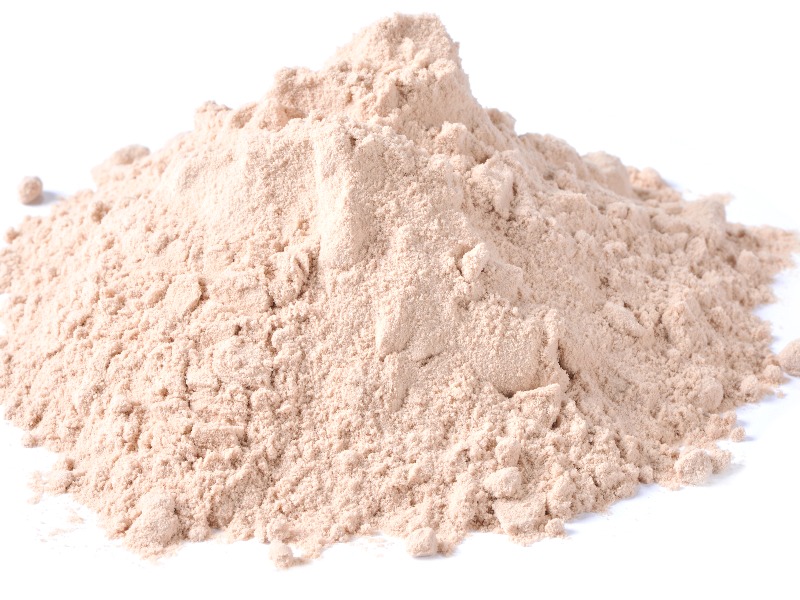
- 72–78% protein.
- Low ash content.
- Functional binding support.
- Highly digestible protein source.
Exploring a Functional Solution
Recent work with Bühler Group focused on a practical objective: can plasma help enable higher meat inclusion in extruded pet food while maintaining quality?
Using a standard twin screw Bühler extrusion system for dry kibbles production, trials were conducted in the Bühler pilot plant with varying levels of cooked chicken MDM (63% moisture) and plasma to evaluate their combined impact on kibble structure, durability, and appearance.

The goal was not to create a finished diet, but to understand how formulation adjustments influence real-world processing outcomes.
What Happens Without the Right Support
During the trials, performance followed a predictable pattern as meat inclusion increased.
At Standard fresh meat inclusion levels in dry kibbles, extrusion performs as expected. But as meat increases, the limitations become clear.
Without functional support:

- Kibble becomes softer and more fragile.
- Structural integrity declines.
- Breakage increases during processing and handling.
- Surface quality and consistency suffer.
In some cases, the product simply does not hold together.
Where Plasma Changes the Equation
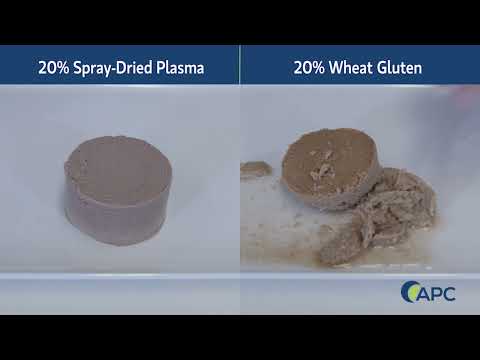
When we introduced plasma during the trials, the impact became immediately noticeable.
At Medium fresh meat inclusion levels, the addition of plasma resulted in:
- Improved texture and structural strength.
- Reduced breakage and deformation.
- Smoother surface appearance.
- Better overall processing stability.
Even during handling and transport, kibble integrity remained intact. That becomes increasingly difficult as meat levels rise, and that is where plasma demonstrates its value beyond nutrition.
Looking at the trial conditions, the impact becomes even more clear in the observed results as plasma, water and meat levels were adjusted:

Pushing the Limits with Control
At higher inclusion levels tested in the trials, the role of plasma became more defined. It helped:
- Stabilize the extrusion process.
- Maintain kibble shape and durability.
- Offset the effects of added moisture.
- Support consistent product quality.
While optimization is still required at higher inclusion levels, the trials clearly showed that plasma can extend what is possible within extrusion systems.
More Than a Trend, a Formulation Shift
High meat diets are not going away. If anything, consumer expectations around meat inclusion and premium nutrition will keep growing. But successfully formulating these diets requires more than simply increasing fresh meat levels. As inclusion rates rise, so do the processing challenges that can impact kibble quality, consistency, and manufacturing efficiency.
This is why formulators are increasingly looking beyond nutrition alone and focusing on ingredients that also provide functional processing support. Ingredients that help manage moisture, improve structural integrity, and maintain product consistency can make a big difference in high-meat extrusion systems. In the end, a formulation may look impressive on paper, but it still must run efficiently through production and hold up in the bowl.
A Practical Tool for Modern Formulators
These findings reinforce a broader industry reality—there is no single ingredient that solves every challenge. But the right combination of ingredients and extrusion can unlock new possibilities.
Plasma offers a unique combination of:
- High levels of protein.
- Durability benefits.
- Palatability support.
- Digestibility benefits.
The Takeaway
Extruded pet food will always involve trade-offs. As these trials demonstrate, those tradeoffs do not have to limit innovation.
With the right tools, formulators can:
- Push meat inclusion further.
- Maintain product quality.
- Improve consistency across production.
Ultimately, they can deliver the kind of products today's market is asking for without compromising performance along the way.
For additional technical information, contact Dr. Carsten Petry - Bühler at carsten.petry@buhlergroup.com, or Dr. Joy Campbell - APC at joy.campbell@apcproteins.com
By APC in collaboration with Bühler Group
Source: All Pet Food Magazine
You could be interested: Understanding the Link Between Gut Health and Pet Wellness


About the company

About the company
Our history dates back more than 35 years, when our scientists discovered the powerful role that functional plasma-derived proteins play in maintaining the immune function of animals.
Since then, we have obtained extraordinary, consistent and effective results.
Spray-dried plasma (SDP) and red blood cell products are used in animal feed and other industries to add value through their unique properties that positively impact billions of animals each year.


31/08/2026
Innovative Functional Protein Solutions for the Next Generation of Dry and Wet Pet Food
25/03/2026
New Research: Plasma Positively Impacts Mobility-Related Outcomes in Adult Dogs

Videos
Next videos


Events

All Pet Food Day
25 November, 2026
Guayaquil, Ecuador
https://allpetfood.net/allpetfoodday2026

IberPet 2027
10 to 12 March, 2027
Madrid, Spain
https://www.ifema.es/en/iberpet

Figan 2027
16 to 19 March, 2027
Zaragoza, Spain
https://www.feriazaragoza.es/en/figan

ZOOMARK 2027
11 to 13 May, 2027
Fair District
https://www.zoomark.it/en/

Foro Mascotas 2027
02 to 04 June, 2027
Guadalajara, Mexico
https://www.foromascotas.mx/en

Pet Fair Asia 2027
18 to 22 August, 2027
Shanghai, China
https://en.petfairasia.com/exhibition/pfa.html

VICTAM 2027
14 to 16 September, 2027
São Paulo, Brazil
https://victamlatam.com/en-us/

Pet Fair South East Asia
27 to 29 October, 2027
Bangkok, Thailand
https://petfair-sea.com/

CIPEU 2027
10 to 11 November, 2027
Zaragoza, Spain
https://www.feriazaragoza.es/en/node/75302
Advertising