Triplethree International
https://triplethreeinternational.com/About
Providing the highest quality and experience of service and professionalism to our clients
Triplethree International is a flexible, dynamic and innovative market research company that handles various analysis and research methodologies, adapted to the business objective of each client.
Triplethree specializes in industries and categories where there is little market information, or it is complex to access. Our mission is to connect the strategic information that we investigate and analyze, with the growth objective of our clients.
Founded in 2014 by Iván Franco, (Mexican economist) Triplethree works in partnership and alliance with some carefully selected consultancies to generate efficiencies and be competitive.

Products

Company News
 Industry News
4+ MIN
16/06/2026
By
The Real Size of the Pet Food Market in Latin America
Despite the sector's evident growth, a significant gap still exists between the figures commonly cited in international reports and the market's actual size in Latin America.
Various studies from non-specialized global consulting firms tend to estimate the regional pet food market at around USD 10 to 11 billion. These are frequent figures in aggregated reports based on international databases and broad research methodologies.
However, a closer examination of industry-level operational data suggests that these estimates significantly underestimate the market's true scale. The main reason lies in methodological limitations.
These reports rely on data from modern retail, formal trade channels, or limited secondary sources, leaving out a substantial portion of actual consumption across Latin America.
In the region, the pet food market extends far beyond supermarkets and large retail chains. Traditional channels, regional distributors, independent veterinary clinics, specialty stores, agricultural retailers, wholesalers, and informal distribution networks account for a substantial portion of sales. Numerous local manufacturers and co-packers produce private-label brands for retailers and distributors—many of which are not present on international databases.
When these components are excluded, the result is an inevitable underestimation of the market's actual size; Mexico provides a clear example. Some non-specialized sources estimate the Mexican pet food market at approximately USD 3.5 billion. However, this figure is difficult to reconcile with the operational reality of the sector. For instance, a single retail chain in the country accounts for nearly one-third of that value on its own—suggesting that the total market size is considerably larger when all channels and industry participants are taken into account. Discrepancies become even more evident when analyzing the industrial structure across the region.
Brazil, for example, has one of the largest pet food productions in the world. The country hosts dozens of industrial plants operated by both domestic and international manufacturers, supplying not only the local market but also exports across Latin America. Companies such as PremieR, Adimax, BRF Pet, and Special Dog have developed highly sophisticated production infrastructures, with capacities that exceed the needs of several regional markets.
When estimated production and consumption volumes across the region's key markets—including Brazil, Mexico, Argentina, Chile, Colombia, Peru, Ecuador, Central America, and others—are aggregated, the true scale of the Latin American market becomes much more evident.
According to an analysis conducted by Triplethree International, based on primary market research, species-level consumption modeling, industrial capacity assessment, and competitive structure by brand, the Latin American pet food market reached approximately 9.25 million tons in 2025.
Assuming an average regional price of around USD 3/kg at the point of sale, the total market value is estimated at approximately USD 30 billion. This positions Latin America as one of the most relevant pet food markets globally, far exceeding many of the estimates published in secondary reports
A Market with Strong Potential
Beyond its absolute size, what makes the Latin American market particularly compelling is its heterogeneous structure and growth potential.
Unlike mature markets—such as the United States or Western Europe—where the pet food sector is highly consolidated and dominated by a small number of multinational corporations, Latin America presents a unique combination of global players and highly competitive regional manufacturers.
Mars, Nestlé Purina, and ADM are examples of multinational companies that coexist with local companies and have established strong leadership positions in specific markets. In countries such as Brazil, Chile, Argentina, and Peru, regional players have developed solid brands and distribution networks that compete directly with major international groups.
This industrial ecosystem creates a highly dynamic environment, where market shares can shift rapidly as consumer preferences evolve and companies adjust their expansion strategies.
Another key driver of growth is pet humanization, a trend increasingly visible across the region. An increasing number of households are treating dogs and cats as family members, willing to invest in nutrition, health, and overall well-being. This cultural shift is driving the expansion of higher value-added segments, particularly in categories such as functional foods, specialized diets, premium nutrition, and veterinary products.
At the same time, the expansion of modern retail, the growth of e-commerce, and the professionalization of specialized channels are transforming how consumers access pet food products.
These factors position Latin America as a market that is expected to continue growing steadily over the next decade, both in volume and value.
The Importance of the Accurate Measure of the Market
Understanding the true scale of the market is essential for manufacturers, investors, and industry operators seeking to evaluate expansion opportunities in the region.
Beyond the numbers, the future of the pet food sector in Latin America will depend on companies' ability to accurately interpret the complexity of distribution systems, local competitive dynamics, and evolving consumer preferences.
In this context, having estimates based on primary research and models tailored to the Latin American reality is critical to understanding where one of the world's most dynamic—and still underanalyzed—pet food markets is heading.
By Iván Franco
Source: All Pet Food Magazine
 Industry News
3+ MIN
15/05/2024
By
Connection and trust: Revolutionizing brands in the pet food world
This shift in thinking leads us to evaluate the key elements in building a brand, from product innovation to social responsibility, which combine to forge a cohesive and resonant brand identity. In this text, we address these topics by highlighting the impact of each element on customer loyalty and satisfaction. Real connections are brand essence Creating a successful brand in the pet food industry means establishing a genuine connection with pet owners. This involves going beyond the product to speak directly to the hearts of consumers, addressing their values, needs, and desires. A comprehensive approach, which ranges from discovering a brand's mission to implementing effective communication and loyalty strategies, is the path to lasting loyalty. For example, let's look at some leading multinational brand experts in connecting with pet owners. Technological innovation is the key to the future In a rapidly saturated market, technological innovation is crucial. On the other hand, developing innovative products that anticipate trends and meet pet owners' expectations is essential to maintain our brand relevance. This ranges from specialized or improved formulas to sustainable practices, as well as the use of technology as a marketing claim, which generates trust and enriches the product experience. Today, there are successful brands that 'sell' technology implicitly and explicitly, particularly in premium foods. Digitization cannot wait in the data era Digital technology has redefined how we interact, and for pet food brands, it is an invaluable tool to increase and make the connection with pet owners ubiquitous. Personalizing the shopping experience and customer service through digital solutions can completely transform brand perception. Sustainability and social responsibility are values that permeate Today, sustainability and social responsibility are not just good practices. These are already expectations consumers have, especially the youngest ones. Brands that demonstrate a real, transparent, and honest commitment to these values not only earn the respect of pet owners but also their loyalty by resonating with their personal principles. An example of social responsibility is carried out by some leading brands by helping abandoned dog communities and donating food to their shelter network. Empower the business by measuring and analyzing data In our journey to connect with pet owners, we cannot overlook the compass that guides us: the power of data. Understanding the importance of measuring and analyzing our efforts allows us to fine-tune our brand strategies with precision. This analytical approach is what helps us ensure that we are not only meeting market expectations but exceeding them, raising the bar for what it means to be a brand in the pet food world. This area is where we are most behind in the region since there are only a couple of examples of brands that do not skimp on analyzing because they know that the returns are juicy. Conclusion: generating brands that inspire loyalty Building a brand in the pet food world goes far beyond selling a product with pretty packaging and a catchy name. It's about creating a meaningful experience and lasting relationship with pet owners. By holistically addressing innovation, technology, sustainability, and data analytics, we can ensure the relevance and competitiveness of our brands over time and in saturated environments. Brand architecture is the skeleton on which the entire identity of a company is built and organized, ensuring coherence and clarity in its offer to the market. It facilitates consumer understanding, reinforcing their perception of value and loyalty towards the brand. This strategic approach is crucial to differentiate itself in highly competitive markets, guiding the expansion and evolution of the brand with a vision for the future. By Iván Franco. Source: All Pet Food Magazine.
 Industry News
2+ MIN
28/07/2022
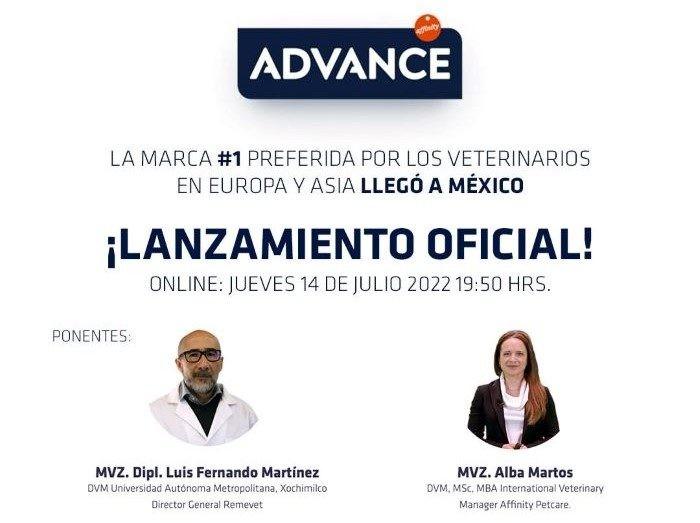
Spanish pet food brand strengthens presence in Mexico
Pet Markt Company, a Mexican producer and distributor of super-premium pet food, is launching Advance, a brand of Spanish company Grupo Affinity. Affinity is among the largest pet food companies in the world, while Advance is well-known as a prescription pet food brand intended for dogs with dermatological ailments. A leader in nearly 70 markets worldwide, Advance is manufactured in Spain and comprises several prescription pet food products and a few maintenance formulations. The brand owns a research center near Barcelona to test and validate its formulations for dogs and cats, which recently published the first testing report on its dermatological products. In the trial, their product regenerated skin tissue (in a skin-artificial model), reducing the amount of cortisone required in the patient. Veterinary pet diets only In this initial launch in Mexico, Pet Markt introduced Advance's Atopic, Hypoallergenic and Sensitive Skin for dogs. As for cat food, the company introduced the Advance Renal variety. Advance products are available solely at veterinary clinics in Mexico and won't be available at other specialty pet food chains or online.Pet Markt distributes its products from Mexico City to the rest of the country and has same-day deliveries to central Mexico. Pet food launch complemented by e-learning program According to a media release, to support the launch in Mexico and provide knowledge and awareness, Advance (through Pet Markt) is offering its e-learning program, Vets & Clinics, directed to the veterinary community, free of charge. This hub of online resources includes webinars, clinical cases, papers, podcasts on Spotify, diagnostic posters and other relevant information for veterinarians. In addition, the platform offers an e-learning program with monthly tuition, where doctors can pursue diplomas in different areas, from managing a veterinary clinic to workshops for specific diseases. Plus, Pet Markt, the operator of Vets & Clinics in Mexico, offers 100% scholarships for Vets & Clinics-Advance customers. by Iván Franco