


7 min reading
Bas Versluis: “Automation is no longer optional; it is mandatory in the pet food industry”
Bas Versluis, Commercial Director at KSE, leads global business activities and the development of strategic markets, such as the pet food industry. In this interview, he explains how automation, artificial intelligence, and the efficient management of ingredients are helping manufacturers address an increasingly demanding market, marked by personalization, traceability, and the need for more productive flexibility.
Bas Versluis, Commercial Director at KSE, leads global business activities and the development of strategic markets, such as the pet food industry. In this interview, he explains how automation, artificial intelligence, and the efficient management of ingredients are helping manufacturers address an increasingly demanding market, marked by personalization, traceability, and the need for more productive flexibility.
From your perspective, how are the global pet food and aquaculture markets evolving, and what are the key trends shaping both industries today?
Both the pet food and aquafeed markets are growing and becoming more complex, but the drivers behind that complexity are different.
In pet food, we see a clear move towards diversification, premiumization and personalization. Consumers increasingly want products that are tailored to the specific needs of their pets. That can be based on breed, size or age, but also on lifestyle, allergies, sensitivities, health conditions and even the dietary preferences of the pet owner. Pet food has become a highly consumer-driven market, and brands need to respond quickly to changing trends.
This has a direct impact on production. Many factories were originally designed for large-volume production with a limited number of recipes. Today, those same factories may need to handle dozens or even hundreds of product variations, with shorter production runs, more frequent changeovers and full traceability. That creates a shift from traditional mass production towards much more flexible and recipe-driven production.
The challenge is that the market often moves faster than a factory can physically adapt. Customers need flexibility, but they also need consistency, quality and efficiency. That is where automation and smart batching systems become essential.




KSE operates across both pet food and aquaculture sectors. How does the company position itself within these industries, and what role do your solutions play in modern production environments?
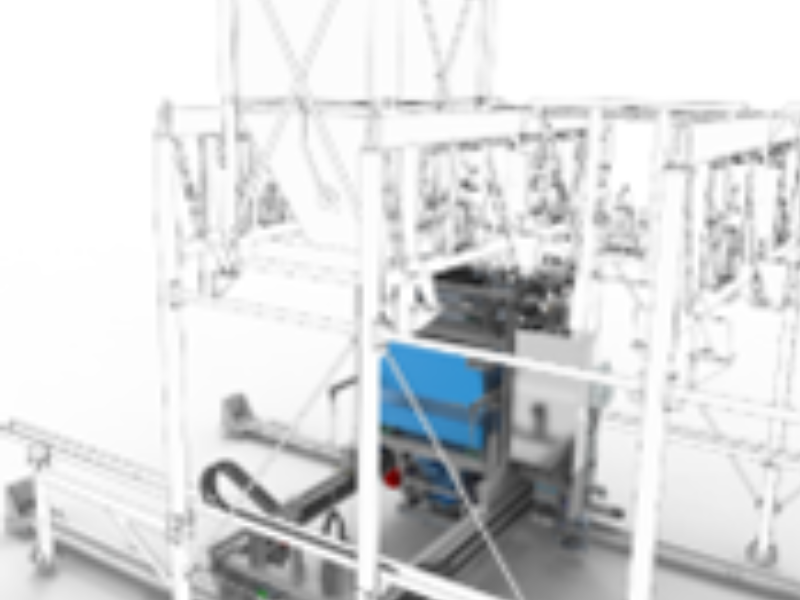
KSE positions itself as a specialist in batching systems for the animal nutrition industry. Our expertise lies in accurately collecting, dosing, weighing and transporting ingredients as part of a fully controlled batch process.
That includes micro dosing, minor and macro ingredient dosing, ingredient automation systems, batch transport and process automation. In practice, this means that we help producers handle many different ingredients and recipes in the right sequence, within the required batch time, and with the required accuracy and traceability.
We have built this knowledge over more than 50 years, and we continue to develop it every day. What makes KSE different is that we are not a general automation supplier. We focus specifically on animal nutrition. That means our systems are designed around the real production challenges of this industry: powder behavior, ingredient flowability, dosing accuracy, cross-contamination risks, batch integrity, recipe management and traceability.
Today, we combine our practical experience with advanced software, intelligent algorithms and AI-supported models. These models are already being used in commercial applications and have been running in the field for the past one to two years. They help our systems make better decisions during production by processing data from recipes, raw material characteristics, machine behavior and process requirements.
For our customers, the result is a more stable and predictable production process. They become less dependent on individual operators, reduce the risk of manual errors, and gain more control over quality and output. In modern pet food, that level of control is no longer optional. It is becoming a requirement.
Looking at regional dynamics, how do you assess the development of markets such as Latin America compared to more mature regions?
Latin America is developing at a high pace, both in pet food and aquafeed. We see that the region is moving towards solutions that have already been applied for many years in more mature markets such as Europe and North America.
In Europe, for example, a high level of recipe variation, strict regulation, advanced traceability and strong quality requirements have been standard for a long time. Many producers in Latin America are now facing similar challenges as their markets mature and become more demanding.
What makes Latin America particularly interesting is the combination of volume, growth and ambition. In pet food, countries such as Brazil and Mexico are very important markets with strong domestic demand and increasingly sophisticated consumers.
Because of the large production volumes in the region, companies are increasingly able and willing to invest in better technology. They understand that automation, process control and traceability are important for future competitiveness.
For KSE, this creates an opportunity to bring proven technology from mature markets into a fast-growing region. The challenges may be newer in Latin America, but they are not new to us. We can use our experience from Europe and North America to help customers take the next step in their production development.
There is also a long-standing trade relationship between Europe and Latin America, which creates a natural basis for cooperation. We see our role as helping producers in the region build the next generation of feed production facilities, capable of meeting today's requirements and tomorrow's market expectations.
In increasingly complex production systems, how important are automation, data management, and ingredient handling solutions in improving efficiency and consistency?
They are absolutely critical in today's production environment. Margins are becoming smaller, not only financially, but also in terms of acceptable error margins. Producers need to make more products, in shorter timeframes, with more ingredients, stricter specifications and fewer available operators. At the same time, quality standards, food safety requirements and customer expectations continue to increase.
That combination is very difficult to manage manually. In the past, many decisions in the production process were made by experienced operators. Today, that knowledge needs to be embedded into the system. The factory must be able to make the right decisions based on data, software logic and process intelligence.
That is why automation, data management and ingredient handling are so important. Automation ensures that the process is executed consistently. Data management ensures that every step is logged, monitored and available for analysis. Ingredient handling systems ensure that raw materials are dosed and transported correctly, even when they behave differently in practice.
Within KSE, we use intelligent models and AI-supported software to bring these factors together. The system can evaluate production parameters in real time and adjust the process where needed. For example, if an ingredient has difficult flowability, the system can compensate through machine behavior and dosing strategy.
This leads to more consistent production, higher quality and better use of raw materials. It also reduces waste, rework and unnecessary manual corrections. That is important from an efficiency point of view, but also from a sustainability perspective. If you dose more accurately and produce more consistently, you use ingredients more efficiently and reduce losses in the process.
Ultimately, automation and data are not just about productivity. They are about business continuity, quality assurance and long-term competitiveness.
What are the main strategic priorities for KSE as it continues to expand its presence in the pet food industry?
Our main strategic priority is to be a long-term technology partner for our customers in the animal nutrition industry, especially in markets such as pet food where complexity is increasing rapidly.
We want to help customers solve structural challenges in their factories: operator shortages, increasing quality demands, higher production volumes, more recipe variation and the need for greater flexibility. That requires more than simply supplying equipment. It requires understanding of the customer's business, their market, their production process and their long-term ambitions.
One of our key priorities is AI and data-driven production. We are already applying AI-supported models in commercial systems, and we see a lot of potential to further improve process control, predictive behavior and production decision making.
A second priority is further automation to reduce operator dependency. Many producers are struggling to find and retain skilled operators. By automating ingredient handling, dosing and batching processes, we help customers reduce that dependency while improving quality and consistency.
A third priority is service and lifetime support. A batching system is a long-term investment. Customers need to know that their system will continue to perform, adapt and remain reliable over many years. That means strong service, lifecycle support, upgrades, performance monitoring and close cooperation throughout the lifetime of the installation.
For KSE, the goal is not only to help customers solve today's bottlenecks. We want to help build factories that can continue to develop with their business for many years to come.
For the pet food sector, how are manufacturers leveraging automation and ingredient handling systems to improve product quality, traceability, and flexibility in production?
Pet food is a very dynamic market because it is directly influenced by consumer behavior. Product ranges change frequently, and manufacturers need to respond to trends such as premiumization, functional nutrition, breed-specific diets, age-specific diets, grain-free concepts, alternative proteins and health-focused formulations.
That creates major challenges in the factory. A plant that was originally designed for a limited number of high-volume recipes may now need to produce many different variations, often in shorter runs and with more frequent changeovers. At the same time, quality and traceability requirements are extremely high.
Pet food is also distributed through complex retail and logistics networks. If a quality issue occurs and a recall is required, the impact can be enormous. It can create high costs, but also significant damage to brand reputation. That is why producers want to prevent errors as early as possible in the process.
Automation and ingredient handling systems play a key role in this. By automating dosing, weighing, batch transport and recipe execution, producers reduce dependency on manual decisions. The system follows predefined protocols and quality parameters, ensuring that every batch is produced according to specification.
Traceability is another major benefit. Every ingredient movement, dosing step and batch action can be logged. This gives producers a complete production record and supports audits, quality control and regulatory compliance.
Importantly, automation does not reduce flexibility. When designed correctly, it actually increases flexibility. It allows manufacturers to switch between recipes more efficiently, handle a wider range of ingredients and produce smaller runs without losing control over quality.
For pet food producers, this balance is crucial: they need the flexibility to respond to the market, but the control and traceability required to protect product quality and brand reputation.
In a context marked by the growing complexity of production and the demand for greater flexibility, KSE continues to develop solutions focused on automation, traceability, and the intelligent use of data. For the company, supporting manufacturers as they evolve their plants will be key to meeting the demands of a constantly changing pet food industry.
Learn more about KSE's solutions at https://www.ksegroup.com/
By Bas Versluis
Source: All Pet Food
You could be interested: Innovating together: A new development for the premix pet food industry


About the company

About the company
Partner in optimizing production processes
Increasing complexity forms the biggest challenge for animal nutrition manufacturers; more recipes, a growing number of ingredients, additions that are difficult to dose and higher quality standards contribute to this trend.
For over 50 years, KSE has been supplying future proof solutions to stay ahead of the trend in the form of modular machinery and smart software that fit together perfectly. We create flexible processing solutions that enable a responsive production process. Automation, accuracy and contamination control are at the basis of our future-proof innovations. Our aim is to not only improve the production process, but also to make a significant contribution to increasing margins and achieving targets.
Together we create the solutions with the best results!

Interviews


Videos
Next videos
Next videos






Events

Pet Fair South East Asia
28 to 30 October, 2026
Bangkok, Thailand
https://petfair-sea.com/

China International Pet Show (CIPS 2026)
12 to 15 November, 2026
Guangzhou, China
https://en.cipscom.com/

All Pet Food Day
25 November, 2026
Guayaquil, Ecuador
https://allpetfood.net/allpetfoodday2026

IberPet 2027
10 to 12 March, 2027
Madrid, Spain
https://www.ifema.es/en/iberpet

Figan 2027
16 to 19 March, 2027
Zaragoza, Spain
https://www.feriazaragoza.es/en/figan

ZOOMARK 2027
11 to 13 May, 2027
Fair District
https://www.zoomark.it/en/

Pet Fair Asia 2027
18 to 22 August, 2027
Shanghai, China
https://en.petfairasia.com/exhibition/pfa.html

VICTAM 2027
14 to 16 September, 2027
São Paulo, Brazil
https://victamlatam.com/en-us/
Advertising

