4 min reading
Greater Efficiency, Less Space: The Rise of Compact Palletising
Greater efficiency, less space: the rise of compact palletising. Space in industrial plants is a resource that can be difficult to manage. Plant expansions are not always feasible, refurbishments must minimise civil engineering work, and every square metre must justify its operational return. For this reason, end-of-line design has evolved towards increasingly compact and efficient solutions, such as compact palletising.
Greater efficiency, less space: the rise of compact palletising. Space in industrial plants is a resource that can be difficult to manage. Plant expansions are not always feasible, refurbishments must minimise civil engineering work, and every square metre must justify its operational return. For this reason, end-of-line design has evolved towards increasingly compact and efficient solutions, such as compact palletising.
Compact palletising has emerged as a response to this reality: automating the stacking of sacks in confined spaces without compromising stability, productivity or pallet quality. In this article, we analyse the technical fundamentals, competitive advantages and operational impact of compact palletising, showing you some examples of solutions proposed by TMI.
What is a compact palletising system?
Compact palletising refers to automated configurations designed to minimise industrial floor space without sacrificing essential functionalities: controlled handling, configurable patterns, compaction, and the ability to integrate wrappers, accumulation tables or empty load modules.
In other words, the aim is to design automated configurations capable of maintaining positioning accuracy and structural stability, whilst reducing the system's footprint.

These are typically flexible, pre-assembled, modular and scalable configurations that allow for high OEE without taking up more space than necessary.
This type of solution is particularly relevant in scenarios such as:
- Plant conversions where it is not possible to expand floor space.
- Lines with multiple inputs that require decentralised palletising.
- Medium-speed processes (500–1,500 bags/h) requiring cost-effective yet automated solutions.
- Architectural constraints, whether due to headroom, structural columns or operator movement.
Design, operation and safety of compact palletising systems
A compact system must meet the same critical requirements as a conventional palletiser:
- Positioning accuracy on the X, Y and Z axes.
- Mechanical stability of the palletised load (with layer-forming stops).
- Compatibility with different formats, weights and production levels.
- Ease of maintenance and technical access.
In this regard, solutions such as the ILERPAL H, ILERPAL L and ILERPAL P embody different approaches within the compact concept.
The ILERPAL H model, with a closed structure and vertical bag lifter, allows layer formation and transfer to be integrated into a small space, whilst maintaining high production rates and high-quality finishes.
The ILERPAL L, designed in a demountable configuration with low-level pallet loading, is particularly suitable for facilities with limited access or logistical constraints, without compromising on stability or performance.
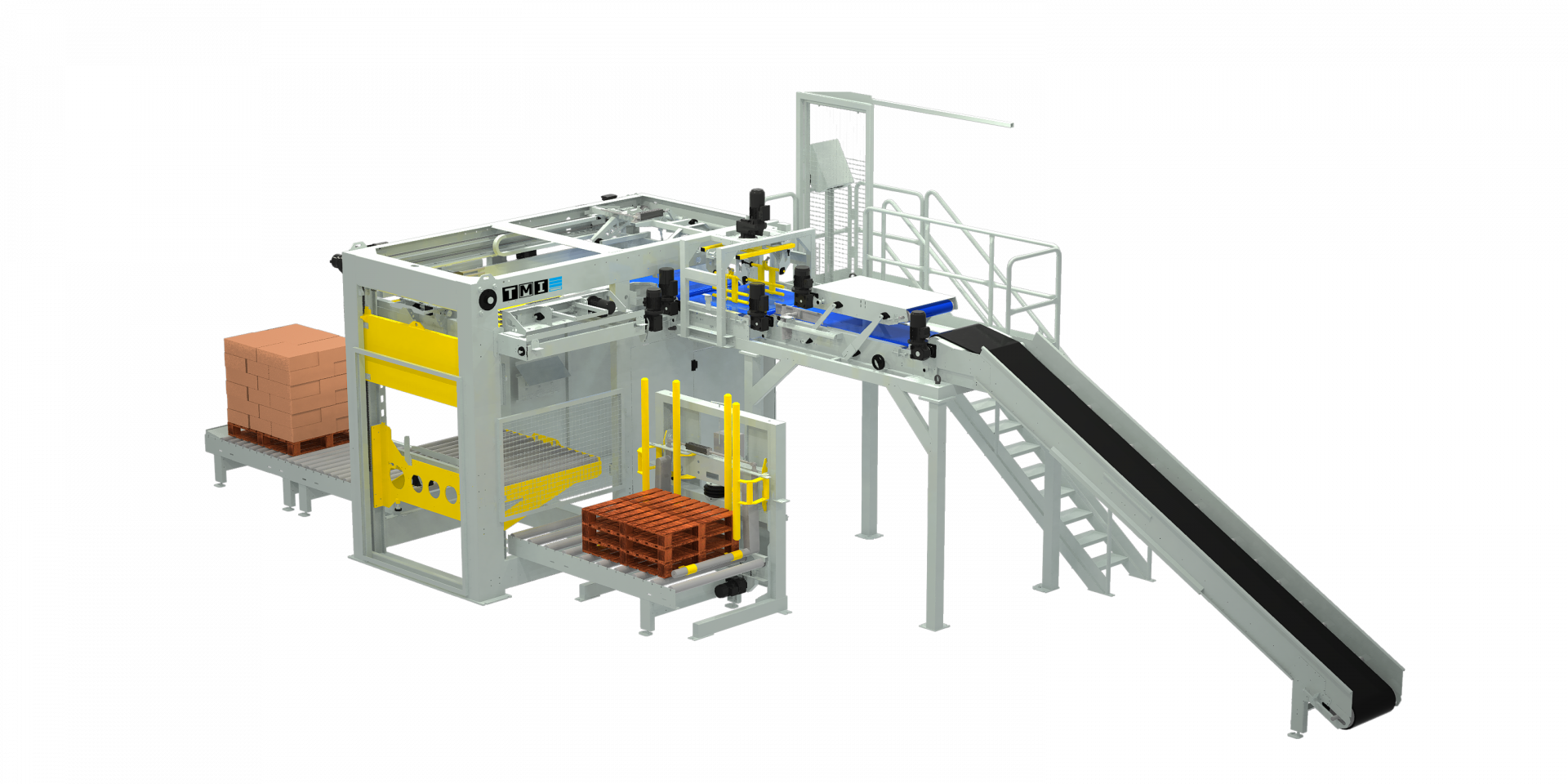
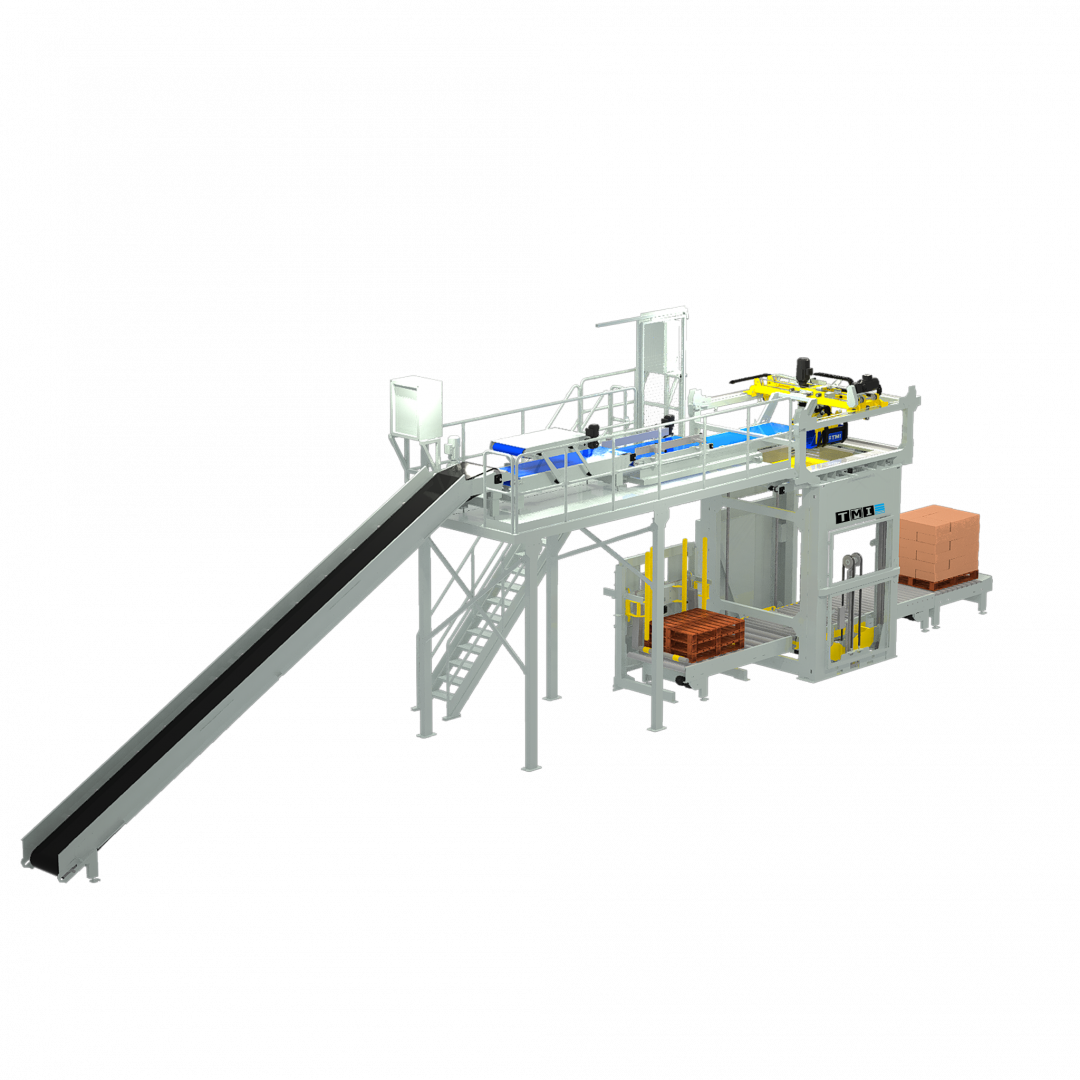
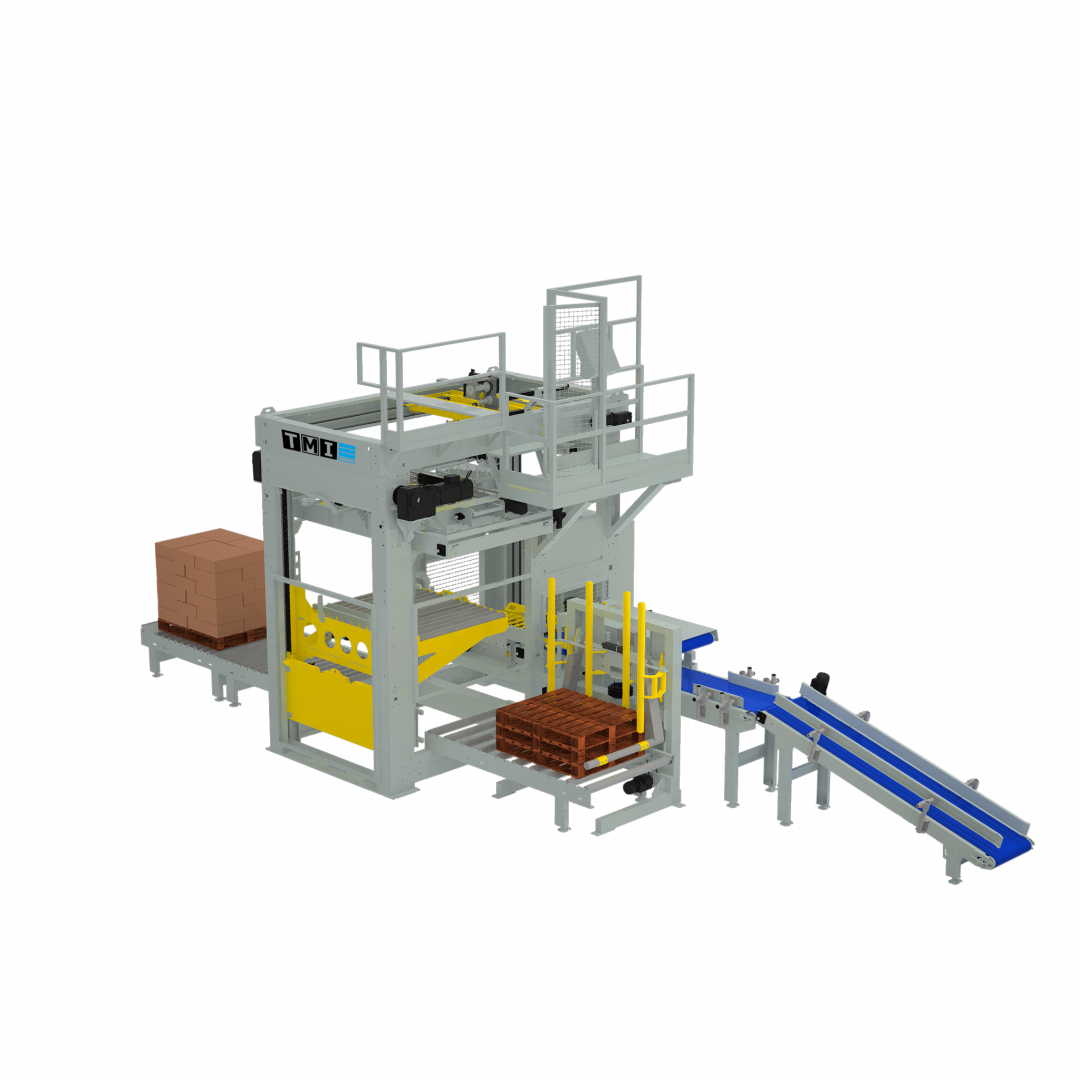

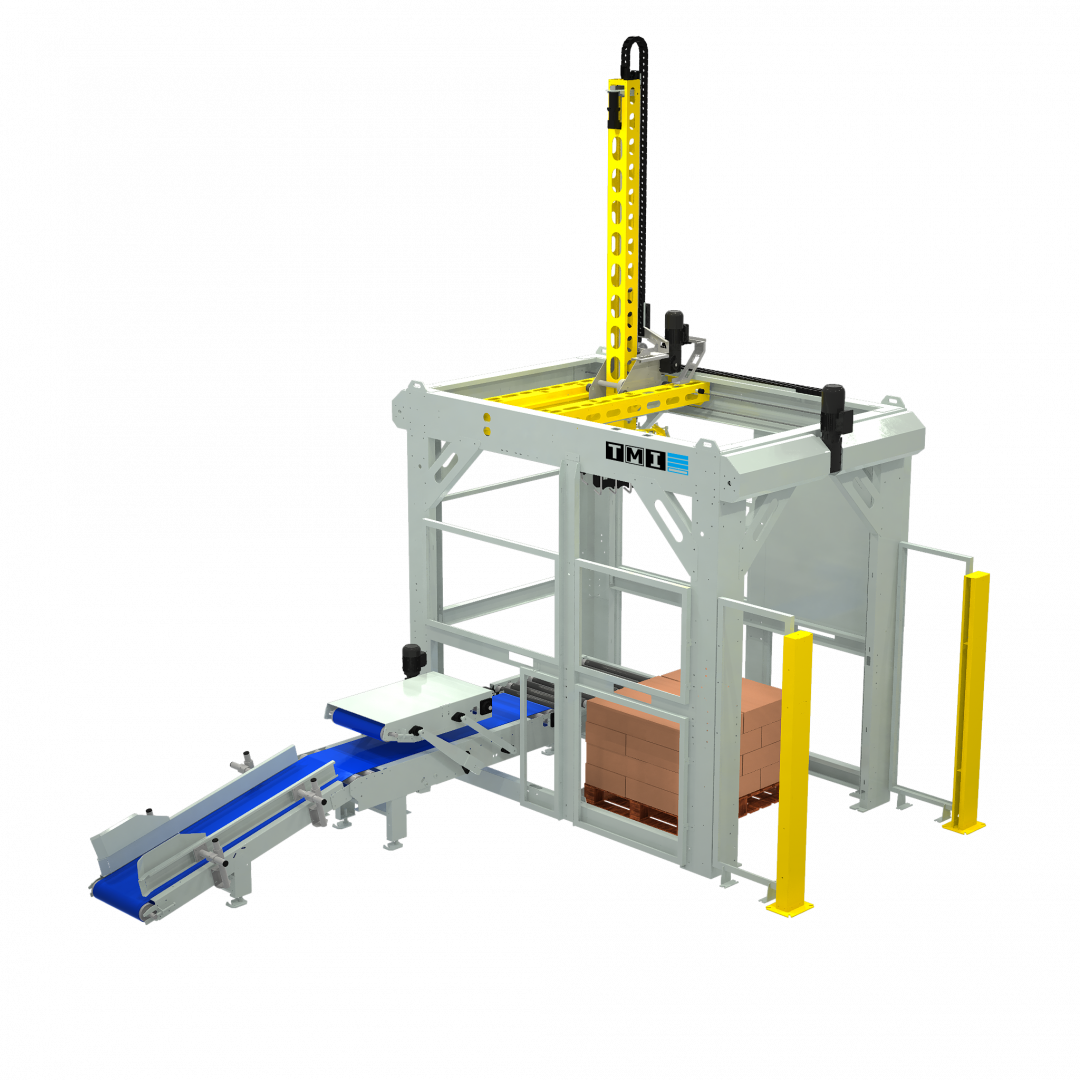
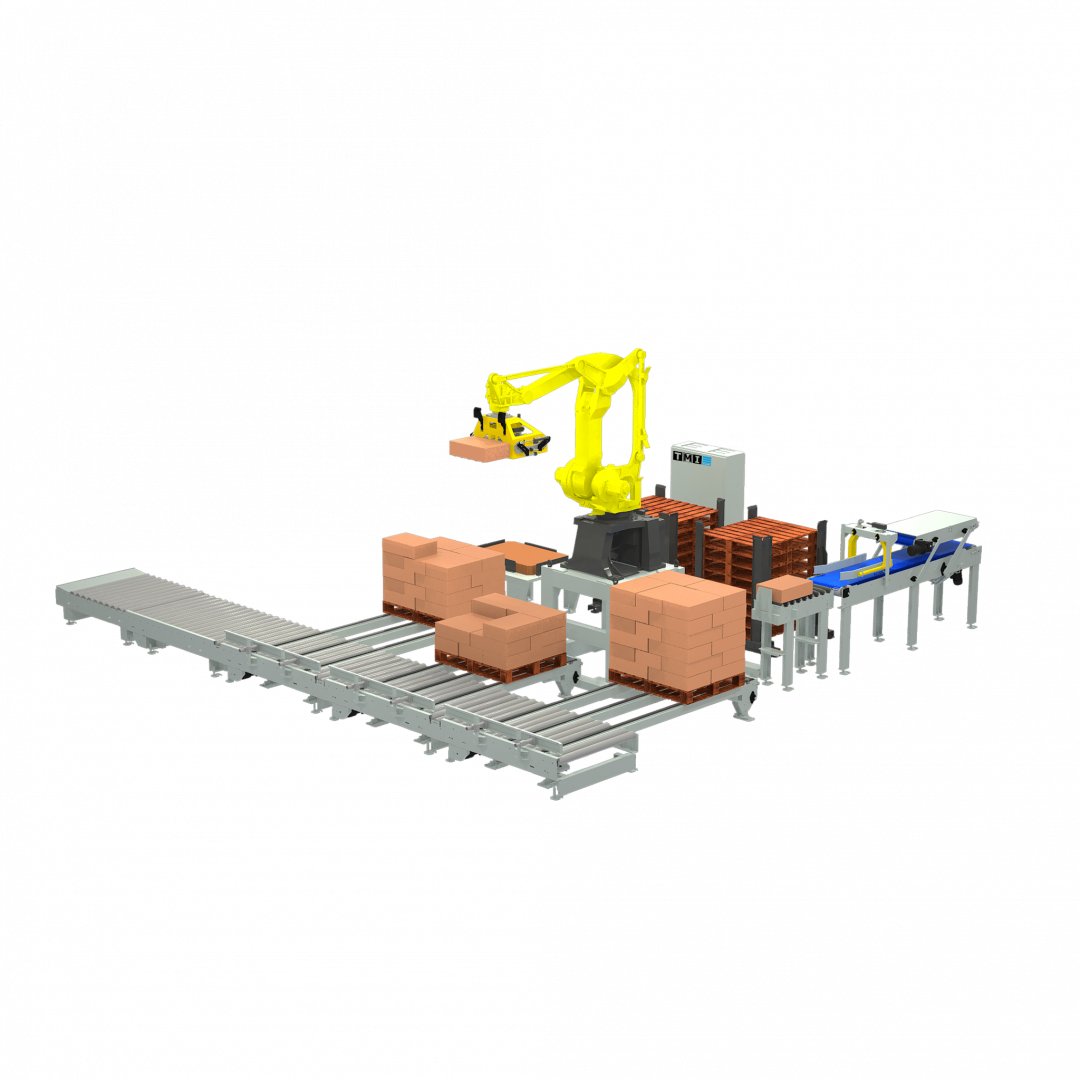
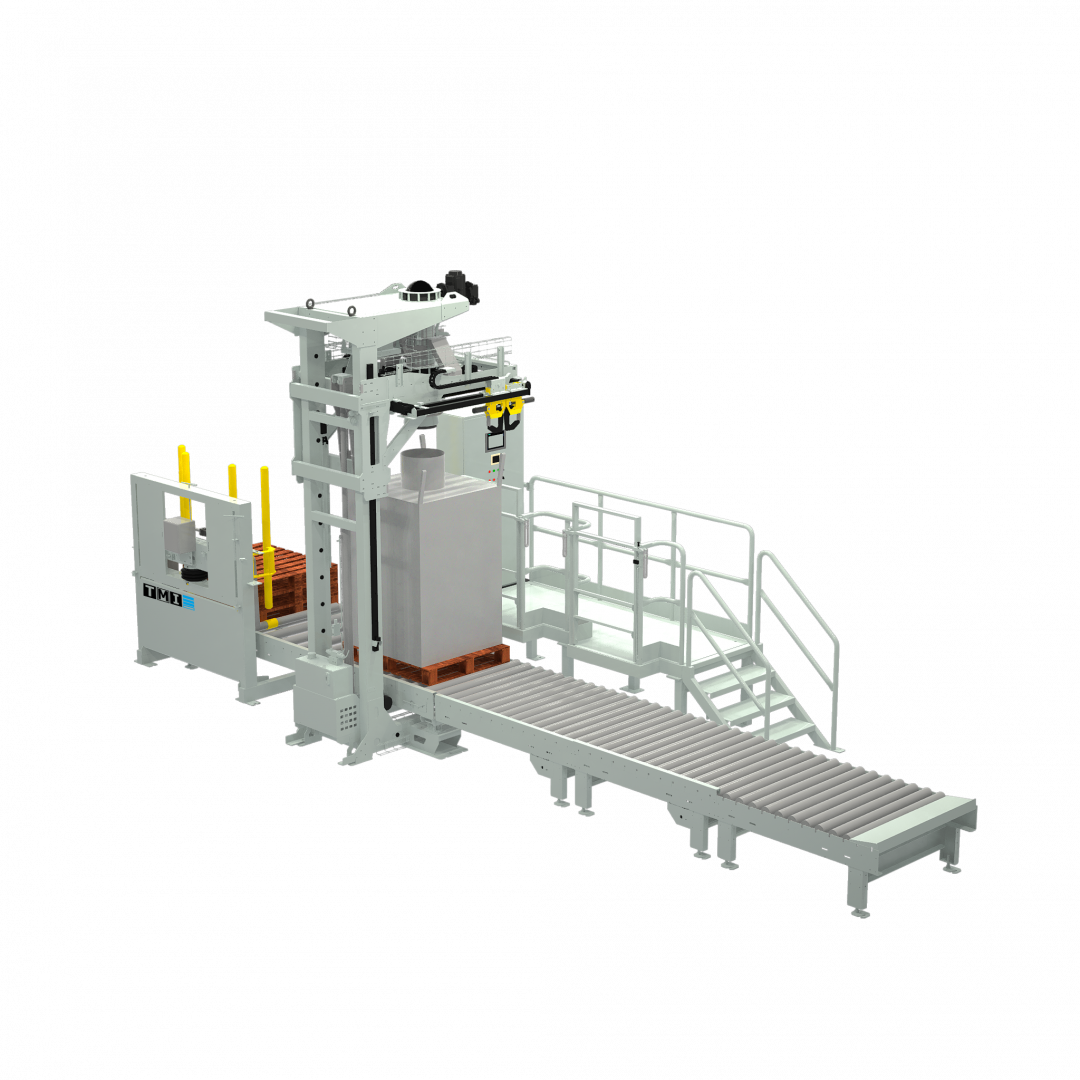
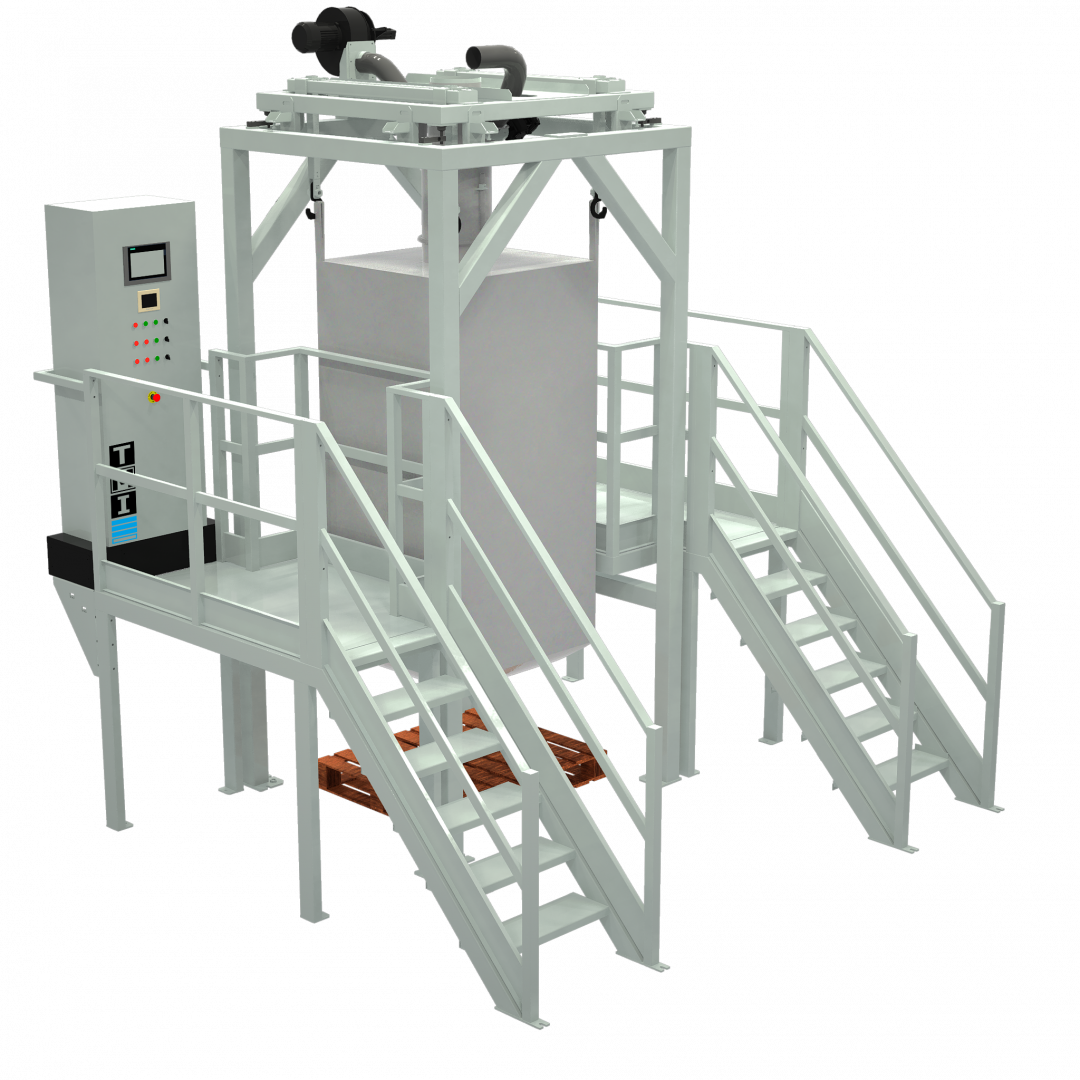
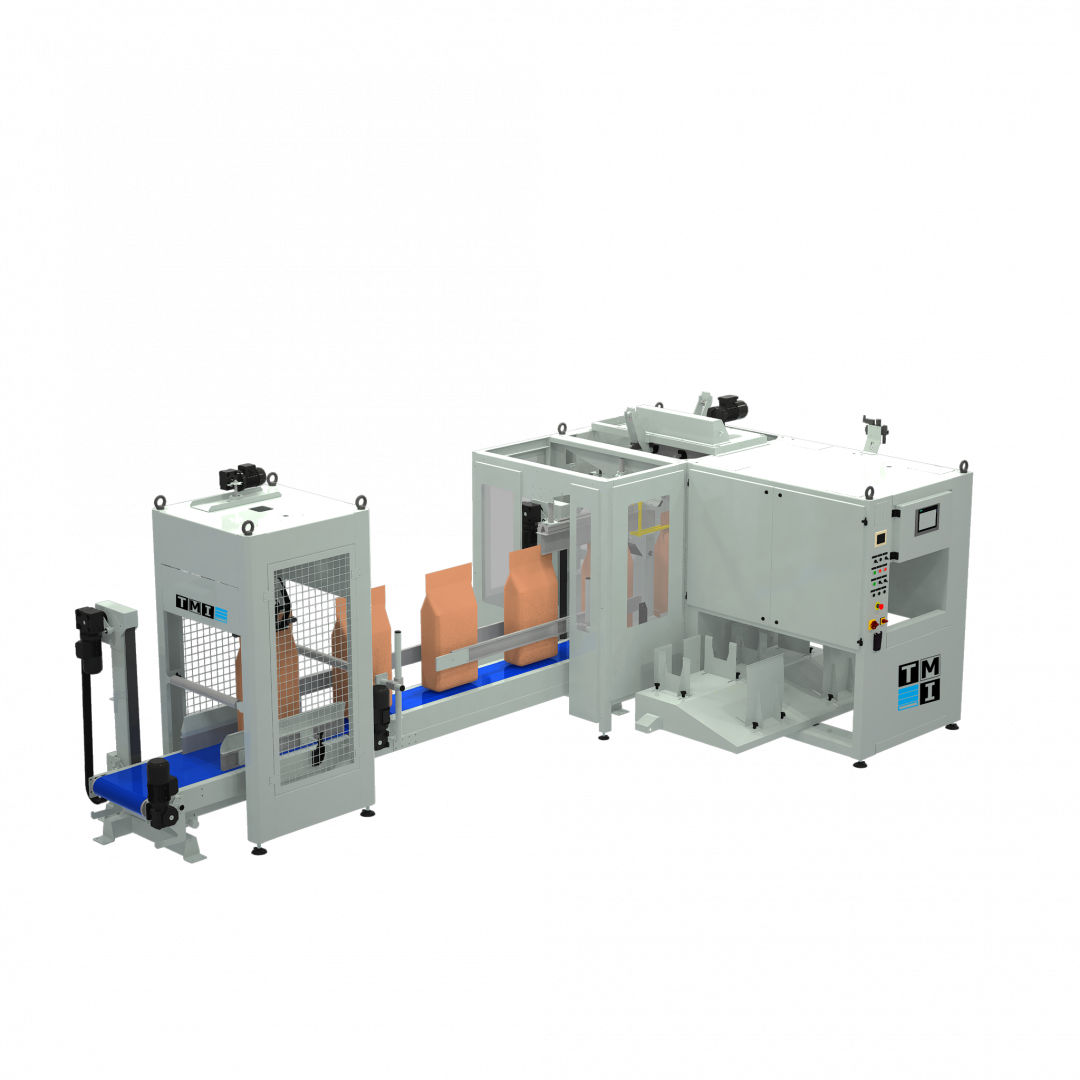
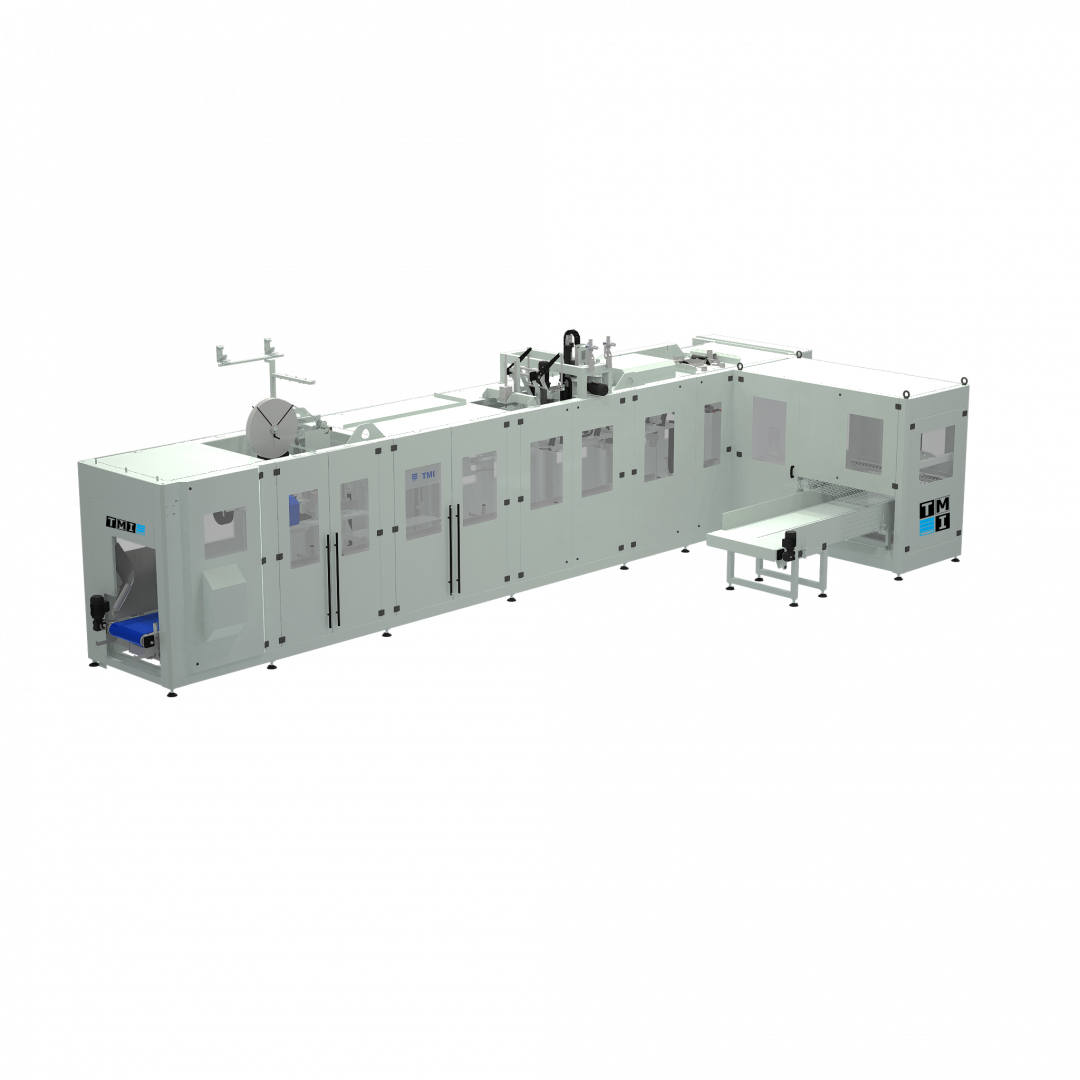
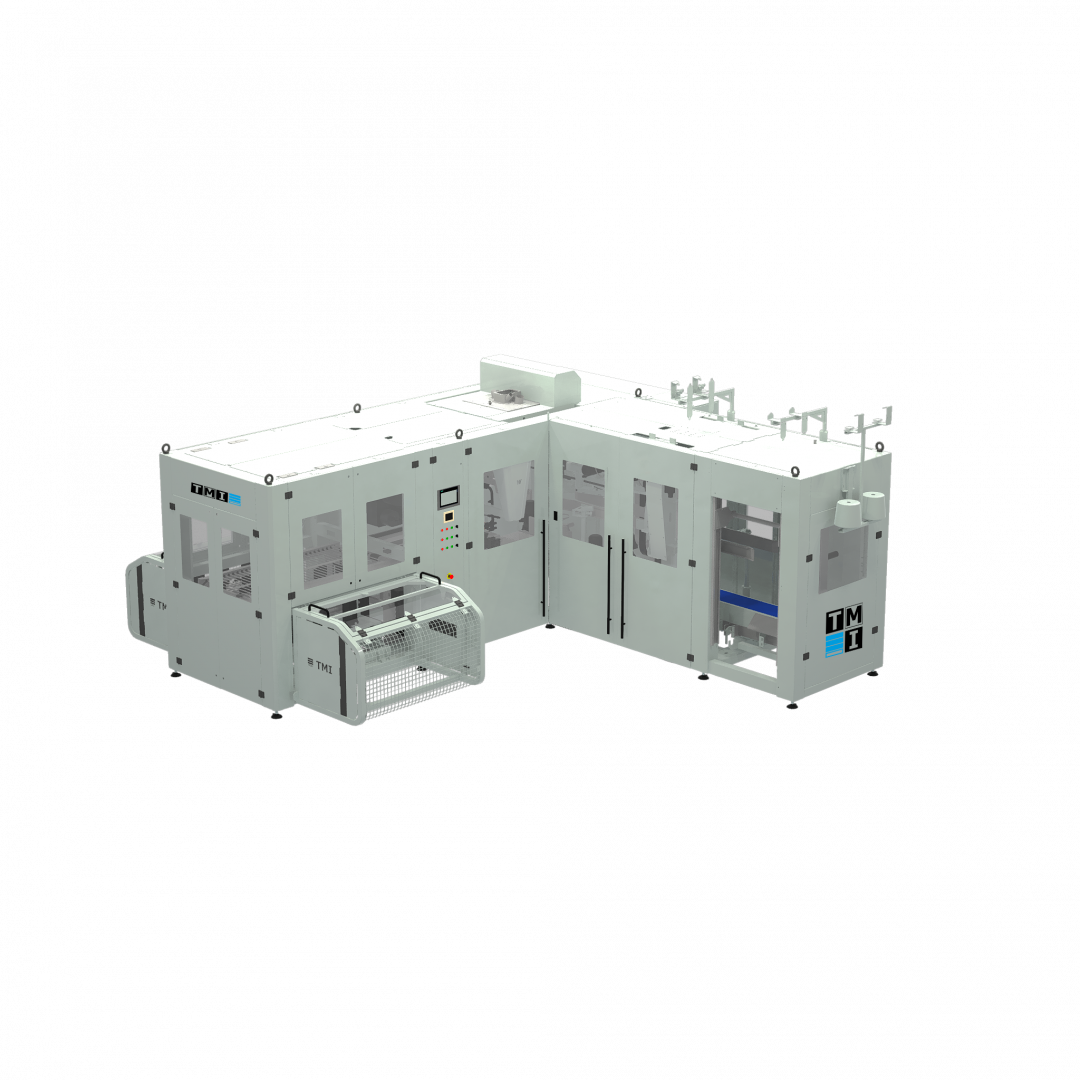
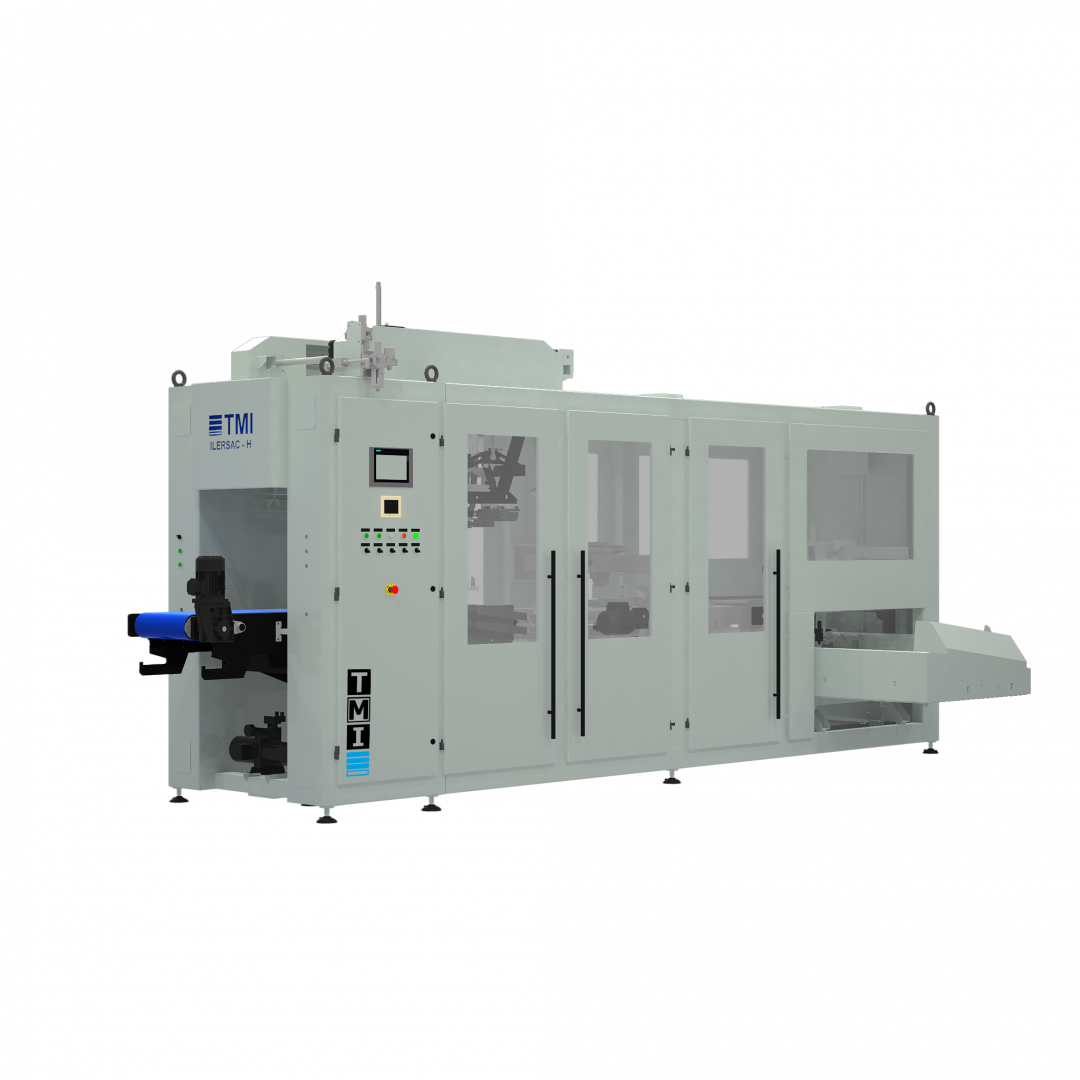
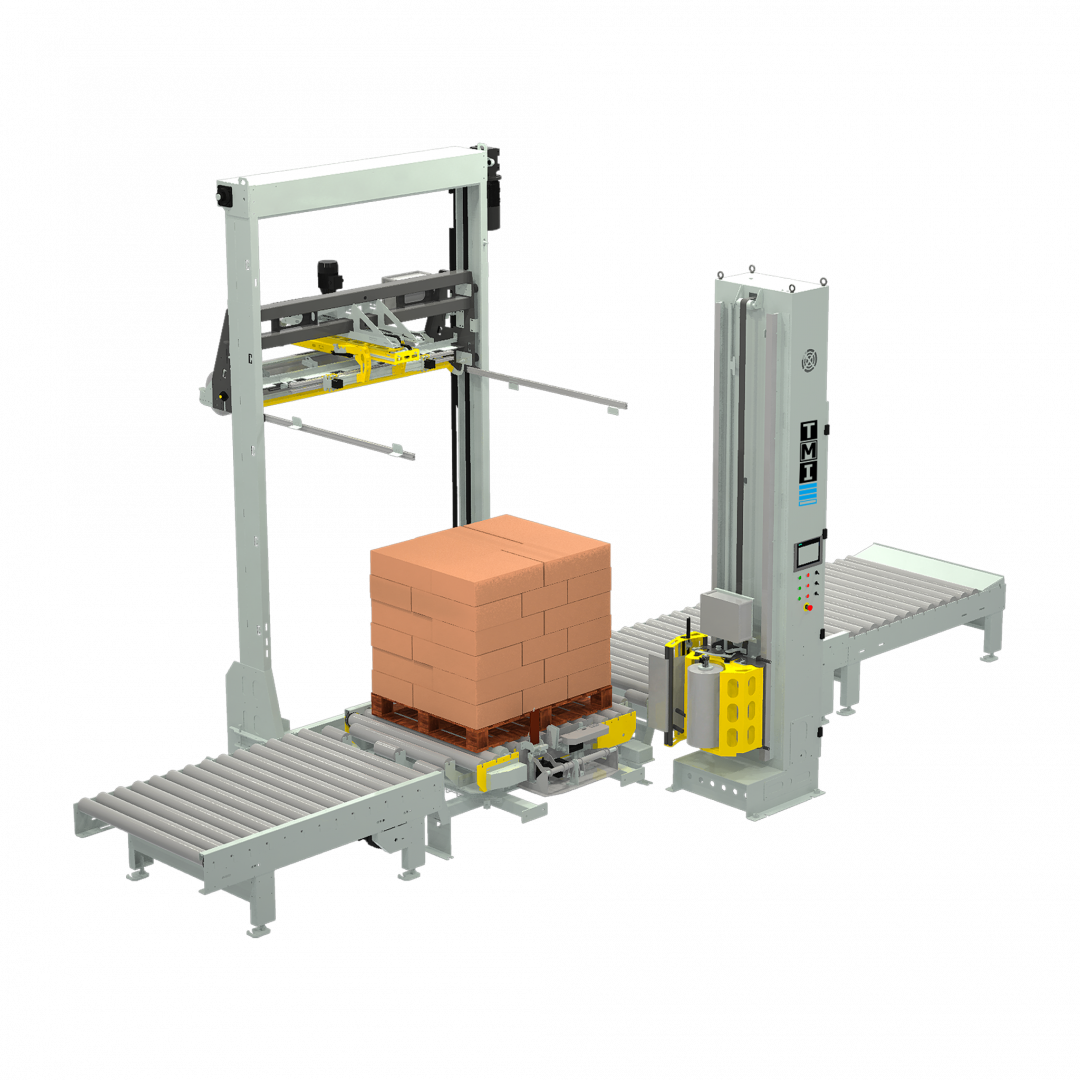
For its part, the ILERPAL P offers a modular architecture that facilitates extremely compact configurations, adapting to plants where space is the main constraint of the project.
Furthermore, all TMI's compact models allow integration with strapping via ILERGIR, enabling the end-of-line cycle to be completed without the need to expand the layout, thereby consolidating a fully automated cell within a minimal footprint.
Advantages of compact palletising over traditional systems
The advantage of compact palletising is not limited to space savings, but has other direct implications for day-to-day operations.
Reduction in the system's total footprint: by reducing floor space by up to 40% compared to traditional configurations with extensive tables and conveyors, space is freed up for circulation, storage or future expansions.
Energy efficiency: by eliminating lifts, heavy chains or auxiliary conveyors, electricity and compressed air consumption is reduced, which has a direct impact on the operational cost per palletising cycle.
Reduced implementation times: the modular nature of these solutions typically results in shorter implementation times. The ability to supply pre-assembled cells reduces the need for civil engineering work and speeds up FAT and SAT validation processes, a decisive factor when production schedules are tight.
High adaptability to format changes: from an operational perspective, recipe management via HMI allows palletising patterns to be changed without manual mechanical adjustments, facilitating adaptation to different SKUs or production batches.
Minimal impact on the existing layout: compact systems are ideal for integration into existing lines without the need for logistical or flow redesign, thereby reducing friction in retrofit or modernisation projects.
TMI's experience with compact palletising
At TMI, we have deployed compact solutions in plants across more than 40 countries, tailoring each cell to the customer's production, space and flow requirements.
The rise of compact palletising is particularly evident in sectors where plant density and operational robustness are critical, for example:
- Chemicals and agrochemicals: where mechanical strength and a sealed environment necessitate low-maintenance lines with a closed design.
- Ingredients and dry food: frequent batch or SKU changes require versatile, compact and easy-to-clean systems.
- Salts and additives: aggressive or dusty products, where structural simplicity and direct access to the maintenance area are critical.
The challenge in these cases is not merely to produce more, but to do so with greater space efficiency, lower energy consumption and greater flexibility in the face of market changes. Integrating compact solutions at the end of the line allows for automation in a small space, optimising the layout without compromising performance.
If you are considering optimising your factory floor space without compromising on productivity and stability, TMI's technical team can help you design a compact palletising solution tailored to your production needs. Find out more about our palletising solutions on our website.
Àngel Pedrós Castany, Product Owner en TMI Bagging & Palletizing.
Source: TMI Bagging & Palletizing
You could be interested: TMI and HS Automation Consolidate their International Expansion with the Launch of TMI USA Inc.

About the company

About the company
TMI is a manufacturer of bagging, palletizing and stretch wrapping machinery.
But that' s not all we want to be:
We want to be your partner from the design process of your end-of-line installation, until the start-up is completed, in order to deliver turnkey projects that perfectly fit your company's needs.
We like challenges, and we use our knowledge and engineering skills to undertake complex projects with the maximum guarantee of success. We are pioneers and have a strong commitment to innovation, aiming to provide your complete bagging lines with the latest advances in industrial automation.
We believe in the value of solid relationships and, as your technological allies, we are constantly working towards improving and expanding our technical service network. That way we can offer you the best assistance when you need us.
Because at TMI we know what commitment means, and we want to be always by your side when it comes to your bagging, palletizing and stretch-wrapping machinery.


Videos

Events

FIGAP 2026
21 to 23 October, 2026
Guadalajara, Jalisco, Mexico
https://figap.com/

Pet Fair South East Asia
28 to 30 October, 2026
Bangkok, Thailand
https://petfair-sea.com/

China International Pet Show (CIPS 2026)
12 to 15 November, 2026
Guangzhou, China
https://en.cipscom.com/

All Pet Food Day
25 November, 2026
Guayaquil, Ecuador
https://allpetfood.net/allpetfoodday2026

IberPet 2027
10 to 12 March, 2027
Madrid, Spain
https://www.ifema.es/en/iberpet

Figan 2027
16 to 19 March, 2027
Zaragoza, Spain
https://www.feriazaragoza.es/en/figan

ZOOMARK 2027
11 to 13 May, 2027
Fair District
https://www.zoomark.it/en/

Pet Fair Asia 2027
18 to 22 August, 2027
Shanghai, China
https://en.petfairasia.com/exhibition/pfa.html

VICTAM 2027
14 to 16 September, 2027
São Paulo, Brazil
https://victamlatam.com/en-us/
Advertising