3A BIOTECH
www.tres-a.comAbout
3A BIOTECH, a Spanish company, was founded in 2000 and is committed to Green INNOVATION, adaptive SOLUTIONS, and specialized COUNSELING. With more than 20 years of experience, we produce ingredients and synergic formulations of preservatives and antioxidants that ensure the freshness, quality, security, durability, and shelf-life of products.
We are specialists in key sectors, such as human and animal feeding, cosmetics, nutraceuticals, agriculture, paints, inks, and biodiesel. We adapt our solutions to each client's specific needs.
Our focus combines advanced research with great knowledge of the challenges in oxidation by offering innovative formulations, including synthetic, natural, and clean label options.
At 3A BIOTECH, we direct our energy to develop innovative solutions that ensure product quality and contribute to the clients’ sustainable success.

Company News
 Formulation
5+ MIN
19/05/2026
Holistic Stability with Functional Ingredients and Real Value
3A BIOTECH and Real Value: You Don't Buy It, You Protect It
The value of a raw material is not defined only by its specification sheet, but by its ability to remain stable over time. Pet food is a living system, exposed to chemical changes, sensory alterations and microbiological hazards during processing, storage and transport—and finally when the pack is opened at home. Throughout that journey, stability determines whether the formulation delivers on its promise.
How to Prevent Loss of Real Value
Fats and oils, meals and proteins are core pillars of metabolisable energy, palatability and the supply of essential nutrients. At the same time, they are the components most vulnerable to degradation. Lipid oxidation generates free radicals and peroxides that damage vitamins and other fat-soluble compounds, alter aroma and reduce the food's actual bioavailability. These processes begin as soon as the raw material is exposed to air and continue throughout the entire shelf life.
The consequences are direct: a drop in real energy delivery, loss of palatability, the formation of undesirable secondary compounds and reduced aroma stability. In practice, the lipid profile the animal consumes may no longer match what is declared. That is why oxidative stability is a central parameter of real value: if an ingredient oxidises easily, its nutritional and functional value diminishes long before it reaches the consumer.
Moreover, oxidation is not only a sensory issue. Certain compounds derived from rancidity can contribute to digestive imbalances. In pet food—where tolerance and the microbiome matter—protecting against oxidation also protects the nutritional experience.
3A BIOTECH and Microbiological Safety: The Other Pillar of Real Value
Alongside oxidative loss comes microbiological instability. Animal-origin raw materials and certain cereals can promote the growth of moulds and bacteria if not properly controlled. The challenge is compounded by the potential presence of heat-stable mycotoxins, which can survive processing and compromise final product safety.
Even moderate microbial loads can accelerate degradation and shorten shelf life in ways that are not immediately visible. For that reason, microbiological quality is a critical component of real value: it determines safety, stability and formulation performance, and it also influences batch-to-batch consistency.
Beyond Price: Technological Efficiency and Functional Value
In a market that has historically competed in cost, more and more manufacturers recognise that differentiation is not only about purchase price, but about true functional value: what an ingredient delivers, what it preserves, and what it guarantees. Evaluation moves beyond '€/tonne' and starts to include stability, digestibility, control of wastage, sensory consistency and fewer issues/complaints.
This evolution reflects a more demanding end consumer seeking premium, natural products with tangible benefits. It also pushes the industry towards integrated systems that not only protect raw materials but also provide technological and biological functionality.
3A BIOTECH Functional Ingredients: Protect, Complement, Optimise
A functional ingredient—typically natural in origin, derived from plants, microorganisms or bioactive extracts—provides additional benefits either to the organism or to the formulation itself. In pet food, this translates into improvements, such as gut-health support, immune reinforcement, oxidative stabilisation, microbiota modulation, cellular protection against oxidative stress, and improved digestibility.
From a technological perspective, functional ingredients extend product stability, preserve organoleptic integrity and reduce degradation during storage. They can also help optimise texture, stabilise emulsions, minimise unwanted reactions and support preservation, by reducing variability and enabling more consistent nutritional claims.
Holistic Stability with 3A BIOTECH: Antioxidants + Preservatives, By Design
To preserve real value, the industry relies on carefully designed antioxidant and preservative systems. Antioxidants work by preventing free-radical formation and protecting lipid integrity. In parallel, preservatives based on organic acids help keep microbial loads under control, avoiding deterioration that would reduce the initial nutritional value.
When these systems are formulated with an integrated approach—synergy, correct dosing and process compatibility—they stop being 'additives' and become functional ingredients: they influence stability, safety and overall formula performance.
3A BIOTECH in Dry and Wet: Two Challenges, One Goal
In dry foods, the risk of rancidity increases when oxidation-susceptible meals are combined with oils applied as coatings. Processing and storage time can intensify degradation, affecting aroma, flavour and acceptance by the animal.
In wet foods, although wax coatings can help minimise drying out—particularly relevant for cats due to their more fragmented feeding pattern—it remains essential to stabilise emulsions and control oxidative and microbiological degradation. Here, emulsion physical stability is key to maintaining texture, appearance and palatability: small variations can trigger defects visible to the consumer.
3A BIOTECH TOCOTYROSOL: Stability + Functionality in One Solution
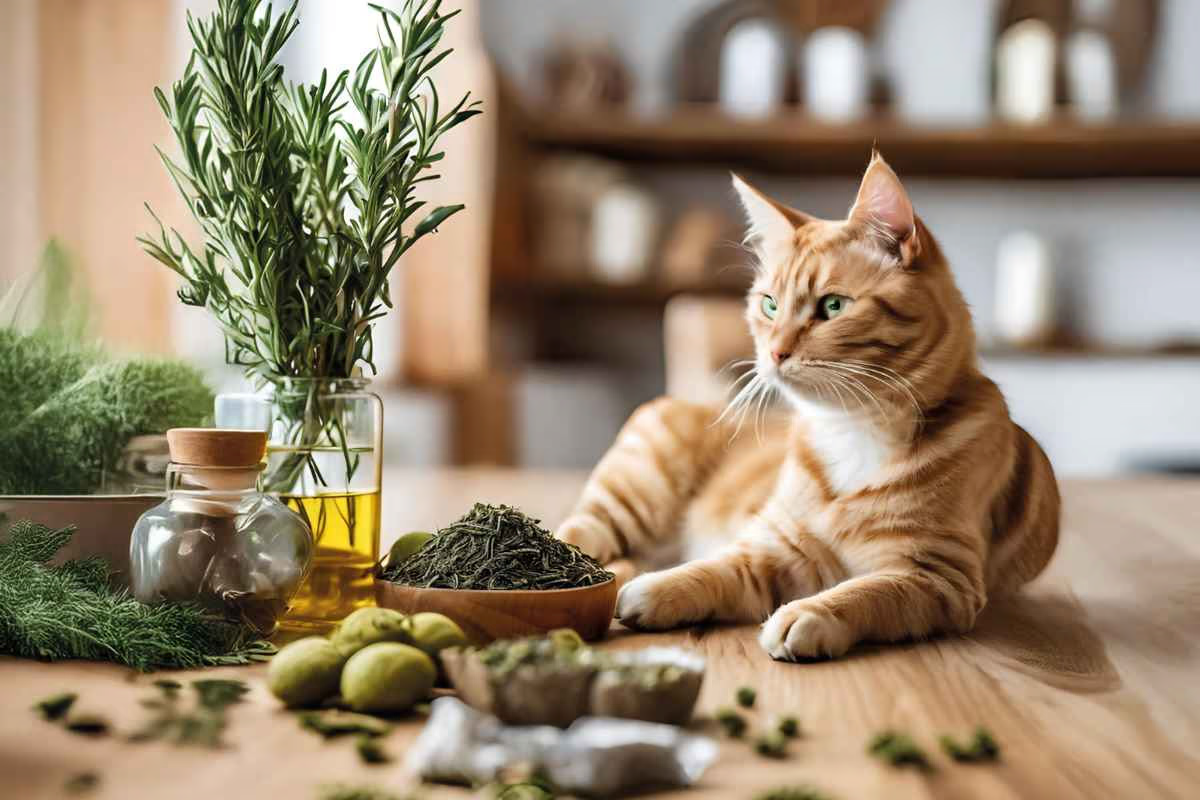
A balanced combination of antioxidant protection and functional support is found in formulations such as TOCOTYROSOL by 3A BIOTECH. This solution is developed using natural antioxidants—tocopherols and extracts of rosemary, olive and green tea—and is designed to integrate efficiently into manufacturing processes for both dry and wet foods.
Its antioxidant synergy helps preserve sensory and nutritional stability from production through to consumption, supporting lipid profile integrity, palatability and product consistency. In addition, it incorporates a prebiotic angle that supports the intestinal microbiota and digestive efficiency, aligning with the growing demand for more functional formulations.
From the manufacturer's perspective, these solutions deliver value at the technological stage (oxidation control, stability, preservation and reduced variability) and help sustain formulation performance over time. In other words, they enable the final product to fulfil the brand promise—batch after batch.
Conclusion: Raw Material, Real Value
The pet food industry no longer competes to be the cheapest, but to be the most efficient, stable and functional. In a sector where every ingredient is an investment, ensuring raw materials retain their real value is a strategic decision: it improves final quality, reduces issues and strengthens consumer trust.
At 3A BIOTECH, we help brands protect that value with natural solutions based on functional ingredients and holistic stability systems.
Would you like to validate it on your own line? Request a technical assessment or a pilot trial with TOCOTYROSOL and see how well-designed protection can translate into greater stability, a better consumption experience and a more consistent product.
By 3A BIOTECH
Source: All Pet Food Magazine
 Functional Additives
3+ MIN
26/08/2025
Innovation in Natural Extracts, Prebiotics & Parabiotics for Pet Nutrition
Within this context, several scientific terms have moved beyond academia and now feature prominently on health-oriented product labels, driving innovation in animal-feed formulations:
Prebiotics: substrates that are selectively utilised by host microorganisms, conferring a health benefit.
Probiotics: live microorganisms that, when administered in adequate amounts, confer a health benefit on the host.
Postbiotics: preparations of inanimate microorganisms and/or their components that confer a health benefit.
Parabiotics: non-viable microbial cells, cellular structures or fermentation extracts devoid of live organisms.
These functional ingredients not only promote gastrointestinal health but also reduce the need for antibiotic interventions, improve feed conversion ratios and potentiate immune responses —thereby lowering disease incidence. The upshot is higher productivity together with a growing consumer preference for safe, antibiotic-free, 'naturally derived' animal products. Pets likewise benefit from functional diets that support health, growth and longevity.
At 3A BIOTECH, we fully embrace this paradigm, designing natural extracts and formulations that safeguard the food chain and care for both livestock and companion animals. Our portfolio contains numerous prebiotic solutions. Among the botanical extracts with proven prebiotic activity that we incorporate are rosemary, green-tea, olive-fruit (and co-products) and soybean extracts. Beyond their well-documented antioxidant properties, these materials supply prebiotic molecules and serve as natural alternatives to conventional aroma and fat stabilisers, preventing rancidity during drying processes and extending product shelf life.
A flagship example is our proprietary Tocotyrosol™ range —an all-natural substitute for synthetic additives that unites technological functionality with prebiotic activity to support a balanced diet. The formulation synergises tocopherols from oilseeds, hydroxytyrosol and other olive derivatives, plus rosemary and green-tea extracts. Health benefits stem from the bioactive principles within these extracts. For instance, rosemary-derived rosmarinic acid is metabolised by gut symbionts into compounds capable of suppressing pathogenic bacteria while stimulating beneficial microbes.
Available in lipid- and water-soluble formats, both liquid and powder, these solutions extend the shelf life of dry pet food, stabilise organoleptic properties and texture, and enrich formulations with essential nutrients. All products are backed by quality certifications such as GMP+, IP-Non-GMO, Kosher, Halal and CAAE.
Beyond our current prebiotic portfolio, 3A BIOTECH is actively developing parabiotic formulations derived from proprietary fermentative strains, with promising preliminary results. Parabiotics are particularly valuable where probiotic viability cannot be guaranteed —e.g., high-temperature pelleted feeds or products requiring long storage. Multiple studies demonstrate that parabiotics fortify the intestinal barrier, attenuate inflammation and modulate both innate and adaptive immunity across animal species, thereby improving overall health status.
The convergence of biotechnology and animal nutrition now enables unprecedented diet personalisation, lowering antimicrobial use and optimising resource efficiency. Microbiome sequencing, intestinal metagenome analysis, bespoke fermentation platforms and in-vitro digestive models are revealing intricate microbe–nutrient–host interactions. In this light, our products are far more than 'additives': they are microbial-engineering tools that help cut antibiotics, boost gut health, improve feed efficiency and shrink the environmental footprint of animal production.
We invite industry partners to join us on this journey, embracing technological solutions that transform animal nutrition into a lever for value creation, sustainability and profitability. At 3A BIOTECH, we remain committed to research, development and the transfer of innovations that make a tangible difference in the field.
By 3A BIOTECH
Source: All Pet Food Magazine
 Preservatives / Antioxidants
6+ MIN
19/11/2024
Caring for our pets' bacteria
A few years ago, it seemed incredible to think that our bodies contain more bacterial cells than human ones, but this is indeed the case. In a 70 kg human, the number of bacteria is around 3.8 x 10¹³, while human cells are estimated at 3 x 10¹³. Some studies even suggest this difference could be greater, making us a true ecosystem where various types of bacteria coexist with our own cells. This concept is not only applicable to humans but also to other animals, including our pets. Pets are now perceived as family members, and the efforts to improve their diet and health have drastically increased in recent years. Numerous advances in understanding how the bacteria in their bodies affect their health have made the search for new foods and products to care for these bacteria fundamental in maintaining a healthy balance. The microbiome and its importance The set of microorganisms that coexist in balance within the bodies of our companion animals is known as the microbiome. The microbiome plays a crucial role in the host's health, protecting against pathogenic microorganisms, modulating the immune response, contributing to the production of neurotransmitters, and participating in digestive processes such as fibre breakdown. The microbiome in a specific part of the body is called the microbiota, and depending on its location, certain types of bacteria will predominate. Thus, in the same animal, the bacteria living on the skin, in the mouth, or in the intestines will differ. Moreover, the microbiome is specific to each individual and depends on factors such as hygiene habits, stress, the animal's age, its living environment, contact with nature, and diet. A prolonged imbalance in the microorganism population can lead to dysbiosis, which, in turn, can trigger various diseases. For instance, in the mouth, dysbiosis can cause dental problems, gum inflammation, bad breath, digestive issues, promote the growth of caries-causing bacteria like Streptococcus mutans, or even increase the risk of cardiovascular or neurological diseases. In the gut, dysbiosis is associated with diseases like irritable bowel syndrome or inflammatory bowel disease, which alters the intestinal microbiota that disrupts key functions such as metabolite production and the intestinal barrier. This can lead to symptoms like diarrhoea, vomiting, loss of appetite or weight, though some pets may be asymptomatic. Treating dysbiosis involves dietary changes and the use of prebiotics, probiotics, or symbiotics, alongside managing underlying gastrointestinal conditions. On the other hand, the loss of beneficial bacteria leaves a niche available for opportunistic microorganisms, which can be pathogenic for both our pets and us. This is the case with some bacteria like Escherichia coli or Clostridium perfringens in dogs. Microorganisms may not always be serious pathogenic for animals, but they can be for humans, as in the case of toxoplasmosis (Toxoplasma gondii) in cats, highlighting how our health is directly linked to that of our pets. Helping to care for their microbiome As we have seen, it is essential to care for our pets' microbiomes to maintain their health, focusing on proper nutrition and habits. Among the available foods, some can help maintain, enrich, or enhance the microbiota in their digestive system. An example of this is foods rich in prebiotics, compounds that our pets cannot metabolise, but which serve as food for the beneficial bacteria in their bodies. Compounds, such as plant fibres, fructooligosaccharides, beta-glucans, various arabinogalactans, and inulin are particularly effective in promoting the development of intestinal microbiota. These compounds can be found in pet-safe foods like pumpkin, sweet potatoes, chicory root, or wheat bran, among others. Numerous studies have shown that consuming foods rich in prebiotics boosts the abundance of microorganisms from the Bacteroides, Bifidobacterium, or Lactobacillus genera, all of which are beneficial. Another advantage of prebiotics is that, since pets cannot digest them, they help control weight by reducing calorie intake and suppressing appetite. Another noteworthy group is probiotics. These foods contain live microorganisms that, when consumed in adequate amounts, can colonize different parts of the digestive tract, protecting the host from pathogens and directly benefiting health. Many probiotics belong to the lactic acid bacteria genus, which can be cultivated and introduced into our pets' diets. Fermented foods typically consumed by humans, which contain bacteria from the Lactobacillus and Bifidobacterium genera or fungi like Aspergillus, also offer such benefits. Currently, new functional foods include these strains in prepared foods for both humans and pets, usually obtained from healthy individuals and tested to ensure they promote balance and provide health benefits. An example is the colonization of Lactobacillus bacteria that has been shown to reduce pathogenic bacteria from the Enterobacteriaceae genera or C. perfringens in dogs. When a probiotic is combined with a prebiotic, results in a symbiotic. These products enhance the benefits of both by providing both positive strains and the food they need to thrive in their target niche, typically a segment of our pets' intestines. Lastly, postbiotics are metabolites produced by bacterial activity. These include short-chain fatty acids, enzymes, antimicrobial peptides, and other compounds. A subgroup of postbiotics is parapostbiotics, which are postbiotics obtained after lysing the bacteria that produced them, preventing their viability and development in the host. Industrial biotechnology has utilized these metabolites as natural preservatives since many microorganisms produce substances that inhibit the growth of undesirable microbes. By optimising the production and purification of these compounds, it is possible to offer natural and sustainable solutions to improve both food and cosmetics, extending the shelf life of these products. Development at 3A BIOTECH We are committed to a comprehensive development of these three key areas for the proper functioning and maintenance of intestinal microflora: we combine prebiotics from our raw materials, develop products with probiotics cultivated from our own strains, and obtain the best blends of postbiotics, ready for application by our clients to their products. Under these principles, at 3A BIOTECH we have developed the Bioprotect range, formulations with 100% natural ingredients that allow our clients to use clean label ingredients. These products are not only more environmentally friendly but also offer safer alternatives to synthetic compounds, meeting the growing demand for more natural and sustainable options. Among this range is Bioprotect-RT, a product enriched with reuterin, a natural postbiotic with activity against Salmonella, produced by the probiotic Lactobacillus reuteri, which is well known for its benefits in both oral and intestinal health. One of our standout solutions in this range is Bioprotect-DF, a product generated from the fermentation of the bacterium Propionibacterium acidipropionici, enriched with short-chain fatty acids with antifungal activity, ideal for wet pet food. This line comes as a result of expanding our facilities, including larger volume bioreactors, or as we like to call them, biofactories. These large tanks are essential for maintaining the optimal conditions for microbial growth and production of the desired compounds. Additionally, local waste by-products can be used as raw materials in these bioprocesses, improving the sustainability of the region—a fundamental principle for our company. In addition to the Bioprotect range, we have developed other innovative formulations that not only promote intestinal microbiomes in humans and pets but also act as antioxidants and preservatives in foods, enhancing their shelf life. Furthermore, they improve the organoleptic profile, adding distinctive aroma, flavour, and texture, making products more palatable and attractive to pets. At 3A BIOTECH, we aim to expand into new markets, building new biofactories to become leaders in Spain and developing new product lines for both human and animal nutrition. With the help of our microorganisms, we will continue to be "The shield for tomorrow's well-being" for years to come. By: 3A BIOTECH Source: All Pet Food Magazine
 Sustainability
3+ MIN
28/08/2024
3R's - Reduce, recycle, reuse
1. Reduction of food waste Reducing food waste is a global challenge. According to the FAO (Food and Agriculture Organization of the United Nations), one-third of the food produced worldwide is wasted. In the European Union, around 59 million tonnes of food are wasted annually. At 3A BIOTECH, our production of natural antioxidants and preservatives, along with the evaluation of their synergy, allows us to REDUCE food waste by controlling the deterioration of animal feed products, thereby extending their shelf life. A significant portion of pet and livestock feed ingredients suffer from oxidation and microbial spoilage, reducing their availability and use. Increases in rancidity and microbial spoilage lead to greater wastes. We develop formulations of natural antioxidants (such as tocopherols, rosemary, olive, tea, among others) and preservatives (short and long-chain organic acids) that prolong shelf life, extending the expiry date by up to 70% or more, depending on the composition of the ingredients and the doses used. Through this strategy of REDUCING food waste by using antioxidants and preservatives, 3A BIOTECH aligns with the European Green Deal through the Circular Economy Action Plan and the Farm to Fork Strategy. 2. Recycling of By-Products The main activity of 3A BIOTECH includes the RECYCLING of by-products obtained from various production processes, including: Extraction of a natural extract rich in rosmarinic acid: from recycling a by-product generated during rosemary extraction. This natural extract has technological antioxidant properties to control feed rancidity and extend its shelf life, as well as biological antioxidant properties to prevent cellular damage. Antioxidants from olive by-products: especially from olive leaves, which have antioxidant and prebiotic properties, extending food shelf life and promoting bacterial balance. Tocopherols from vegetable oil by-products: recycled from deodorization distillated during vegetable oil refining, they are widely known as natural antioxidants in animal feed. Reuse of almond shells: used as a support in the formulation of natural antioxidants and preservatives. Animal and fish by-products: used in another recycling cycle for the production of meals, fats, and oils, where we apply our additives to ensure food preservation and safety. Our ability to recycle various industrial by-products and isolate antioxidant and preservative molecules is a hallmark of 3A BIOTECH's R&D Department. 3. Reuse of Food Ingredients Many antioxidants and preservatives are REUSED in different applications. Natural antioxidants, besides extending the shelf life of food ingredients, have other uses: Prebiotics: modulate the intestinal microbiota in animal and human nutrition. Biological antioxidants: protect against cellular damage. Technological adjuvants: control the Redox potential in fermentation processes and the drying of food colourants. Additionally, the by-products generated at our biotechnology plant at 3A BIOTECH are REUSED to design probiotic systems in animal feed. In this regard, the cellular biomass obtained from various biotechnological processes is reused due to its probiotic properties. 4. 3A BIOTECH's triple R Model This model makes us a company committed to and involved in the reduction of waste, recycling, and reuse of by-products, providing the animal feed industry with the economic and environmental sustainability, so essential in these times. At 3A BIOTECH, we contribute to making moments of quality, benefiting end consumers and minimising waste by extending the shelf life of food. Our goal is to maintain organoleptic properties and health benefits for longer, reflecting our effort to return the resources consumed to society and form an eco-sustainable production chain. By: 3A Biotech Source: All Pet Food Magazine
Videos
Next videos
Next videos