4 min reading
How to read properly pet food labeling?
It is common for owners of companion animals to have doubts when it comes to what food to choose for their companion animals, whether they are dogs or cats. For this reason, the animal health company Virbac, which has the Veterinary HPM line of feeding for companion animals, gives some keys to guide them when reading the label.
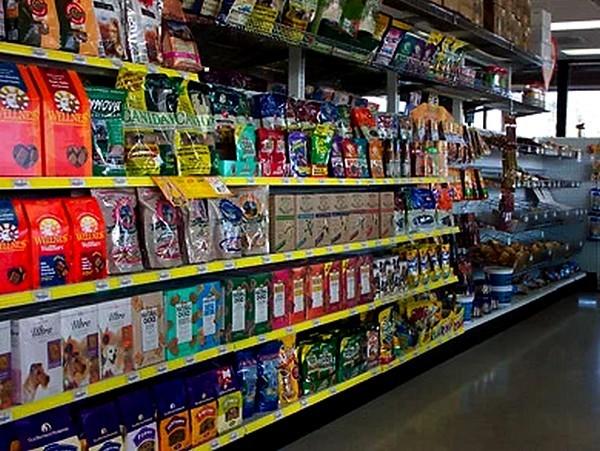
First of all, they advise not to be fooled by packaging claims. 'If you visit the animal feed section of any supermarket you will see how colorful and striking it is. Sacks of strong colors and with messages such as chicken flavor, 'rich in chicken and rice', 'natural', 'super-premium' ', they advice from Virbac.
However, they remember that, "far from what is highlighted in the package", you have to go to the "small print" and analyze all the ingredients. "When we find the slogan' chicken flavor 'or any other protein, we already know that chicken may have nothing and that this flavor may simply be the result of a mixture of flavorings," they point out.

On the other hand, they explain that the mention 'with chicken', 'with veal' etc. indicates that it must contain at least 4%, but that protein can come from by-products such as heads, crushed bones, viscera or legs, that is, the protein source will not be of quality.
The next step is when you see the statements "rich in chicken and rice," for example. "Here the minimum percentage of chicken must be 14%, but its origin can also be by-products", they add.
"If the source of animal protein appears as is: 'chicken', 'lamb', 'salmon', etc., the minimum content already rises to 26%, but by-products are still allowed,". Therefore, it is when mention is made of 'chicken meat', when it is only evident that it does not come from by-products and must contain a minimum of 26% chicken meat.
Regarding this, they point out that it is not the same that the meat is fresh or dehydrated. "If the meat is fresh, we must know that a high percentage of moisture will be lost during processing, so that amount of fresh meat will be reduced in the final product," they clarify.
On the other hand, if the meat is included already dehydrated, there will be no loss of moisture during manufacturing and the indicated amount of that source of animal protein will be closer to that of the final product.
LOOK FOR THE INGREDIENTS AND READ THE LIST CAREFULLY
'Normally, we can find the ingredient list on the back or side of the package and we should always read it before buying a dog or cat food. As also happens in human food, the ingredients must always appear in descending order, that is, they must be written in order from highest to lowest amount in which they have been used to create the product ', they detail.

Thus, they advise that, since cats and dogs are carnivorous animals, if a dry food begins its ingredient list with 'rice', 'corn', 'cereals' etc., first, it would not be conforming to what a carnivore should eat.
Another indicator of poor quality that they indicate is the use of vegetable or animal by-products, since anything is included here, it is difficult to get an idea of the origin of the raw materials.
"Taking into account the above, what tells us that this product has an acceptable quality? Without a doubt, the fact that the first ingredient is of animal origin', they affirm from Virbac.
In this sense, they explain that it will normally appear as fresh or dehydrated meat, accompanied or not by a percentage. "Next, the rest of the ingredients will appear and make sure there is not an excess of cereals, legumes or vegetables," they point out.
Other ingredients that can be found in dry pet food are probiotics, fibers, chondroprotectants, as well as different synthetic nutrients.
THE IDEAL PET FOOD: HIGH IN PROTEINS AND LOW IN CARBOHYDRATES
Taking the above into account, Virbac recalls that cats and dogs are carnivores and their diet must be adapted to this condition. "The food of our animals is the basis of their health, so we must opt for the best possible quality," they say.
For this reason, they insist that the premise of "high in animal protein and low in carbohydrates" must always be taken into account, as we promote from the Virbac Veterinary HPM range of food.
Source: Animal's Health
You could be interested: Rethinking Pet food Sustainability: Upcycled and Rendered Ingredients as Strategic Tools for People, Pets and Planet


Trends

07/09/2026
AI & Digital Transformation Seminar to Help Manufacturers Turn AI Strategy into Practical Action
04/08/2026
Circular Economy in Pet Food: How Recovered Packaging Creates Environmental and Social Impact
20/04/2026
Safeguarding Circularity: European Pet Food Industry Calls for Coherent EU Bioeconomy Policies

Events

SINPET 2026
15 to 16 October, 2026
Porto Alegre, Brazil
https://www.instagram.com/sinpet2026/

FIGAP 2026
21 to 23 October, 2026
Guadalajara, Jalisco, Mexico
https://figap.com/

Pet Fair South East Asia
28 to 30 October, 2026
Bangkok, Thailand
https://petfair-sea.com/

China International Pet Show (CIPS 2026)
12 to 15 November, 2026
Guangzhou, China
https://en.cipscom.com/

All Pet Food Day
25 November, 2026
Guayaquil, Ecuador
https://allpetfood.net/allpetfoodday2026

IberPet 2027
10 to 12 March, 2027
Madrid, Spain
https://www.ifema.es/en/iberpet

Figan 2027
16 to 19 March, 2027
Zaragoza, Spain
https://www.feriazaragoza.es/en/figan

ZOOMARK 2027
11 to 13 May, 2027
Fair District
https://www.zoomark.it/en/

Pet Fair Asia 2027
18 to 22 August, 2027
Shanghai, China
https://en.petfairasia.com/exhibition/pfa.html

VICTAM 2027
14 to 16 September, 2027
São Paulo, Brazil
https://victamlatam.com/en-us/
Advertising