Latest content from Labels

Pet Food Label Modernization is Coming Soon!
Labels

4+ MIN

Pet Food Label Modernization is Coming Soon!

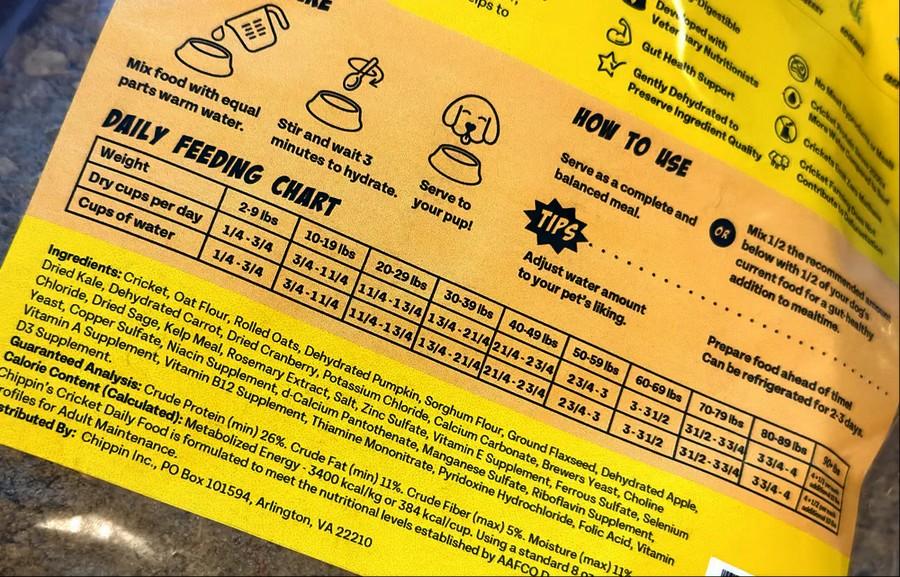
A final draft of the updated model regulations for pet food and specialty pet food was voted on by the executive committee and will be presented to the full membership on July 31st for a vote.  There are numerous changes to the regulations that will impact the labeling for all pet food, pet treats and specialty pet food and treats. Below is a discussion of some of the main changes that will impact your pet food label design. Please note that small and very small packages with a total printable area of 40 or 12 square inches or less respectively will have different layout requirements due to space constraints Changes to the front of the pack include the requirement for a verbatim intended use statement. This statement must be in the bottom ⅓ of the principal display panel and parallel to the bottom of the panel (front panel for packages that sit upright on the shelf and also on the bottom butt panel for packages that lay flat on the shelf), must be at least as large as the net quantity statement per FDA 16 CFR 500.21, must be in the same color and style font and on the same background color as the statement of net quantity and must be separated from the statement of net quantity and any other label material by the height of the 'N' above and below and by twice the width of the 'N' on either side.  Some examples of the verbatim intended use statements include:  'Complete Dog Food' for foods that are complete and balanced for all life stages, including growth of large size dogs. 'Complete Puppy Food' or 'Complete Food for Puppies' for growth products that include growth of large size dogs.  'Complete Food for Adult Cats' for adult maintenance cat foods. 'Complete Food for Puppies (<70 lb. as an adult)' for growth diets that are not appropriate for the growth of large size dogs. 'Complete Food for Dogs (except puppies >70 lb. as an adult)' for all life stages products that exclude the growth of large size dogs. Another major change is the replacement of the Guaranteed Analysis with a Pet Nutrition Facts section. This change was made to more closely align the nutritional information with the format on human food labels in order to help the consumer better understand what they are buying. The Pet Nutrition Facts is required to be included on all pet foods in a prominent place on the label (but not necessarily on the principal display panel). On most packages (except very small labels), this will be in a box set off by hairlines and will be all black or one-color type, printed on white or neutral background.  The heading 'Pet Nutrition Facts' will be centered in the top row of the box and must be twice the size of the other text in the box. The familiar household unit (cup, can, treat, etc) will be right justified in the next row and must include the weight in grams. A bold line must separate this information from the next row. Calorie content will appear in the next line of the box and will no longer be stated as kcal/kg. It must be stated in kcal/'familiar household unit' and will be left justified. If the calories are determined by a feeding study, the word '(fed)' will appear after the value. Maybe provide an example of a few familiar household units. Underneath the calorie content, indented text will appear indicating the calories from protein, fat and carbohydrates. The Modified Atwater formula is still the correct way to determine the calorie content.      Following the calorie content will be the guaranteed nutrient levels. Protein, Fat, Carbohydrates (calculated value), Total Dietary Fiber and Moisture are the required guarantees for every label. These will be expressed in % and also in grams/'familiar household unit.' If you don't have dietary fiber data for your recipes, now would be a good time to begin testing to obtain these values. If you have additional nutritional guarantees, they may be included similarly to today's labels. Essential guarantees must still follow the order of the AAFCO nutrient profiles and nonessential nutrient guarantees are listed following the last essential guarantee. The verbatim nutritional adequacy statement will still be required and must now live within the Pet Nutrition Facts box so that placement is consistent across all products. Feeding directions must be included on all labels and should be consistent with the intended use statement that is on the principal display panel. There are some other minor changes that may impact your labeling, but the information above captures the most impactful of the proposed updates to the regulations. The implementation workgroup is proposing 6 years for the timeline for labeling in the market to comply with the new regulations. Consumer outreach and education has been a top priority and as more brands launch compliant labels, pet parents will be looking for this new format. This could potentially become part of the buying decision for savvy pet parents. The North River Enterprises team is involved in several AAFCO workgroups helping to develop educational materials explaining the required changes once PFLM becomes a reality.  by Melissa Brookshire

Clean labels: the bridge to a more transparent industry
Labels

4+ MIN

Clean labels: the bridge to a more transparent industry

By María Candelaria Carbajo

In recent years, consumers have become much more conscious about the care of their pets and, consequently, about the products they offer for their nutrition. The industry, then, has to ensure its products are of good quality and made with ingredients that people easily accept when reading the labels.   What are we talking about when we talk about clean labels? When pet owners read, a few years ago, the ingredients on the pet food labels they chose, they used to find, for the most part, complex terms that made them lose confidence about the quality of said food for their pets. Today, with this trend, we are facing a slow and progressive change, which jeopardizes what has been sustained up to now and requires the industry to offer new alternatives. Thus, the clean-label trend arises to calm people's fear of harmful chemical equations, incomprehensible terms, and complex compositions.   It's all about perception One of the most significant challenges facing this trend is that there is no single perception of what clean-label food really is. While we all understand that it would be a transparent and easy-to-understand label, for some consumers it may mean short and simple recipes with few synthetic vitamins, preservatives, and other artificial ingredients. For others, it may be discovering a product made from 100% natural ingredients with no artificial preservatives, non-grain carbohydrate sources, non-GMO ingredients, natural colors and flavors, limited ingredient diets, by-product-free protein sources, vegan ingredients, or locally sourced, for example. According to reports from the International Food Information Council (IFIC), almost 2 out of 3 participants believe ingredients influence their purchasing decisions. Meanwhile, according to a BIS Research study, the global market for clean-label ingredients was valued at $19.77 billion in 2020, and it's expected to reach $32.08 billion by 2026. With these predictions, it is clear that clean-label ingredients are the food industry's alternative to the growing consumer demand for consumables without questionable ingredients.   The importance of clean labels (and their ingredients) The transparency of the ingredients and their description on the labels lies in openly sharing the sources of the substances used in food and the practices followed to obtain them. Today's consumers know they have the right to know all the information they want about food ingredients. The plain consequence of this market demand is a late increase in sales of organic products and a decrease in processed foods or foods with artificial additives. This, in turn, is reflected in 'free from' style labels or stamps on product packaging that have had to be reformulated to come as close to natural as possible, avoiding adulterated or artificial ingredients as much as possible. In this sense, new technologies and food science are playing a significant role in helping manufacturers innovate their solutions to go to market with more transparent products and labels.   Clean-label challenges Inevitably, to ensure clean label ingredients maintain and expand their reach, flavor, and product developers began paying more attention to nutritional profiles.   Leaving the known behind Some formulas will be easier to modify and adjust than others. Transforming a current product may require various adjustments and validation processes, since changing preservatives is not the same as eliminating, for example, a main source of protein or carbohydrates. In many cases, what begins as a small modification ends in a product requalification and almost a total redesign. For other ingredient categories, such as colorants, the alternatives may be limited. However, we already find companies working on finding solutions to this challenge. Color additive suppliers are already developing natural alternatives to currently certified pigments, such as caramel colorants which, while perfectly compliant with the clean-label category, only achieve a certain level of darkness.   Naming what is needed Another industry challenge is related to the vitamins, minerals, and other nutrients necessary for a complete and balanced pet diet. Most owners prefer ingredients they recognize and can pronounce, which is why the most difficult ingredients to tackle are vitamins and minerals, but the truth is that pets require them, as well as specific bioavailable fatty acids and amino acids for a complete and healthy diet. In this regard, the AAFCO requires that supplemental vitamins and minerals are included in the packages with the approved names, and although some may be difficult to recognize, perhaps the best option, in this case, is to educate people on their importance. On the other hand, we can mention the difficulty that arises when it comes to achieving a clean label on wet foods since these usually contain guar, cassia, or xanthan hydrocolloids, carrageenan, or carob, profitable alternatives to achieve the proper viscosity in these foods. However, with the increase in demand for natural and recognizable ingredients in packaging, more and more manufacturers are looking to replace these gums with clean-label ingredients, such as rice starch.   Challenge accepted: clean and transparent labels (and products) Reformulating a pet food product to meet clean-label criteria can take considerable time to have it validated and ready for launching to the market. New ingredient qualification, establishing long-term viable material supply chains, and quality control validation of the final product design are some of the critical steps that affect the redesign process. The positive thing about this request for ingredients that satisfy the demanding preferences of new pet owners is that it has allowed industry suppliers to innovate and work to offer healthier and more transparent solutions.   Source: All Pet Food Magazine

Updates to Pet food Labels: A long Time Coming!
Labels

2+ MIN

Updates to Pet food Labels: A long Time Coming!

When launching the multi-year, AAFCO-led, pet food label modernization effort, the association intended to provide consumers with easy-to-understand information on their pets' food packaging so that they could comprehend the nutritional benefits their pets gained from eating the food or treats and how to best feed their pets and store the remaining food. It sought to do this by creating alignment with the formatting of human food nutrition boxes, provide front-of-packaging pet nutrition cues for consumers, consider the development of handling and storage instructions, and change the analysis requirements for fiber. Industry, including many American Feed Industry Association members, has worked alongside state and federal regulators in the step-by-step process of developing new analysis requirements, packaging narrative and visual prompts to increase consumers' understanding of pet food labels.  For example, nutrition fact boxes, similar in format to what are used on human foods, will state the number of calories per common household unit, such as a cup or can of pet food. The updated facts box format will also include the actual amounts of protein, fat, dietary fiber and carbohydrates instead of the previously used minimum guarantees for protein, fat and crude fiber. These changes will support consumer selection of pet foods to best meet the needs of individual pets.  Pet food manufacturers will also have the opportunity to voluntarily use standardized icons to provide information about best practices for storing pet foods and common handling steps, such as hand washing and separating utensils for serving pet foods. They will also be asked to provide clear language on the lower third of the front of pet food packages to plainly state the intended uses of the food with statements, such as 'Complete food for adult dogs,' or 'Cat and kitten treats.'  By the end of 2024, we expect that some pet food labels may start to include the changes brought about by this herculean effort, but it will take many years before all manufacturers are able to be in full compliance with the required changes.   Educational materials are currently being developed to assist manufacturers, regulators, retailers and veterinarians in their different roles for the promotion and regulation of the new label formats and to assure consumer understanding of the increased information available for determining pet food choices.  So where does that leave us now? The changes passed the AAFCO Pet Food Committee and are awaiting a vote by the full AAFCO membership later this summer. The next big steps will include the demanding task of state-by-state approval of the AAFCO-sanctioned changes, industry adoption of the new label requirements, and retailer and consumer education about the revised labels. It has taken eight years to formalize the changes to pet food labels and now in 2023, a new shark has taken the stage. Move over Left Shark, it's all about 'Baby Shark' now.   by AFIA

Advertising

260x430 260x430 260x430 260x430 260x430